Introduction
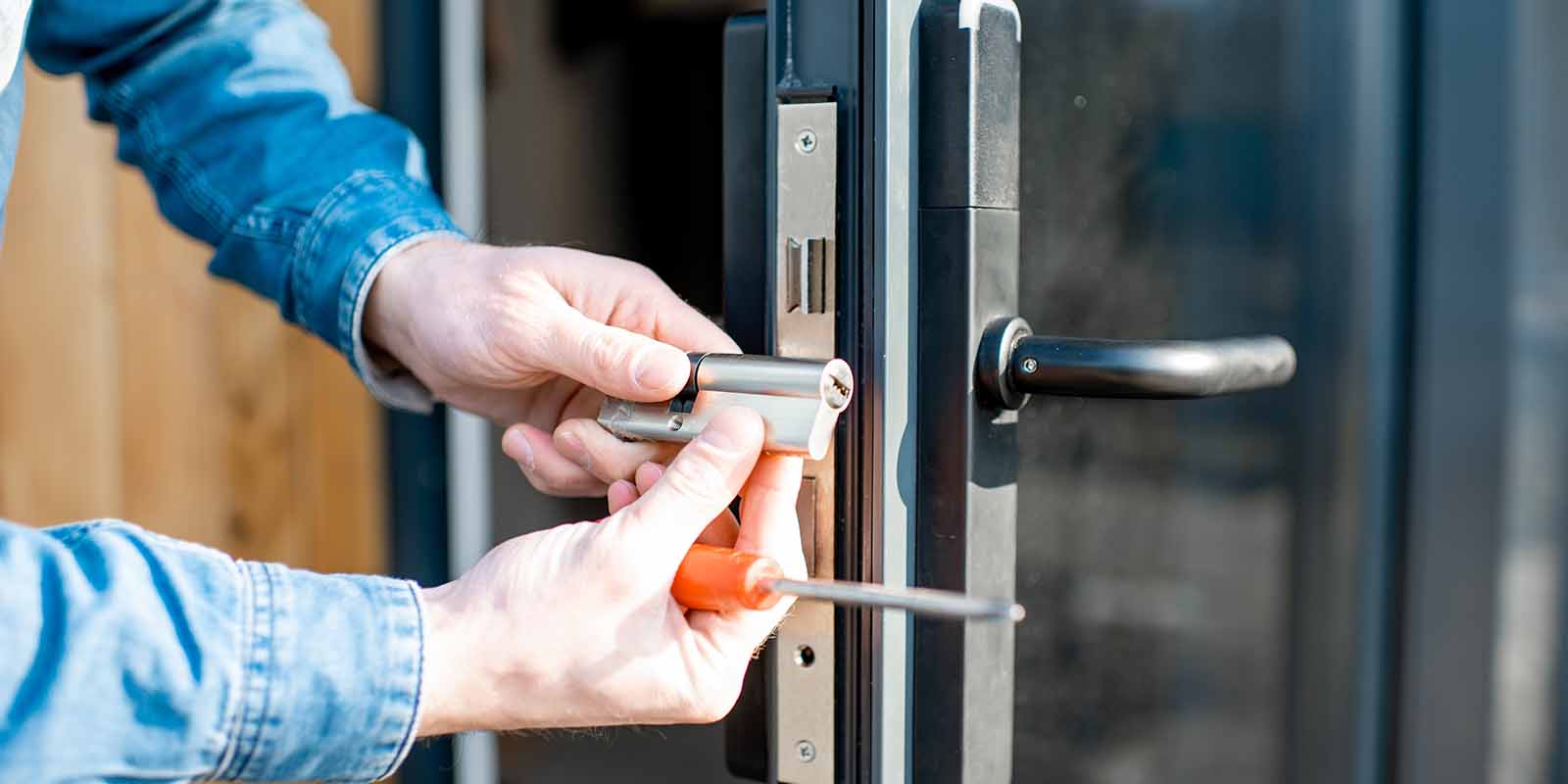
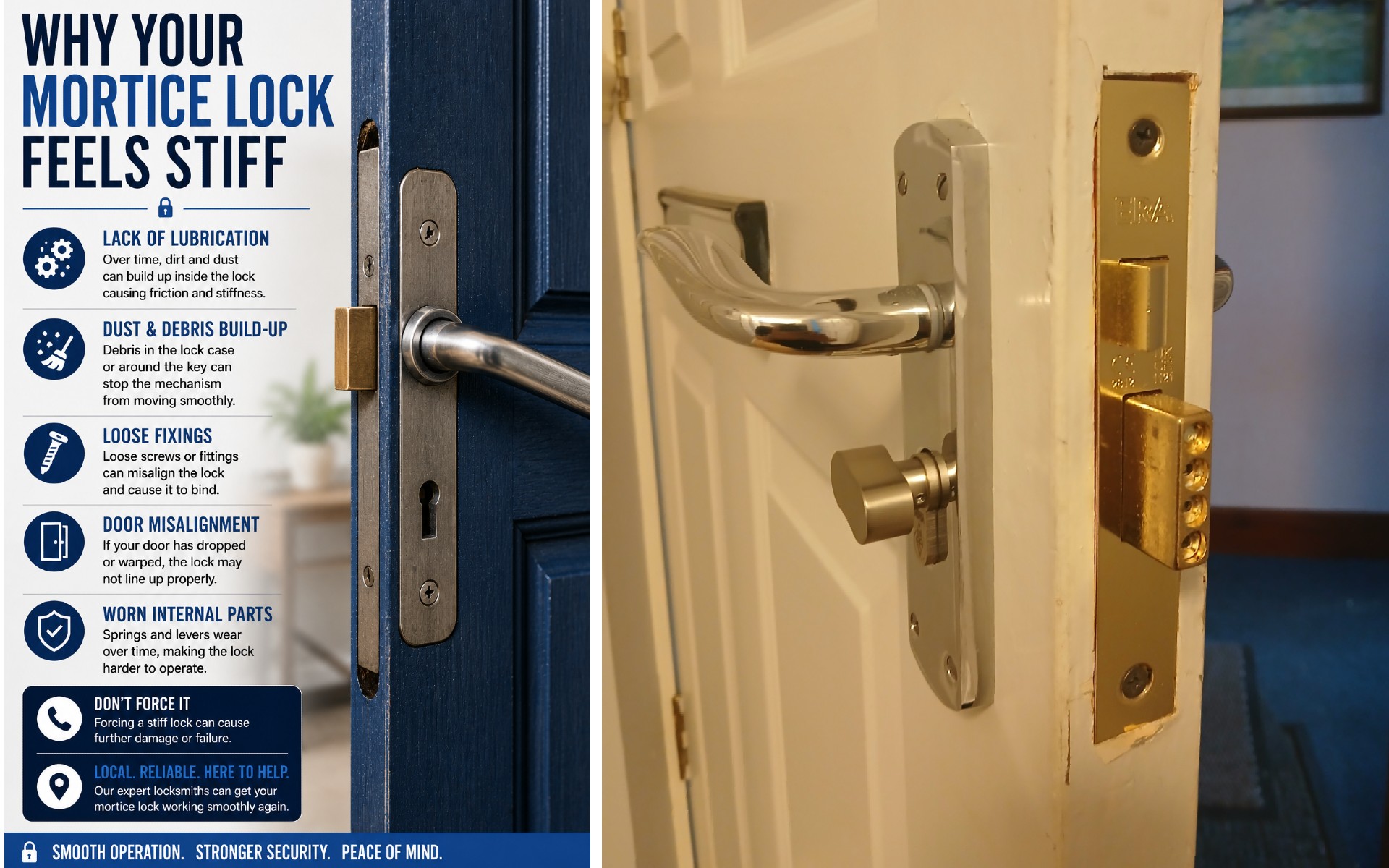
A mortice lock should operate smoothly with very little effort. If you're finding that the key is becoming difficult to turn or the lock feels rough when locking and unlocking the door, it's usually a sign that something needs attention.
Ignoring a stiff mortice lock can eventually lead to a broken key, internal lock failure, or even being locked out of your home. The good news is that many of the causes can be identified and repaired before the lock fails completely.
Normal Wear and Tear
Like any mechanical device, a mortice lock wears over time.
Inside every mortice lock are a number of precision components, including:
- Levers.
- Springs.
- Deadbolts.
- Moving linkages.
- Internal pivots.
After many years of daily use, these components gradually wear, making the lock feel stiff, rough or inconsistent when operated.
Door Movement
Many people assume the lock is faulty when the real problem is the door.
Timber doors naturally expand and contract with changes in temperature and humidity. Over time, the door or frame can move slightly, causing the deadbolt to bind against the keep.
Common signs include:
- The key turns smoothly with the door open.
- The lock becomes stiff when the door is closed.
- You need to push or pull the door while locking it.
- The door catches slightly before closing.
Often the lock itself is perfectly serviceable, but poor alignment is placing it under unnecessary strain.
A Misaligned Keep
The keep is the metal box or strike plate fitted to the frame that receives the deadbolt.
If the keep has moved slightly, or wasn't positioned correctly when installed, the bolt may rub against it every time the lock is used.
This creates resistance, making the key feel stiff and increasing wear on the internal components.
Correcting the keep alignment can often restore smooth operation.
Lack of Lubrication
Mortice locks contain several moving parts that benefit from occasional maintenance.
Over time:
- Dust accumulates.
- Lubrication dries out.
- Wrong lubrication used.
- Dirt enters the mechanism.
- Components begin to move less freely.
A lock that has been neglected for many years may simply require cleaning and appropriate lubrication before more serious wear develops.
A Worn Key
Sometimes the lock isn't the problem at all.
Keys gradually wear through everyday use and can become:
- Rounded.
- Slightly bent.
- Worn along the cuts.
- Distorted through years of use.
A worn key may struggle to lift the levers accurately, making the lock feel increasingly difficult to operate.
Trying a spare key in good condition can often help identify whether the key is at fault.
Poorly Cut Key Copies
Badly cut key copies are one of the most common causes of stiff mortice locks.
If a copied key isn't cut accurately, it may:
- Feel rough when turning.
- Fail to lift the levers correctly.
- Increase wear inside the lock.
- Eventually damage the internal components.
Whenever possible, additional keys should be copied from the original manufacturer's key rather than another duplicate.
Internal Lock Failure
Eventually, the internal components inside a mortice lock begin to fail.
Warning signs include:
- Increasing stiffness.
- Intermittent operation.
- Difficulty removing the key.
- The key turning but feeling rough.
- The lock working one day and not the next.
Once springs or levers become excessively worn, replacing the lock is usually the most reliable long-term solution.
Weather Can Play a Part
Scotland's weather can affect timber doors throughout the year.
During periods of:
- High humidity.
- Heavy rain.
- Cold temperatures.
- Seasonal weather changes.
timber can swell or contract slightly, affecting how the bolt lines up with the keep.
In many cases, the weather is exposing an alignment problem rather than creating a new one.
A Poorly Fitted Lock
If a mortice lock has been installed incorrectly, problems can develop from the outset.
Examples include:
- The lock case being forced into the mortice.
- An incorrectly positioned keep.
- A faceplate that isn't seated flush.
- A bolt that doesn't fully engage.
A properly installed lock should operate smoothly without placing unnecessary pressure on the key.
Signs Your Mortice Lock Needs Attention
Watch out for these common warning signs:
- The key becoming difficult to turn.
- The lock feeling rough.
- The key sticking in the lock.
- Difficulty removing the key.
- Needing to force the key.
- The door requiring pressure before it will lock.
- The deadbolt not extending fully.
These symptoms rarely improve on their own and often become worse if ignored.
Don't Force a Stiff Lock
One of the worst things you can do is continue forcing a stiff mortice lock.
Doing so can result in:
- A snapped key.
- Broken internal components.
- Damage to the keep.
- A failed lock.
- An emergency lockout.
If a lock suddenly becomes difficult to operate, it's always better to investigate the cause before something breaks.
Repair or Replace?
Not every stiff mortice lock needs replacing.
Depending on the cause, the solution may simply involve:
- Adjusting the keep.
- Realigning the door.
- Replacing a worn key.
- Cleaning and lubricating the lock.
- Repairing the surrounding door hardware.
However, if the lock is worn internally, damaged, or several decades old, replacement is usually the most cost-effective long-term option.
Modern BS3621 mortice locks also provide improved security and may help meet home insurance requirements.
Conclusion
A stiff mortice lock is usually an early warning that something isn't quite right. Whether the cause is normal wear, timber door movement, a misaligned keep, a worn key or failing internal components, addressing the problem early can prevent broken keys, lockouts and expensive repairs. If your lock no longer operates smoothly, don't ignore it. Identifying the cause and carrying out the appropriate repair or replacement will keep your door secure and ensure reliable operation for years to come.