Introduction
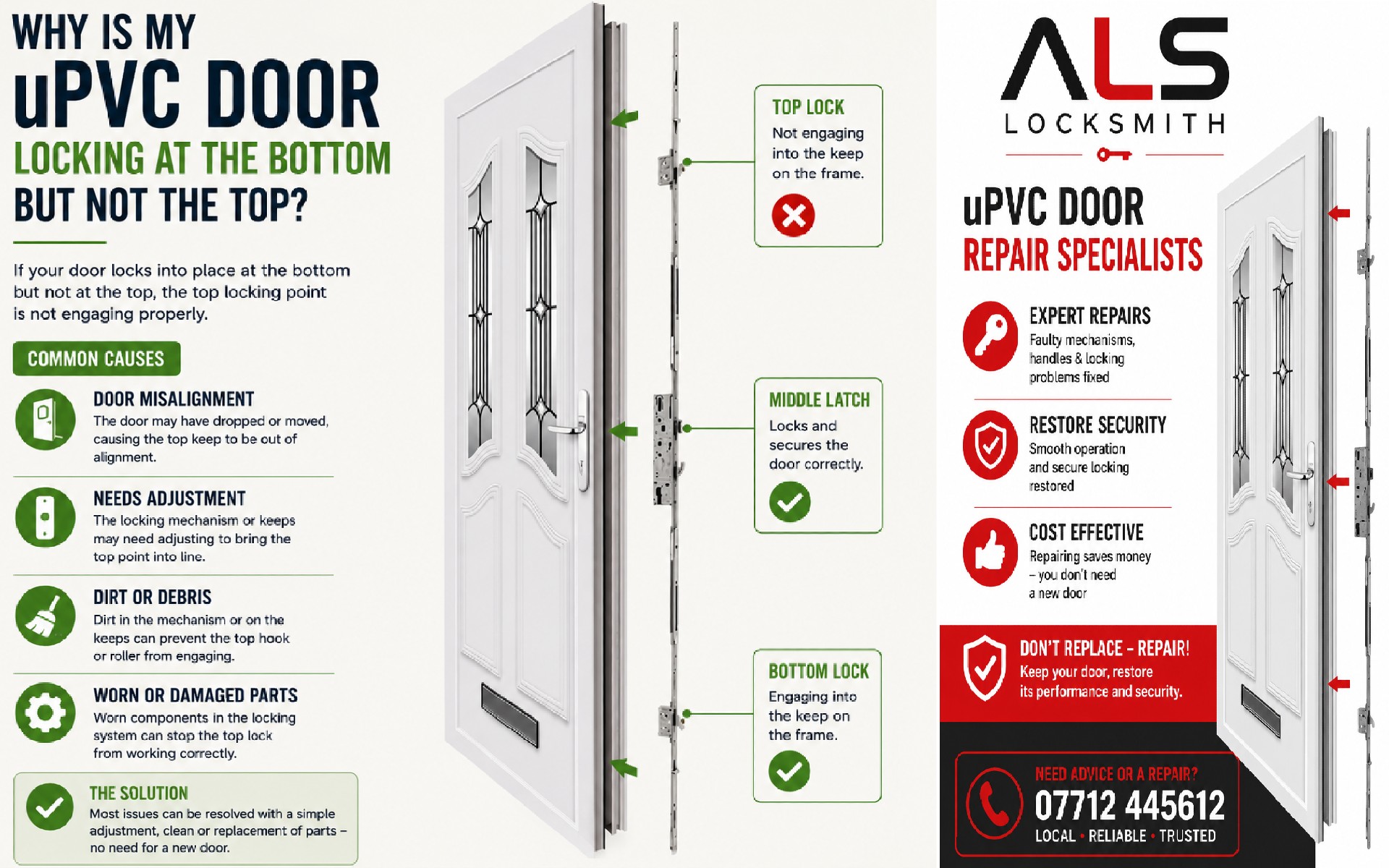
If your uPVC door locks securely at the bottom but refuses to lock properly at the top, it's usually a sign that something is no longer lining up as it should. This is a common problem with older doors and, while it can make the door difficult or even impossible to lock, it doesn't necessarily mean the locking mechanism has failed.
In many cases, the fault is caused by the door gradually moving out of alignment. The good news is that most doors can be repaired without the expense of replacing the door itself.
How a Multipoint Lock Should Work
A multipoint locking mechanism is designed so that all of the locking points engage together when the handle is lifted or the key is turned.
These locking points—typically hooks, rollers and deadbolts—must line up precisely with the keeps fitted to the frame.
If one part of the mechanism engages while another doesn't, the door won't lock correctly and unnecessary strain is placed on the entire locking system.
Why Does the Bottom Lock but Not the Top?
When the bottom of the door locks normally but the top won't engage, it usually means the upper locking points are no longer aligning with the frame.
Common causes include:
- A dropped door.
- Worn or loose hinges.
- Poor door alignment.
- A warped door.
- A worn multipoint locking mechanism.
- Internal gearbox wear.
The only way to determine the correct repair is to identify the underlying cause before replacing any parts.
A Dropped Door Is the Most Common Cause
Over time, the weight of a uPVC door can cause it to move slightly on its hinges.
Although the movement may only be a few millimetres, it can be enough for the top locking points to miss the keeps while the lower locking points continue to engage normally.
Typical symptoms include:
- The bottom of the door locks.
- The top won't engage.
- The handle becomes harder to lift.
- The key is more difficult to turn.
- The top corner catches the frame.
This is one of the most common alignment problems seen on uPVC doors.
Don't Force the Handle
If the top locking points won't engage, avoid forcing the handle into the locked position.
Excessive force can damage:
- The gearbox.
- The internal linkages.
- The locking points.
- The door handles.
- The multipoint locking mechanism.
What begins as a simple alignment issue can quickly develop into a much more expensive repair if the mechanism is repeatedly forced.
It Could Be the Locking Mechanism
If the door alignment is correct, attention should turn to the locking mechanism itself.
Possible faults include:
- Worn hooks.
- Damaged rollers.
- Broken internal linkages.
- A worn gearbox.
- General wear within the multipoint mechanism.
Depending on the condition of the lock, the repair may involve replacing only the gearbox or fitting a complete replacement mechanism.
Watch How the Door Closes
The way your door closes can provide valuable clues about the cause of the problem.
Ask yourself:
- Does the top corner rub against the frame?
- Do you need to push or pull the door to lock it?
- Has lifting the handle become harder over time?
- Is the door hard to close?
- Is the key becoming increasingly stiff?
- Does the door feel different depending on the weather?
These are all signs that the locking mechanism may be operating under unnecessary pressure.
Door Realignment Is Often the Solution
If the door has dropped, realigning it will usually allow the locking points to engage correctly again.
A properly adjusted door should:
- Lock evenly from top to bottom.
- Allow the handle to lift smoothly.
- Let the key turn with minimal effort.
- Reduce strain on the gearbox.
- Prevent unnecessary wear on the locking mechanism.
Even when replacement parts are required, correct alignment should always form part of the repair.
Sometimes the Gearbox Has Already Been Damaged
If the door has been difficult to lock for a prolonged period, the gearbox may already have suffered internal wear from working under constant pressure.
In these situations, the repair may involve:
- Replacing the gearbox.
- Replacing the complete multipoint locking mechanism.
- Realigning the door.
- Replacing worn handles if required.
Correcting the alignment afterwards helps ensure the new components aren't subjected to the same excessive strain.
Repair Before You Replace
Many homeowners are advised to replace their door when a locking problem develops, but this is rarely necessary.
Provided the door and frame remain structurally sound, most faults can be resolved by repairing or replacing the worn components and restoring the correct alignment.
Repairing the existing door is usually quicker, more cost-effective and far less disruptive than fitting a completely new door.
Conclusion
If your uPVC door locks at the bottom but not at the top, don't assume the door or locking mechanism has reached the end of its life. More often than not, the problem is caused by poor alignment, worn hinges or a locking mechanism that has been operating under unnecessary strain.
Identifying the real cause before replacing parts is the key to a lasting repair. Once the door has been correctly adjusted and any worn components have been replaced, most doors can be restored to smooth, secure and reliable operation for many years to come.
Related guides: