Introduction
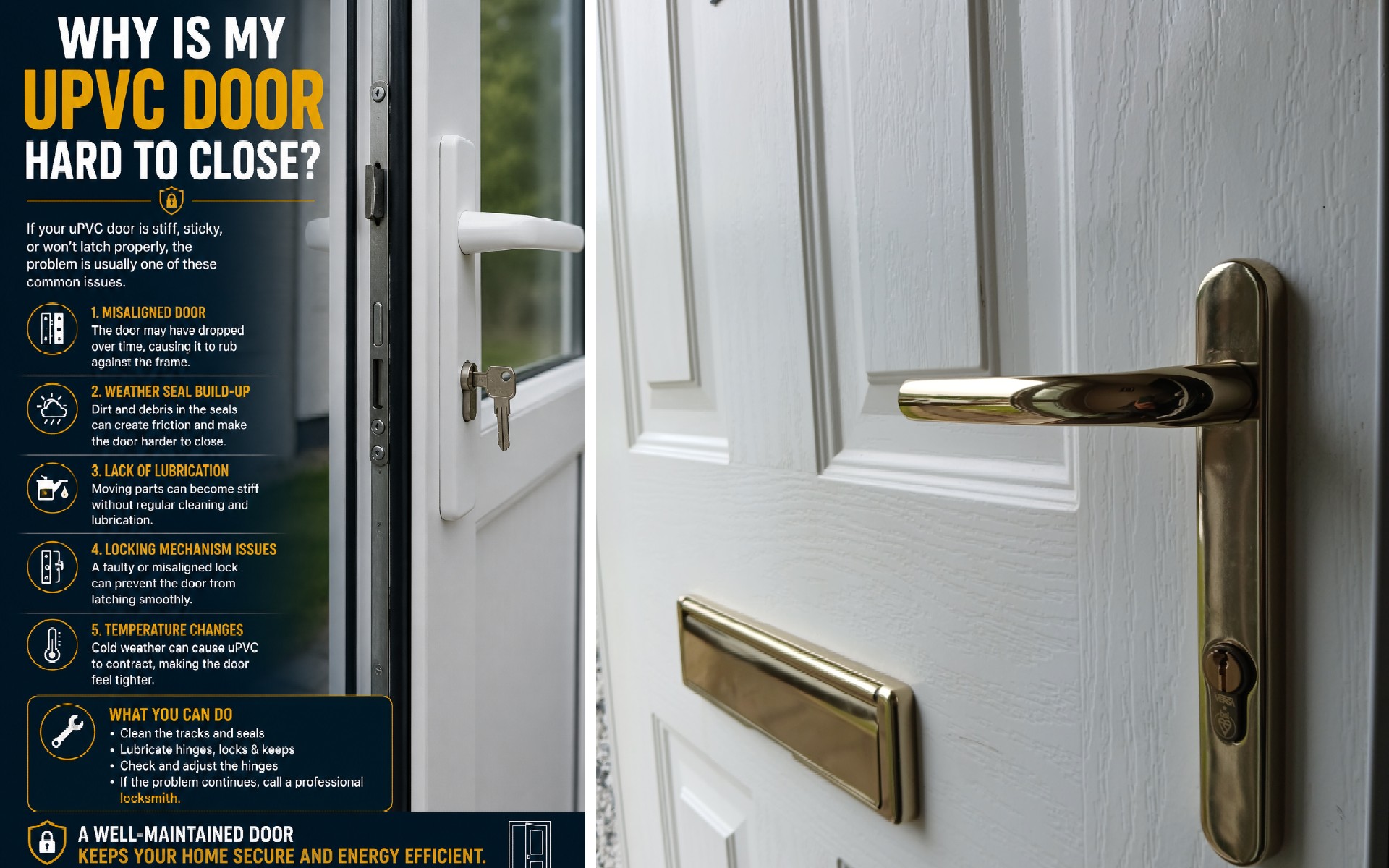
A uPVC door should open, close and lock smoothly with very little effort. If your door has become difficult to close, catches the frame, or requires force to lock, it's usually a sign that something isn't working as it should.
Many homeowners assume the lock has failed, but in most cases the real cause is poor door alignment, worn hinges or a locking mechanism that's been placed under unnecessary strain. The good news is that these problems can often be repaired without replacing the entire door.
Addressing the issue early can prevent more expensive repairs later and significantly extend the lifespan of your locking system.
The Door Has Dropped
One of the most common causes of a hard-to-close uPVC door is that it has gradually dropped out of alignment.
Over time, the weight of the door, everyday use and seasonal movement can cause it to shift slightly on its hinges.
Common signs include:
- The door rubbing on the frame.
- Scrape marks on the threshold.
- Difficulty closing the door.
- The handle becoming harder to lift.
- Uneven gaps around the frame.
- Draughts around the seals.
Even a few millimetres of movement can affect how the locking mechanism operates.
The Locking Points Are Hitting the Keeps
The hooks, rollers and deadbolts on a multipoint locking mechanism must align precisely with the keeps fitted to the frame.
If they don't, you may notice:
- The handle feels heavy to lift.
- The key becomes difficult to turn.
- The door feels tight when locking.
- The locking points scrape against the keeps.
Every time you force the handle, extra pressure is transferred into the gearbox and locking mechanism.
Left unchecked, this can eventually lead to complete lock failure.
The Door Is Out of Alignment
A door doesn't have to visibly drop before it develops alignment problems.
Small movements caused by:
- Building settlement.
- Temperature changes.
- Worn hinges.
- Daily use.
can all affect how the door sits within the frame.
A correctly aligned door should:
- Open smoothly.
- Close easily.
- Lock without force.
- Compress evenly against the weather seals.
- Allow the key to turn effortlessly.
If you need to push, pull or lift the door before it locks, it almost certainly requires adjustment.
The Gearbox Is Beginning to Fail
The gearbox is the heart of the multipoint locking mechanism.
As it begins to wear, symptoms often include:
- Increasing resistance.
- A stiff handle.
- Difficulty locking.
- The handle lifting but feeling rough.
- Inconsistent operation.
- The key becoming harder to turn.
Catching gearbox problems early often allows repairs before complete failure occurs.
Seized Hooks, Rollers and Locking Points
The moving parts of a multipoint lock should travel freely every time the handle is lifted.
Years of use, dirt, corrosion or lack of lubrication can cause:
- Hooks to stick.
- Rollers to seize.
- Deadbolts to bind.
- Increased resistance throughout the mechanism.
This additional load places unnecessary strain on the gearbox every time the door is locked.
Regular servicing and lubrication can often prevent these issues.
Worn Hinges
Door hinges support the full weight of the door every day.
As hinges wear they can allow the door to move out of position.
This may result in:
- Poor alignment.
- Draughts.
- Doors catching the frame.
- Increased pressure on the locking mechanism.
- Uneven compression of the weather seals.
Depending on their condition, hinges may simply require adjustment or, in some cases, replacement.
Previous Incorrect Adjustments
It's increasingly common for homeowners to attempt repairs after watching online tutorials.
Unfortunately, incorrect hinge adjustments can often make matters worse.
I've attended many jobs where:
- Hinges had been adjusted too far.
- Doors had been twisted within the frame.
- Keeps had been moved incorrectly.
- Locking points no longer operated within their intended tolerances.
Although the door sometimes appears straighter, excessive strain is often transferred into the locking mechanism, leading to premature gearbox failure.
Weather and Seasonal Movement
Scotland's changing weather can also affect how uPVC doors perform.
Heat causes materials to expand.
Cold temperatures cause them to contract.
Combined with years of use, these seasonal movements can gradually affect alignment and how tightly the door compresses against its seals.
Regular inspection helps identify these changes before they become serious.
Why You Shouldn't Ignore the Problem
A hard-to-close door rarely fixes itself.
Continuing to force the door can lead to:
- Failed gearboxes.
- Broken handles.
- Damaged lock cylinders.
- Worn locking points.
- Jammed doors.
- Emergency lockouts.
What may initially require only a minor adjustment can eventually become a much larger repair.
How a Professional Repair Restores Smooth Operation
A proper repair involves much more than adjusting the hinges.
A professional inspection should include checking:
- Door alignment.
- Hinge condition.
- Keep positions.
- Lock cylinder operation.
- Gearbox condition.
- Multipoint locking mechanism.
- Compression against the weather seals.
- Handle operation.
The objective is to achieve:
- Smooth opening and closing.
- Light handle operation.
- Easy key movement.
- Even sealing around the frame.
- Locking points engaging naturally without force.
Correcting the underlying cause ensures the repair lasts and reduces unnecessary wear on the entire locking system.
Long-Term Benefits of Early Repairs
Addressing the problem early can:
- Extend the life of the gearbox.
- Protect the multipoint locking mechanism.
- Reduce wear on the euro cylinder.
- Prevent broken handles.
- Improve security.
- Eliminate draughts.
- Improve thermal efficiency.
- Restore smooth day-to-day operation.
- Avoid expensive emergency repairs.
- Delay or eliminate the need for replacement parts.
Conclusion
A uPVC door that has become difficult to close is usually giving you an early warning that something needs attention. Whether the cause is poor alignment, worn hinges, seized locking points or the early stages of gearbox wear, dealing with the problem promptly can prevent more serious failures and unnecessary expense. In most cases, a professional adjustment, service or component replacement is all that's needed to restore smooth, effortless operation. Rather than replacing the entire door, correcting the underlying cause helps improve security, eliminate draughts and maximise the lifespan of your existing locking system.