Introduction
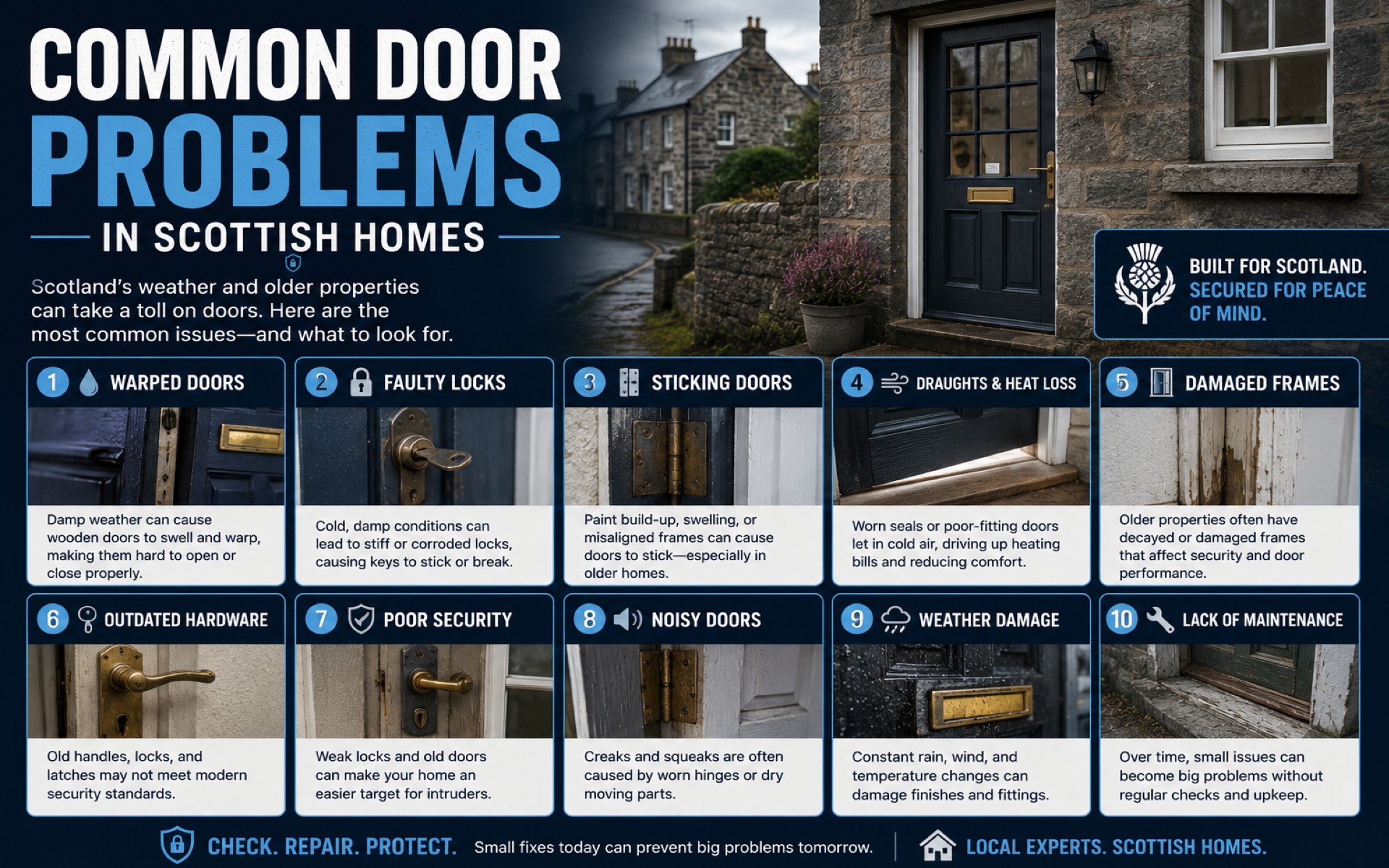
Scotland's climate is hard on external doors. Constant rain, strong winds, changing temperatures and everyday use all take their toll on uPVC, composite and timber doors. Over time, components wear, doors move out of alignment and locks become more difficult to operate.
Many homeowners assume these problems mean they need a completely new door. In reality, that's rarely the case. Most common door faults can be repaired by replacing worn components, realigning the door or carrying out adjustments, often at a fraction of the cost of a replacement.
Doors That Have Dropped
One of the most common problems is a door that has gradually dropped out of alignment.
Typical signs include:
- The door rubbing on the frame.
- Difficulty opening or closing.
- The handle becoming difficult to lift.
- The key becoming stiff to turn.
- Having to push or pull the door to lock it.
- Uneven gaps around the door.
- Draughts around the frame.
Even a few millimetres of movement can place considerable strain on the locking mechanism every time the door is used.
Correctly adjusting the hinges and fine-tuning the keeps usually restores smooth operation and prevents unnecessary wear.
Failed Multipoint Locking Mechanisms
Most modern uPVC, composite, French and bifold doors are fitted with multipoint locking systems.
After years of daily use, components such as:
- Gearboxes.
- Hooks.
- Rollers.
- Deadbolts.
- Internal springs.
- Cams.
can eventually wear out.
Common symptoms include:
- The handle lifts but nothing happens.
- The key turns without locking the door.
- Locking points fail to engage.
- The mechanism jams.
- The door becomes stuck closed.
In many cases, replacing the faulty component restores full operation without replacing the complete door.
Draughty Doors
With Scotland's weather, a draughty door quickly becomes noticeable.
Common causes include:
- Poor door alignment.
- Incorrectly adjusted keeps.
- Worn hinges.
- Damaged weather seals.
- Locking points failing to pull the door tightly against the frame.
A correctly adjusted door should compress evenly against the weather seals, preventing cold air and water entering the property.
Stiff Locks and Handles
If your handle becomes difficult to lift or the key feels increasingly stiff, it's usually an early warning sign rather than the fault itself.
Possible causes include:
- Poor door alignment.
- Worn lock cylinders.
- Seized locking points.
- Failing gearboxes.
- Poorly cut keys.
- Lack of maintenance.
Ignoring these symptoms often leads to complete lock failure and more expensive repairs.
Related guide: Why is my door hard to close?
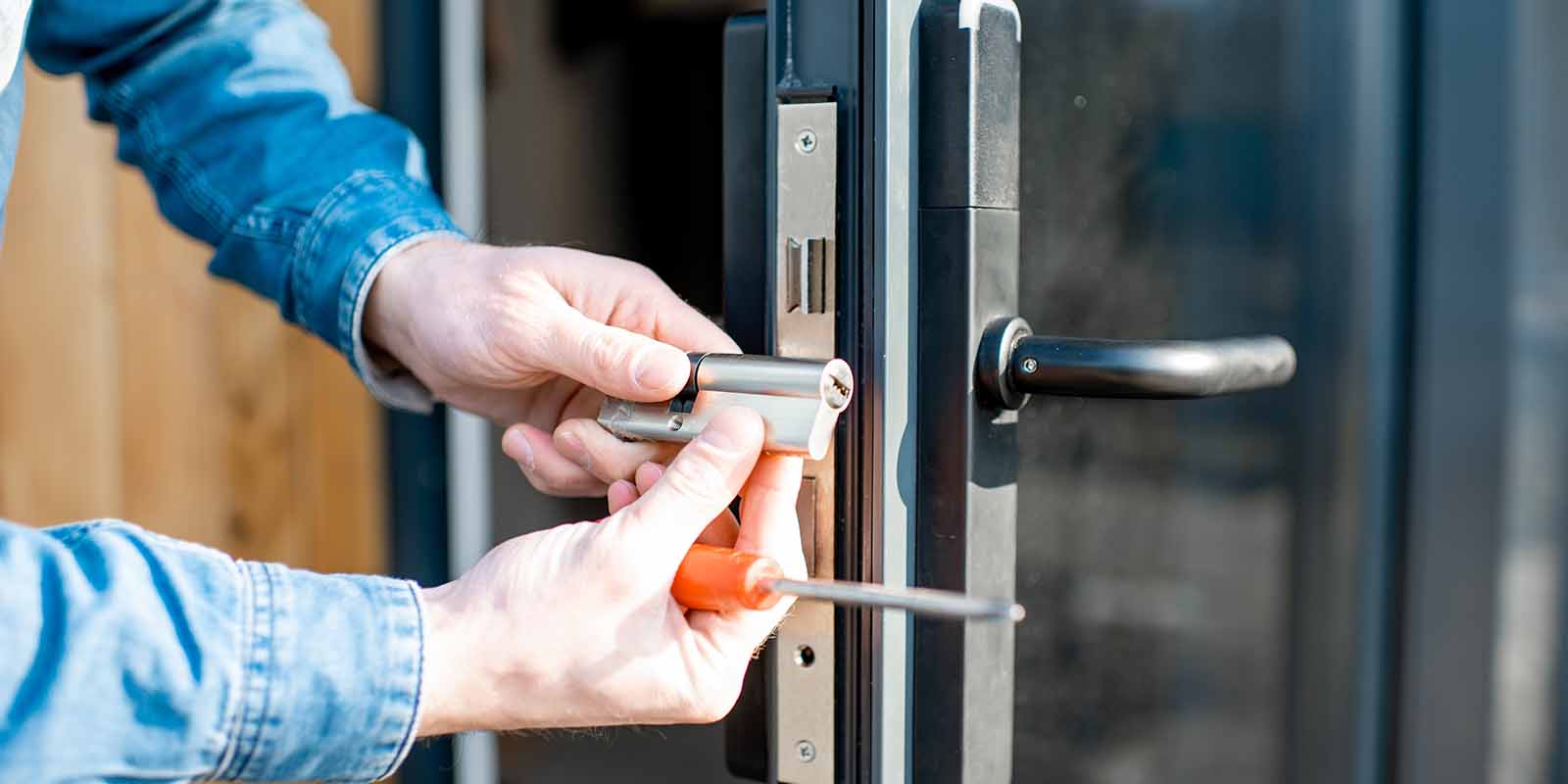
Wrong Sized Lock Cylinders
It's surprisingly common to find euro cylinders that have never been correctly sized.
An incorrectly fitted cylinder may:
- Protrude beyond the handle.
- Create a security weakness.
- Be more vulnerable to lock snapping.
- Look untidy.
Replacing the cylinder with the correct size improves both security and appearance.
Many homeowners also choose to upgrade to a modern anti-snap cylinder at the same time.
Worn or Broken Door Handles
Door handles are one of the hardest-working components on any door.
Over time they can develop problems such as:
- Loose handles.
- Broken return springs.
- Handles failing to return.
- Handles pulling away from the door.
- Worn backplates.
Quality sprung handles not only improve operation but also help reduce strain on the gearbox by supporting the handle correctly after each use.
Failed Letterboxes
Scotland's weather is particularly hard on external door furniture.
Letterboxes can become:
- Rusted.
- Loose.
- Broken.
- Difficult to open.
- Poorly sealed.
Replacing a worn letterbox is an inexpensive way to improve both the appearance of the door and its weather resistance.
Obsolete Locking Mechanisms
Many older uPVC doors are fitted with locking mechanisms that are no longer manufactured.
Some companies immediately recommend replacing the entire door.
However, experienced locksmiths can often:
- Source obsolete parts.
- Repair existing mechanisms.
- Replace failed gearboxes.
- Fit compatible upgraded mechanisms.
- Secure the property with temporary overnight locks while specialist parts are ordered.
In many cases this saves homeowners hundreds, or even thousands, of pounds.
Timber Door Problems
Timber doors develop their own common issues over time.
These include:
- Worn mortice locks.
- Failed nightlatches.
- Loose hinges.
- Doors swelling during wet weather.
- Doors shrinking during dry periods.
- Misaligned keeps.
- Worn door furniture.
Many older timber doors benefit from upgrading to:
- BS3621 mortice locks for improved security and insurance compliance.
- BS8621 mortice locks where keyless emergency escape is required.
- Modern Kitemarked nightlatches.
- Reinforced keeps and strike plates.
These upgrades improve security while preserving the character of the original door.
Hinges That Need Attention
Door hinges naturally wear after years of supporting heavy doors.
Signs include:
- Doors dropping.
- Uneven gaps.
- Creaking.
- Doors catching the threshold.
- Increased movement when opened.
Sometimes simple hinge adjustment is all that's required, while severely worn hinges may need replacing.
Weather Seals and Compression Problems
Weather seals deteriorate with age and constant exposure to Scotland's climate.
Problems may include:
- Cold draughts.
- Water ingress.
- Increased outside noise.
- Poor thermal insulation.
- Uneven seal compression.
Correct door alignment often restores proper compression, while damaged seals can usually be replaced without replacing the door itself.
Why Do Doors Develop Problems?
Most faults develop gradually through:
- Daily use.
- Scotland's changing weather.
- Heavy door weights.
- Seasonal expansion and contraction.
- Worn hinges.
- Lack of maintenance.
- Previous incorrect adjustments.
- General mechanical wear.
Many of these issues begin months or even years before complete failure occurs.
Related guide: What to do if your door mechanism is broken?
Long-Term Benefits of Early Repairs
Addressing small problems early can help:
- Extend the life of the locking mechanism.
- Protect the gearbox.
- Reduce wear on the lock cylinder.
- Prevent repeated lock failures.
- Eliminate draughts.
- Improve home security.
- Restore smooth operation.
- Avoid emergency call-outs.
- Save the cost of unnecessary door replacement.
Routine maintenance and timely adjustments often keep doors operating reliably for many years.
Conclusion
Scotland's weather and everyday use inevitably place stress on external doors, but most faults can be repaired without replacing the entire door. Dropped doors, failed gearboxes, worn handles, faulty cylinders, damaged hinges, obsolete mechanisms and weather-related problems are all common issues that can usually be resolved by repairing or replacing individual components. Identifying the underlying cause of the fault, rather than simply replacing failed parts, helps restore smooth operation, improve security and maximise the lifespan of the door. In many cases, a professional repair provides a quicker, more economical solution while keeping your existing door performing as it was originally designed.