Introduction
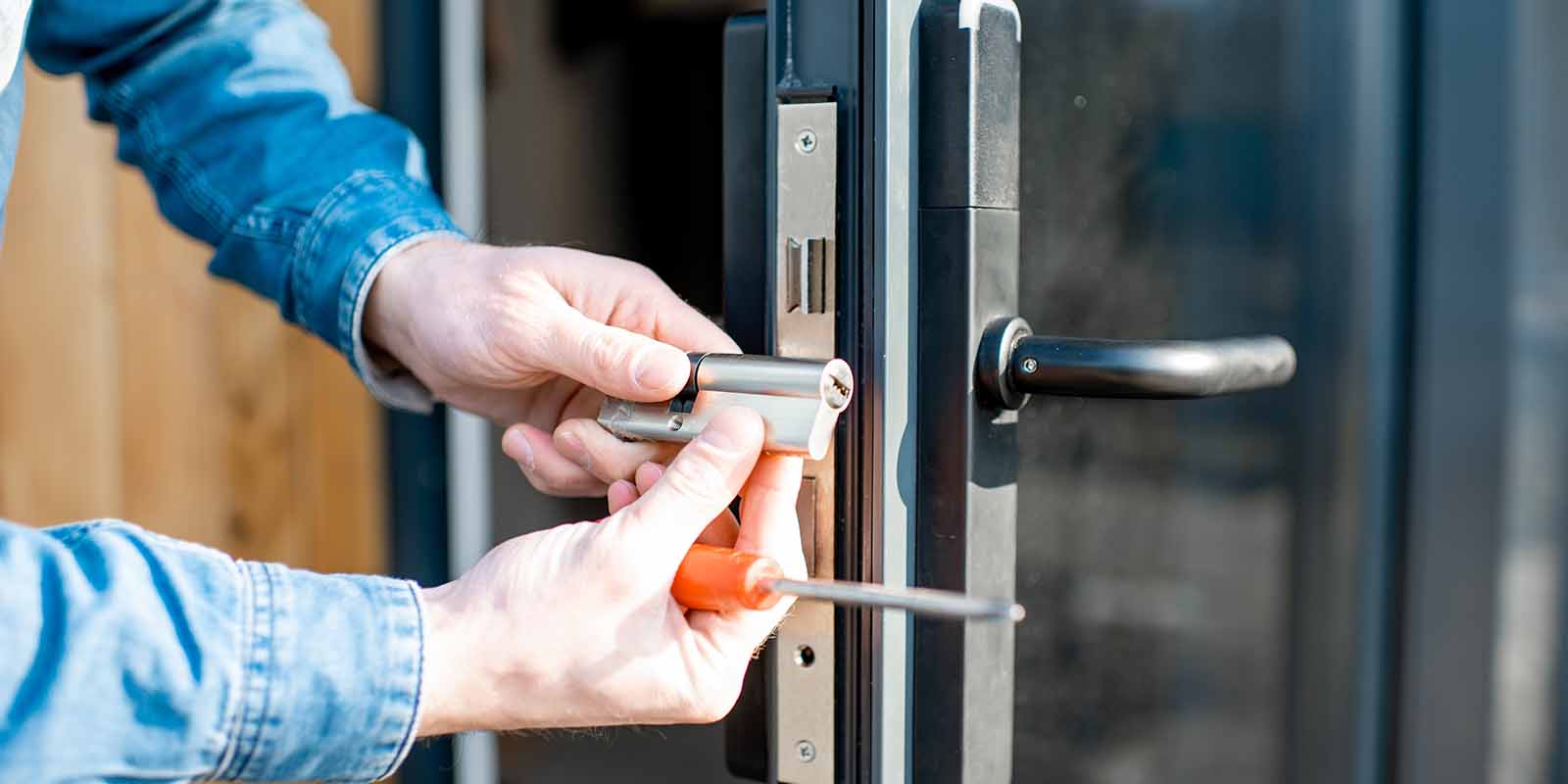
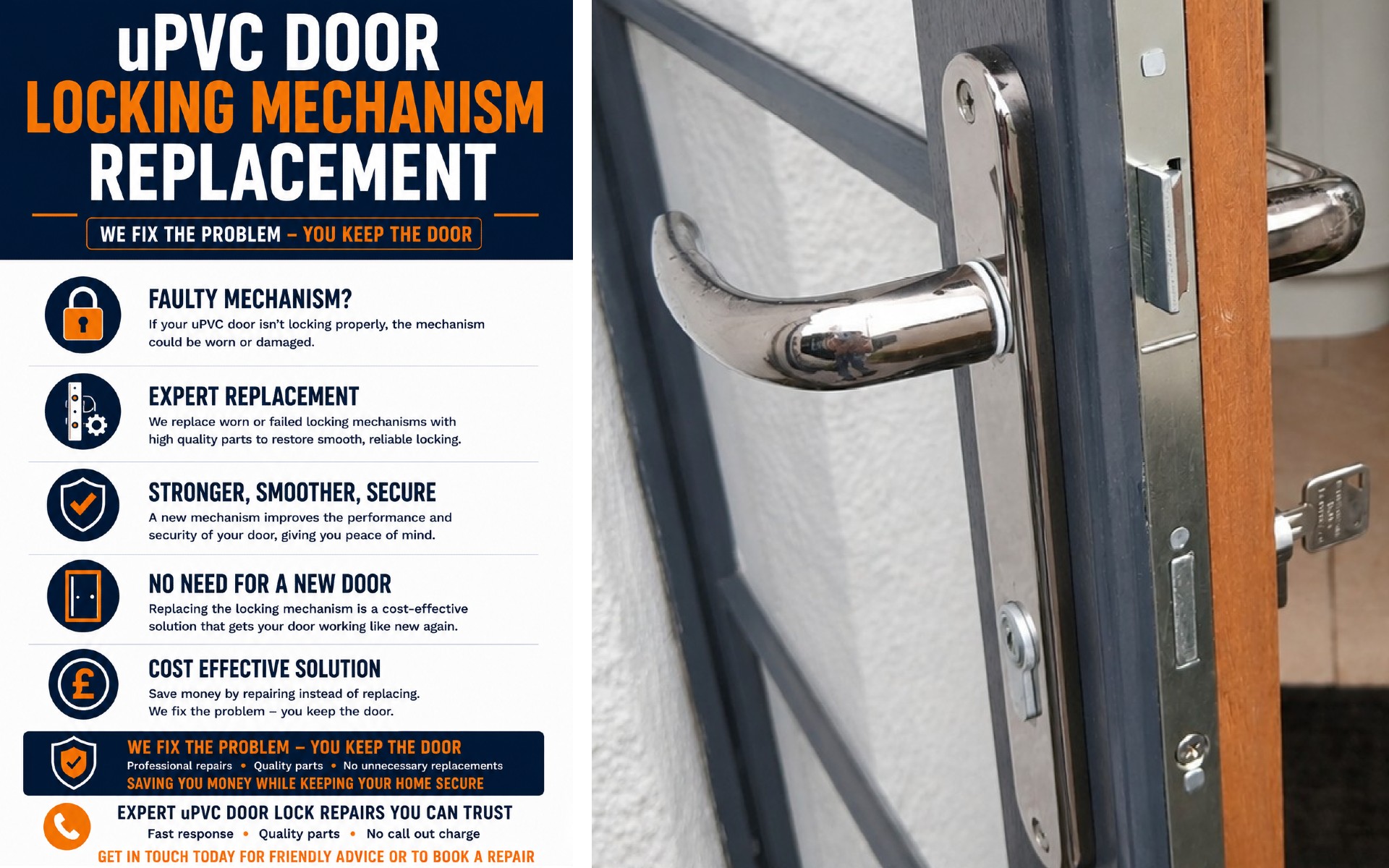
A faulty uPVC door locking mechanism doesn't always mean you need a new door. In most cases, replacing the locking mechanism restores your door's security, reliability and smooth operation at a fraction of the cost of a replacement door.
Whether your lock has failed completely or is becoming progressively more difficult to operate, replacing worn components before they fail altogether can help prevent an inconvenient lockout and avoid further damage to the locking system.
What Is a uPVC Door Locking Mechanism?
The locking mechanism is the long metal strip fitted inside the edge of a uPVC door.
It consists of several components working together, including:
- Gearbox.
- Hooks.
- Rollers.
- Deadbolts.
- Latches.
- Connecting rods.
- Faceplate.
When you lift the handle and turn the key, these components work together to secure the door at multiple points along its height, providing greater security than a traditional single-point lock.
Signs Your Locking Mechanism Needs Replacing
Most locking mechanisms give plenty of warning before they fail completely.
Common symptoms include:
- The handle is difficult to lift.
- The key is stiff or difficult to turn.
- The door won't lock properly.
- The locking points don't engage fully.
- The handle feels loose or floppy.
- Grinding, clicking or rough operation.
- The mechanism feels stiff.
- The door has become jammed.
- You need to push or pull the door to lock it.
Ignoring these warning signs can place additional strain on the mechanism and lead to more extensive repairs.
Gearbox or Complete Mechanism?
Not every fault requires replacing the entire locking strip.
If only the gearbox has failed and the remainder of the mechanism is in good condition, replacing the gearbox is often the most economical solution.
However, a complete mechanism replacement is usually recommended where there is:
- Broken connecting rods.
- Worn hooks or rollers.
- Seized locking points.
- Multiple worn components.
- Damage to the faceplate.
- An obsolete mechanism that cannot be repaired economically.
Correct diagnosis is essential to determine the most appropriate repair.
Why Locking Mechanisms Fail
Most failures aren't caused by poor-quality parts alone.
Common causes include:
- Everyday wear and tear.
- Lack of maintenance.
- Doors dropping over time.
- Poor door alignment.
- Forcing a stiff handle.
- Worn hinges.
- Seasonal expansion and contraction.
- General mechanical wear.
Many locking mechanisms fail because they've been working under constant strain for months—or even years—before finally breaking.
Door Realignment Is Essential
Replacing the locking mechanism is only part of the repair.
If the door has dropped or become misaligned, the new mechanism will continue working under unnecessary pressure every time it's used. The door may be hard to close or open.
After fitting a replacement mechanism, the door should always be checked and correctly realigned.
Proper alignment allows:
- The handle to lift smoothly.
- The key to turn freely.
- Hooks, rollers and deadbolts to engage correctly.
- Even pressure across the entire mechanism.
- Reduced strain on the gearbox.
- A longer service life for the new mechanism.
Replacing the mechanism without correcting the alignment is one of the most common reasons replacement locks fail prematurely.
Don't Assume You Need a New Door
Many homeowners are told they need a replacement uPVC door when the real problem is simply a failed locking mechanism.
In most cases, replacing the mechanism allows you to:
- Keep your existing door.
- Restore full security.
- Improve reliability.
- Avoid the expense of a replacement door.
- Extend the life of your existing door for many more years.
If the door panel and frame remain structurally sound, repairing the locking system is usually the most sensible and economical option.
Obsolete Mechanisms Can Often Be Replaced
Even if your original locking mechanism is no longer manufactured, there are often practical solutions available.
Depending on the door, it may be possible to:
- Source an identical mechanism.
- Fit a compatible replacement.
- Upgrade to a more modern mechanism.
- Replace individual components.
- Adapt suitable replacement parts where appropriate.
An obsolete mechanism doesn't automatically mean replacing the entire door.
A Professional Replacement Involves More Than New Parts
A quality repair doesn't end once the new mechanism has been fitted.
The repair should also include:
- Identifying why the original mechanism failed.
- Checking whether the gearbox alone could be replaced.
- Inspecting the condition of the handles.
- Assessing the lock cylinder.
- Checking hinges for wear.
- Realigning the door where necessary.
- Testing every locking point.
- Confirming smooth operation before completion.
Addressing the underlying cause helps ensure the replacement mechanism performs reliably for many years.
Prevent Future Lock Failures
Once your new mechanism has been installed, a little preventative maintenance can significantly increase its lifespan.
Good practice includes:
- Never forcing a stiff handle.
- Investigating locking problems early.
- Lubricating hooks, rollers and locking points periodically.
- Keeping the door correctly aligned.
- Replacing worn handles before they fail.
- Checking the lock cylinder if the key becomes stiff.
Preventative maintenance is usually far cheaper than dealing with an emergency lockout.
Repair the Door, Not Replace It
A failed uPVC door locking mechanism is one of the most common door faults, but it's rarely the end of the door itself. In most cases, replacing the gearbox or complete multipoint mechanism, together with correcting any alignment issues, will restore smooth operation and reliable security.
With the correct diagnosis, quality replacement parts and proper door realignment, most uPVC doors can continue providing many more years of dependable service without the unnecessary cost and disruption of replacing the entire door.
Related guides: