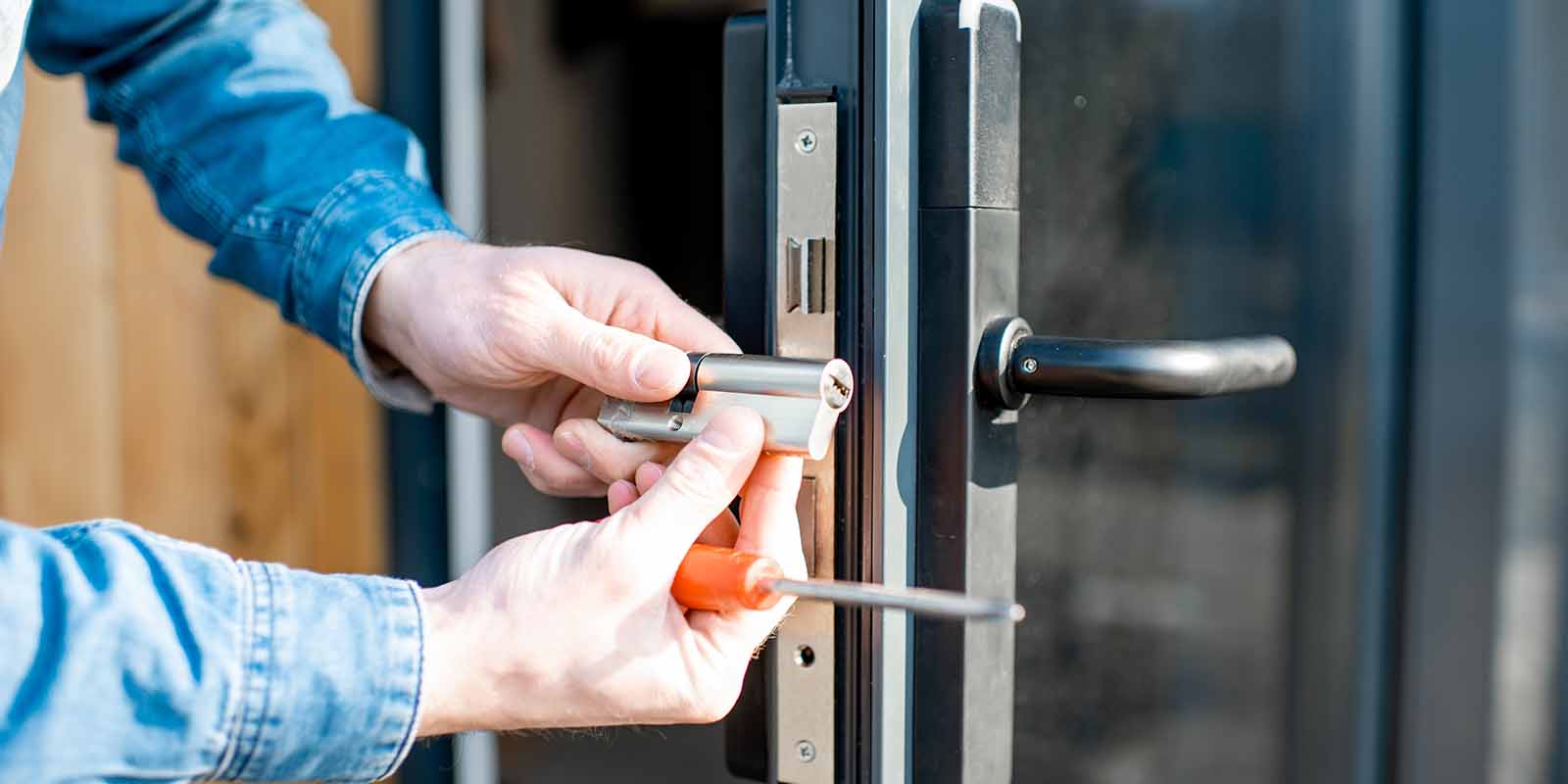
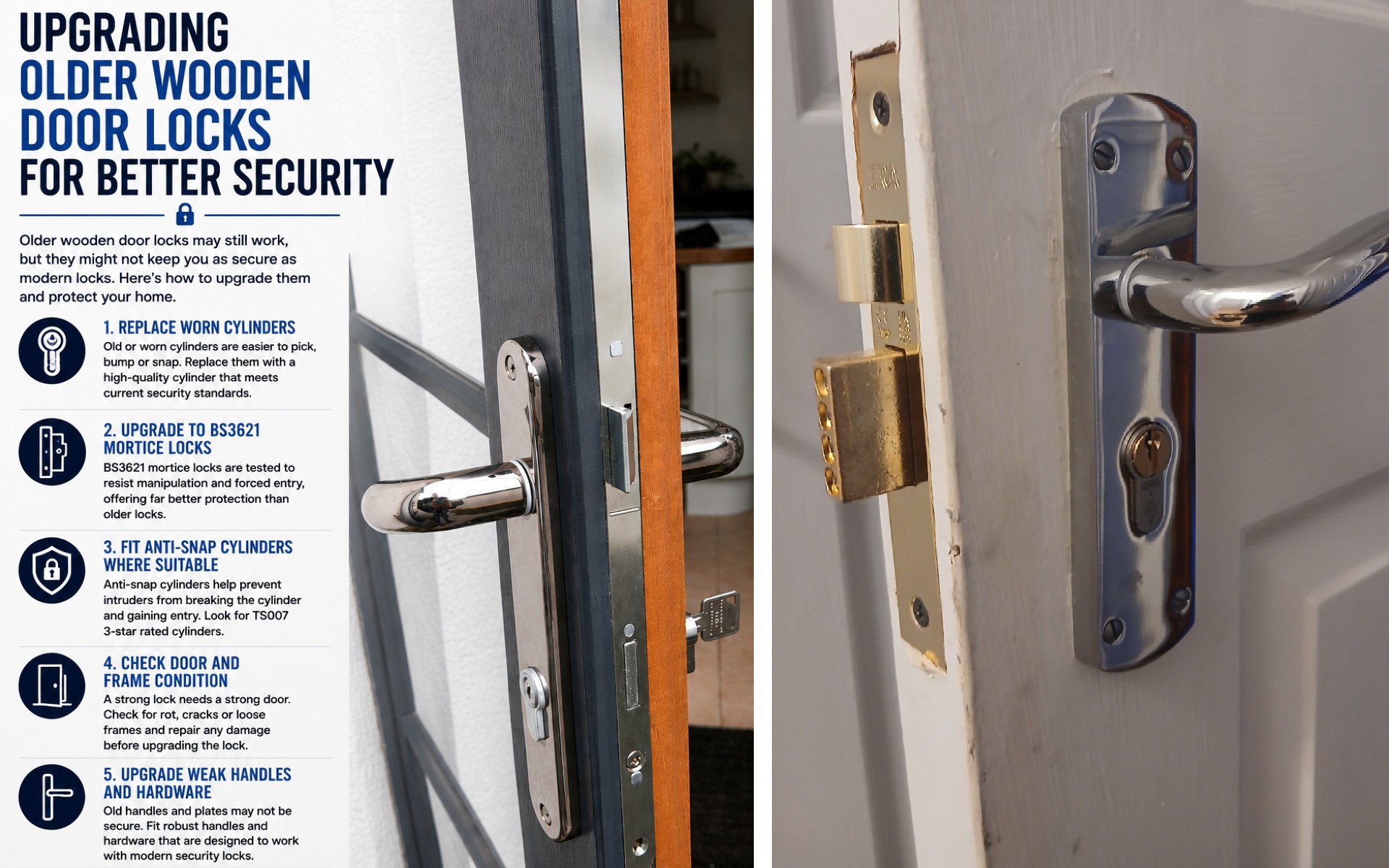
Many older wooden doors are still fitted with locks that were installed decades ago. While these locks may still work, they often don't offer the level of security expected today. Upgrading an older lock can improve security, reliability and, in some cases, help meet insurance requirements.
The good news is that most wooden doors can be upgraded without replacing the door itself.
Check What Lock You Currently Have
The first step is identifying what's fitted to the door.
Common older locks include:
- 3 Lever Mortice Locks
- Older 5 Lever Mortice Locks
- Basic Nightlatches
- Non-British Standard Locks
Many of these were acceptable when installed but may no longer provide the level of protection homeowners want today. If you're unsure which lock is best for your door, Choosing the Right Lock for a Wooden Front Door explains the most common options.
Upgrade to a BS3621 Mortice Lock
For most timber front doors, a BS3621 5 Lever Mortice Deadlock is one of the best upgrades available.
These locks feature:
- Hardened anti-drill plates.
- Strong deadbolts.
- British Standard certification.
- Improved resistance to attack.
Many insurance companies prefer or require BS3621 locks on external wooden doors. Are Your Door Locks Insurance Approved? explains why this standard is so widely recommended.
Don't Forget the Keep
A BS3621 lock is only British Standard compliant when fitted with the keep supplied by the manufacturer.
I've seen doors where a new lock was fitted but the old keep was left in place.
In that situation, the lock may no longer meet the standard it was designed to achieve.
When upgrading, the keep should always be replaced and fitted correctly.
Upgrade Older Nightlatches
Many wooden doors also have a nightlatch fitted.
Older nightlatches can often be upgraded to modern versions featuring:
- Improved security.
- Better resistance to attack.
- Automatic deadlocking features.
- British Standard approval.
A quality nightlatch paired with a BS3621 mortice lock provides an excellent level of security.
Check the Door and Frame Condition
Even the best lock won't perform properly if the door or frame is in poor condition.
Check for:
- Loose hinges.
- Rotting timber.
- Split frames.
- Damaged keeps.
- Loose handles.
The strength of the door is just as important as the strength of the lock. If the door itself is showing signs of wear, Repair vs Replace: What's Best for Your Door? explains when repairs are a better option than replacement.
Consider Key Control
Many older locks have had numerous keys cut over the years.
If you've moved into the property or don't know who has copies, a lock upgrade gives you the opportunity to start fresh with a new set of keys. Why Change the Locks When Moving Into a New Home? explains why this is recommended even when the existing locks appear to be in good condition.
Improve Security Without Replacing the Door
One of the biggest misconceptions is that an older wooden door needs replacing to improve security.
In reality, upgrading:
- Mortice locks.
- Nightlatches.
- Keeps.
- Handles.
- Hinges.
can significantly improve security while retaining the original door. In many cases, this is one of the most cost-effective ways to improve home security, as explained in Home Security Improvements That Don't Cost a Fortune.
Signs Your Lock May Need Upgrading
Consider replacing the lock if:
- The key is becoming stiff.
- The lock is decades old.
- You've lost keys.
- The lock isn't BS3621 rated.
- The lock has been forced or damaged.
- You're unsure who has copies of the keys.
If your lock is showing signs of age, Signs Your Lock Is Wearing Out explains the warning signs that shouldn't be ignored.
Security and Reliability
Modern locks are not only more secure but often more reliable than older worn mechanisms. An upgrade can improve day-to-day operation while giving you greater confidence that your front door is properly protected. If you're planning a lock replacement, What Happens During a Professional Lock Change? explains the process and what you can expect during the upgrade.