The lifespan of a door lock depends on the type of lock, how often it's used and whether the door is properly maintained. While some locks can last for decades, others may begin showing signs of wear much sooner, particularly if they're subjected to heavy use or poor door alignment.
A lock rarely fails without warning, and understanding its expected lifespan can help you avoid unexpected problems.
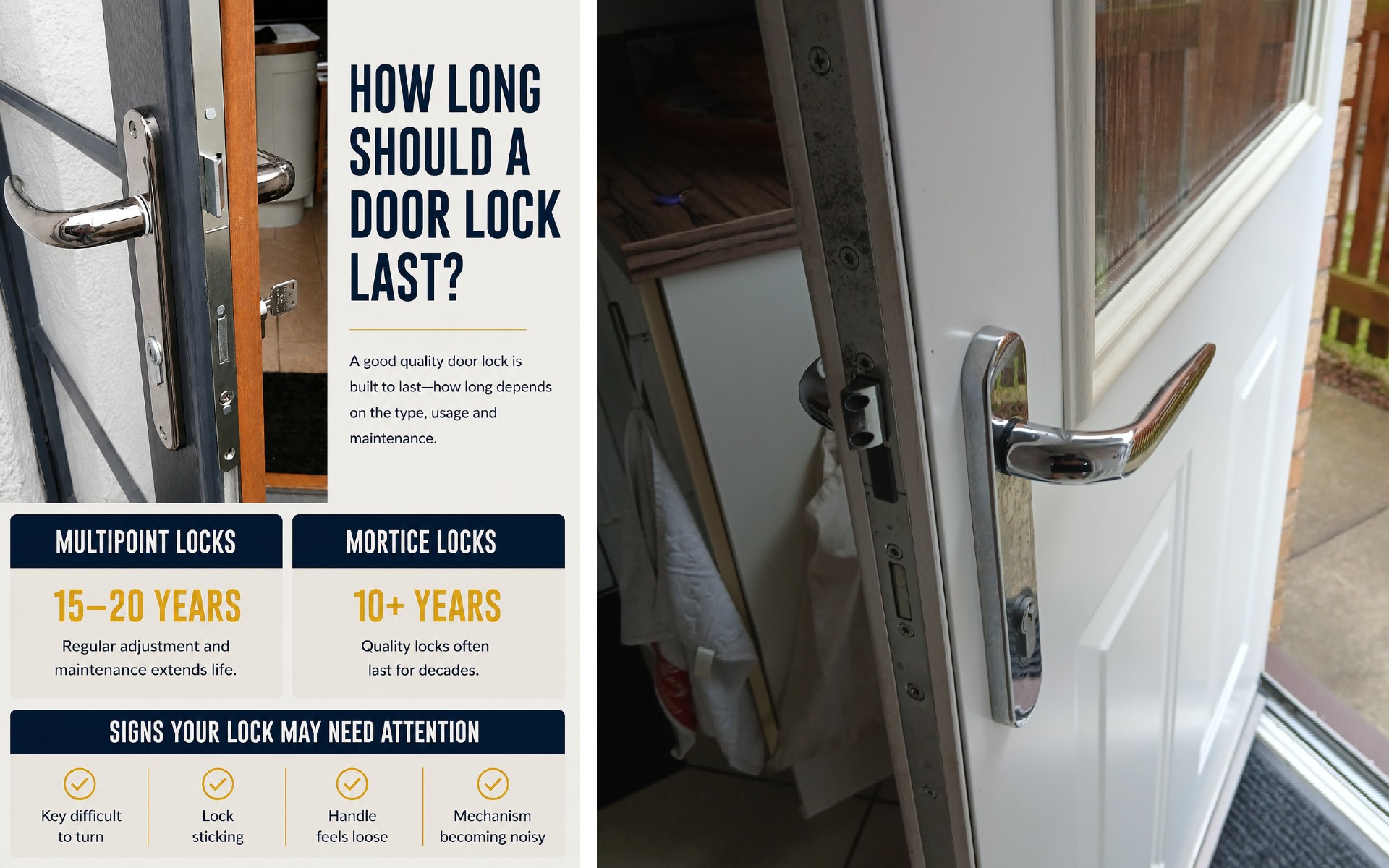
Multipoint Locks
Most uPVC and composite doors use multipoint locking mechanisms.
A quality multipoint lock will often last:
15–20 years or more
However, lifespan can be reduced by:
- Dropped doors.
- Poor alignment.
- Lack of maintenance.
- Heavy daily use.
- Forcing stiff handles.
In many cases, the gearbox will wear out before the rest of the mechanism. Correcting alignment problems early can significantly extend the life of the lock.
Mortice Locks
Mortice locks fitted to timber doors are generally very durable.
A good-quality mortice lock can often last:
10 years or more
Many older locks remain operational for much longer, although improving security or meeting modern insurance standards may justify replacement before complete failure. If you have an older timber door, Upgrading Older Wooden Door Locks for Better Security explains the benefits of upgrading.
Lock Cylinders
Euro cylinders typically have a shorter lifespan than the mechanisms they operate.
You may consider replacement if:
- The key becomes stiff.
- The cylinder is worn.
- The lock is outdated.
- Security improvements are desired.
Often, cylinders are replaced for security reasons long before they actually fail. If you've recently moved home or misplaced a key, replacing the cylinder is often recommended regardless of its age.
Handles Don't Last Forever
Door handles are one of the most frequently used components on any door.
Over time you may notice:
- Loose handles.
- Drooping handles.
- Broken springs.
- Excessive movement.
Replacing worn handles can help reduce strain on the locking mechanism and prevent further damage.
Door Alignment Affects Lifespan
One of the biggest factors affecting lock life is door alignment.
When a door drops:
- The locking points rub against the frame.
- The gearbox works harder.
- Handles experience more stress.
- Internal wear accelerates.
A properly aligned door can significantly extend the life of the entire locking system. Many locks that appear to have failed are simply suffering from years of unnecessary strain caused by a dropped door.
Signs a Lock Is Wearing Out
Watch for:
- Stiff keys.
- Difficulty locking.
- Rough operation.
- Handles not returning properly.
- Hooks not retracting fully.
- Unusual noises from the mechanism.
These are often early warning signs that a component is approaching the end of its service life. Signs Your Lock Is Wearing Out explains these symptoms in more detail.
Maintenance Makes a Difference
Simple maintenance can add years to a lock's lifespan.
This includes:
- Lubricating locking points.
- Adjusting dropped doors.
- Replacing worn handles.
- Investigating stiffness early.
- Using well-cut keys.
Many lock failures could have been prevented by dealing with small problems sooner. Regular maintenance is also one of the easiest ways to improve security without spending a fortune, as explained in Home Security Improvements That Don't Cost a Fortune.
Replacement Isn't Always Necessary
Just because a lock is old doesn't mean it needs replacing.
Many older locks continue to operate perfectly well. The important thing is how the lock performs rather than its age alone.
However, if the lock is becoming unreliable or no longer meets modern security standards, replacement may be worthwhile. In many cases, replacing a worn lock is far more cost-effective than waiting for it to fail completely. Repair vs Replace: What's Best for Your Door? explains when repair is appropriate and when replacement is the better option.
A Well-Maintained Lock Can Last for Years
Most door locks provide many years of reliable service when fitted correctly and maintained properly. Keeping the door aligned, addressing faults early and carrying out occasional maintenance can significantly increase the lifespan of both the lock and the door mechanism. If replacement does become necessary, What Happens During a Professional Lock Change? explains what's involved, while Security Checks Every Homeowner Should Carry Out can help you spot potential problems before they develop into expensive repairs.