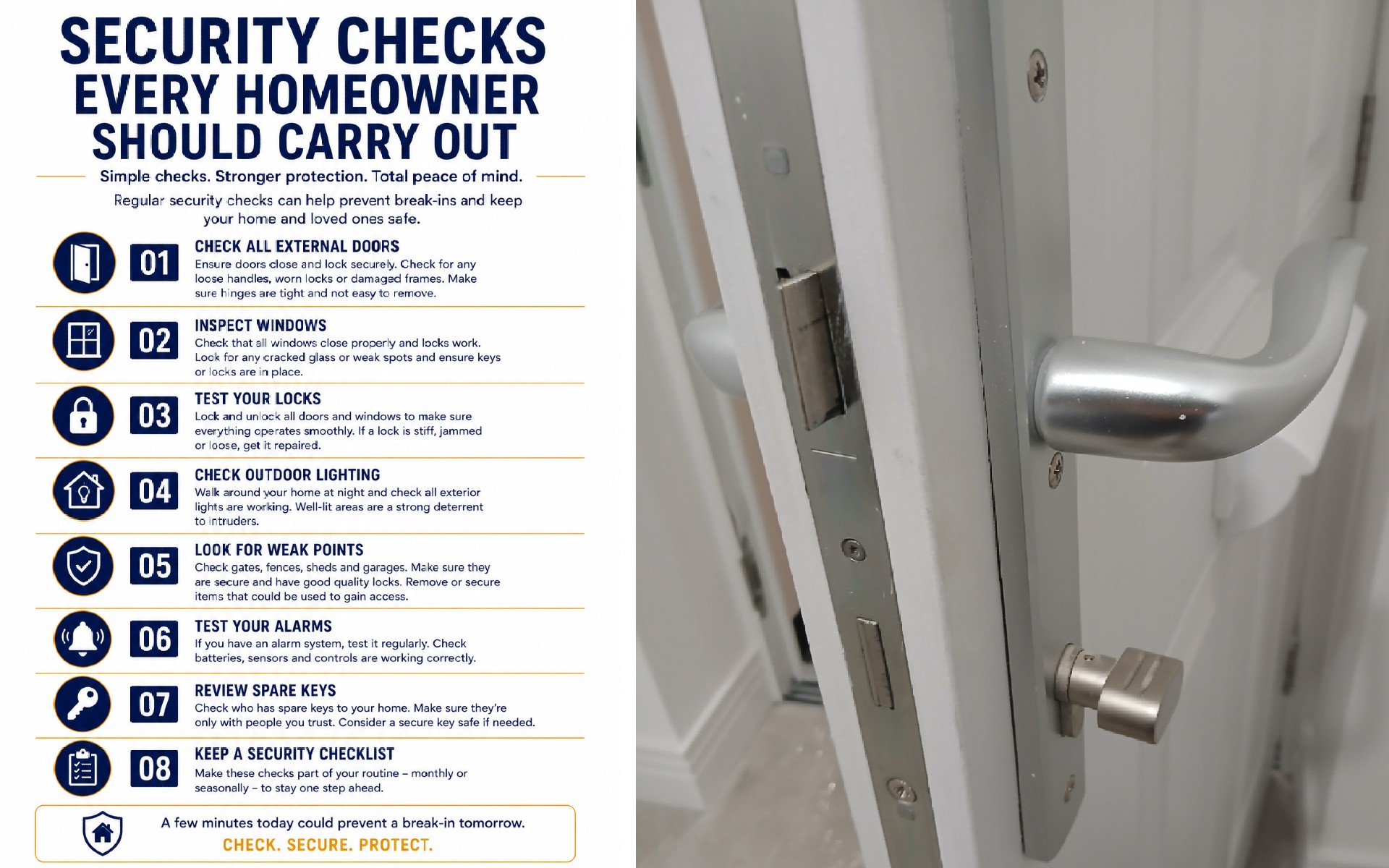
Most homeowners don't think about their locks and doors until something goes wrong. However, a few simple security checks carried out every few months can help identify weaknesses before they become a problem.
Many break-ins exploit basic security flaws that could have been corrected quickly and cheaply.
Check Your Lock Cylinders
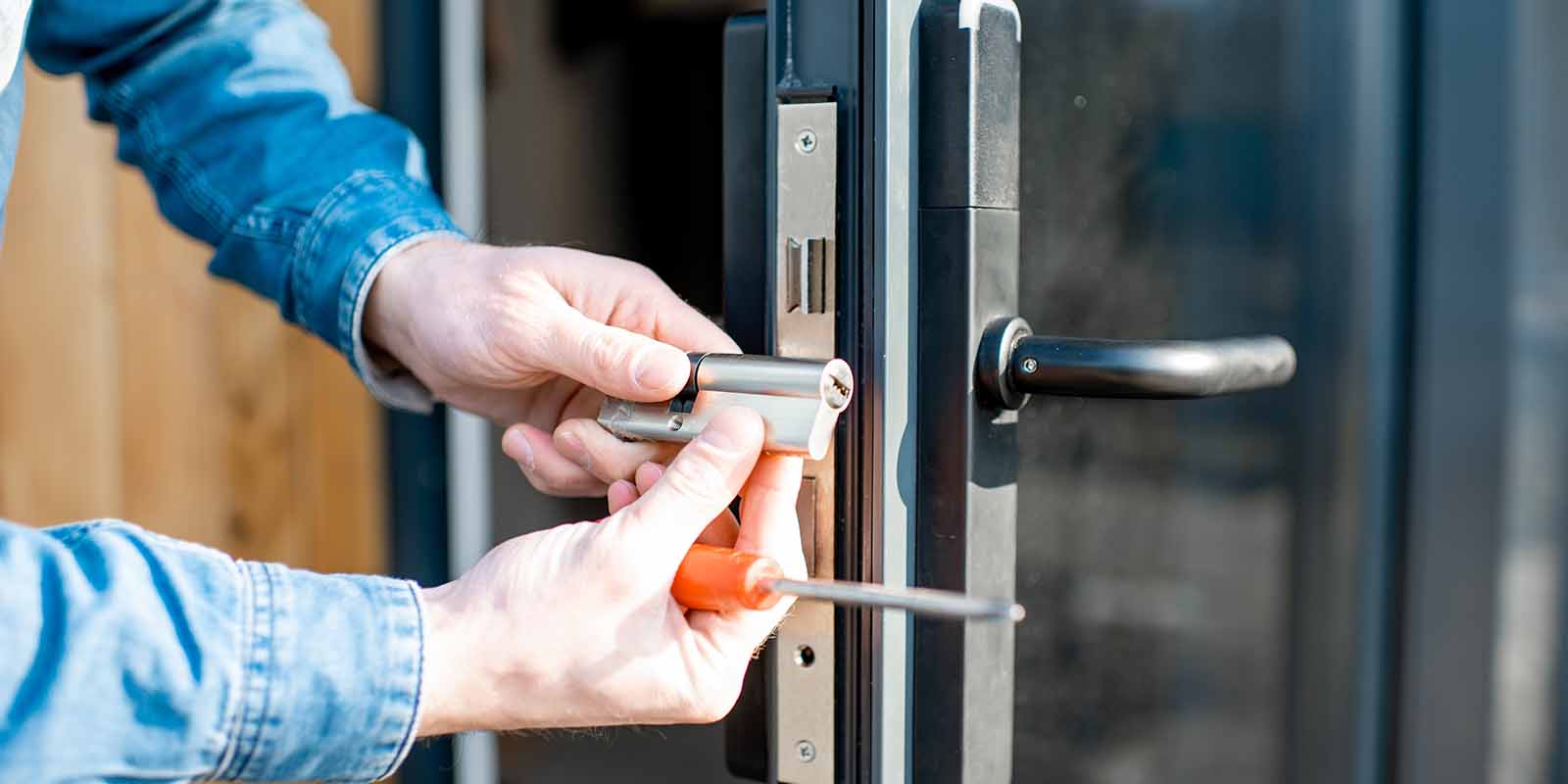
Take a look at the lock cylinder on your uPVC or composite door.
Ask yourself:
- Does the lock protrude beyond the handle?
- Is it an older standard cylinder?
- Does it show signs of wear or damage?
If the cylinder sticks out excessively, it may be worth replacing it with a correctly sized, high-security cylinder. If you're unsure whether your current locks offer adequate protection, Are Your Door Locks Insurance Approved? explains what to look for.
Test Every Door Lock
Open and close each external door and check:
- Does the key turn smoothly?
- Does the handle lift easily?
- Do all locking points engage properly?
- Does the lock operate without force?
A lock that feels stiff today could become a lockout tomorrow. Signs Your Lock Is Wearing Out explains the warning signs that shouldn't be ignored.
Check for Door Alignment Issues
Look for signs that a door may have dropped:
- The door catches the frame.
- The handle is difficult to lift.
- The key feels stiff.
- Draughts are present.
- You have to push or pull the door to lock it.
Alignment issues are one of the leading causes of gearbox and mechanism failures, and correcting them early can prevent more costly repairs.
Inspect Door Handles
Check that handles:
- Are secure.
- Return to their resting position.
- Do not wobble.
- Are not pulling away from the door.
Loose or worn handles can place extra strain on the locking mechanism and should be repaired before they fail completely.
Check French and Patio Doors
Many homeowners focus on the front door and overlook other access points.
Ensure:
- Slave doors lock correctly.
- Top and bottom bolts engage fully.
- Handles operate smoothly.
- Locks are secure.
Remember, burglars often choose the easiest route into a property.
Inspect Window Locks
Check that window locks:
- Operate correctly.
- Lock securely.
- Are not damaged.
- Have keys available if required.
Ground-floor windows should never be overlooked when assessing home security.
Review Spare Key Storage
If you keep a spare key outside, ask yourself whether it's really secure.
Common hiding places such as:
- Under mats.
- Under flower pots.
- In fake rocks.
- Above door frames.
are well known and should be avoided. If you've misplaced a key, Should You Change Locks After Losing a House Key? explains when replacing the lock is the safest option.
Check External Lighting
Good lighting can be an effective deterrent.
Make sure:
- Security lights work correctly.
- Motion sensors activate properly.
- Entrance areas are well illuminated.
Combined with secure doors and quality locks, good lighting helps make your property a less attractive target.
Inspect Garages and Outbuildings
Garages and sheds often contain valuable tools that can be used to attack other locks around the property.
Check:
- Garage locks.
- Side doors.
- Garden gates.
- Shed security.
These areas are often overlooked but can provide easy access if left unsecured.
Look for Signs of Wear
Pay attention to:
- Rust.
- Corrosion.
- Loose fixings.
- Damaged letterboxes.
- Cracked handles.
- Worn hinges.
Small problems are usually easier and cheaper to fix than major failures. If you're unsure whether a repair or replacement is the best option, Repair vs Replace: What's Best for Your Door? explains how to decide.
Don't Forget to Lock Up
One of the simplest security checks is also one of the most important.
Make sure doors are fully locked and all locking points are engaged. Many multipoint doors require the handle to be lifted before turning the key. Simply closing the door may not fully secure it. If you've recently moved into a new property, Moved Into a New Home? Consider a Lock Change explains why replacing the locks should also be high on your checklist.
A Few Minutes Can Make a Big Difference
Carrying out a basic security inspection a few times a year can help identify worn locks, alignment issues and potential vulnerabilities before they lead to expensive repairs or security concerns. Many of these checks take only a few minutes, yet they can significantly improve your home's security and help you avoid unexpected lock failures. If you're looking for more simple ways to improve your property's security, Home Security Improvements That Don't Cost a Fortune offers practical ideas that don't require a large budget.