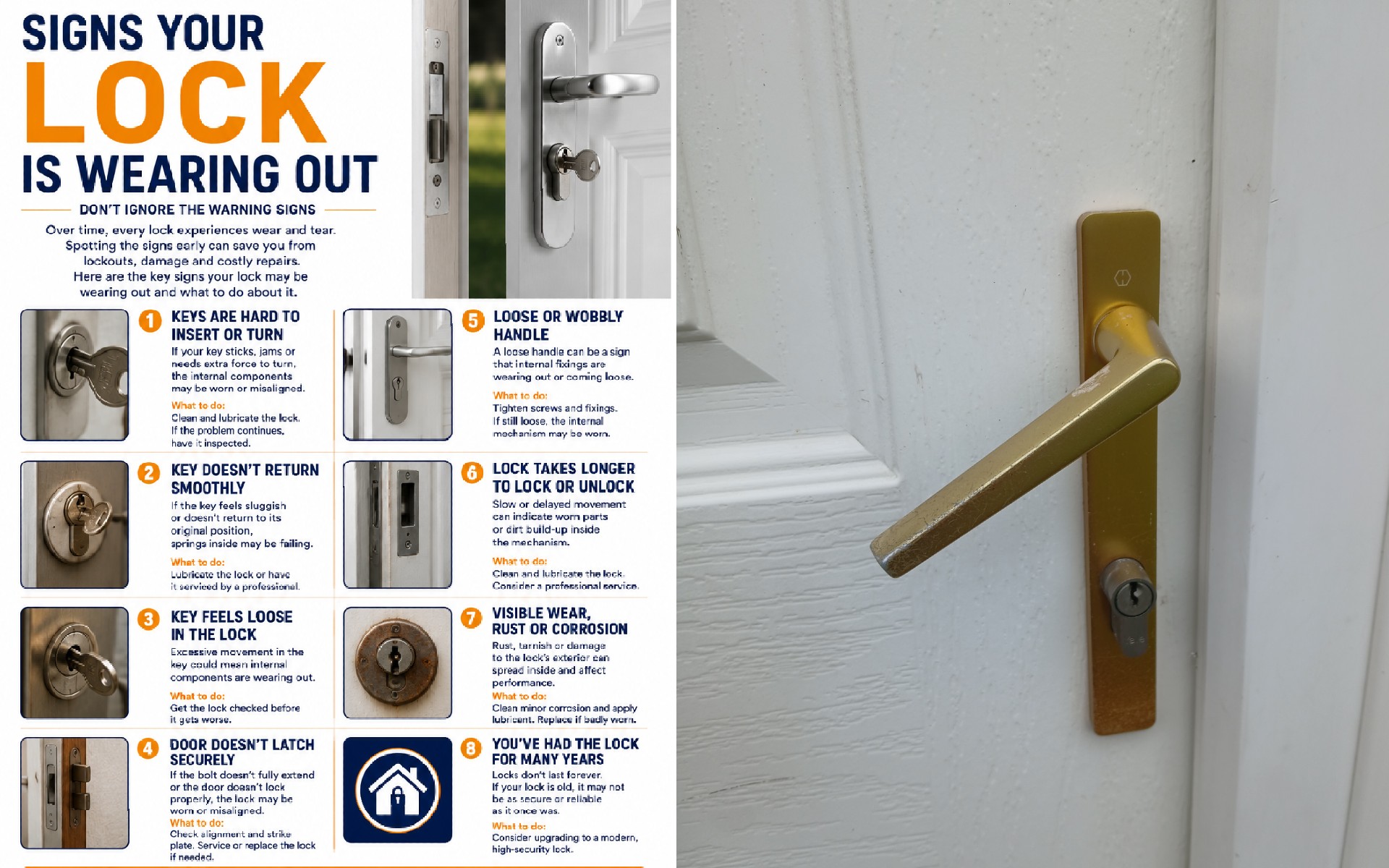
Like any mechanical component, door locks wear over time. Most locks don't suddenly fail without warning. Instead, they usually give several signs that something isn't right. Recognising these warning signs early can help prevent lockouts, jammed doors and expensive emergency repairs.
The Key Is Becoming Harder to Turn
One of the first signs of a worn lock is increased resistance when turning the key.
You may notice:
- The key feels stiff.
- The key needs wiggled to work.
- The lock feels rough.
- Extra force is needed to lock or unlock the door.
While this can sometimes be caused by door alignment issues, it can also indicate wear inside the lock cylinder. If the problem only occurs when the door is closed, the fault may not be the lock at all.
The Lock Works Intermittently
A lock that works sometimes and not others is often nearing the end of its service life.
Common symptoms include:
- The key works from one side but not the other.
- The lock occasionally sticks.
- The key doesn't engage every time.
- The lock feels inconsistent.
These faults rarely improve on their own and are usually an indication that the lock should be inspected before it fails completely.
The Key Is Difficult to Remove
If your key becomes difficult to pull out after unlocking the door, the lock may be wearing internally.
This can be caused by worn pins, springs or other components inside the cylinder. It can also be caused by a door that's no longer correctly aligned, so it's worth identifying the real cause before replacing any parts.
Visible Wear or Damage
Take a look at the lock itself.
Signs of wear include:
- Corrosion or rust.
- Scratches around the keyway.
- Loose cylinders.
- Cracks in the lock body.
- Signs of previous attack attempts.
Any visible damage should be investigated before it worsens.
The Lock Feels Loose
A cylinder should feel secure within the door.
If the lock moves excessively when the key is inserted or turned, it may indicate:
- A loose fixing screw.
- Wear within the cylinder.
- Damage caused by attempted forced entry.
A loose lock should never be ignored, as it can affect both security and reliability.
You've Been Using Poorly Cut Keys
Badly cut keys can accelerate lock wear.
Over time they can damage:
- Pins.
- Springs.
- Internal chambers.
If you've noticed several poorly cut copies being used, the lock may be suffering from premature wear.
The Door Has Become Harder to Lock
Sometimes the lock isn't actually worn out, but years of strain from a misaligned door can cause excessive wear on both the cylinder and mechanism.
If you need to:
- Push the door.
- Pull the door.
- Lift the handle harder than normal.
the lock may be working under constant stress. A simple door adjustment carried out early can often prevent much more expensive repairs later.
The Lock Is Several Years Old
Many locks provide years of reliable service, but age eventually catches up with them.
Older locks may lack modern protection against:
- Lock snapping.
- Drilling.
- Picking.
- Bumping.
Even if they still work, upgrading can improve both security and reliability. If you're unsure whether your current locks meet modern standards, Are Your Door Locks Insurance Approved? explains what to look for.
The Lock Has Already Been Repaired Multiple Times
If the same lock continues developing faults, replacement is often the most sensible option.
Repeated repairs may cost more in the long run than fitting a new, higher-security cylinder. What Happens During a Professional Lock Change? explains what's involved when replacing a worn lock.
Don't Wait for Complete Failure
Many emergency lockouts begin with a lock that was showing warning signs for weeks or months.
A lock replacement carried out at a convenient time is usually far less stressful than dealing with a failed lock when you're unable to secure your home. If you've already noticed stiffness or inconsistent operation, How Long Should a Door Lock Last? explains when replacement becomes the more cost-effective option. For homeowners looking to improve security at the same time, Home Security Improvements That Don't Cost a Fortune outlines some of the best-value upgrades you can make.