Introduction
Most homeowners rarely think about their door locks until something goes wrong. If the key turns and the handle lifts, it's easy to assume everything is working as it should. However, locks and multipoint locking mechanisms are mechanical systems that experience wear every time the door is opened or locked.
Regular servicing helps keep the entire locking system operating smoothly, reduces unnecessary strain on moving parts and allows developing faults to be identified before they become expensive repairs. In many cases, a simple adjustment or lubrication carried out at the right time can prevent a complete lock failure.
General Recommendation
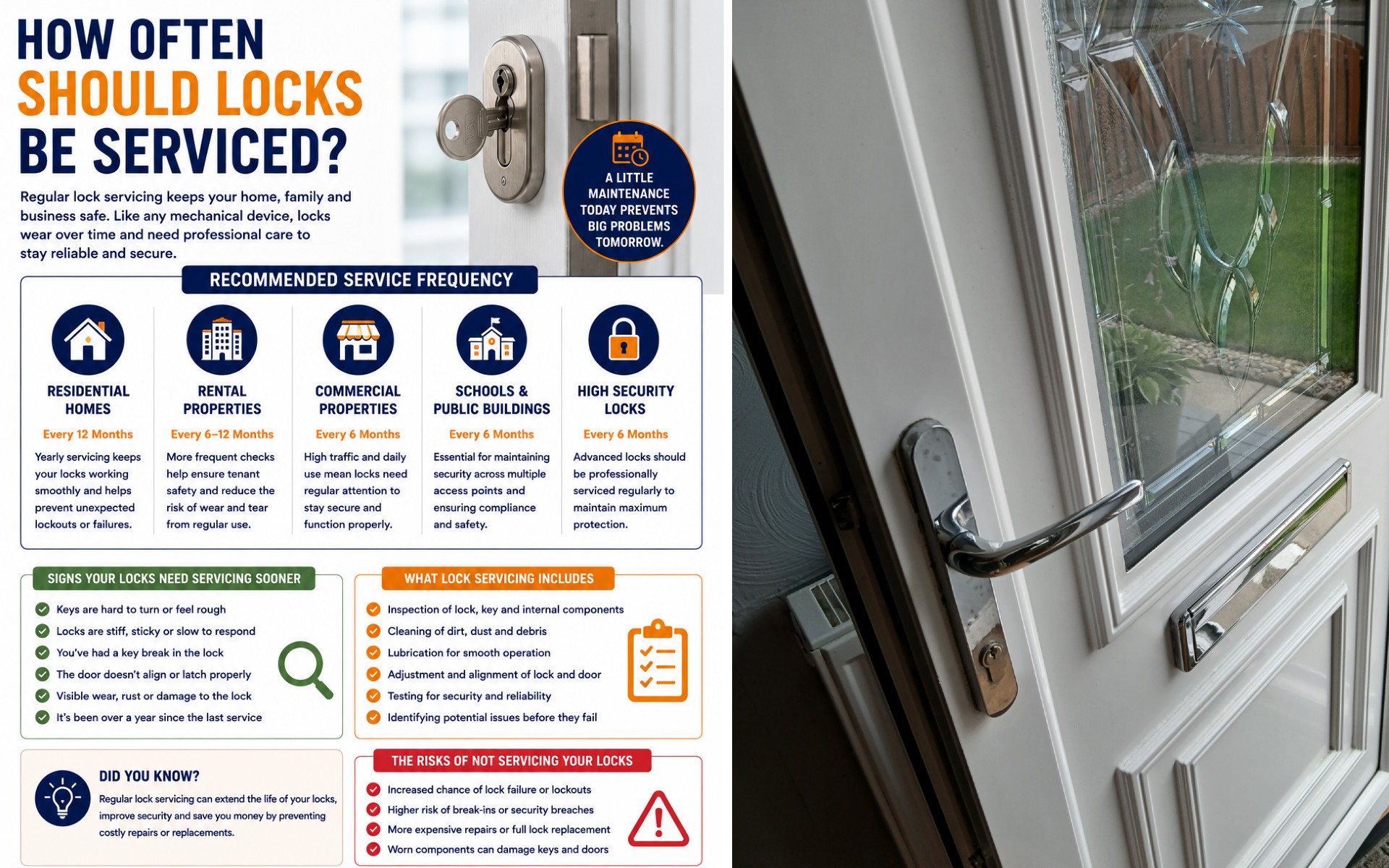
For the average home, a door lock and multipoint locking mechanism should be serviced approximately every 12 months.
An annual inspection allows the condition of the lock, handles, hinges and door alignment to be checked before excessive wear develops. It also provides an opportunity to lubricate moving parts and identify any components beginning to deteriorate.
Routine servicing is particularly worthwhile for uPVC and composite doors, where poor alignment can place additional strain on the locking mechanism over time.
High-Use Doors Need More Frequent Servicing
Some doors are subjected to far more use than others. The more often a locking mechanism operates, the faster normal wear occurs.
Doors that may benefit from servicing every six months include:
- Main entrance doors.
- Busy family homes.
- Rental properties.
- HMOs.
- Commercial premises.
- Offices and communal entrances.
Regular inspections help identify developing problems before they result in lockouts or failed components.
What Does a Door Lock Service Include?
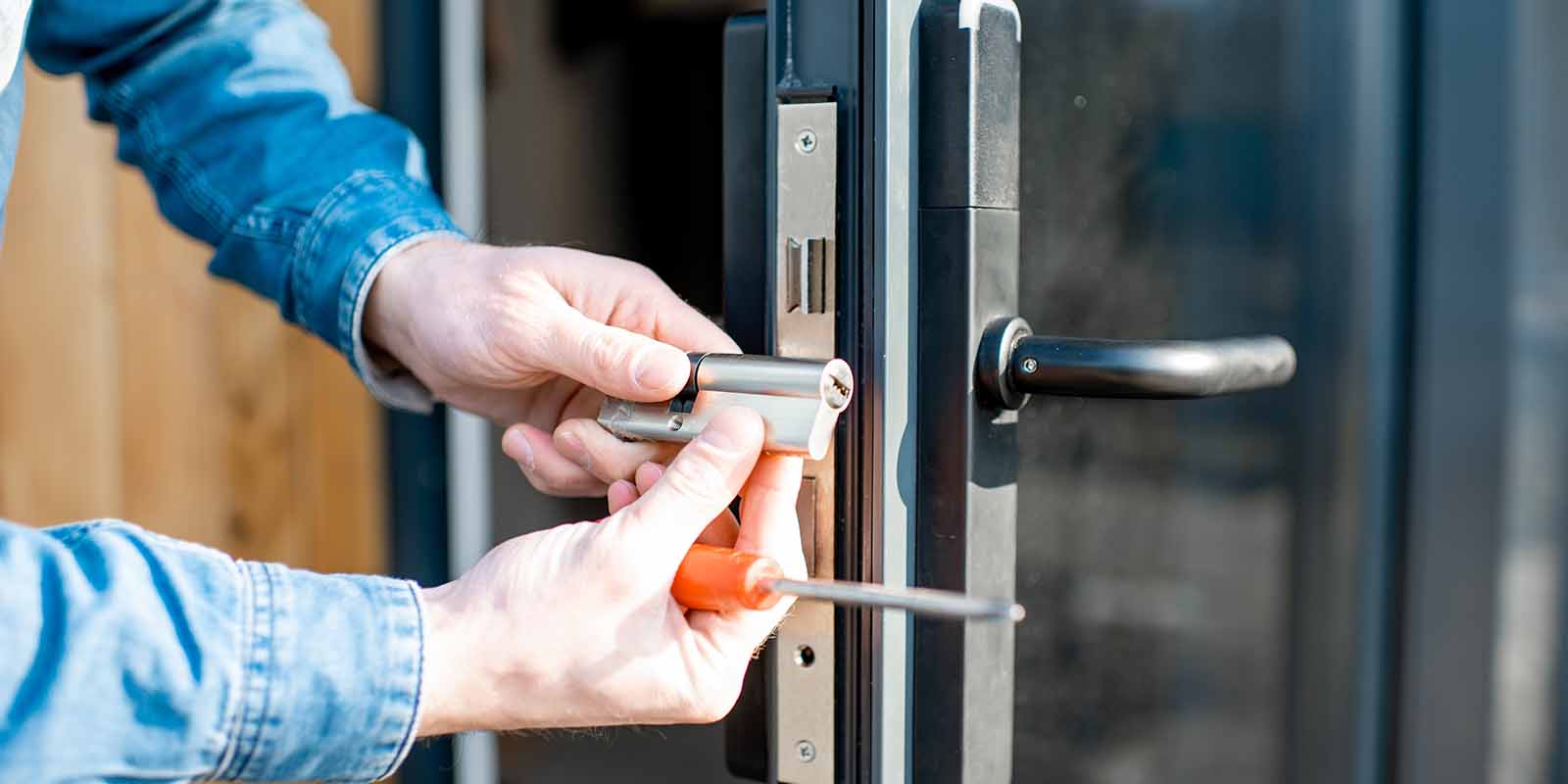
A professional lock service involves much more than simply spraying lubricant into the keyhole.
Typical servicing includes:
- Checking the door is correctly aligned.
- Inspecting hinges for wear or movement.
- Testing handle operation.
- Lubricating hooks, rollers, latches and moving components.
- Inspecting the lock cylinder.
- Checking the gearbox for signs of wear.
- Inspecting frame keeps.
- Ensuring every locking point engages correctly.
- Identifying worn or damaged components.
The objective is to ensure the entire locking system operates smoothly and without unnecessary resistance.
Warning Signs Your Lock Needs Attention
You should not wait for the next scheduled service if your door begins showing signs of difficulty.
Common warning signs include:
- The key becoming stiff to turn.
- Difficulty lifting the handle.
- The handle not returning properly.
- The door catching on the frame.
- Needing to push or pull the door to lock it.
- Locking points feeling rough or uneven.
- Draughts appearing around the door.
These symptoms often indicate developing alignment or mechanism problems that are easier and less expensive to repair before a complete failure occurs.
Why Door Alignment Is So Important
Many homeowners assume a stiff lock means the lock itself has worn out. In reality, poor door alignment is one of the most common causes of lock problems.
As a door gradually drops or shifts, the locking points no longer line up perfectly with the keeps in the frame. This forces the gearbox and handles to work much harder every time the door is locked.
Over time, this extra strain can lead to:
- Gearbox failure.
- Broken handles.
- Worn locking points.
- Premature lock cylinder wear.
Regular servicing helps identify alignment issues before they cause damage.
Lubrication Reduces Wear
Every multipoint locking mechanism contains numerous moving parts.
Hooks, rollers, deadbolts and latches all rely on smooth movement to operate correctly. As lubricant dries out and dirt accumulates, friction increases throughout the mechanism.
Applying the correct lubricant during routine servicing helps:
- Reduce operating resistance.
- Protect moving components.
- Minimise wear.
- Improve handle operation.
- Extend the life of the locking mechanism.
Only suitable lock lubricants should be used, as incorrect products can attract dirt or damage certain components.
Older Doors Benefit from More Regular Checks
As doors age, the likelihood of wear naturally increases.
If your door is more than ten years old, periodic inspections become increasingly valuable.
Older locking mechanisms may begin to develop:
- Internal wear.
- Corrosion.
- Seized locking points.
- Weak handle springs.
- Gearbox deterioration.
- Worn keeps and hinges.
Finding these issues early often allows repairs to be carried out before the mechanism fails completely.
Prevention Is Better Than Emergency Repairs
Many emergency locksmith visits involve faults that have been developing for weeks or months.
Ignoring a stiff handle or slightly difficult lock can eventually result in:
- Doors that will not lock.
- Doors that will not open.
- Failed gearboxes.
- Broken handles.
- Snapped keys.
- Costly emergency repairs.
Routine servicing is usually far less expensive than replacing damaged components after a complete failure.
Smart Locks Can Be More Expensive to Repair
If your door is fitted with a smart lock, regular servicing becomes even more important.
Many smart locks still rely on the door's existing multipoint locking mechanism to secure the door. If the door becomes misaligned or the mechanism starts to wear, the additional resistance can place extra strain on both the mechanical and electronic components.
Smart locks are also generally more expensive to replace than traditional handles or cylinders. Depending on the model, repairs may involve replacing electronic components, batteries or specialist parts that are not always readily available.
Keeping the door correctly aligned and the multipoint locking mechanism operating smoothly can help extend the life of a smart lock and reduce the likelihood of costly repairs. Regular maintenance protects not only the locking mechanism but also your investment in the smart lock itself.
Conclusion
Like any mechanical system, door locks benefit from regular maintenance. An annual service is sufficient for most homes, while doors that receive heavy daily use may require more frequent inspections. By checking alignment, lubricating moving parts and identifying worn components early, homeowners can reduce unnecessary wear, avoid inconvenient lock failures and significantly extend the life of their multipoint locking mechanism. A small amount of preventative maintenance today can help avoid a much larger repair bill in the future.