Introduction
French doors are a popular choice for homeowners, offering excellent natural light and easy access to gardens and patios. Like any external door, however, they rely on a number of moving components working together correctly. As these parts wear or the doors move out of alignment, locking problems can begin to appear.
Many homeowners assume the lock itself has failed, but in reality the cause is often something much simpler. The earlier the problem is identified, the easier and less expensive it is usually to repair.
Door Alignment Issues
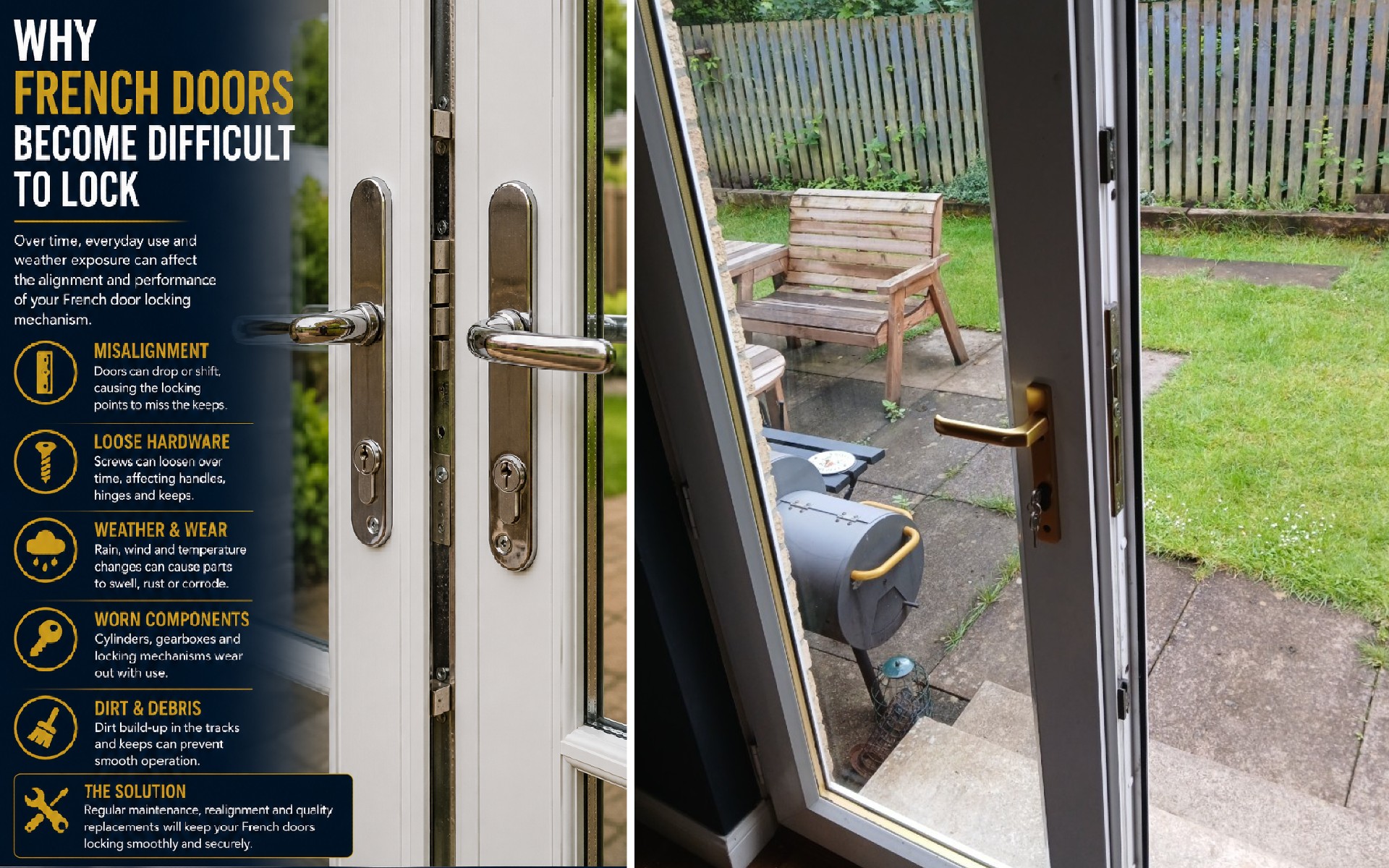
Poor alignment is the most common reason French doors become difficult to lock.
Over time the doors can move slightly because of:
- Daily use.
- Worn hinges.
- Seasonal expansion and contraction.
- Minor building movement.
- The weight of the door.
Even a few millimetres of movement can prevent the locking points from lining up correctly with the keeps on the frame.
Common signs include:
- Difficulty lifting the handle.
- The need to push or pull the door before locking.
- A stiff key.
- Doors catching the frame.
- Doors wont open properly.
- Uneven gaps between the doors.
Correct alignment reduces strain on the locking mechanism and helps extend its lifespan.
A Dropped Slave Door
French doors consist of two door leaves:
- The master door, which contains the main lock and handle.
- The slave door, which is secured using top and bottom locking bolts or a secondary locking mechanism.
If the slave door drops slightly or no longer locks securely into the frame, it can affect:
- Overall door alignment.
- Lock engagement.
- Handle operation.
- Security.
- Weather sealing.
It's common for the master lock to be blamed when the real fault lies with the secondary door.
Worn Multipoint Locking Mechanism
Most French doors use a multipoint locking system to secure the door at several points along its height.
Over time, components such as the:
- Hooks.
- Rollers.
- Mushrooms.
- Deadbolts.
- Internal linkages.
can wear through years of daily use.
Typical symptoms include:
- A heavy handle.
- Difficulty engaging the locking points.
- Rough operation.
- Inconsistent locking.
- The door feeling stiff when closed.
Failed Gearbox
The gearbox is the operating centre of the multipoint lock.
It converts the movement of the handle and key into the locking action that operates every locking point.
As it wears you may notice:
- The handle lifting but nothing happening.
- Locking points failing to engage.
- A stiff or inconsistent key.
- The handle feeling loose.
- The key turning without fully locking the door.
In many cases, replacing the gearbox is far more economical than replacing the complete mechanism.
Worn or Broken Handles
Door handles are another common source of locking problems.
Look for:
- Drooping handles.
- Broken return springs.
- Loose backplates.
- Excessive movement.
- Handles that don't return to the horizontal position.
Quality sprung handles help support the gearbox by returning the handle after use, reducing unnecessary strain on the mechanism.
Lock Cylinder Problems
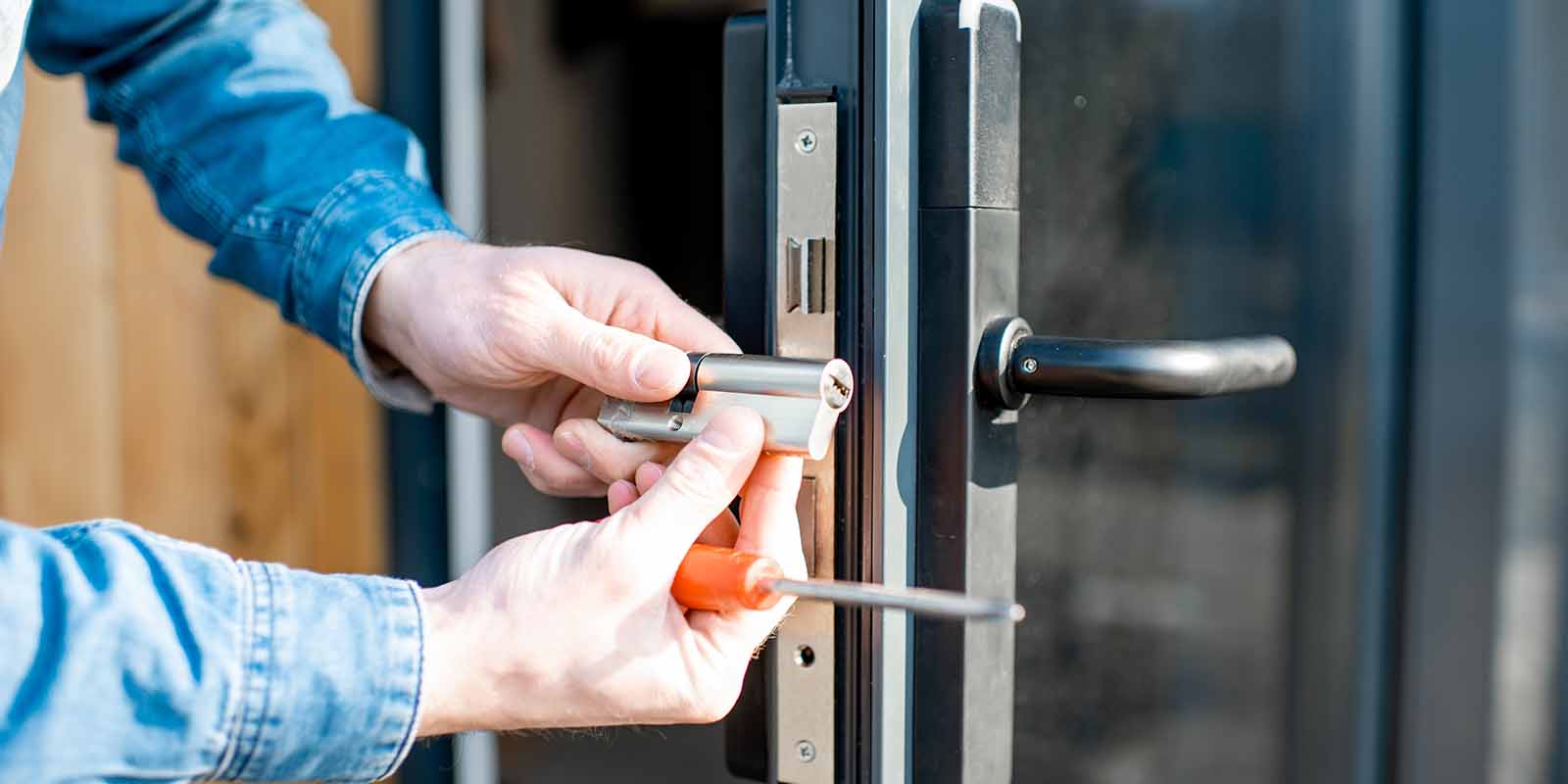
Although less common than alignment or gearbox faults, the euro cylinder itself can cause locking issues.
Signs include:
- Keys becoming difficult to turn.
- Keys sticking.
- The cylinder working from one side only.
- Rough operation.
- Intermittent locking.
A worn cylinder should be replaced before it fails completely or leaves you locked out.
Lack of Maintenance
French doors contain more moving parts than a standard entrance door.
Without occasional maintenance:
- Dirt accumulates.
- Lubrication dries out.
- Locking points become stiff.
- Wear increases.
- The gearbox works harder than it should.
Cleaning and lubricating the moving locking points periodically helps maintain smooth operation.
Weather and Temperature Changes
French doors are exposed to constant changes in weather throughout the year.
During hot weather, the doors may expand slightly.
During colder months, slight contraction and movement can make existing alignment issues more noticeable.
You may experience:
- Tight operation.
- Increased resistance.
- Difficulty lifting the handle.
- A stiff key.
- Locking points catching.
In most cases, the weather is revealing an underlying alignment problem rather than causing the fault itself.
Don't Force the Lock
If your French doors suddenly become difficult to lock, avoid forcing the key or handle.
Excessive force can damage:
- The gearbox.
- The lock cylinder.
- The handles.
- The locking points.
- The multipoint mechanism.
A relatively inexpensive adjustment today can easily become a much larger repair if the warning signs are ignored.
Most French Door Problems Can Be Repaired
Many homeowners are told they need new French doors when the fault actually involves replaceable components.
Common repairs include:
- Door realignment.
- Gearbox replacement.
- Lock cylinder replacement.
- Handle replacement.
- Multipoint mechanism repairs.
- Adjustment of the slave door.
- Keep adjustment.
These repairs can usually restore smooth operation without replacing the doors themselves.
Watch for the Warning Signs
Most French door lock failures don't happen suddenly.
Look out for:
- Difficulty lifting the handle.
- Keys becoming stiff.
- Doors catching the frame.
- Gaps between the doors.
- Loose or drooping handles.
- Hooks not retracting properly.
- Having to push or pull the doors before locking.
Dealing with these issues early can help prevent a complete lock failure and avoid the inconvenience of being unable to secure your home.
Related article: Signs your french door needs repaired.
Conclusion
French doors should lock smoothly with very little effort. If they're becoming difficult to operate, the cause is usually poor alignment, a worn gearbox, failing handles or a multipoint locking mechanism that needs attention—not the doors themselves.
A proper diagnosis and timely repair can restore smooth operation, improve security and extend the life of the locking system, often at a fraction of the cost of replacing the doors.
Related guides: