Introduction
French doors provide an attractive connection between your home and garden, combining wide access with the security of a multipoint locking system. Like any mechanical system, however, the locking mechanism experiences wear every time the doors are opened and closed.
The good news is that lock failures rarely happen without warning. Most mechanisms develop symptoms gradually, giving you the opportunity to have the problem repaired before you're left with a door that won't lock—or won't open.
Recognising these early warning signs can help you avoid emergency repairs and extend the life of your French door locking system.
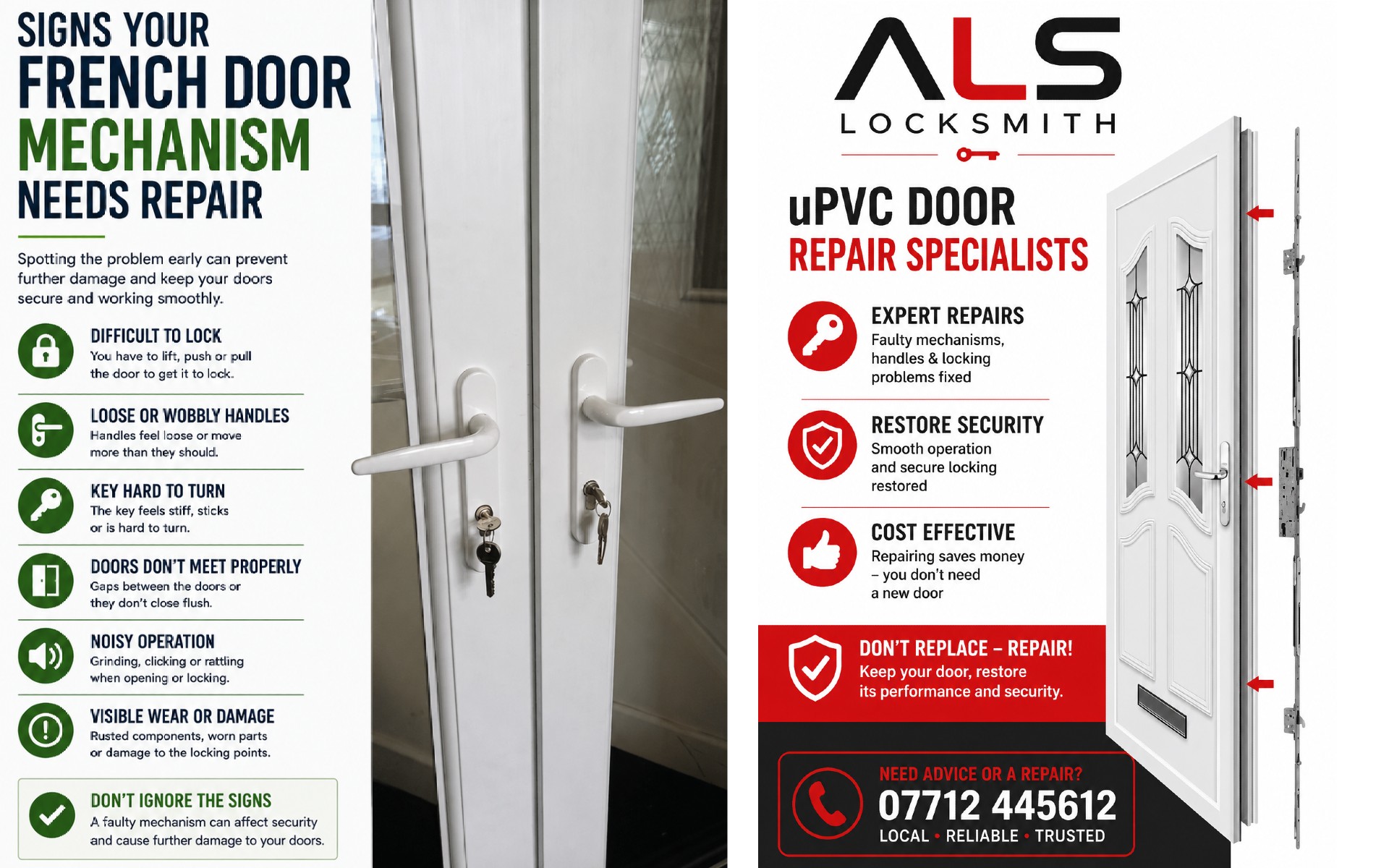
The Handle Is Becoming Stiff
One of the earliest signs of a developing problem is a handle that becomes increasingly difficult to lift.
This can be caused by:
- A dropped door.
- Poor door alignment.
- A worn gearbox.
- A failing multipoint locking mechanism.
- Locking points operating under excessive pressure.
A healthy locking mechanism should allow the handle to lift smoothly with very little effort.
The Key Is Becoming Difficult to Turn
If your key no longer turns as easily as it once did, don't automatically assume the lock cylinder has worn out.
The stiffness may actually be caused by:
- Pressure from poor door alignment.
- A worn gearbox.
- A multipoint mechanism under strain.
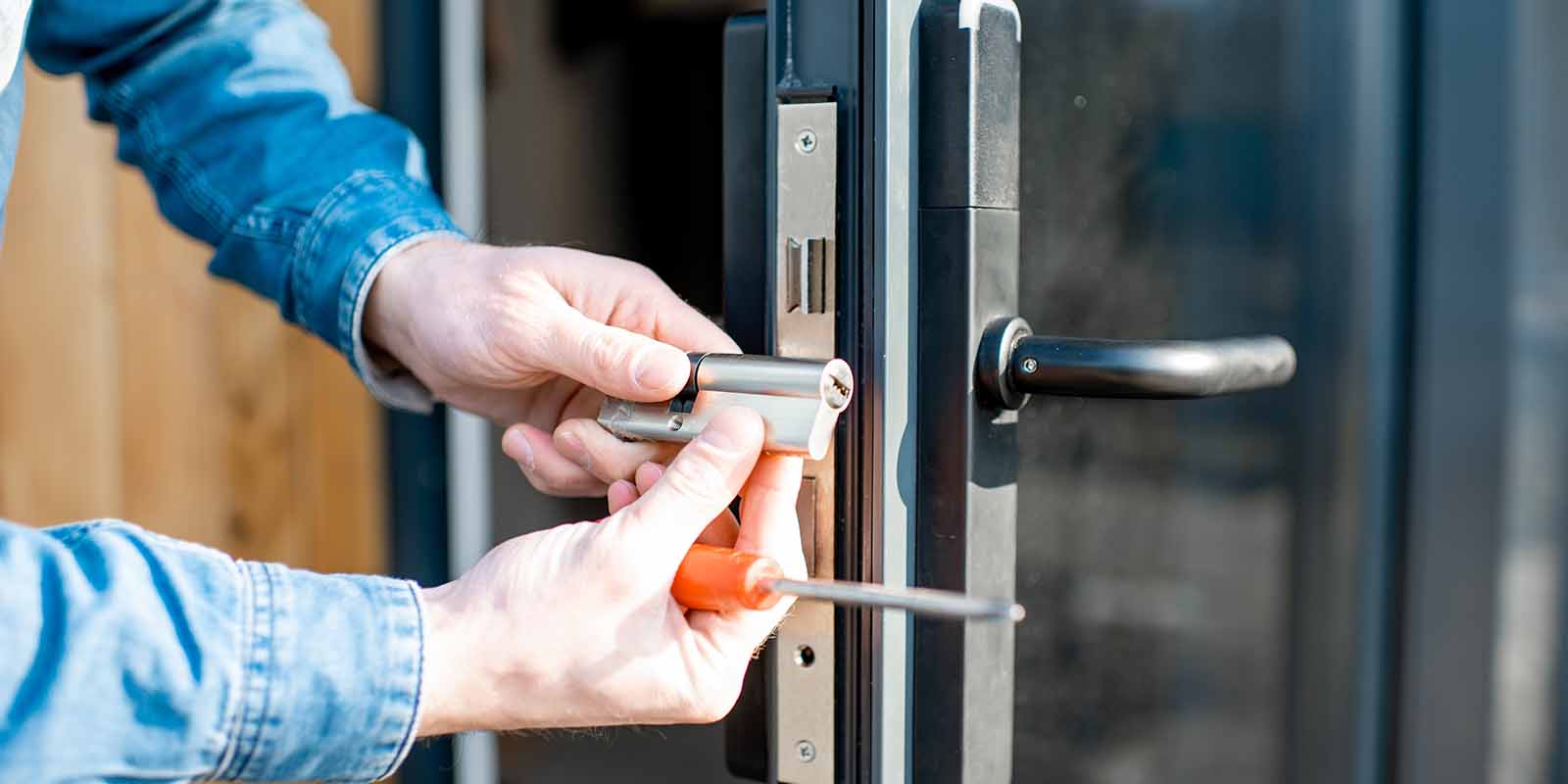
- A worn euro cylinder.
Avoid forcing the key, as this can damage both the cylinder and the internal locking mechanism.
One Door Locks but the Other Doesn't
French doors consist of a master door, which is operated by the handle and key, and a slave door, which is secured by its own locking system or shoot bolts.
If:
- One door locks normally.
- One door difficult to lock.
- The other refuses to lock.
- Only the top or bottom engages.
- The slave door feels stiff.
the problem may lie with the slave mechanism, shoot bolts, hinges or the alignment of the doors.
The Handle Moves but the Lock Doesn't
If the handle lifts but the locking points fail to move, it's often a sign that the gearbox has failed internally.
Common symptoms include:
- The handle feels unusually loose.
- The locking points remain retracted.
- Door wont open properly.
- The key turns but the door won't unlock.
- The mechanism feels disconnected.
In many cases, replacing the gearbox restores normal operation without replacing the complete locking mechanism.
The Doors Are Becoming Difficult to Lock
If you find yourself having to:
- Push the doors together.
- Pull one door towards you.
- Lift the handle harder than before.
- Slam the doors to make them lock.
it's a strong indication that the locking mechanism is working under unnecessary strain.
Ignoring these symptoms often leads to premature gearbox or mechanism failure.
Unusual Grinding or Clicking Noises
A French door locking mechanism should operate quietly.
Grinding, clicking, crunching or scraping noises may indicate:
- Internal gearbox wear.
- Damaged gears.
- Worn locking points.
- Components rubbing because of poor alignment.
These sounds should never be ignored, as they often appear before a complete failure.
The Handle Doesn't Spring Back
Door handles should return smoothly to their original position after use.
If they remain down or return slowly, possible causes include:
- Worn handle springs.
- A failing gearbox.
- Excessive strain caused by poor alignment.
- Wear within the multipoint locking mechanism.
Simply replacing the handles may not solve the underlying problem if another component has already begun to fail.
The Doors Have Dropped
French doors are heavier than many standard doors and can gradually move on their hinges over time.
Signs of a dropped door include:
- Uneven gaps around the doors.
- The top corner catching the frame.
- The locking points rubbing against the keeps.
- The two doors no longer meeting evenly in the centre.
- Increased effort needed to lift the handle.
Even a small amount of movement can place constant pressure on the locking mechanism every time the doors are used.
Everything Works When the Doors Are Open
One of the clearest signs of an alignment problem is when the locking mechanism operates perfectly with the doors open but becomes stiff or difficult once they're closed.
This usually indicates:
- Poor door alignment.
- Worn hinges.
- Misaligned keeps.
- Pressure on the locking points.
If the mechanism works freely with the doors open, the lock itself is often not the primary cause of the problem.
Don't Ignore the Early Warning Signs
Many homeowners continue using French doors that have become progressively harder to lock because they still function.
Unfortunately, every operation places additional strain on:
- The gearbox.
- The multipoint locking mechanism.
- The door handles.
- Internal connecting components.
- The lock cylinder.
What begins as a simple adjustment can eventually develop into a much more expensive repair if left unattended.
Every Repair Should Include Door Alignment
Replacing worn parts is only part of the solution.
A professional repair should also include checking that:
- Both doors are correctly aligned.
- The locking points engage without resistance.
- The handles lift smoothly.
- The key turns easily.
- The mechanisms operate without unnecessary strain.
Correct alignment helps protect replacement parts and significantly extends the life of the locking system.
Conclusion
French door locking mechanisms rarely fail without warning. Stiff handles, difficult keys, poor alignment, unusual noises and doors that no longer lock smoothly are all signs that the locking system needs attention. Addressing these problems early often prevents a complete lock failure, reduces repair costs and avoids the inconvenience of being locked in or out.
In most cases, the doors themselves don't need replacing. By identifying the cause of the problem, replacing only the worn components and ensuring both doors are correctly aligned afterwards, French doors can usually be restored to smooth, secure and reliable operation for many years.
Related guides: