Introduction
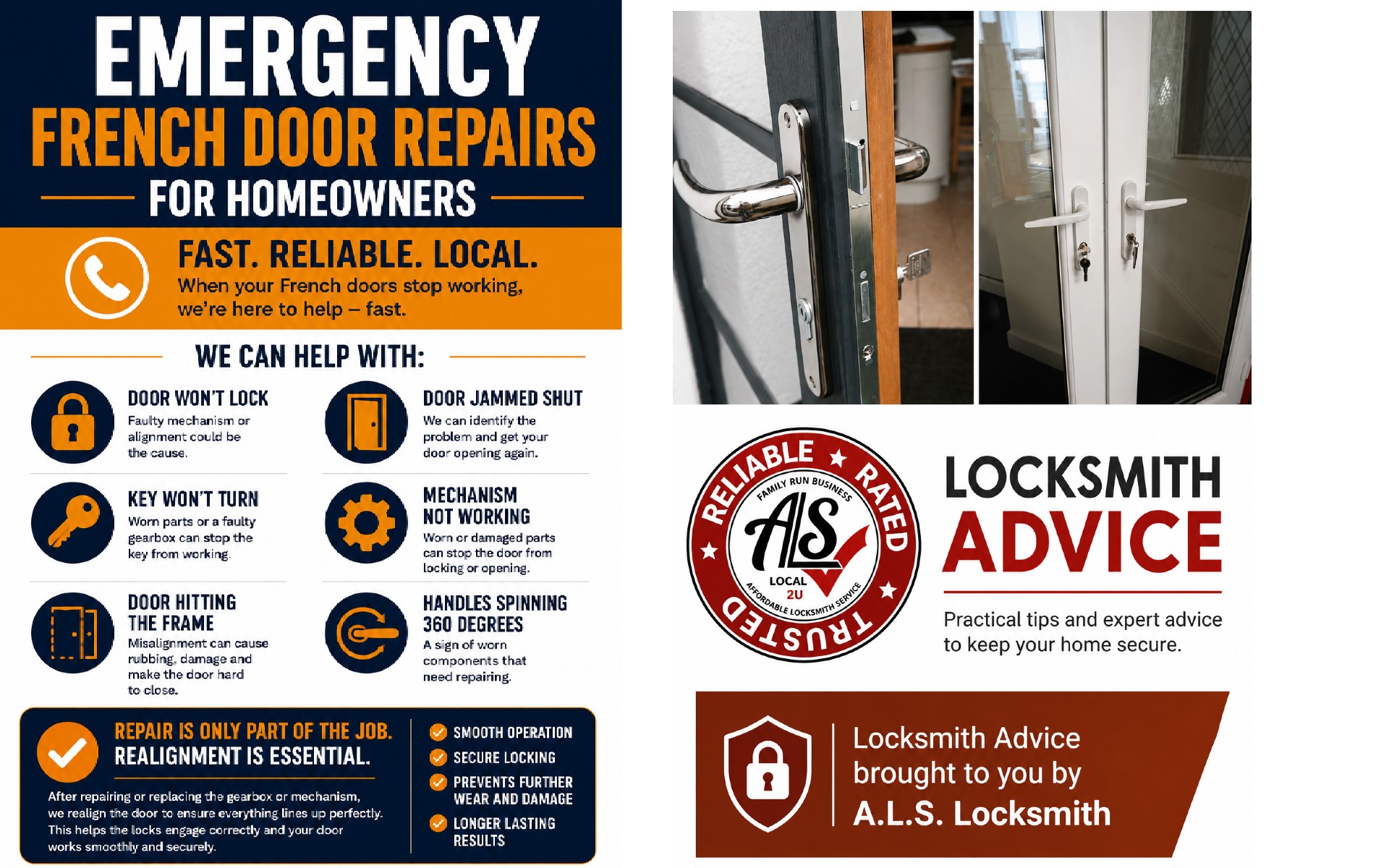
French doors are designed to provide years of reliable service, but when something goes wrong it can quickly become an emergency. Whether the doors won't open, won't lock, or have become jammed shut, the problem can leave your home insecure or prevent you from getting in or out.
The good news is that most emergency French door problems are caused by faults within the locking system rather than the doors themselves. In many cases, the problem can be repaired without replacing the doors.
Common French Door Emergencies
Emergency call-outs often involve problems such as:
- French doors won't open.
- French doors won't lock.
- The handle won't lift.
- The key won't turn.
- A snapped key in the lock.
- A jammed multipoint locking mechanism.
- A failed gearbox.
- Door alignment issues.
- A broken slave door lock.
- Doors stuck closed.
- Locking points failing to retract.
Many of these faults develop gradually before failing completely.
Failed Gearboxes
One of the most common emergency repairs involves a failed gearbox.
Typical symptoms include:
- The handle moves but nothing happens.
- The key turns but the lock remains engaged.
- The locking points won't retract.
- The door is locked shut.
- The handle feels loose or floppy.
If the remainder of the mechanism is still in good condition, replacing the gearbox is often the most cost-effective repair.
However, if the locking points, connecting rods or other internal components have also failed, replacing the complete multipoint locking mechanism is usually the most reliable long-term solution.
Failed Multipoint Locking Mechanisms
Sometimes the damage extends beyond the gearbox.
A complete mechanism replacement may be required where there is:
- Broken connecting rods.
- Seized locking points.
- Damaged hooks or rollers.
- Excessive internal wear.
- A damaged faceplate.
- Multiple failed components.
Replacing only the gearbox in these situations is unlikely to provide a lasting repair.
Dropped Doors
French doors that have gradually dropped out of alignment place constant strain on the locking mechanism.
Common signs include:
- Difficulty lifting the handle.
- The doors catching the frame.
- Having to push or pull the doors to lock them.
- Uneven gaps around the doors.
- A stiff key.
If left unresolved, the additional strain often causes the gearbox or complete mechanism to fail prematurely.
Slave Door Problems
Many French door emergencies actually originate with the secondary (slave) door.
Common faults include:
- Shoot bolts won't retract.
- The slave door won't release.
- One door opens while the other remains locked.
- Misaligned locking points.
- Stiff or seized shoot bolts.
Repairing the slave door often restores the operation of the entire door set.
Broken Handles
A broken or floppy handle can prevent the lock from operating correctly.
Common symptoms include:
- A drooping handle.
- The handle spins without operating the lock.
- Broken return springs.
- Excessive movement.
- Loose backplates.
Replacing the handles may solve the problem, but they should always be inspected alongside the gearbox and locking mechanism to identify the underlying cause.
Lock Cylinder Problems
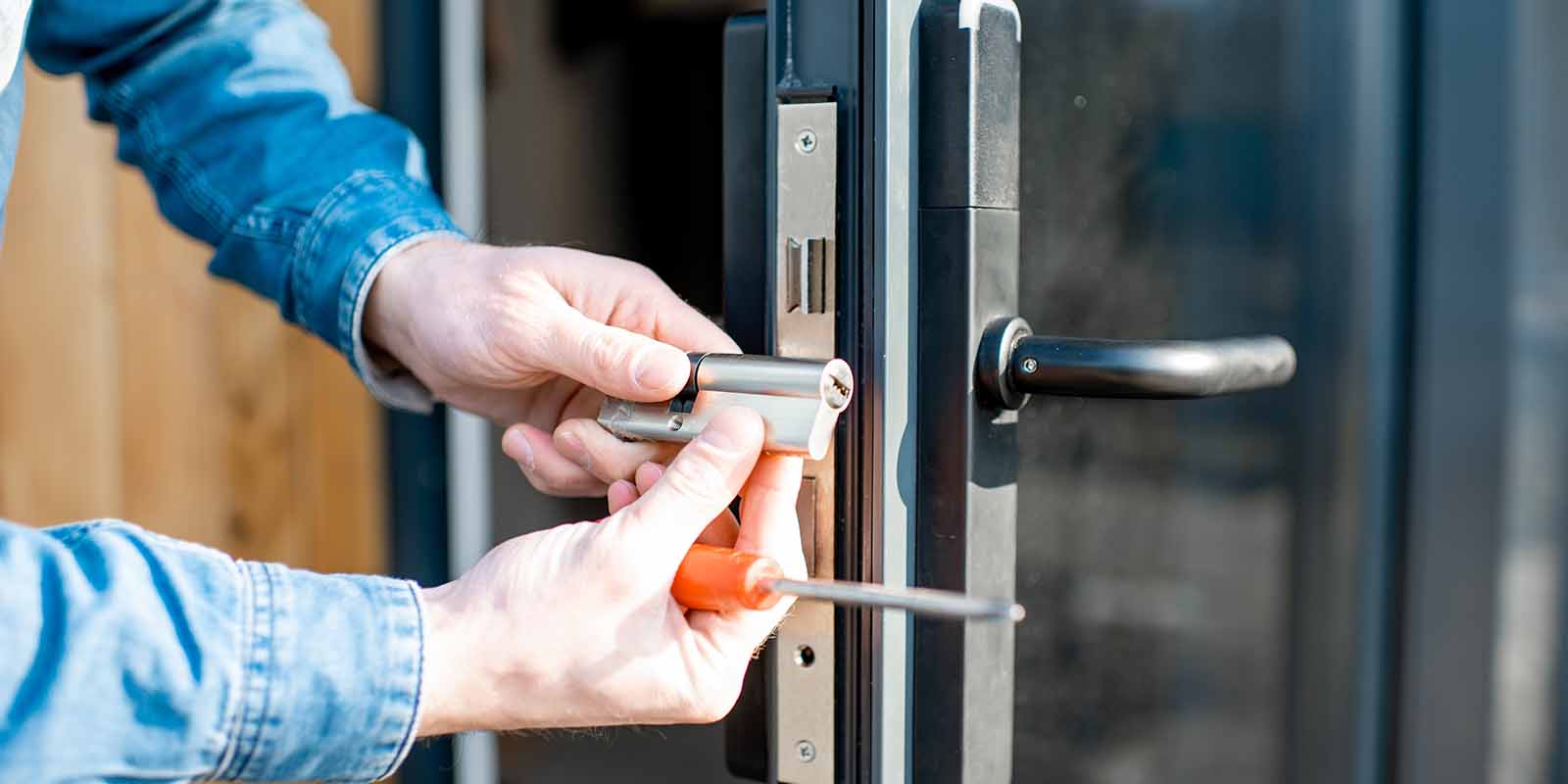
Sometimes the fault lies with the euro cylinder rather than the multipoint mechanism.
Signs include:
- The key won't turn.
- The key sticks in the lock.
- Rough operation.
- Difficulty removing the key.
- A snapped key.
Replacing the cylinder can often restore normal operation, provided no damage has occurred elsewhere within the locking system.
Don't Force the Door
If your French doors become difficult to open or lock, avoid forcing the handle or key.
Doing so can damage:
- The gearbox.
- The multipoint mechanism.
- The lock cylinder.
- The handles.
- The locking points.
- The connecting rods.
A repair that may have involved replacing a single component can quickly become a complete mechanism replacement if excessive force is used.
Door Realignment Is Essential
Replacing a failed gearbox or multipoint mechanism is only part of a proper repair.
If the doors have dropped or become misaligned, the new parts will continue working under unnecessary strain.
After repairing the lock, the doors should always be checked and adjusted where necessary.
Correct alignment allows:
- Smooth handle operation.
- Easy key movement.
- Proper engagement of every locking point.
- Reduced stress on the gearbox.
- Longer life for replacement components.
- Improved weather sealing.
Ignoring the alignment is one of the most common reasons replacement gearboxes and mechanisms fail prematurely.
Most French Door Emergencies Can Be Repaired
A jammed or faulty French door rarely means replacing the entire door set.
Many emergency repairs involve:
- Gearbox replacement.
- Complete multipoint mechanism replacement.
- Lock cylinder replacement.
- Door realignment.
- Handle replacement.
- Slave door repairs.
- Shoot bolt repairs.
A proper diagnosis ensures only the faulty components are replaced, making the repair significantly more cost-effective than installing new French doors.
Prevention Is Better Than an Emergency
French doors almost always give warning signs before failing completely.
Watch for:
- A stiff handle.
- A difficult key.
- Doors catching the frame.
- Handles that don't return properly.
- Locking points that feel tight or rough.
- Needing to force the door closed.
Dealing with these issues early is usually far cheaper than an emergency repair.
Conclusion
A French door that won't open, won't lock or has jammed shut can be stressful, but it doesn't usually mean the doors need replacing. Most emergency repairs involve worn gearboxes, failed multipoint mechanisms, dropped doors or faulty lock components that can be repaired quickly and cost-effectively. By correctly diagnosing the fault, replacing only the necessary parts and ensuring the doors are properly aligned afterwards, your French doors can usually be restored to smooth, secure and reliable operation without the expense of a complete replacement.
Related guides: