Introduction
Home security has changed dramatically over the past 60 years. The locks fitted to a typical front door in the 1960s bear little resemblance to the high-security multipoint locking systems found on modern uPVC and composite doors today.
As burglary methods have evolved, so too have the locks, cylinders, door materials and security standards designed to protect homes. What was considered excellent security half a century ago would often fall short of modern expectations, not because earlier products were poorly designed, but because criminal techniques, manufacturing technology and independent testing have all advanced significantly.
The good news for homeowners is that many existing doors can benefit from these developments without needing complete replacement. Understanding how residential door security has evolved helps explain why modern locking systems provide much greater protection than their predecessors.
Front Door Security in the 1960s
During the 1960s, most British homes were fitted with solid timber front doors.
Typical locking arrangements included:
- Rim nightlatches.
- Mortice deadlocks.
- Mortice sashlocks.
- Simple cylinder nightlatches.
These locks were considered secure for their time because burglary methods were generally less sophisticated. Many break-ins involved unlocked doors, poorly secured windows or forced entry through weak timber panels rather than attacks on the locking mechanism itself.
Security products were designed primarily to provide everyday protection and convenience rather than resist specialist burglary techniques.
The Rise of the Nightlatch
Few locks became as familiar in British homes as the nightlatch.
Mounted on the inside face of a timber door, it automatically latched when the door closed, making it convenient for everyday use.
Over the years, manufacturers introduced improvements including:
- Internal snibs.
- Deadlocking functions.
- Automatic deadlocking.
- Improved cylinder protection.
- High-security British Standard models.
Many homes still use nightlatches today, although they're now commonly paired with a mortice deadlock or other high-security locking system to provide additional protection.
Security Changed During the 1970s and 1980s
As burglary patterns changed during the 1970s and 1980s, manufacturers recognised that traditional locking systems needed to offer greater resistance against physical attack.
This period saw increasing emphasis on:
- Stronger lock cases.
- Better cylinder design.
- Improved strike plates.
- Hardened internal components.
- More robust fixing methods.
Independent testing and recognised security standards also began playing a much greater role in helping homeowners identify quality products.
The Arrival of uPVC Doors
One of the biggest changes in residential security came with the widespread adoption of uPVC entrance doors during the 1980s and 1990s.
Unlike traditional timber doors, uPVC doors required a completely different approach to locking.
Because these doors were taller, lighter and designed differently, manufacturers developed locking systems that secured the door along its entire height rather than at just one point.
This innovation transformed residential door security.
How Multipoint Locking Systems Changed Everything
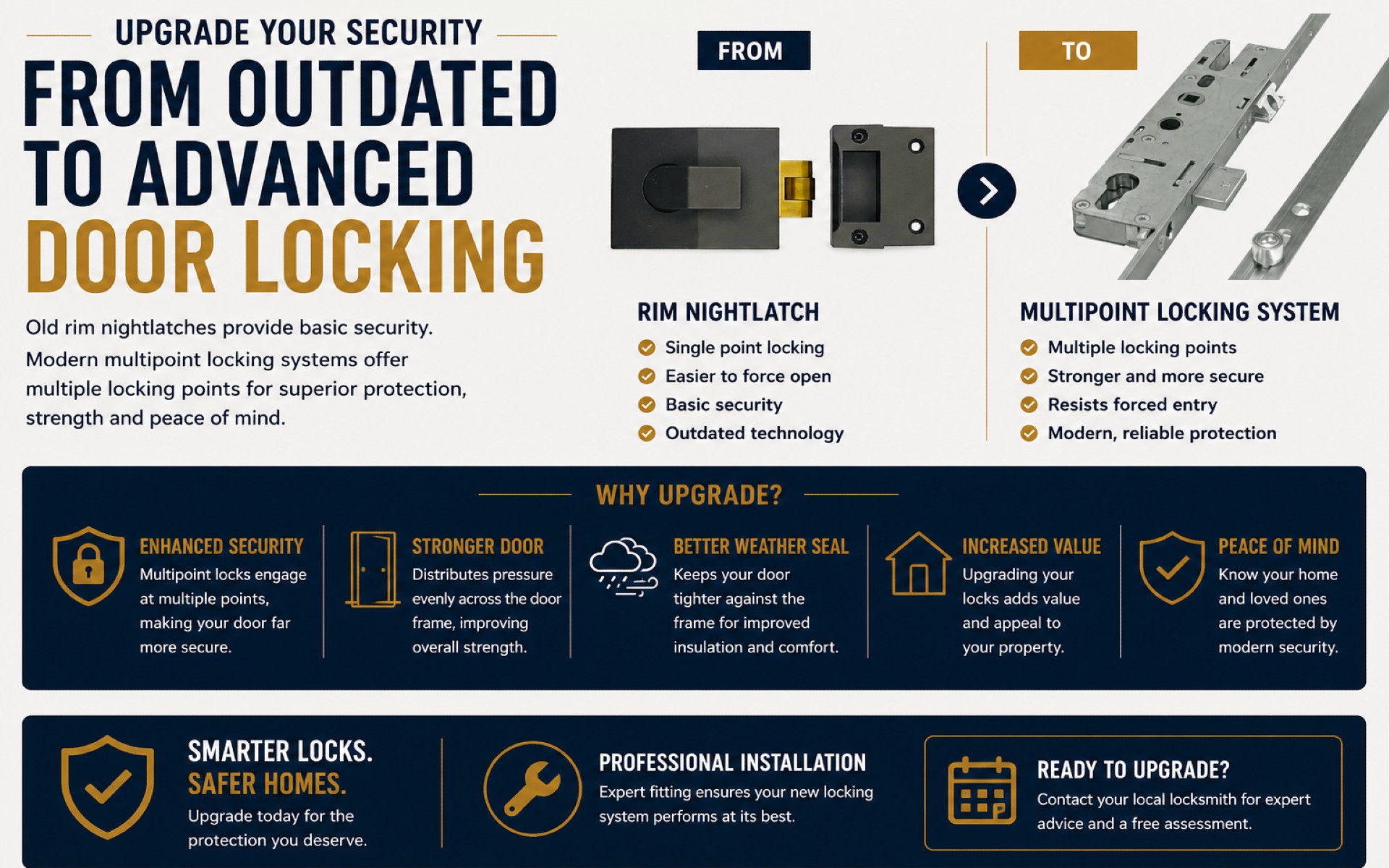
The introduction of the multipoint locking mechanism was arguably the single biggest advancement in domestic door security.
Instead of relying on one deadbolt, the locking mechanism secures the door at several positions simultaneously.
These locking points commonly include:
- Hooks.
- Rollers.
- Deadbolts.
- Mushroom cams.
The benefits were significant:
- Improved resistance to forced entry.
- Better weather sealing.
- Reduced movement of the door.
- Greater structural rigidity.
- Improved long-term performance.
Today, multipoint locking systems are standard on almost every modern uPVC and composite entrance door.
The Evolution of the Euro Cylinder
Traditional mortice locks required considerable dismantling when the locking barrel needed replacing.
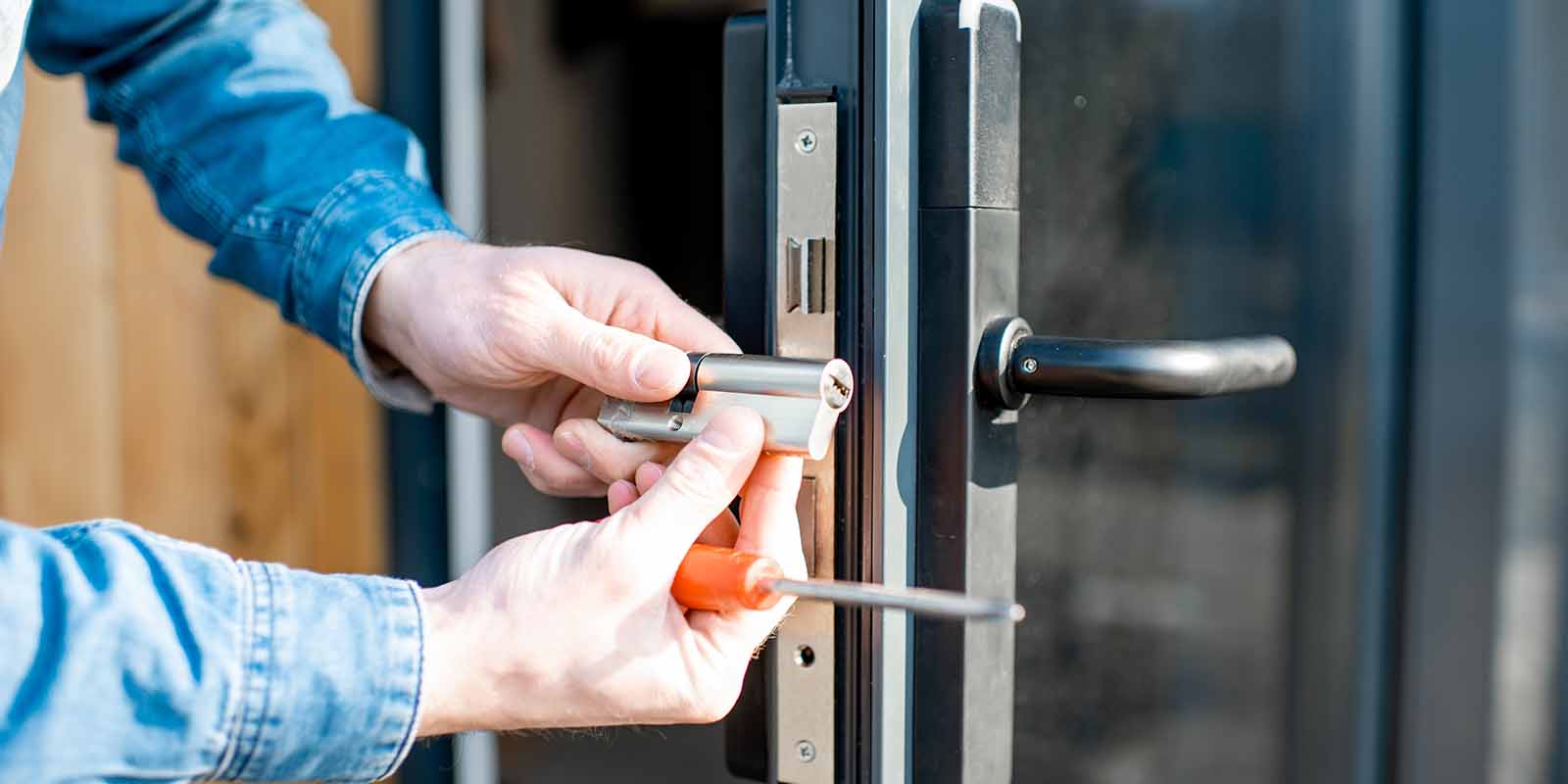
The introduction of the euro profile cylinder made upgrades much simpler.
In most cases, replacing a euro cylinder requires removing only a single retaining screw.
This provided several advantages:
- Quick replacement.
- Easy security upgrades.
- Lower repair costs.
- Compatibility with many different locking systems.
As multipoint locks became widespread, the euro cylinder became the dominant locking solution across much of the UK.
Modern Euro Cylinders Offer Much Greater Protection
Early euro cylinders provided convenience but relatively little resistance against attacks that later became common.
Modern high-security cylinders are engineered to resist techniques including:
- Lock snapping.
- Drilling.
- Picking.
- Bumping.
- Forced manipulation.
Many now incorporate:
- Sacrificial anti-snap sections.
- Hardened steel inserts.
- Anti-drill pins.
- Security pin technology.
- Reinforced internal construction.
These improvements represent decades of continual engineering development.
The Rise of Composite Doors
As homeowners sought doors offering greater strength and improved insulation, composite doors became increasingly popular.
Rather than relying on one material, composite doors combine several engineered layers, typically including:
- Reinforced outer skins.
- High-density insulating cores.
- Reinforcement where required.
- Modern multipoint locking systems.
The result is a door offering:
- Excellent structural strength.
- Improved thermal efficiency.
- Better weather resistance.
- Reduced maintenance.
- High levels of security.
Composite doors are now among the most common replacement entrance doors across the UK.
Door Hardware Has Changed Too
The appearance and durability of door furniture have evolved alongside locking technology.
Traditional front doors commonly featured:
- Brass knockers.
- Polished brass letterplates.
- Brass door handles.
- Black wrought iron furniture.
Today's homeowners can choose from a much wider range of finishes, including:
- Chrome.
- Satin chrome.
- Satin nickel.
- Stainless steel.
- White.
- Black.
- Anthracite grey.
- Gold.
- Bronze.
- Antique black.
- Polished nickel.
Modern finishes are selected not only for appearance but also for durability, corrosion resistance and compatibility with contemporary architecture.
Security Standards Continued to Evolve
As locking technology improved, independent testing became increasingly important.
Today many products are tested against recognised standards including:
- PAS 24.
- TS007.
- BS EN 1303.
- BS 3621.
- Secured by Design.
- Sold Secure.
- SS312 Diamond.
These standards provide homeowners with confidence that products have been independently assessed for security, durability and resistance to recognised methods of attack.
Rather than relying on advertising claims alone, buyers can choose products that have demonstrated their performance under controlled testing.
Better Engineering Means Better Reliability
Modern locks are not only more secure—they're generally more reliable too.
Advances in manufacturing have resulted in:
- Stronger internal gears.
- Improved spring design.
- More durable materials.
- Greater manufacturing precision.
- Improved corrosion resistance.
- Longer service life.
Many of today's locking systems are designed to withstand tens of thousands of operating cycles while maintaining smooth operation.
Smart Technology Is Changing Home Security
The latest stage in the evolution of door security involves electronic access systems.
Increasingly common technologies include:
- Smart locks.
- Keyless entry systems.
- Fingerprint readers.
- Smartphone-controlled locks.
- Remote monitoring.
- Electronic multipoint locking systems.
While these systems offer new levels of convenience, they still rely on strong mechanical hardware beneath the electronics.
A smart lock is only as secure as the door, locking mechanism and installation supporting it.
Good Security Still Depends on the Basics
Despite enormous technological progress, the fundamentals of door security remain remarkably consistent.
A secure entrance still depends upon:
- A strong door.
- Quality locking components.
- Correct installation.
- Proper door alignment.
- Secure hinges and keeps.
- Regular maintenance.
Even the most advanced cylinder cannot compensate for a dropped door or a worn multipoint locking mechanism.
The strongest security always comes from ensuring every component works together as a complete system.
Upgrading an Older Door
Having an older front door doesn't necessarily mean replacing it.
Many existing doors can be significantly improved by upgrading:
- The lock cylinder.
- Door handles.
- The locking mechanism.
- Strike plates.
- Hinges where appropriate.
These upgrades often provide a substantial increase in security while preserving a perfectly serviceable door.
Conclusion
The journey from the traditional timber front doors of the 1960s to today's composite doors and sophisticated multipoint locking systems reflects more than six decades of engineering innovation. As burglary techniques have evolved, manufacturers have responded with stronger doors, better locking mechanisms, high-security euro cylinders and independently tested products that provide far greater protection than earlier generations of locks.
Although technology continues to advance with smart locks and electronic access systems, the principles of good door security remain unchanged. A quality lock, correctly fitted to a well-maintained and properly aligned door, will always provide the foundation of effective home security. For many homeowners, upgrading existing locking components rather than replacing the entire door is often the most practical and cost-effective way to benefit from these decades of progress.
Frequently Asked Questions
Were front door locks less secure in the 1960s?
By today's standards, many were. However, they were generally considered suitable for the burglary methods common at the time. Modern locks have evolved to resist attacks such as snapping, drilling, bumping and picking.
Why did multipoint locking systems become popular?
Multipoint locks secure the door at several points instead of just one, improving security, weather sealing and the overall strength of the door.
Why are euro cylinders so widely used today?
Euro cylinders are simple to replace, easy to upgrade and compatible with most modern multipoint locking systems, making them a practical choice for many residential doors.
Are older timber doors still secure?
They can be. Many older timber doors can be upgraded with modern locks and security hardware, provided the door itself remains structurally sound.
What is the biggest improvement in modern front door security?
There isn't a single improvement. Modern security results from combining stronger doors, multipoint locking systems, high-security cylinders, improved door hardware and independently tested security standards into one integrated system.
Related guides: