Introduction
Conservatory doors are often used every day, particularly during the warmer months when they're opened and closed repeatedly. Whether you have French doors, patio doors or a single conservatory entrance door, every movement places a little more wear on the hinges, handles and locking mechanism.
Over time, mechanical components naturally wear, doors can move slightly out of alignment, and small faults begin to develop. Unfortunately, many homeowners dismiss these early warning signs as minor annoyances, only seeking help when the door becomes difficult to lock or jams completely.
Recognising the symptoms early can often prevent a far more expensive repair and help extend the life of your existing conservatory door.
A Stiff Door Handle
One of the earliest signs of a developing problem is a handle that's becoming increasingly difficult to lift or operate.
A correctly adjusted conservatory door should lock with very little effort.
If you're having to force the handle, it may indicate:
- A dropped door.
- Poor door alignment.
- Doors hitting one another.
- A worn gearbox.
- Pressure on the locking points.
- A worn multipoint locking mechanism.
Forcing a stiff handle places additional strain on every moving part inside the lock and can eventually lead to complete gearbox failure.
The Key Is Becoming Difficult to Turn
Many homeowners immediately assume a stiff key means the lock cylinder has failed.
In reality, the cylinder is often working perfectly.
Difficulty turning the key may actually be caused by:
- Poor door alignment.
- A worn gearbox.
- A failing multipoint locking mechanism.
- Excessive pressure caused by the door dropping.
- Locking points struggling to engage correctly.
Replacing the cylinder without identifying the underlying cause may not solve the problem.
The Door Locks Better When It's Open
One of the simplest tests you can carry out is to operate the door while it's open.
If:
- The handle lifts easily.
- The key turns smoothly.
- The lock works perfectly.
but the door becomes stiff once it's closed, the problem is usually poor alignment rather than the lock itself.
This is one of the clearest signs that the hooks, rollers or deadbolts are no longer lining up correctly with the keeps in the frame.
Continuing to force the handle only increases the strain on the gearbox and locking mechanism.
The Handle Doesn't Spring Back
A conservatory door handle should always return smoothly to its normal horizontal position after use.
If it remains pointing down or feels loose, possible causes include:
- Worn handle springs.
- Handles feel loose.
- A failing gearbox.
- Poor door alignment placing excessive pressure on the locking system.
- Wear within the multipoint locking mechanism.
Although replacing the handles may sometimes solve the problem, it's important to identify why the fault developed in the first place.
The Doors Catch or Rub Together
Many conservatories have French doors that should meet neatly in the centre.
If the doors begin:
- Catching each other.
- Rubbing together.
- Touching at the top.
- Touching at the bottom.
- Refusing to close evenly.
they have probably moved out of alignment.
Ignoring the problem often increases the strain on the locking mechanism every time the doors are operated.
You Have to Push, Pull or Lift the Door
A healthy conservatory door shouldn't need force to lock.
If you regularly find yourself having to:
- Lift the door.
- Pull it towards you.
- Push hard to close it.
- Slam it shut.
- Hold the handle up while turning the key.
it's usually a sign that the hinges or alignment require attention.
The longer the door is operated under strain, the greater the likelihood of damaging the gearbox or locking mechanism.
Grinding, Clicking or Crunching Noises
Unusual noises from inside the lock should never be ignored.
Sounds such as:
- Grinding.
- Clicking.
- Crunching.
- Scraping.
- Metallic rubbing.
may indicate:
- Internal gearbox wear.
- Damaged locking points.
- A worn multipoint locking mechanism.
- Excessive friction caused by poor alignment.
Investigating these noises early often prevents complete lock failure.
Draughts Around the Door
If you've started noticing cold air entering around the edges of your conservatory door, worn weather seals aren't always to blame.
A dropped or poorly aligned door may no longer compress evenly against the seals.
This can lead to:
- Draughts.
- Increased heat loss.
- Moisture entering the conservatory.
- Poorer energy efficiency.
Correcting the alignment often restores both smooth operation and an effective weather seal.
Water Leaks Around the Door
Water entering around the door during heavy rain isn't always a sign that the conservatory itself has failed.
Possible causes include:
- Poor door alignment.
- Worn weather seals.
- A door no longer closing evenly.
- Compression seals no longer making proper contact.
Before considering replacing the door, it's worth having both the seals and the alignment professionally checked.
The Lock Feels Different Than It Used To
Many homeowners notice subtle changes long before complete failure occurs.
Examples include:
- The handle feeling heavier.
- The lock sounding different.
- The key no longer turning as smoothly.
- The door needing slightly more effort to close.
- The locking points feeling rough during operation.
These gradual changes are often the earliest indication that components are beginning to wear.
Don't Wait Until the Door Stops Working
Very few conservatory door failures happen without warning.
Most develop gradually over weeks or even months.
Common early warning signs include:
- A stiff handle.
- A difficult key.
- Doors rubbing together.
- Poor alignment.
- Dropping handles.
- Grinding noises.
- Draughts.
- Water leaks.
Addressing these problems early is usually quicker, less expensive and far less disruptive than dealing with a completely jammed door.
Most Conservatory Doors Can Be Repaired
Many homeowners assume a difficult conservatory door has reached the end of its life and needs replacing.
In reality, the door itself often remains perfectly sound.
Common repairs include replacing:
- The gearbox.
- The multipoint locking mechanism.
- Door handles.
- Euro cylinders.
- Hinges where necessary.
Combined with correct door realignment, these repairs can usually restore smooth, reliable operation without the expense of fitting a completely new door.
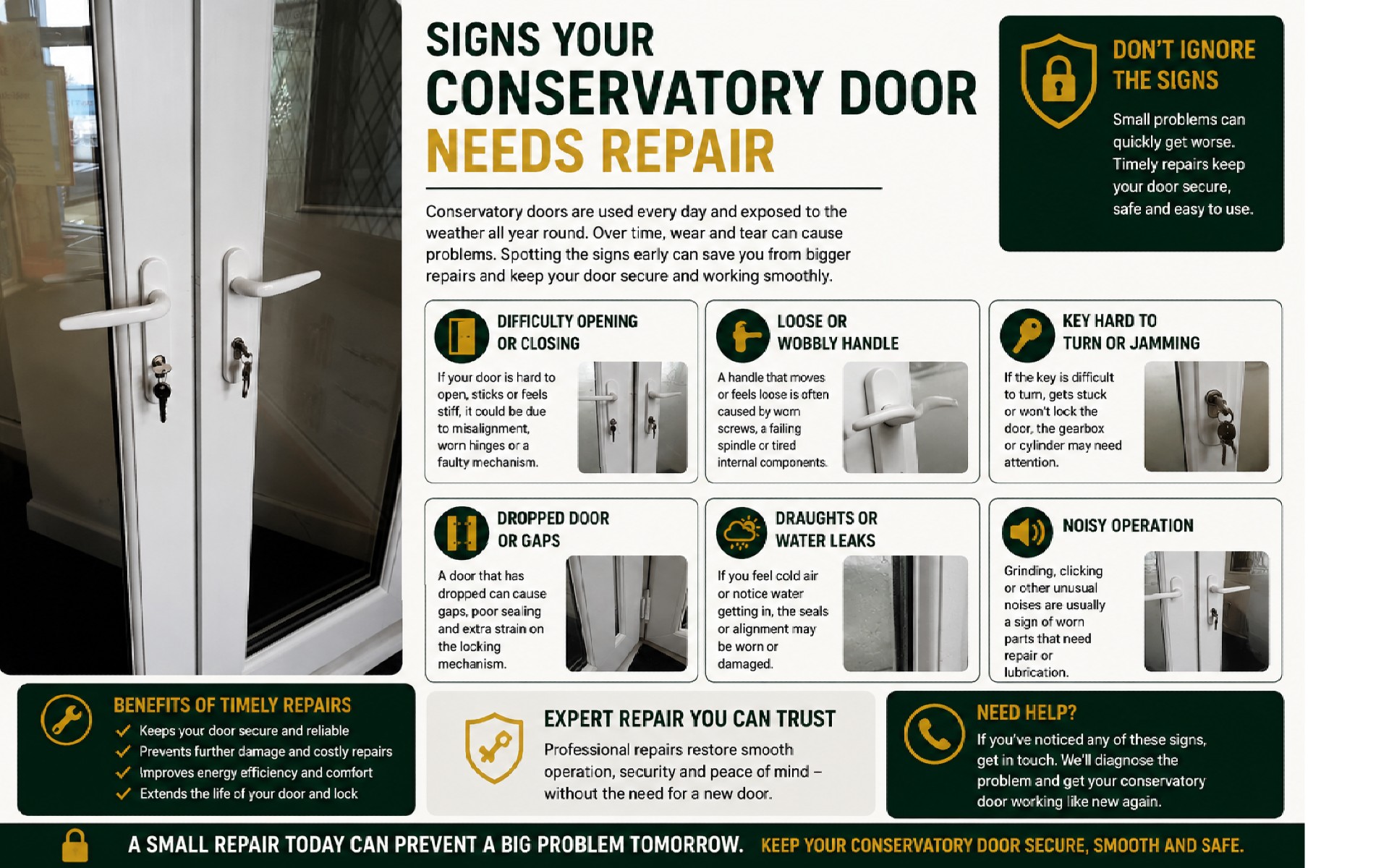
Common causes of conservatory door failure.
Prevention Is Better Than Emergency Repairs
Small faults rarely stay small.
A stiff handle today can become a failed gearbox tomorrow.
A slightly dropped door can eventually damage the handles, locking mechanism and cylinder through repeated strain.
Having the door inspected as soon as symptoms appear often prevents emergency lockouts, reduces repair costs and helps extend the life of the entire locking system.
Conclusion
Conservatory doors are designed to provide many years of reliable service, but like any mechanical system, they naturally experience wear over time. Fortunately, they usually provide plenty of warning before a major failure occurs. A stiff handle, a difficult key, doors rubbing together, poor alignment or unusual noises are all signs that the locking system should be inspected before more serious damage develops.
The encouraging news is that most conservatory door problems can be repaired without replacing the entire door. By identifying the underlying cause—whether it's a worn gearbox, failing multipoint locking mechanism, damaged handles or simple alignment issues—it's often possible to restore smooth operation quickly and cost-effectively. Acting on these early warning signs not only saves money but also helps keep your conservatory secure and functioning reliably for many years to come.
Frequently Asked Questions
Why is my conservatory door difficult to lock?
The most common causes are poor door alignment, a worn gearbox, a failing multipoint locking mechanism or pressure being placed on the locking points because the door has dropped.
Why does my conservatory door work when it's open but not when it's closed?
This usually indicates an alignment problem. The locking mechanism operates freely until it engages with the keeps in the frame, where excessive pressure prevents smooth operation.
Should I replace the handles if they're stiff?
Not necessarily. Stiff handles are often a symptom rather than the actual fault. The underlying cause may be a failing gearbox or poor door alignment.
Can a conservatory door be repaired instead of replaced?
In most cases, yes. Replacing worn components such as the gearbox, multipoint locking mechanism, handles or lock cylinder—and correcting the door alignment—is often all that's required.
What happens if I ignore a stiff conservatory door?
Continuing to force the handle or key can lead to complete gearbox failure, damage to the locking mechanism or a door that becomes difficult or impossible to open or lock.