Common Conservatory Door Lock Problems
Introduction
Conservatory doors are used just as frequently as front and back doors, but they often experience greater temperature changes throughout the year. Daily use, seasonal expansion and contraction, and normal wear can all affect how the locking system performs.
If your conservatory door has become difficult to lock, the handle feels stiff, or the key no longer turns smoothly, it's important not to ignore the warning signs. Most lock failures develop gradually and, if dealt with early, can often be repaired without replacing the entire door.
Door Alignment Problems
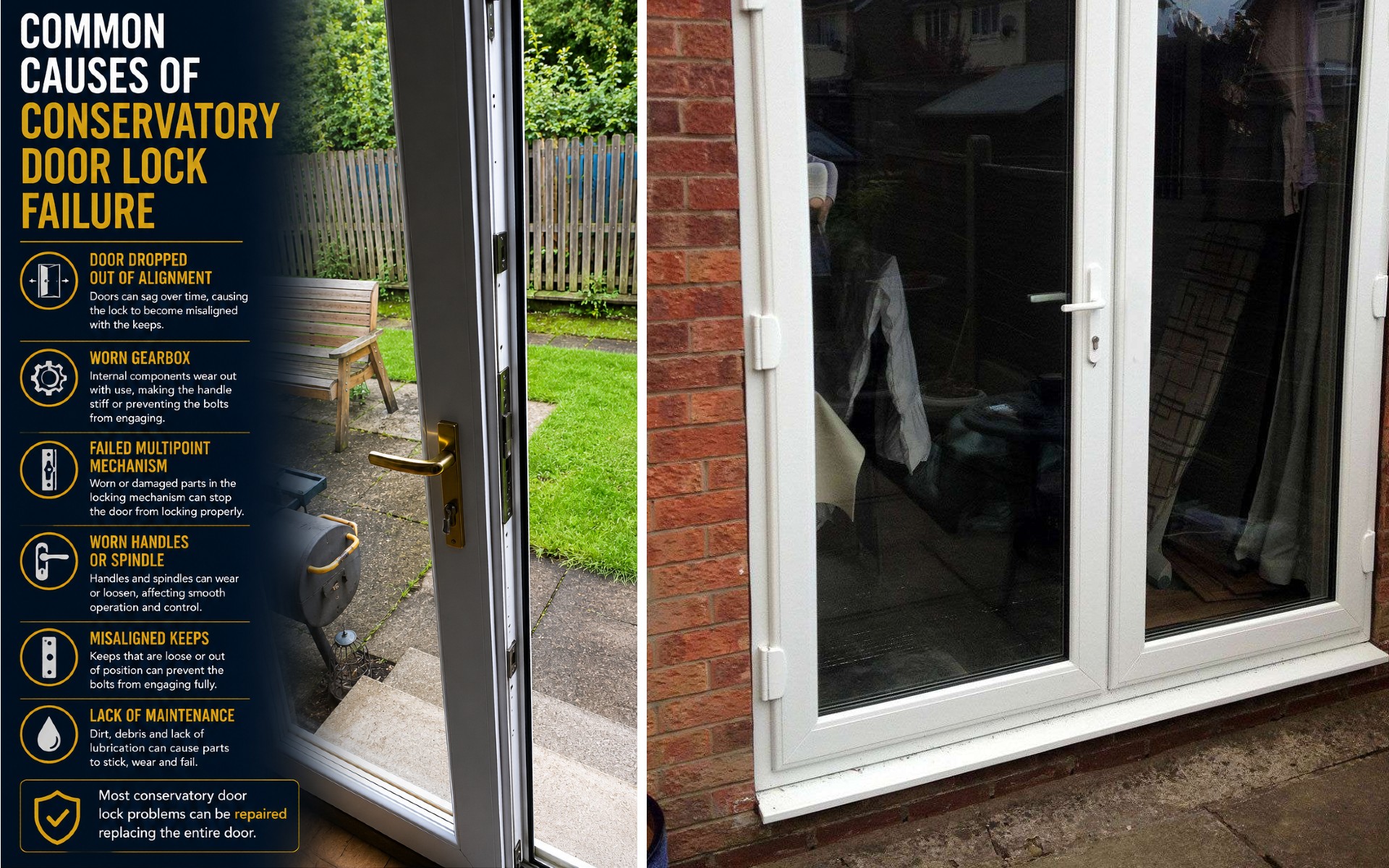
One of the most common causes of conservatory door lock problems is poor door alignment.
As the door drops slightly over time, the hooks, rollers and deadbolts no longer line up correctly with the keeps on the frame. Every time you lift the handle, the locking mechanism has to work harder than it was designed to.
Typical symptoms include:
- Difficulty lifting the handle.
- A stiff or difficult key.
- The door catching the frame.
- Doors hitting one another.
- Having to push or pull the door to lock it.
- Draughts around the door.
- Uneven gaps around the frame.
Correcting the alignment often restores smooth operation while preventing further damage to the locking mechanism.
Failed Gearboxes
The gearbox is the heart of a multipoint locking system.
It transfers the movement of the handle and key to the hooks, rollers, deadbolts and latch.
When the gearbox begins to fail, you may notice:
- The handle moves but nothing happens.
- The key turns without locking or unlocking the door.
- Locking points fail to engage correctly.
- The door becomes difficult to open.
- The handle feels loose or inconsistent.
Providing the rest of the mechanism is still serviceable, replacing the gearbox is often a straightforward and cost-effective repair.
Worn Lock Cylinders
Sometimes the lock cylinder itself is responsible for the problem.
As the internal pins and springs wear, symptoms may include:
- A stiff key.
- Difficulty removing the key.
- Rough or gritty operation.
- Intermittent locking.
- The key working from one side but not the other.
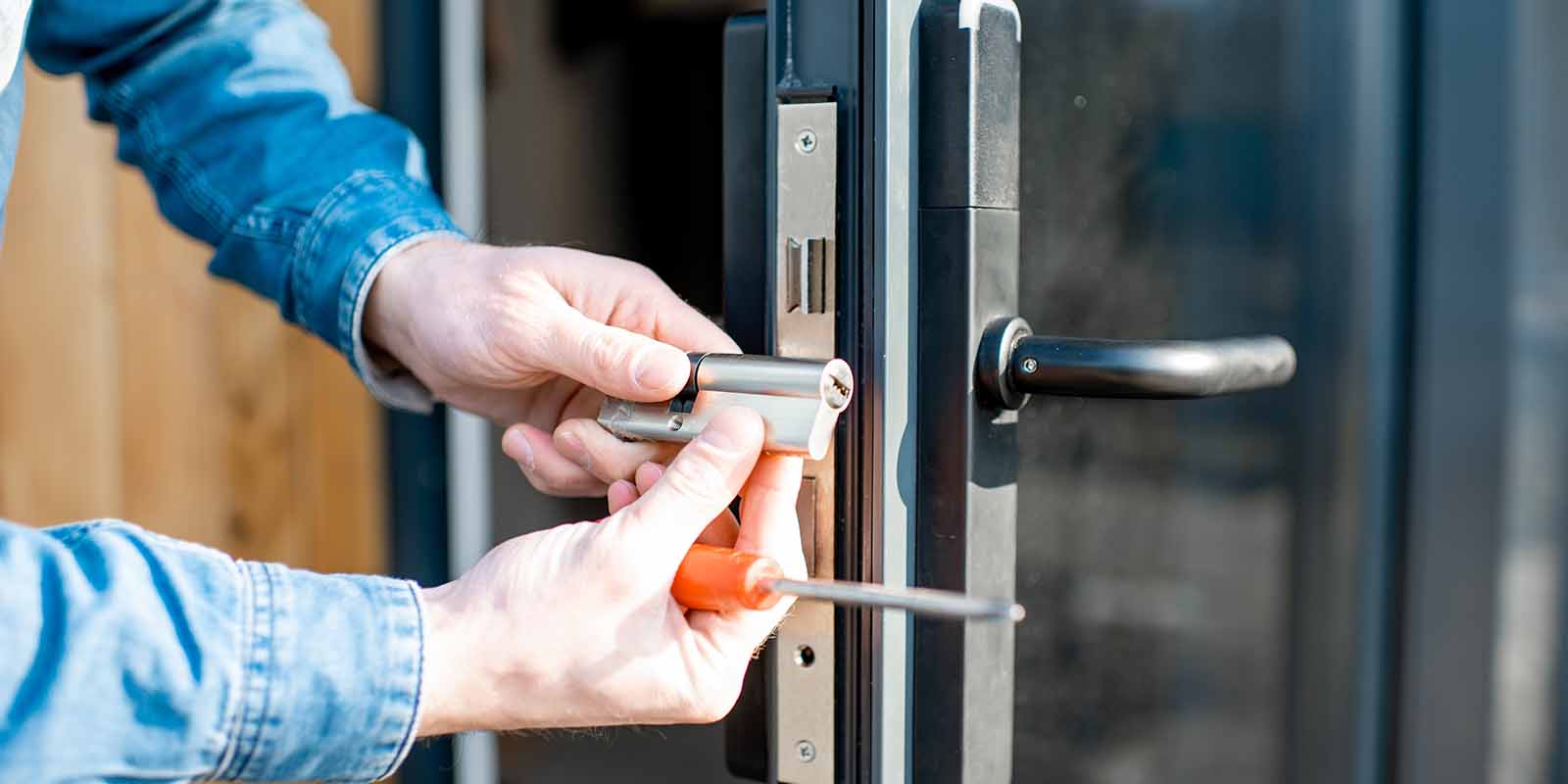
Replacing a worn cylinder restores reliable operation and provides an ideal opportunity to upgrade to a correctly sized snap-resistant cylinder with anti-snap, anti-drill, anti-pick and anti-bump protection.
Seized Locking Points
The hooks, rollers and deadbolts should move freely every time the handle is operated.
Over time they can become:
- Dirty.
- Dry.
- Corroded.
- Stiff.
- Partially seized.
This places increasing strain on the gearbox and eventually leads to premature failure if left untreated.
Cleaning, servicing and lubricating the locking points can often improve operation and extend the life of the mechanism.
Broken or Worn Handles
Door handles experience thousands of operations throughout their lifetime.
Common problems include:
- Loose handles.
- Drooping handles.
- Broken return springs.
- Cracked backplates.
- Handles that don't return properly.
Replacing worn handles—particularly with quality sprung handles—helps improve operation while reducing stress on the gearbox.
Lack of Maintenance
Most conservatory door locks receive little or no maintenance during their lifetime.
Periodic servicing of the:
- Hooks.
- Rollers.
- Deadbolts.
- Latch.
- Moving joints.
helps keep the mechanism operating smoothly and reduces unnecessary wear.
Routine maintenance can often identify small problems before they develop into major repairs.
Temperature Changes
Conservatories experience larger temperature fluctuations than many other parts of the home.
Warm weather can cause slight expansion, while colder conditions can cause contraction.
This often highlights existing issues such as:
- Doors becoming tight to lock.
- Increased resistance when lifting the handle.
- Stiff keys.
- Locking points rubbing against the keeps.
- Alignment problems becoming more noticeable.
The weather is rarely the actual cause of the fault—it simply exposes a problem that already exists.
Obsolete Lock Mechanisms
Many conservatories installed 15 to 25 years ago contain locking mechanisms that are no longer manufactured.
Fortunately, obsolete doesn't automatically mean unrepairable.
Depending on the mechanism, it may still be possible to:
- Replace the gearbox.
- Repair the original mechanism.
- Source compatible replacement parts.
- Adapt the locking system.
- Replace individual components.
This often avoids the considerable expense of replacing the entire conservatory door.
Don't Ignore the Warning Signs
Most lock failures give plenty of notice before they become complete failures.
Look out for:
- Handles becoming heavier.
- Keys getting harder to turn.
- Doors catching the frame.
- Locking points that don't move smoothly.
- Unusual clicking or grinding noises.
- Increased force needed to lock the door.
Addressing these symptoms early can often prevent a lockout and avoid more extensive repairs.
Most Conservatory Door Locks Can Be Repaired
A faulty conservatory door lock rarely means the whole door needs replacing.
Most problems involve:
- Door alignment.
- Failed gearboxes.
- Worn lock cylinders.
- Broken handles.
- Seized locking points.
- Multipoint lock wear.
These faults can usually be repaired quickly, restoring smooth operation and security while saving hundreds—or even thousands—of pounds compared with replacing the entire door.
Conclusion
Conservatory doors work hard throughout the year and are constantly exposed to changing weather conditions, making lock and alignment problems inevitable as they age. Fortunately, most faults are mechanical rather than structural and can usually be repaired without replacing the door itself.
Whether the problem is a dropped door, worn gearbox, faulty cylinder or seized locking points, identifying the cause early is the key to preventing bigger repairs. A properly repaired and correctly aligned conservatory door should lock smoothly, provide reliable security and continue to perform well for many years.
Related article: Signs your door needs repaired.