Are Multipoint Lock Repair Kits Worth It?
Introduction
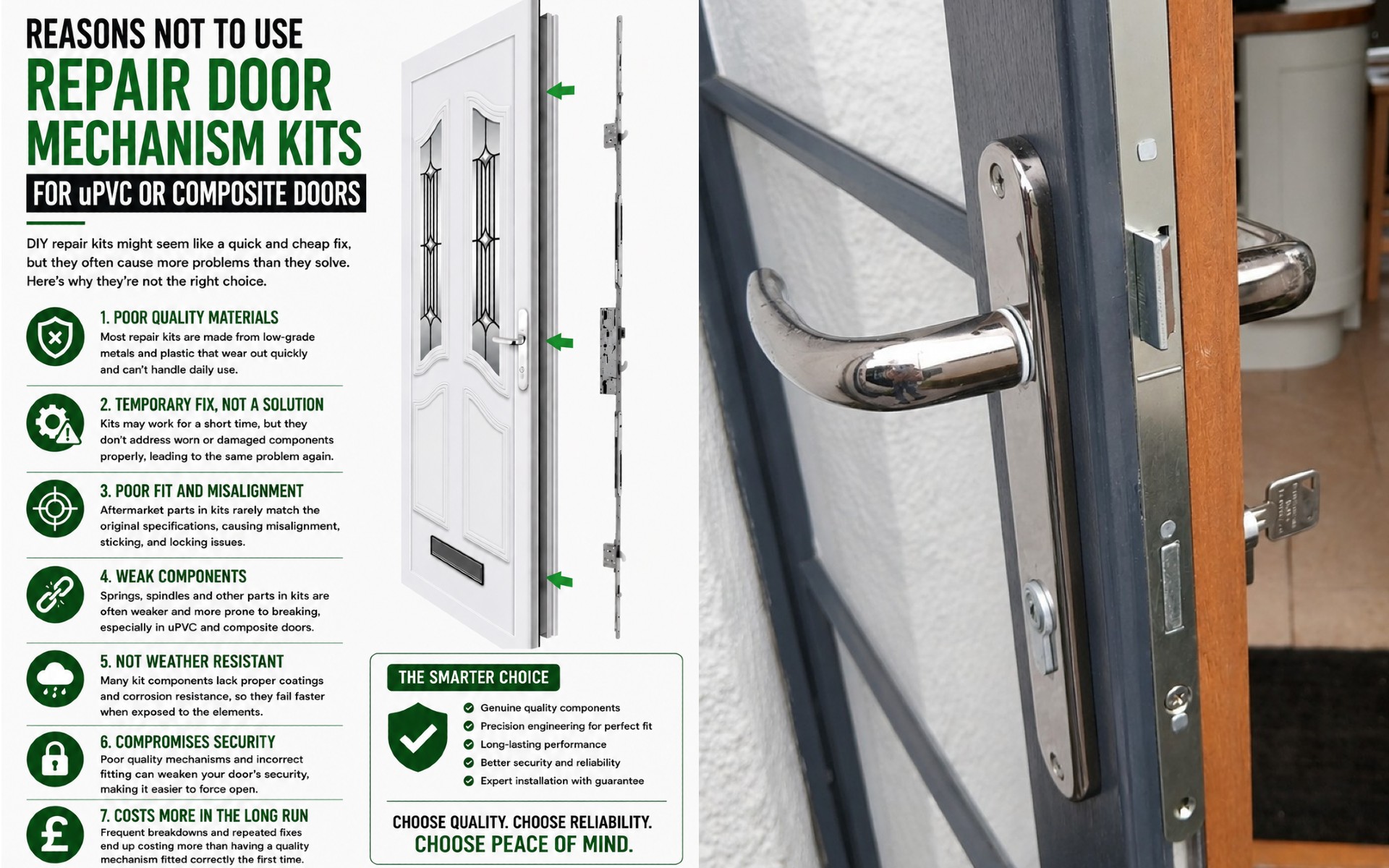
When a uPVC, composite or French door develops a locking problem, it's tempting to search online for a low-cost multipoint lock repair kit. Many of these kits promise to repair a wide range of locking mechanisms for a fraction of the cost of replacing the complete lock.
While they may seem like an economical solution, they're not always the best choice. In many cases, they only address one part of the problem while leaving the underlying cause untouched. That can lead to repeat failures, unnecessary expense and, in some situations, a door that eventually jams closed.
The most successful repairs begin with an accurate diagnosis—not simply replacing parts in the hope of fixing the problem.
What Is a Multipoint Lock Repair Kit?
Most repair kits contain replacement components for part of a multipoint locking mechanism rather than the complete lock.
Depending on the manufacturer, they may include:
- A replacement gearbox.
- Handle drive components.
- Internal springs or fixings.
- Small replacement parts for specific lock models.
These kits are designed to repair certain faults, but they are not a universal solution for every locking problem.
They Don't Address the Original Cause
One of the biggest misconceptions is that replacing the failed part automatically solves the problem.
In reality, many multipoint locking mechanisms fail because they've been operating under excessive strain for a long time.
Common causes include:
- A dropped door.
- Worn hinges.
- Poor door alignment.
- Locking points rubbing against the keeps.
- Excessive force being needed to lift the handle.
If these issues aren't corrected, the replacement parts will simply be subjected to the same pressure that caused the original failure.
Not Every Multipoint Lock Is the Same
Repair kits are often advertised as fitting a wide variety of doors, but multipoint locking mechanisms vary considerably.
Differences include:
- Backset measurements.
- Handle centres (PZ).
- Faceplate width.
- Overall mechanism length.
- Position of locking points.
- Internal gearbox design.
- Manufacturer-specific components.
Even if a repair kit appears to fit physically, it may not operate correctly or provide the same reliability as the original mechanism.
Replacing One Part Doesn't Always Solve the Problem
Many repair kits replace only the gearbox while leaving the remainder of the locking mechanism untouched.
If other components have already worn, such as:
- Hooks.
- Rollers.
- Connecting rods.
- Internal linkages.
- Locking points.
the underlying wear remains.
A professional inspection determines whether only the gearbox has failed or whether the complete multipoint locking mechanism has reached the end of its service life.
Quality Can Vary Significantly
Not all repair kits are manufactured to the same standard.
Lower-quality components may use:
- Weaker internal gears.
- Inferior metals.
- Less precise machining.
- Lower-grade materials.
While they may initially restore operation, they often have a shorter service life than higher-quality replacement components.
Choosing quality parts can reduce the likelihood of another failure in the near future.
Older Doors Can Present Additional Challenges
Many older uPVC and composite doors are fitted with locking mechanisms that are now obsolete.
Generic repair kits aren't always compatible with these older systems and may require modifications that affect how the lock operates.
In many cases, sourcing a suitable replacement mechanism designed for the door provides a more reliable and longer-lasting repair than adapting a universal repair kit.
Door Alignment Is Just as Important
One of the most common reasons replacement parts fail prematurely is because the door alignment hasn't been corrected.
If the door is still:
- Dropping on its hinges.
- Rubbing against the frame.
- Misaligned with the keeps.
- Putting pressure on the locking points.
the replacement gearbox or repair kit will continue working under unnecessary strain.
Correct door alignment is an essential part of any lasting repair.
DIY Repairs Can Sometimes Make the Problem Worse
Replacing parts without first identifying the cause of the fault can create additional problems.
Incorrect installation may lead to:
- Incorrectly fitted components.
- Damaged handles.
- Broken fixings.
- Misaligned locking points.
- A door that becomes difficult to lock.
- A door that won't open at all.
What initially appears to be a straightforward repair can quickly become a more complex and expensive problem.
A Professional Diagnosis Often Saves Money
Rather than replacing parts by trial and error, a proper diagnosis identifies exactly which components have failed.
The repair may involve:
- Replacing only the gearbox.
- Replacing the euro cylinder.
- Realigning the door.
- Replacing the complete multipoint locking mechanism.
- Replacing worn handles if necessary.
Replacing only the components that genuinely need attention is often more economical than repeatedly fitting unsuitable repair kits.
Repair the Cause, Not Just the Fault
The most reliable repairs focus on why the locking mechanism failed rather than simply replacing the broken component.
Whether the cause is poor alignment, worn hinges, excessive strain or general mechanical wear, correcting those issues protects the replacement parts and helps prevent repeat failures.
A repair that addresses both the fault and its underlying cause is far more likely to provide years of smooth, reliable operation.
Conclusion
Multipoint lock repair kits can appear to offer a quick and inexpensive solution, but they're not always the right answer. While they may be suitable in some circumstances, they often replace only part of the locking system and do nothing to address the reason the mechanism failed in the first place.
Most multipoint lock failures are caused by issues such as poor door alignment, worn hinges or prolonged strain on the locking mechanism. Unless these underlying problems are corrected, even new components can wear prematurely. The most effective repair is one that begins with an accurate diagnosis, uses quality parts that are correct for the door and includes realignment to ensure the locking system operates smoothly. That's the difference between a repair that lasts and one that simply postpones the next failure.