Introduction
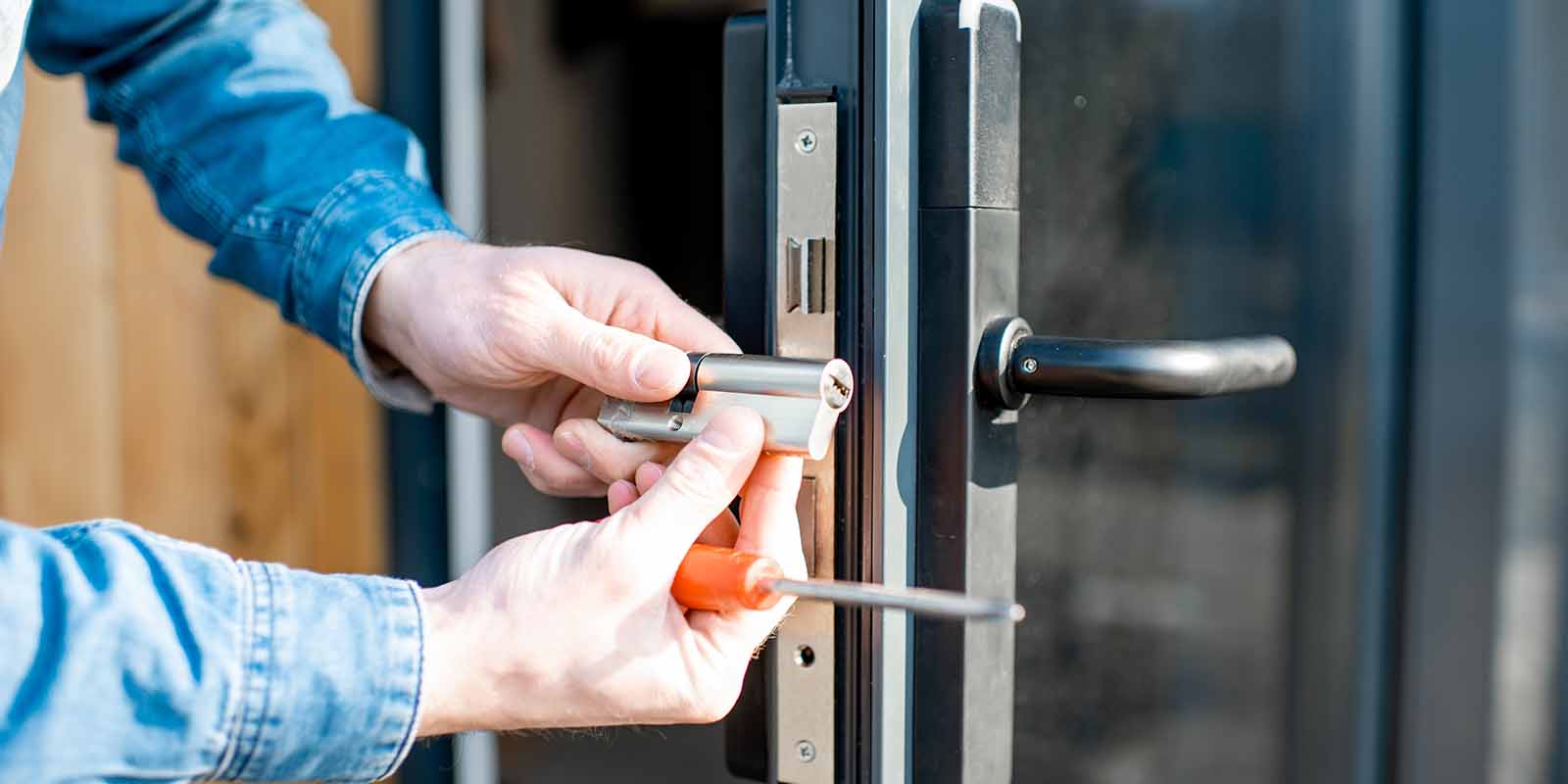
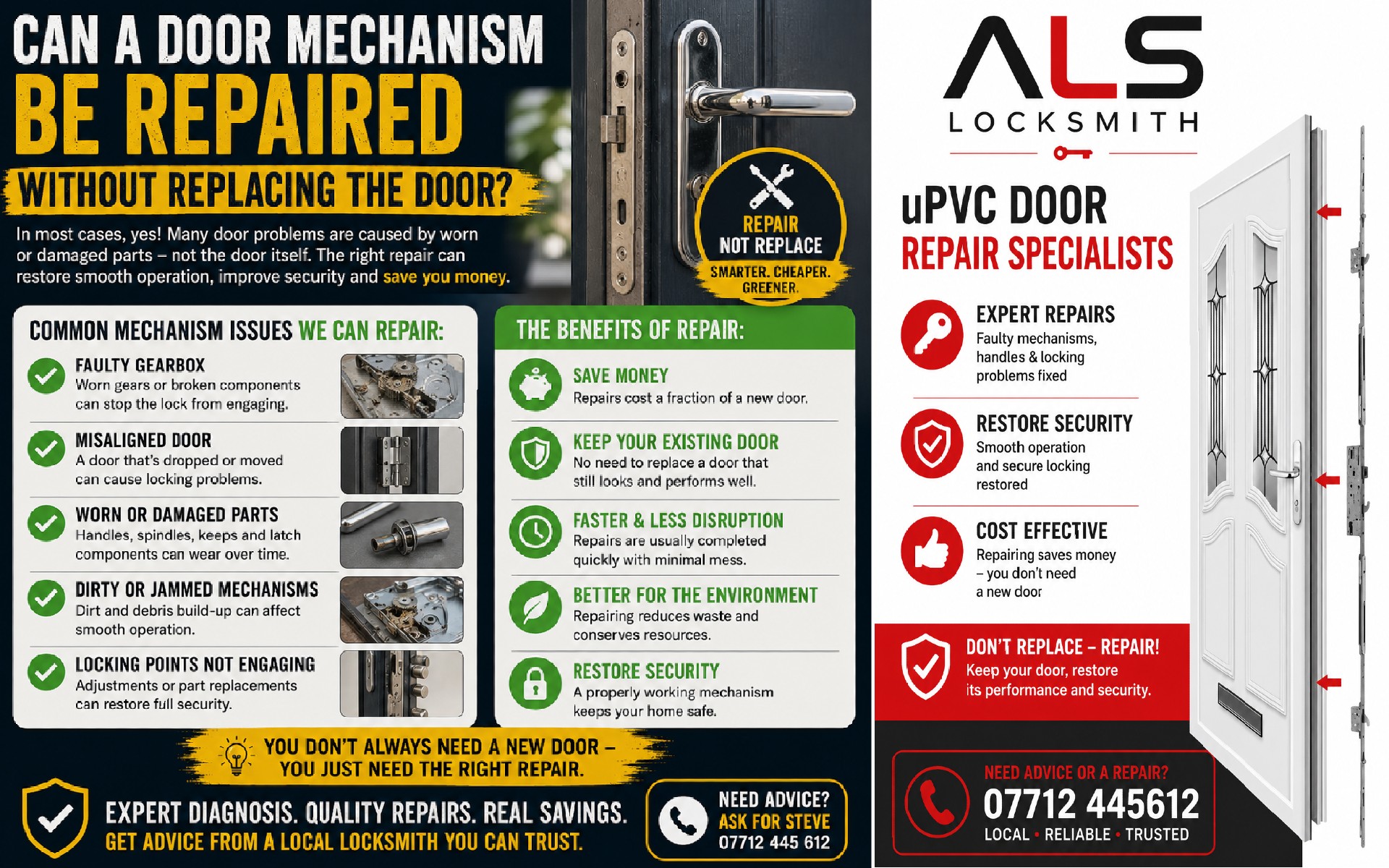
Yes – in most cases, a faulty door mechanism can be repaired without replacing the entire door.
Many homeowners are told they need a new uPVC or composite door when the real problem is simply a worn locking mechanism. While a failed lock can make a door difficult to use or leave it completely jammed, the door itself is often still in excellent condition.
Replacing the faulty components is usually far more cost-effective than fitting a brand-new door and, when carried out correctly, can restore the door to smooth, secure operation for many years.
What Is a Door Mechanism?
The door mechanism, more commonly known as a multipoint locking mechanism, is the long metal strip fitted into the edge of a uPVC or composite door.
It contains several working components, including:
- Gearbox
- Hooks
- Rollers
- Deadbolts
- Centre latch
- Connecting rods
When you lift the handle and turn the key, these parts work together to secure the door at multiple points around the frame.
Signs Your Door Mechanism Has Failed
Most mechanisms don't fail without warning. They usually become progressively harder to operate before eventually stopping altogether.
Common symptoms include:
- The handle is stiff to lift.
- The key becomes difficult to turn.
- The handle moves but nothing happens.
- The locking points fail to engage.
- The door becomes difficult to lock or unlock.
- Grinding, clicking or crunching noises.
- The door jams shut.
If you notice any of these signs, it's worth having the door checked before a complete lock failure occurs.
Sometimes Only the Gearbox Needs Replacing
The gearbox is the most heavily used part of the locking mechanism and one of the components most likely to wear out.
If the hooks, rollers and connecting rods remain in good condition, replacing the gearbox is often all that's required.
This type of repair is usually:
- More affordable than replacing the complete mechanism.
- Less disruptive.
- Faster to complete.
- Just as reliable when the rest of the mechanism is sound.
When the Complete Mechanism Needs Replacing
Sometimes the damage extends beyond the gearbox, making a complete multipoint mechanism replacement the better long-term solution.
This is often necessary where there is:
- Broken connecting rods.
- Seized or damaged locking points.
- Worn hooks or rollers.
- Extensive internal wear.
- An obsolete gearbox with no compatible replacement.
Even in these situations, you're replacing the locking mechanism—not the entire door.
Older Doors Can Often Be Repaired
One of the biggest myths is that an older door can't be repaired because replacement parts are no longer available.
Fortunately, that's rarely the case.
Depending on the make and model, it may be possible to:
- Source original old-stock components.
- Fit a compatible replacement mechanism.
- Upgrade to a newer locking system.
- Adapt modern replacement parts to suit the existing door.
- Use lower quality universal kits.
Many uPVC and composite doors that are 20 years old or more can continue providing reliable service after the correct repair.
Why Door Mechanisms Fail
Multipoint locking mechanisms are designed to last for many years, but they don't usually fail without reason.
The most common causes include:
- Everyday wear and tear.
- Doors dropping out of alignment.
- Worn or loose hinges.
- Poor door adjustment.
- Repeatedly forcing a stiff handle.
- Lack of maintenance.
- Poor quality aftermarket parts.
In many cases, the mechanism has been operating under excessive strain for months before finally failing.
Door Alignment Is Part of the Repair
Replacing a mechanism without checking the door alignment is only doing half the job.
If the door has dropped or moved over time, the new mechanism will immediately begin working under the same pressure that caused the original failure.
Every professional repair should include checking and adjusting the alignment so that:
- The handle lifts smoothly.
- The key turns easily.
- Hooks and rollers engage correctly.
- The locking points move freely.
- The new mechanism operates without unnecessary strain.
Correct alignment significantly extends the life of the replacement parts and helps prevent repeat failures.
When Does a Door Need Replacing?
Although most locking problems can be repaired, there are occasions when replacing the entire door is the better option.
This is usually limited to situations where:
- The door has suffered significant structural damage.
- The frame has failed.
- The door has warped beyond adjustment.
- Corrosion or damage makes repair uneconomical.
A failed locking mechanism on its own is rarely a reason to replace an otherwise sound door.
Repairing Saves Money
Repairing the locking mechanism instead of replacing the door offers several advantages:
- Lower overall cost.
- Less disruption to your home.
- Faster completion.
- Improved security.
- Retains your existing door.
- Extends the life of the door for many more years.
For most homeowners, repairing the mechanism is the smarter and more economical solution.
Conclusion
A faulty door mechanism doesn't automatically mean you need a new door. Whether the problem is a worn gearbox, damaged multipoint locking mechanism or obsolete lock, most faults can be repaired by replacing the correct components and ensuring the door is properly aligned afterwards.
Accurate diagnosis is the key to a lasting repair. By identifying the real cause of the problem, replacing only what's necessary and correcting any alignment issues, your existing door can usually be restored to smooth, secure and reliable operation—without the expense of a complete replacement.