Introduction
When a uPVC, composite or French door develops a locking problem, many homeowners assume the entire multipoint locking mechanism needs replacing. In reality, that's often not the case.
Many faults are caused by a failed gearbox, which can frequently be replaced on its own. However, there are situations where replacing the complete mechanism is the most reliable, economical and long-lasting solution.
The key is identifying exactly what has failed before replacing any parts. An accurate diagnosis not only saves money but also ensures the repair lasts.
Understanding a Multipoint Locking Mechanism
A multipoint locking mechanism is the long metal strip fitted into the edge of many modern doors. It secures the door at several points around the frame, providing greater security than a traditional single-point lock.
A typical mechanism includes:
- Gearbox.
- Hooks, rollers or deadbolts.
- Centre latch.
- Connecting rods.
- Locking points.
- Faceplate and fixing points.
These components work together every time the handle is lifted and the key is turned. If one part fails, it can affect the operation of the entire locking system.
When a Gearbox Replacement Is Enough
The gearbox is the heart of the locking mechanism and is one of the components most likely to wear over time.
If the gearbox has failed but the remainder of the mechanism is still in good condition, replacing only the gearbox is often the best solution.
This is usually possible when:
- The hooks and rollers still move freely.
- The connecting rods are undamaged.
- The locking points are operating correctly.
- There is no excessive wear elsewhere in the mechanism.
- A compatible replacement gearbox is available.
Replacing only the failed gearbox is generally the most cost-effective repair and avoids replacing components that are still perfectly serviceable.
When the Entire Mechanism Should Be Replaced
Sometimes replacing only the gearbox would leave other worn components behind.
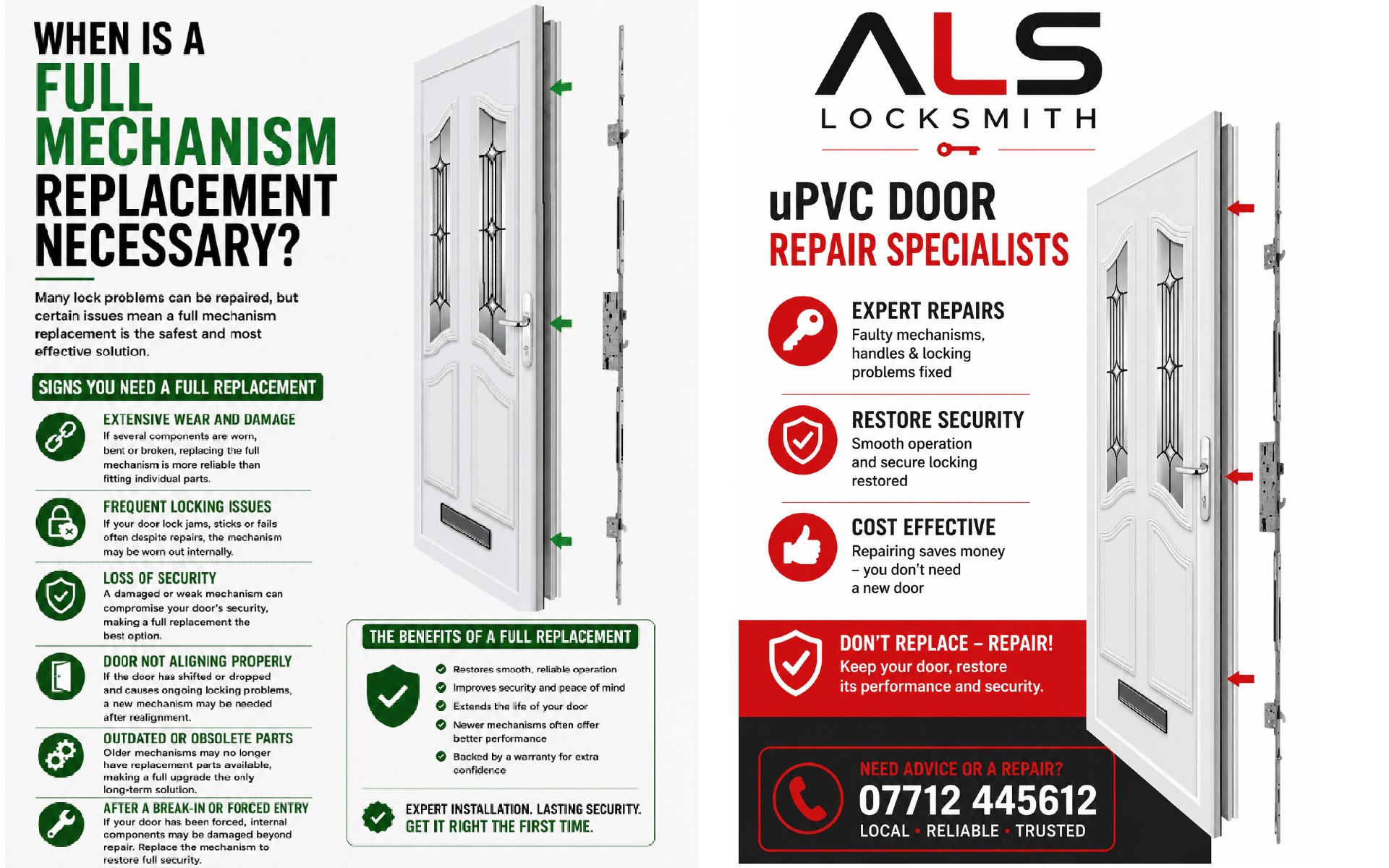
A complete multipoint locking mechanism is often recommended where there is:
- Broken hooks or rollers.
- Damaged connecting rods.
- Gearbox can't be replaced because it's rivetted on.
- Seized locking points.
- Extensive internal wear.
- Corrosion affecting several components.
- Cracked or distorted mechanism cases.
- Previous poor-quality repairs.
- Multiple worn parts approaching the end of their service life.
Replacing the complete mechanism restores the entire locking system rather than repairing only one section of it. A good solution saving the cost of replacing the door.
The Existing Mechanism Is Obsolete
Many older uPVC and composite doors are fitted with locking mechanisms that are no longer manufactured.
If replacement gearboxes or individual parts are unavailable, the options may include:
- Installing a compatible replacement mechanism.
- Upgrading to a modern equivalent.
- Adapting suitable replacement components where appropriate.
An obsolete locking mechanism rarely means the door itself needs replacing. In many cases, a suitable replacement mechanism can be fitted while keeping the existing door.
Multiple Components Have Worn Out
It's not unusual for several parts to wear at the same time, particularly on older doors that have seen years of regular use.
For example, you may find that:
- The gearbox has failed.
- The hooks are badly worn.
- The rollers are damaged.
- Internal linkages have developed excessive play.
- Locking points no longer operate consistently.
Replacing only one component may temporarily restore operation but leave several other worn parts ready to fail.
Where multiple faults are present, replacing the complete mechanism is often the most sensible long-term repair.
Damage Caused by Forcing the Door
Many locking mechanisms suffer additional damage because the door has been forced while already operating under strain.
Repeatedly forcing a stiff handle or lifting it excessively can damage:
- Internal gears.
- Connecting rods.
- Locking points.
- The gearbox casing.
- Handle drive components.
Once several components have been damaged, replacing the complete mechanism is often more reliable than attempting multiple individual repairs.
Door Alignment Is Checked Before Replacing Anything
One of the biggest mistakes is replacing the locking mechanism without identifying why it failed.
Many mechanisms wear prematurely because the door has gradually moved out of alignment.
Before deciding which parts require replacement, the following should always be checked:
- Door alignment.
- Hinge condition.
- Position of the keeps.
- Pressure on the locking points.
- Ease of handle operation.
If these issues aren't corrected, even a brand-new mechanism may begin to wear prematurely.
A Full Mechanism Replacement Doesn't Mean a New Door
Hearing the words complete mechanism replacement often leads homeowners to believe the entire door has to be replaced.
Fortunately, that's rarely the case.
Replacing a multipoint locking mechanism only involves changing the locking strip and its internal components.
Your existing:
- Door.
- Frame.
- Glass.
- Decorative panels.
- Furniture (unless damaged).
- Hinges (unless worn).
normally remain exactly as they are.
It's still a repair—not a replacement door.
Every Replacement Should Include Realignment
Installing new components is only part of the repair.
Once the replacement mechanism has been fitted, the door should be adjusted so that:
- Every locking point engages smoothly.
- The handle lifts with minimal effort.
- The key turns freely.
- No unnecessary pressure is placed on the gearbox.
- The mechanism operates exactly as intended.
Correct alignment not only improves day-to-day operation but also helps maximise the lifespan of the replacement parts.
Repair the Cause, Not Just the Fault
The most successful repairs don't simply replace the failed component—they identify why it failed in the first place.
Whether the cause is poor alignment, worn hinges, excessive strain or normal mechanical wear, correcting the underlying problem helps prevent repeat failures and protects the new mechanism from unnecessary stress.
Conclusion
A full multipoint locking mechanism replacement is only necessary when replacing the gearbox alone won't provide a reliable or long-lasting repair. If multiple components have worn out, the mechanism has become obsolete or significant damage has occurred, replacing the complete mechanism is often the best solution.
In the vast majority of cases, however, the door itself remains perfectly serviceable. By accurately diagnosing the fault, replacing only the components that genuinely need changing and ensuring the door is correctly aligned afterwards, most uPVC, composite and French doors can be restored to smooth, secure and reliable operation without the expense of replacing the entire door.
Related guides: