Introduction
A failed lock is one of the most common problems affecting uPVC and composite doors, but it rarely happens without warning. In most cases, the locking mechanism has been under increasing strain for weeks, months or even years before it eventually fails.
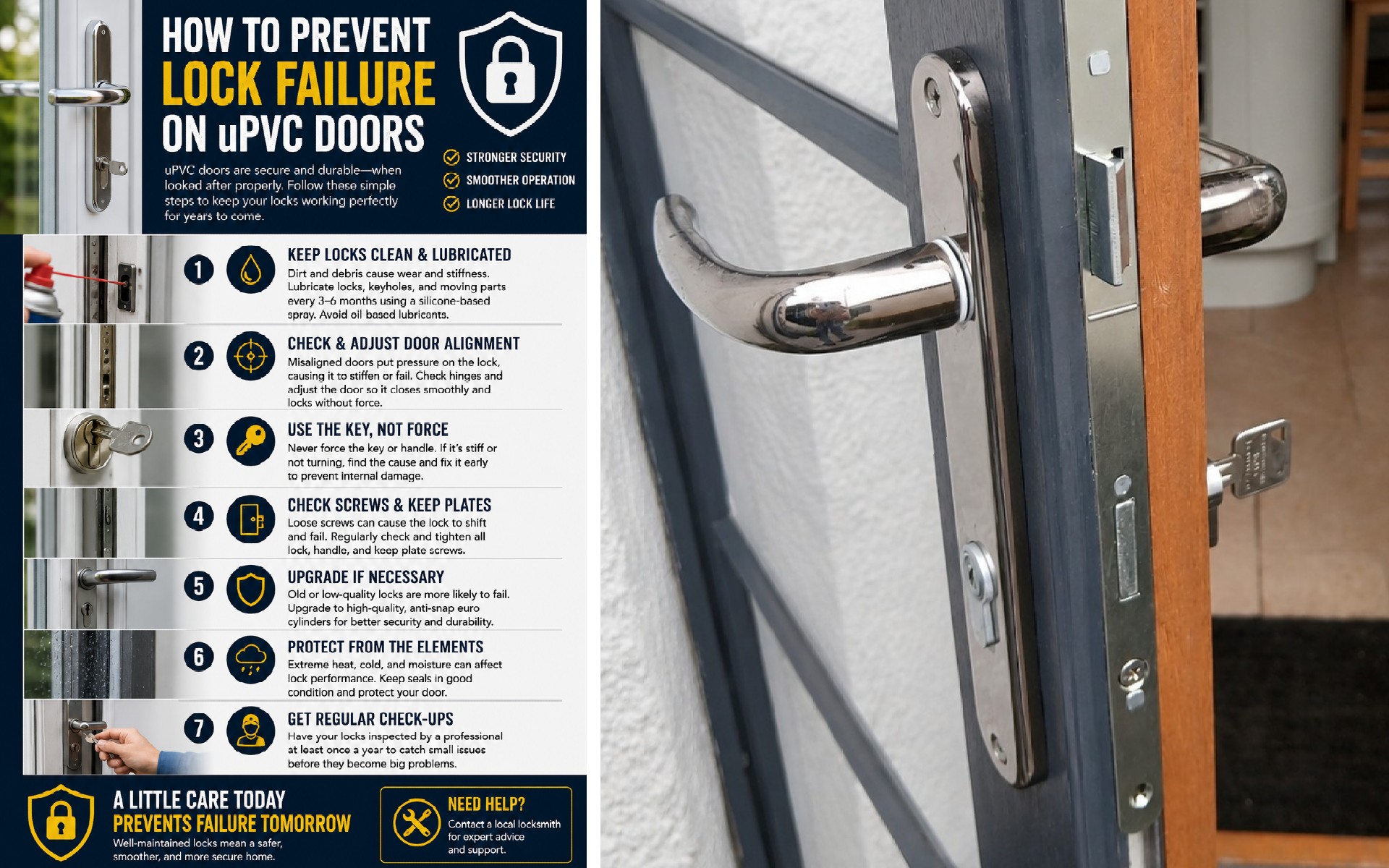
Often, the lock itself isn't the original problem. Poor door alignment, worn hinges, lack of maintenance and ignoring early warning signs all contribute to premature wear. The good news is that a little preventative maintenance and early intervention can significantly extend the life of your locking system and help you avoid expensive repairs or inconvenient lockouts.
Don't Ignore a Stiff Lock
One of the earliest signs that something is wrong is a lock that becomes progressively harder to operate.
You may notice:
- The key becoming harder to turn.
- The handle becoming stiff to lift.
- Increased resistance when locking the door.
- The mechanism feeling rough or inconsistent.
Many homeowners simply apply more force until something eventually breaks. In reality, a stiff lock is usually telling you that the mechanism is under strain and needs attention.
Keep the Door Properly Aligned
Door alignment is one of the biggest factors affecting the lifespan of a multipoint locking mechanism.
As doors age, they can gradually move because of:
- Everyday use.
- The weight of the door.
- Worn hinges.
- Building movement.
- Seasonal expansion and contraction.
When this happens, the locking points no longer line up correctly with the keeps on the frame.
Every time you lift the handle, unnecessary pressure is transferred through:
- The gearbox.
- The multipoint locking mechanism.
- The euro cylinder.
- The handles.
- The locking points.
A simple realignment removes this strain and can add years to the life of the lock.
Lubricate the Moving Parts
Like any mechanical system, a multipoint lock benefits from regular lubrication.
Apply a suitable lubricant to the moving components, including:
- Hooks.
- Rollers.
- Deadbolts.
- Latches.
- Hinges where appropriate.
Keeping these parts moving freely reduces friction, improves operation and helps prevent unnecessary wear.
Avoid using heavy oil inside the lock cylinder. A dedicated lock lubricant is a much better choice.
Replace Worn Handles Early
Door handles work alongside the gearbox every time the door is used.
If the handles become:
- Loose.
- Floppy.
- Difficult to lift.
- Slow to return.
they should be inspected.
Replacing worn handles early is often far less expensive than allowing them to damage the gearbox through continued use.
Don't Force the Handle
If the handle suddenly becomes difficult to lift, resist the temptation to force it.
Repeatedly applying excessive pressure can cause:
- Broken gearbox springs.
- Cracked gearbox casings.
- Bent locking points.
- Broken handles.
- Complete mechanism failure.
What may have been a simple adjustment can quickly turn into a much larger repair.
Check the Lock Cylinder
The euro cylinder should operate smoothly with very little effort.
Warning signs include:
- A stiff key.
- Rough operation.
- Difficulty removing the key.
- Keys sticking in the lock.
- Intermittent operation.
Replacing a worn cylinder before it fails completely helps protect both the cylinder and the gearbox it operates.
Use Good Quality Keys
The condition of your keys also affects the lifespan of your lock.
Avoid using:
- Bent keys.
- Damaged keys.
- Poorly cut copies.
- Copies made from other worn copies.
Poor-quality keys place unnecessary wear on the internal pins of the cylinder and can eventually make a perfectly good lock difficult to operate.
Whenever possible, have duplicates cut from the original key by a reputable locksmith or key cutting specialist.
Deal With Problems Early
Small problems rarely stay small.
Common warning signs include:
- The handle feeling heavier than normal.
- The door catching the frame.
- Hooks not retracting fully.
- The key becoming progressively stiffer.
- Grinding or clicking noises.
- The door only locking when pushed or pulled.
These are all early indicators that something within the door system needs attention.
Repairing the problem early is almost always quicker, cheaper and less disruptive than waiting for the lock to fail completely.
Protect Older Locking Mechanisms
Many older uPVC doors are fitted with locking mechanisms that are now obsolete.
Replacement parts can be difficult—or sometimes impossible—to obtain.
Looking after these mechanisms becomes even more important because unnecessary wear may eventually leave the only option as replacing the complete mechanism with a compatible alternative.
Regular servicing and correct alignment can significantly extend the life of older lock systems.
What Happens If a Lock Isn't Maintained?
Locks that receive little or no maintenance are forced to work progressively harder as friction and wear increase.
Over time this can lead to:
- Stiff handles.
- Difficult-to-turn keys.
- Worn gearboxes.
- Seized locking points.
- Broken handles.
- Snapped keys.
- Failed lock cylinders.
- Jammed doors.
- Complete multipoint locking mechanism failure.
A lock that is continually forced while under strain will almost always fail much sooner than one that is properly maintained and correctly aligned.
Long-Term Benefits of Regular Maintenance
A well-maintained door doesn't just feel better to use—it also lasts considerably longer.
Routine maintenance helps to:
- Reduce wear on expensive components.
- Extend the life of the gearbox.
- Protect the multipoint locking mechanism.
- Improve home security.
- Prevent inconvenient lockouts.
- Reduce repair costs.
- Keep the door operating smoothly throughout the year.
Many gearbox and mechanism failures that appear to be caused by old age are actually the result of years of unnecessary strain and neglected maintenance.
Conclusion
Most uPVC door lock failures are preventable. A lock that operates smoothly, a correctly aligned door, quality keys and occasional lubrication all work together to reduce wear on the gearbox, cylinder and multipoint locking mechanism. By recognising the warning signs early and carrying out simple maintenance, you can significantly extend the lifespan of your door's locking system, avoid unexpected failures and save the cost of major repairs in the future.