uPVC doors are fitted with locking systems designed to secure the door at several points along the frame. These systems provide security, help keep the door firmly closed and allow the door to seal correctly against the weather.
However, when a uPVC door becomes stiff, refuses to lock or develops a fault, understanding how the mechanism works can help you recognise the problem before it becomes worse.
At A.L.S. Locksmiths, we repair and replace uPVC door locks throughout Glasgow, Paisley, Dumbarton, Alexandria, Balloch and surrounding areas. Here is a practical guide to how these locking systems operate.
What Is a Multipoint Locking System?
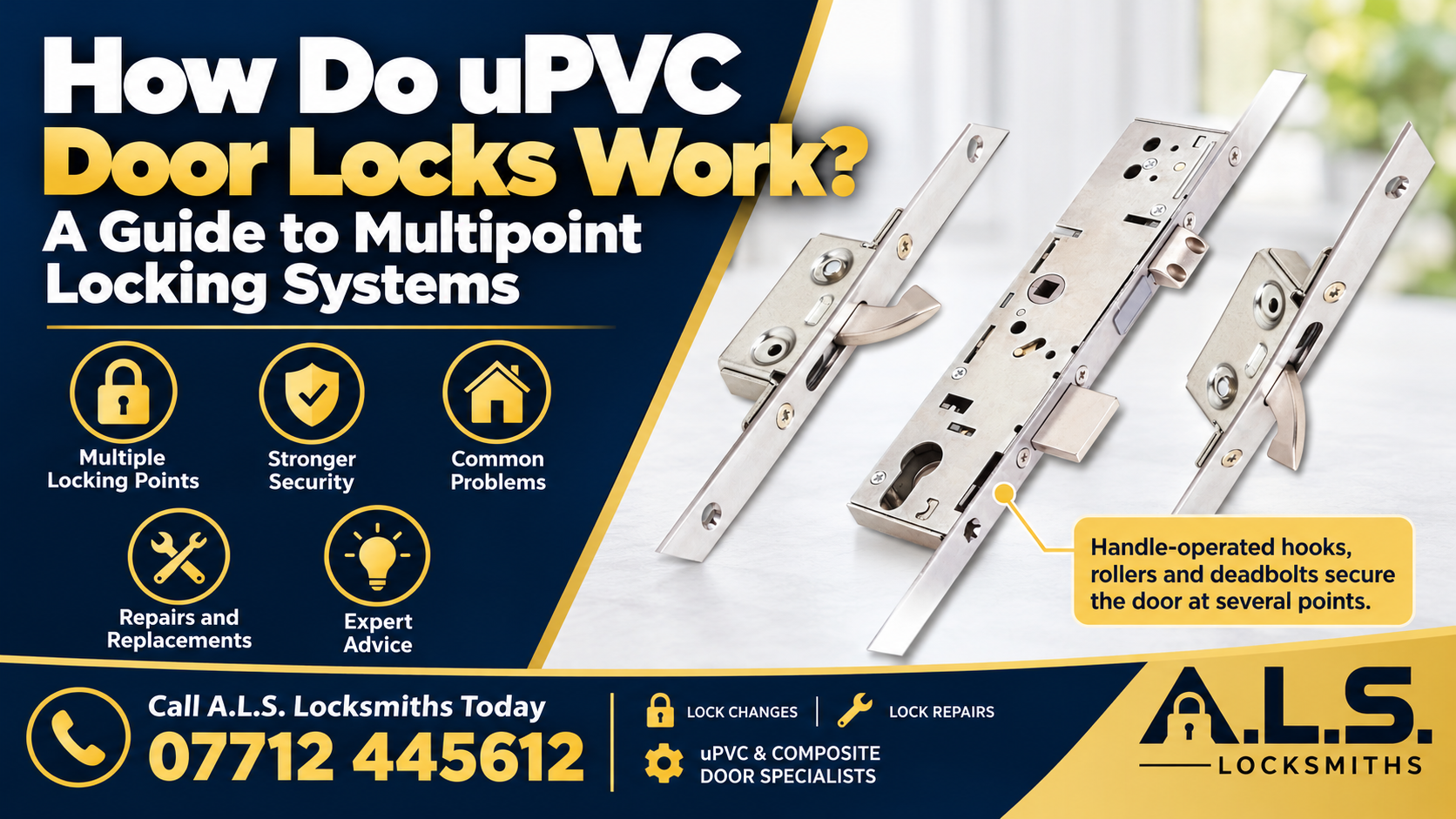
Most modern uPVC doors use a multipoint locking mechanism. Unlike a basic lock that secures the door at a single point, a multipoint system operates several locking points along the edge of the door.
Depending on the design, these may include hooks, rollers, deadbolts and a central latch or deadbolt.
The main components are:
-
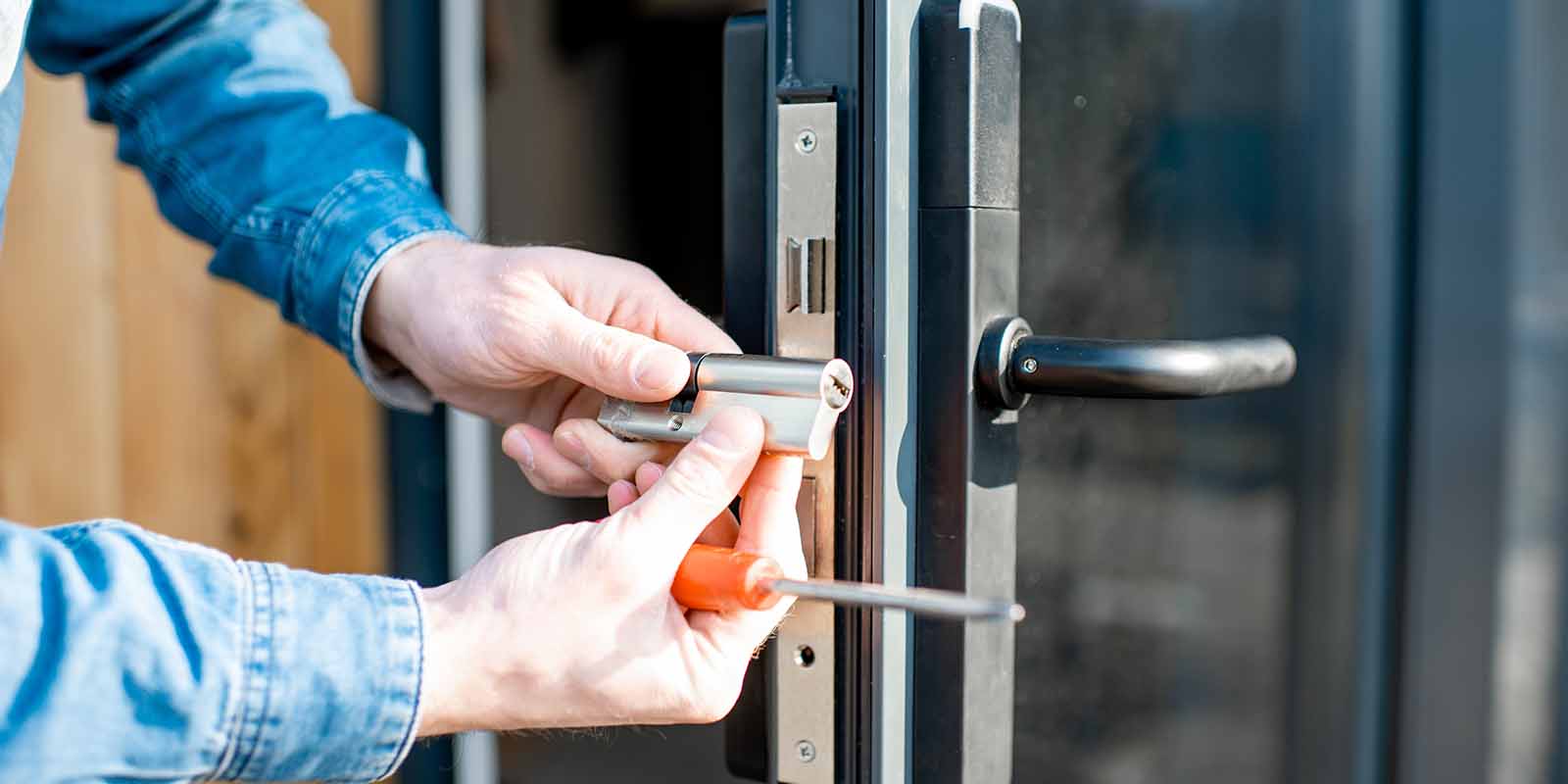
Euro cylinder: The part where you insert and turn the key.
-
Gearbox: The central mechanism that converts movement from the handle or cylinder into locking action.
-
Locking strip: The long metal mechanism fitted along the edge of the door.
-
Hooks, rollers and bolts: Components that engage with keeps fitted to the door frame.
-
Handles and spindle: These transfer handle movement to the gearbox.
-
Keeps: The metal fittings on the frame that receive the locking points.
All these components must work together correctly for the door to lock securely.
How Does a uPVC Door Lock Operate?
1. Closing the Door
When you close the door, the latch meets the corresponding keep in the frame. On many systems, the door can be held shut by the latch before the multipoint locking mechanism is fully engaged.
The door must be correctly aligned for the latch and other locking components to meet their intended positions.
2. Lifting the Handle
On most conventional lift-to-lock systems, lifting the handle operates the gearbox and drives the hooks, rollers or other locking points into their respective keeps.
This secures the door at several positions rather than relying on the central latch alone.
If the door has dropped or the keeps are misaligned, lifting the handle may become difficult. Forcing it can place additional strain on the gearbox and other components.
3. Turning the Key
Once the locking points have engaged, turning the key typically operates the cylinder and secures the mechanism in its locked position.
The exact sequence depends on the lock design. Some systems use different operating arrangements, so not every uPVC door works in precisely the same way.
What Does the Gearbox Do?
The gearbox is the central operating component of the multipoint lock. It transfers movement from the handle and cylinder to the locking strip.
When the gearbox wears, breaks or develops an internal fault, the door may exhibit several symptoms:
-
The handle moves but the locking points do not operate correctly.
-
The key turns without locking or unlocking the door.
-
The handle becomes stiff or feels unusually loose.
-
The door becomes stuck in the locked or unlocked position.
-
The mechanism fails intermittently.
A faulty gearbox does not automatically mean the entire door needs replacing. In many cases, the gearbox or complete locking mechanism can be replaced, provided a suitable compatible part is available.
Correct identification is important because gearboxes differ in dimensions, centres, backset, spindle position and connection arrangements.
Why Does a uPVC Door Become Difficult to Lock?
A stiff or unreliable door lock can have several causes.
Door Misalignment
uPVC doors can move slightly over time due to wear, settling or changes in temperature. If the door drops or shifts, the hooks, rollers and bolts may no longer line up correctly with the keeps.
The solution: The door may need realignment and adjustment rather than a new lock.
Worn or Failed Gearbox
Internal components can wear or break, preventing the locking points from operating properly.
The solution: A compatible replacement gearbox or complete mechanism may be required.
Faulty Euro Cylinder
A damaged or worn cylinder can make the key difficult to turn or prevent the lock from operating reliably.
The solution: The cylinder may need replacing after the cause of the fault has been established.
Worn Handles or Spindle
Loose handles, damaged springs or a worn spindle can affect the operation of the gearbox.
The solution: Replacing the faulty handle components may restore normal operation if the gearbox itself is still serviceable.
Can You Upgrade a uPVC Door Lock?
Yes. Depending on the existing door and mechanism, it may be possible to improve security without replacing the entire door.
One option is to fit a suitable anti-snap euro cylinder. Cylinder security ratings, including TS007, can help you identify products tested against recognised attack methods. A TS007 3-star cylinder is one option, while a suitable 1-star cylinder combined with a 2-star security handle can provide an alternative compliant arrangement.
The cylinder must be correctly sized and fitted. A cylinder that protrudes excessively from the handle can create a security weakness.
If your existing multipoint mechanism is obsolete or no longer available, a compatible replacement or suitable upgrade may still be possible following an assessment of the door.
Should You Repair or Replace the Lock?
The correct solution depends on the fault.
A cylinder replacement may resolve a key-related problem, while a gearbox replacement may be necessary if the central mechanism has failed. If the door has dropped, realignment may be the only repair required.
Replacing components without identifying the underlying problem can lead to unnecessary expense and may not resolve the fault.
If your uPVC door is becoming difficult to lock, avoid forcing the handle or key. Arrange an inspection before the mechanism fails completely, particularly if the door is your main entrance.
uPVC Door Lock Repairs in Glasgow and Paisley
At A.L.S. Locksmiths, we regularly deal with faulty gearboxes, worn cylinders, stiff handles, misaligned doors and obsolete multipoint mechanisms.
Our approach is to identify the actual cause of the problem and explain the available repair or replacement options. In many cases, you do not need a new door just because the locking mechanism has failed.
We provide professional uPVC door lock repairs, mechanism replacements, cylinder upgrades and door realignment throughout Glasgow, Paisley, Dumbarton, Alexandria, Balloch and surrounding areas.
We operate on a fixed-price basis, with no call-out fees. You receive a clear quotation before the agreed work proceeds.
Having problems with your uPVC door lock? Contact A.L.S. Locksmiths on 07712 445612 for advice and professional door lock repairs.
A correctly functioning locking system helps protect your property, so deal with stiff or unreliable locks before they leave you unable to secure your home.