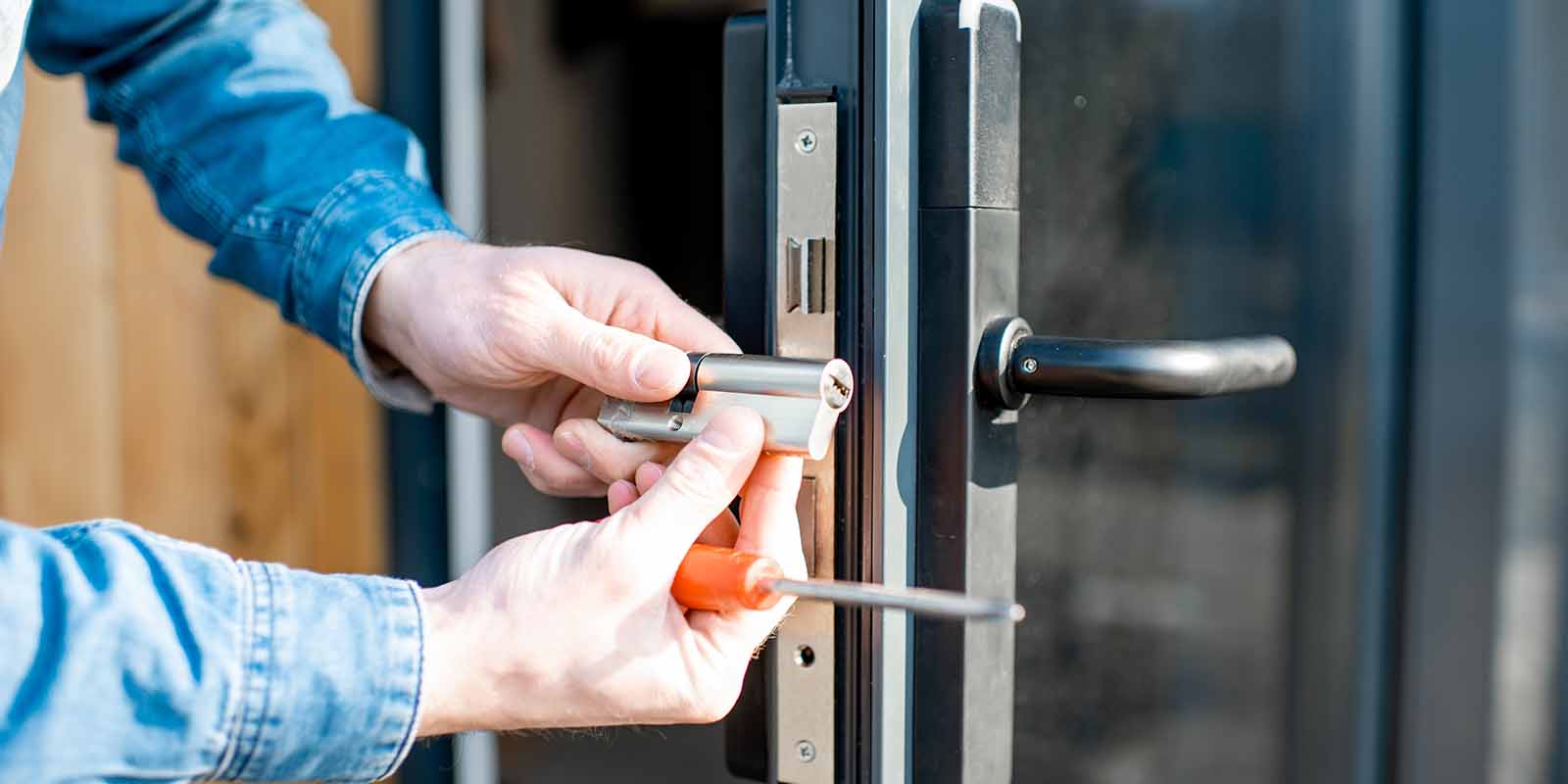
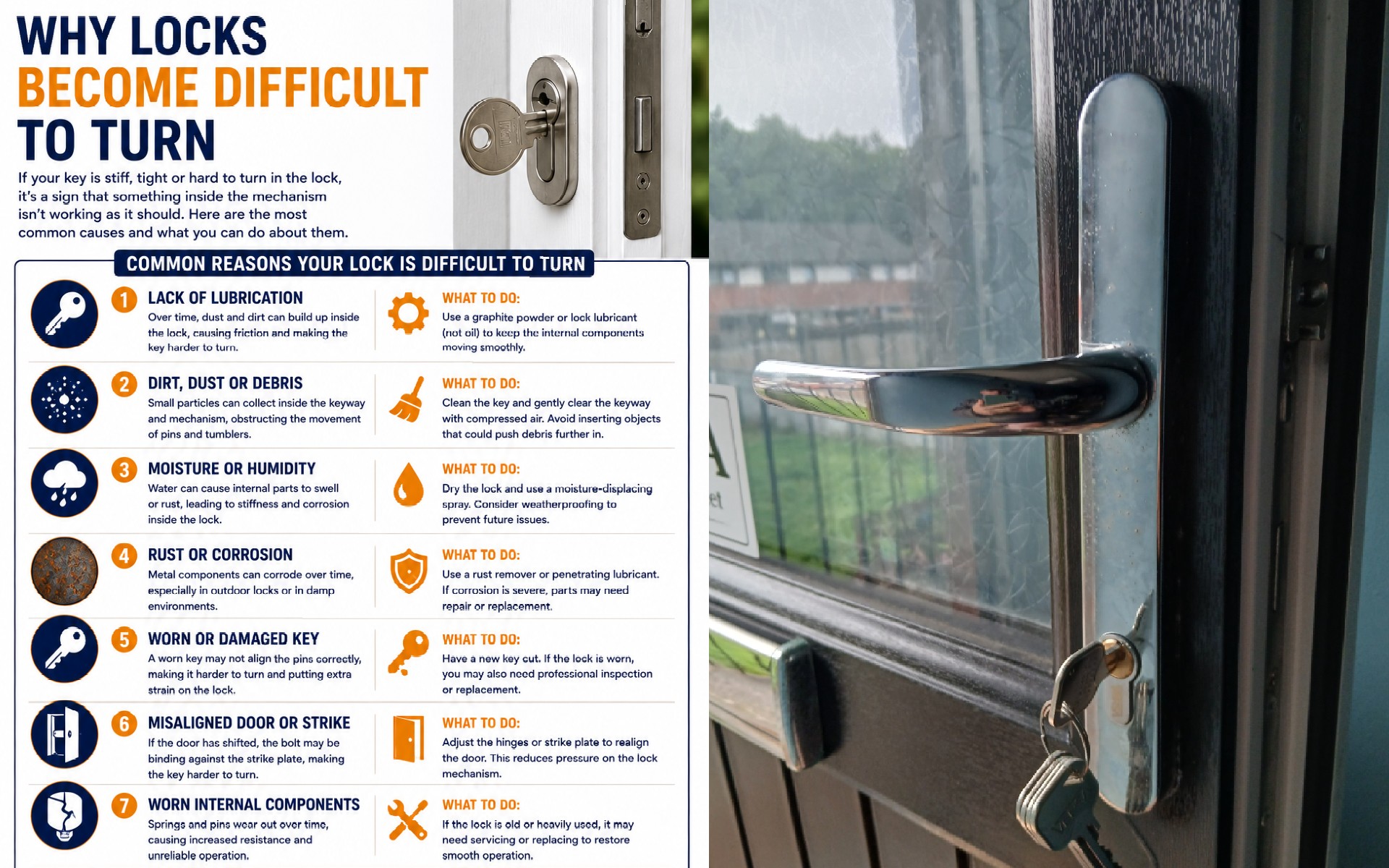
A lock that becomes difficult to turn is usually a warning sign that something isn't working as it should. While many homeowners assume the lock itself is worn out, the problem is often caused by the door, locking mechanism or poor alignment placing unnecessary strain on the lock.
Ignoring the issue can eventually lead to a failed lock, a damaged key or even a jammed door. Why Locks Become Difficult to Turn is one of the earliest warning signs that something within the door system needs attention.
Door Alignment Problems
One of the most common causes of a stiff lock is a door that has dropped out of alignment.
When the hooks, rollers and locking points no longer line up correctly with the keeps in the frame, extra pressure is transferred into the lock cylinder every time you turn the key.
Common signs include:
- Difficulty lifting the handle.
- Having to push or pull the door.
- The door catching the frame.
- Draughts around the door.
In many cases, correctly realigning the door restores smooth operation. uPVC Door Realignment and Lock Adjustment explains why alignment is often the real solution.
A Worn Lock Cylinder
Like any mechanical component, lock cylinders wear over time.
Years of daily use can wear the internal pins and springs, causing the lock to feel rough or stiff.
Typical symptoms include:
- The key becoming harder to turn.
- The key sticking in the lock.
- The lock working intermittently.
- The key needing to be wiggled.
If the problem occurs whether the door is open or closed, the cylinder itself may need replacing.
Poorly Cut Keys
A badly cut key can gradually damage a lock.
If the key doesn't accurately match the original profile, it forces the internal pins into the wrong positions, creating unnecessary wear inside the cylinder.
Where possible, always have duplicate keys cut from the original key rather than from another copy.
A Failing Gearbox
On uPVC and composite doors, the lock cylinder works together with the gearbox.
If the gearbox begins to fail, you may notice:
- Increased resistance when turning the key.
- Difficulty locking the door.
- The handle becoming stiff.
- The locking points failing to engage smoothly.
Many homeowners replace the cylinder only to discover the real fault was the gearbox. Can a Faulty Gearbox Be Repaired? explains why replacing the gearbox is often the correct solution.
Seized Locking Points
Hooks, rollers, mushroom cams and deadbolts should all move freely.
If they become stiff through dirt, corrosion or wear, the lock has to work much harder every time the key is turned.
The extra resistance is often mistaken for a faulty cylinder when the real problem lies elsewhere in the locking mechanism.
Lack of Maintenance
Many door locks receive little or no maintenance throughout their lifetime.
Over time:
- Dirt builds up.
- Lubrication dries out.
- Moving parts become stiff.
- Wear gradually increases.
Simple maintenance can help keep the locking system operating smoothly and prevent unnecessary wear.
Cold Weather Can Highlight Existing Problems
Many homeowners notice their lock becomes stiffer during colder weather.
Temperature changes can cause slight movement in both the door and the frame, making existing alignment problems more noticeable.
Rather than creating the fault, winter often exposes an issue that was already beginning to develop.
The Wrong Lock Size
A lock cylinder that protrudes too far beyond the handle isn't just a security concern.
Excessive movement and leverage can also contribute to premature wear.
A correctly sized cylinder should sit as close to flush with the handle as possible while still operating correctly.
Don't Force the Lock
If your key becomes difficult to turn, resist the temptation to use more force.
Doing so can:
- Snap the key.
- Damage the cylinder.
- Break the gearbox.
- Cause a complete lock failure.
A minor repair carried out early is usually far less expensive than repairing the damage caused by forcing a stiff lock.
Fix the Cause Before the Lock Fails
A lock that becomes difficult to turn is usually giving you an early warning that something isn't right. Whether the cause is poor door alignment, a worn cylinder, a failing gearbox or seized locking points, identifying the fault early can prevent a complete lock failure and avoid more costly repairs. Can a Misaligned Door Damage the Lock?, Can a Dropped Door Damage the Lock Mechanism? and uPVC Jammed Door Specialist explain why dealing with stiffness early helps protect the entire locking system and keeps your door operating smoothly.