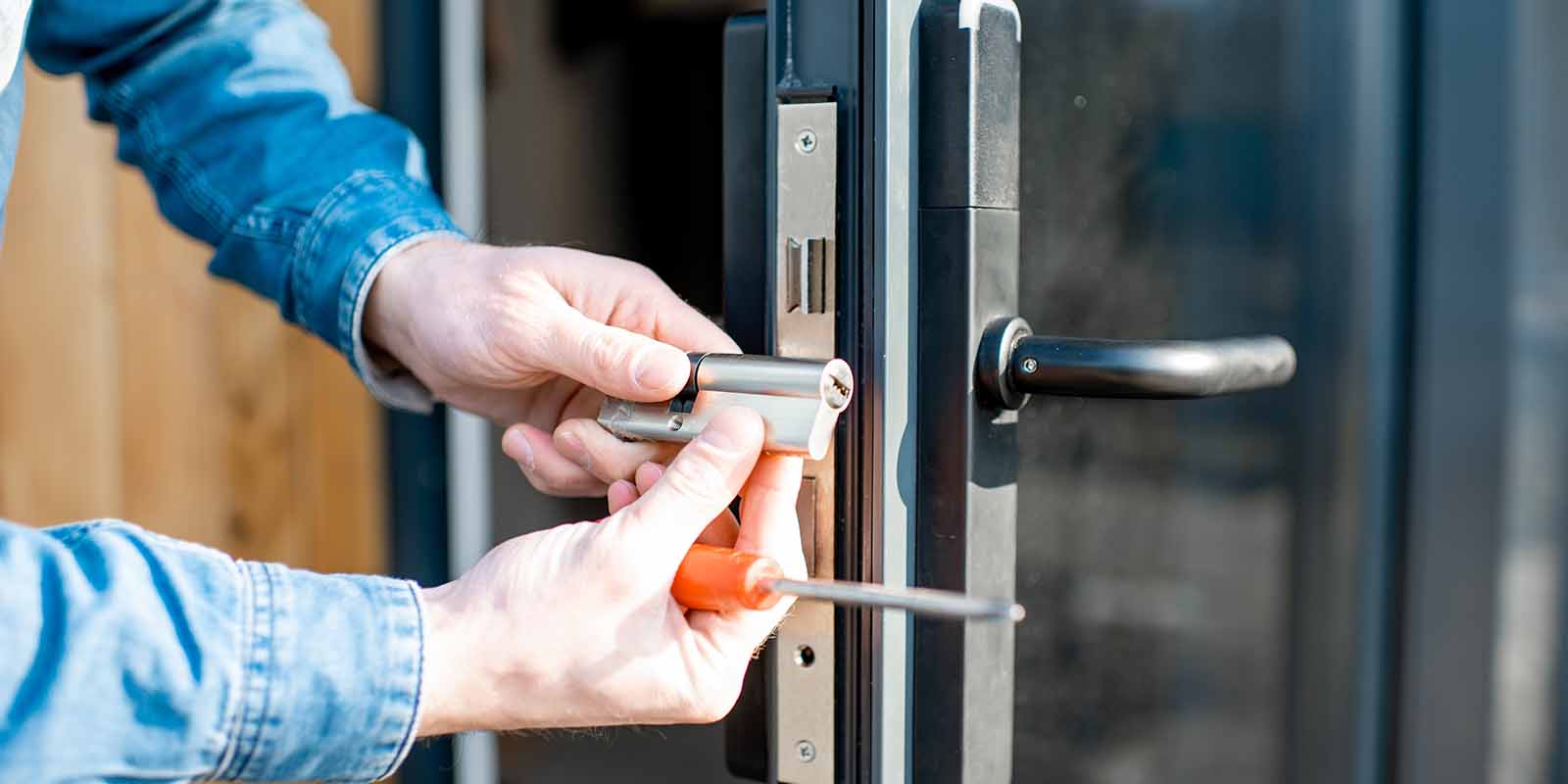
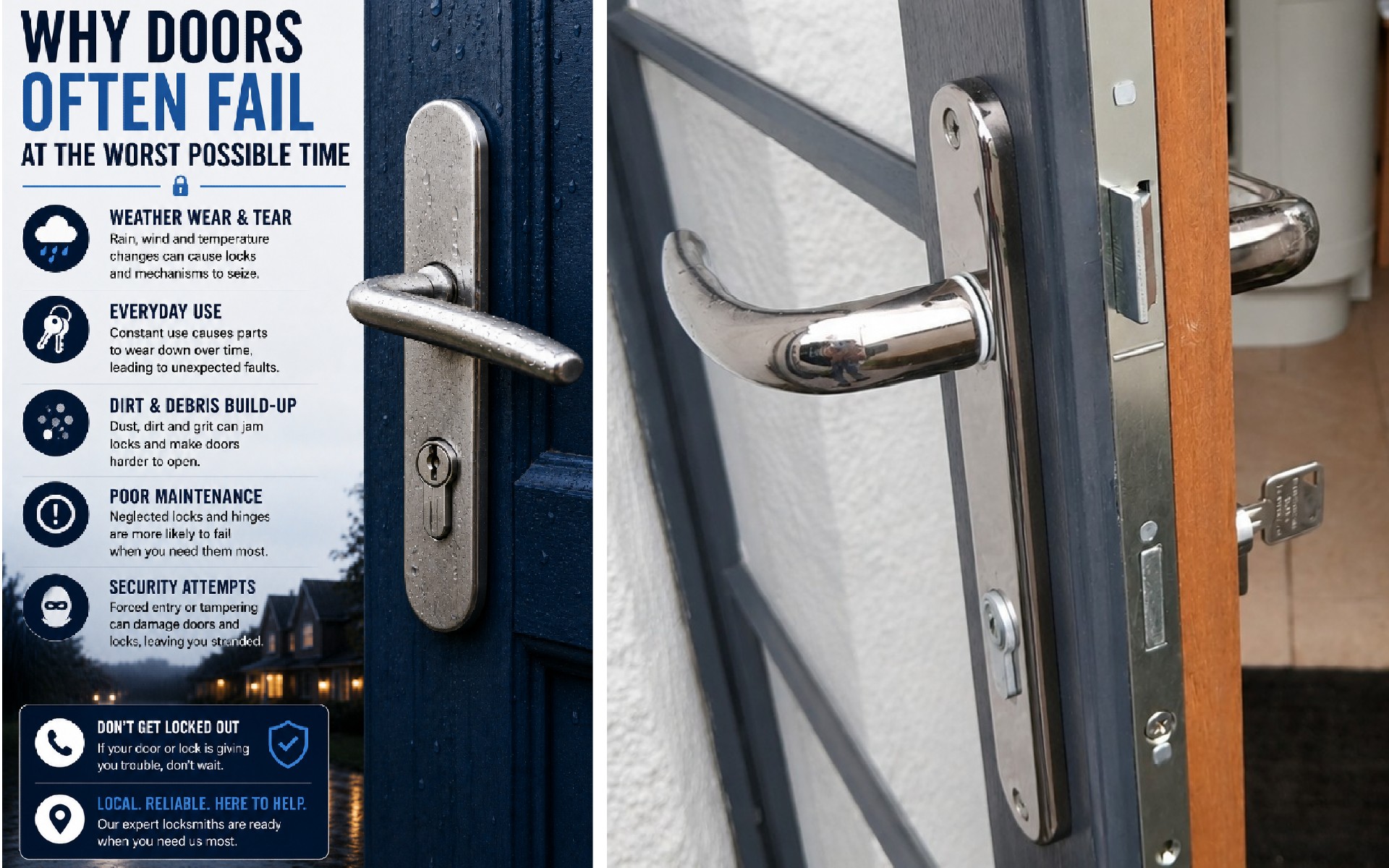
Have you ever noticed that door locks never seem to fail on a quiet afternoon when you've got nothing planned? Instead, they usually stop working when you're rushing to work, doing the school run, arriving home from holiday or standing outside in the pouring rain.
While it may feel like bad luck, there's usually a reason why door problems seem to happen at the worst possible moment.
The Warning Signs Were Already There
Most locks and multipoint mechanisms don't suddenly fail without warning.
In the weeks or even months beforehand, homeowners often notice things like:
- A stiff key.
- A loose or floppy handle.
- Difficulty lifting the handle.
- The door catching the frame.
- Having to push or pull the door to lock it.
Because the door still works, these symptoms are often ignored until the mechanism finally gives up. Why Locks Become Difficult to Turn explains why a stiff lock should never be ignored.
Wear Builds Up Over Time
Door locks are mechanical devices that are used every single day.
A typical front door may be opened and locked thousands of times each year. Over time:
- Springs weaken.
- Gearboxes wear.
- Lock cylinders age.
- Handles loosen.
- Hinges gradually move.
The wear happens little by little until one component eventually reaches the point where it can no longer cope.
Weather Can Be the Final Straw
Scotland's weather can have a surprising effect on doors.
Cold weather, heavy rain and seasonal movement can cause:
- Doors to expand and contract.
- Locking points to become stiff.
- Existing alignment problems to worsen.
- Small faults to become much more noticeable.
Many failures occur during winter because the mechanism was already under strain and the changing weather simply pushed it beyond its limits.
A Dropped Door Places Everything Under Pressure
One of the biggest causes of lock failure is poor door alignment.
When a door gradually drops on its hinges, extra pressure is placed on:
- The gearbox.
- The lock cylinder.
- The locking points.
- The door handles.
Every time the handle is lifted, those components have to work harder than they should.
Eventually, something fails. Can a Dropped Door Damage the Lock Mechanism? explains why a simple alignment problem often leads to expensive lock repairs if left unresolved.
The Door Usually Fails When You Need It Most
Most front doors are used at the busiest times of the day.
That's why failures often happen:
- First thing in the morning.
- When leaving for work.
- During the school run.
- Returning home after a long day.
- Just before going on holiday.
The mechanism may have been deteriorating for months, but it only becomes obvious when the door is being used.
Small Problems Become Bigger Repairs
Many emergency call-outs begin with the same comment:
"It's been a bit stiff for a while."
What started as a minor issue can eventually lead to:
- Failed gearboxes.
- Snapped keys.
- Jammed doors.
- Broken handles.
- Complete lock failures.
Early diagnosis is almost always cheaper than waiting until the door stops working altogether.
Prevention Is Better Than an Emergency Repair
Regular maintenance and early repairs can significantly reduce the risk of an unexpected failure.
Simple checks include:
- Testing the lock regularly.
- Checking the door alignment.
- Lubricating moving parts.
- Replacing worn handles.
- Investigating stiff locks as soon as they appear.
Correcting a small problem today can prevent a major repair tomorrow. uPVC Door Realignment and Lock Adjustment explains why proper alignment is one of the best ways to extend the life of your locking mechanism.
Most Failures Don't Mean a New Door
The good news is that a failed lock or multipoint mechanism rarely means the entire door needs replacing.
In many cases, the solution is simply:
- Replacing the gearbox.
- Repairing the locking mechanism.
- Adjusting the hinges.
- Realigning the door.
- Replacing a worn lock cylinder.
You Don't Need a New Door – We Can Repair It explains why repairing the existing door is often the most cost-effective solution.
Listen to What Your Door Is Telling You
Doors and locks usually give plenty of warning before they fail completely. If your key is becoming stiff, the handle feels heavier than normal or the door is becoming harder to lock, it's worth investigating the cause before it turns into an emergency. Acting early can prevent inconvenient lockouts, avoid unnecessary damage and help keep your door operating reliably for years to come. If your door has already started showing signs of trouble, Door Dropped? Signs Your Hinges Need Adjustment, Can a Misaligned Door Damage the Lock?, and uPVC Jammed Door Specialist explain why early repairs are almost always quicker, simpler and less expensive than dealing with a complete lock failure.