When a door becomes difficult to lock or won't open properly, replacing the first part that looks faulty isn't always the right answer. In fact, it's one of the main reasons homeowners end up paying for repeat repairs.
The difference between a temporary fix and a long-lasting repair often comes down to experience.
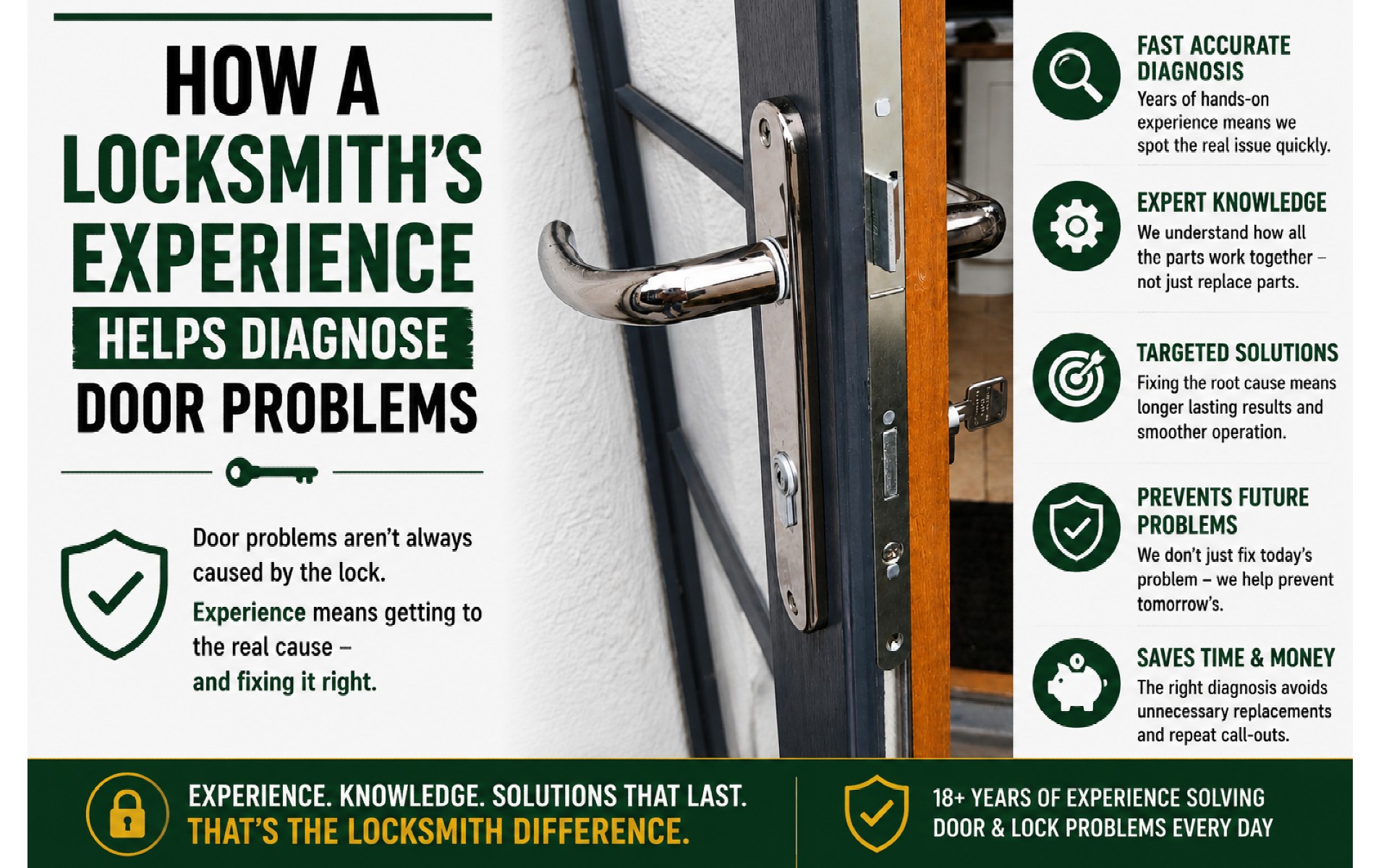
An experienced locksmith doesn't just replace broken parts—they identify why those parts failed in the first place. By diagnosing the root cause rather than simply treating the symptom, they can recommend repairs that are more reliable, more cost-effective and built to last.
Every Fault Has a Cause
Door locks, handles and gearboxes don't usually fail without warning.
There's almost always an underlying reason, such as:
- A dropped door
- Poor door alignment
- Worn hinges
- A stiff locking mechanism
- Years of normal wear and tear
Simply replacing the failed part without correcting the cause often means the same problem returns.
Experience Spots the Real Problem
An experienced locksmith looks beyond the obvious fault.
For example, if a homeowner reports a broken handle, the first question isn't, "Which handle do you need?"
Instead, they'll ask:
- Why did the handle break?
- Is the gearbox becoming stiff?
- Is the door putting pressure on the lock?
- Are the locking points lining up correctly?
- Has the door dropped on its hinges?
The broken handle may simply be the result of a much larger issue.
Small Symptoms Tell a Bigger Story
Years of repairing domestic doors allows an experienced locksmith to recognise patterns that others may overlook.
For example:
- A lock that works with the door open usually points to poor alignment.
- A key that's difficult to turn only when the door is closed often indicates pressure on the locking points.
- A handle that won't spring back may suggest a failing gearbox rather than a faulty handle.
- A gearbox that has failed prematurely often indicates the door has been operating under excessive strain.
These clues help identify the real cause before unnecessary parts are replaced.
Not Every Door Needs New Parts
Experience also means knowing when existing components can be kept.
Sometimes the repair only requires:
- Door realignment
- Hinge adjustment
- A replacement gearbox
- A new euro cylinder
- New handles
Replacing the complete multipoint locking mechanism—or even the door itself—is often unnecessary.
Older Doors Can Often Be Saved
Many homeowners are told their door can't be repaired because the locking mechanism is obsolete.
An experienced locksmith may instead be able to:
- Source compatible replacement parts.
- Replace only the centre case (gearbox).
- Upgrade the locking mechanism.
- Adapt suitable replacement components.
That knowledge can save hundreds, and sometimes thousands, of pounds.
Door Alignment Is Part of the Diagnosis
One of the biggest mistakes is replacing a failed lock without checking the alignment of the door.
If the door has dropped:
- The new gearbox will still work under strain.
- The new handles will continue to experience excessive force.
- The locking mechanism will wear more quickly.
A proper repair includes correcting the alignment as well as replacing any worn parts.
Experience Prevents Repeat Repairs
Replacing parts without understanding why they failed often leads to repeat breakdowns.
A professional diagnosis helps ensure:
- Only worn components are replaced.
- The root cause is corrected.
- The locking system operates without unnecessary strain.
- The repair lasts as long as possible.
That's better value than repeatedly replacing the same components.
Repairing the Cause Saves Money
A careful diagnosis often avoids replacing parts that are still in good condition.
Rather than replacing the entire locking system, the solution may simply be:
- A gearbox replacement
- A door adjustment
- A new lock cylinder
- Replacing worn handles
Repairing only what's necessary reduces costs while restoring smooth, reliable operation.
Experience Is More Valuable Than Guesswork
Anyone can replace a part that has already failed. The real skill lies in understanding why it failed and preventing it from happening again. An experienced locksmith combines product knowledge with years of fault diagnosis to identify the underlying cause, recommend the correct repair and ensure the door operates as it should. That's why experience doesn't just solve today's problem—it helps prevent tomorrow's.
At A.L.S. Locksmiths, we don't believe in guessing or replacing parts unnecessarily. We believe in diagnosing the fault properly, repairing the cause and providing homeowners with repairs that stand the test of time.
Related article: Letterbox replacement fitted (problem solving and overcoming challenges to get the job done right).