A Simple Job... Or So It Seemed
I was recently called to a customer's property to carry out what appeared to be two straightforward jobs: fit a Yale nightlatch and install a new letterbox.
As is often the case, things don't always go to plan.
Saving the Customer Money
The original plan was to supply and fit a new Yale nightlatch. However, after inspecting the existing lock, I found it was still in good working order.
Rather than replacing a perfectly serviceable lock, I suggested reusing it instead.
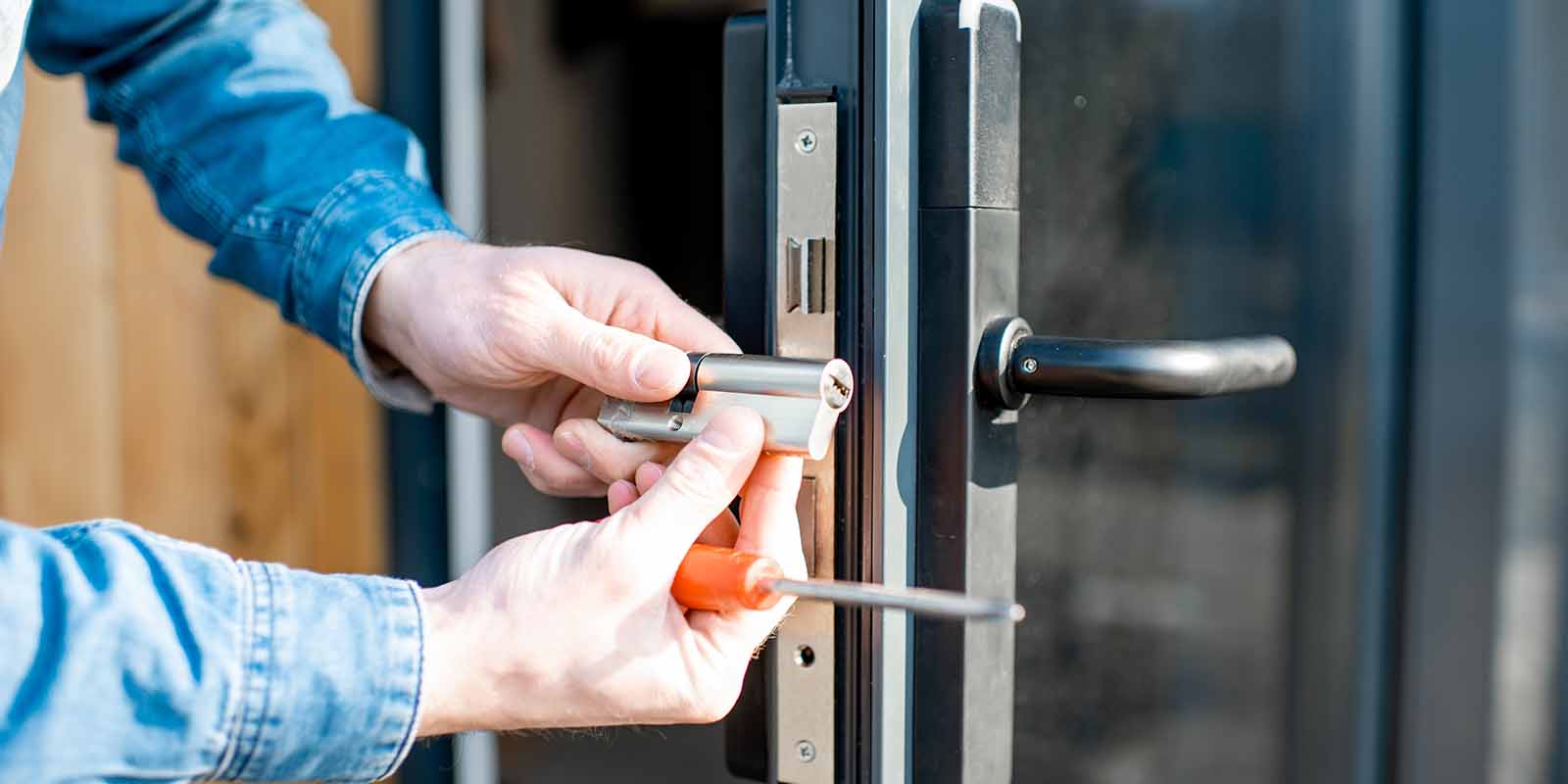
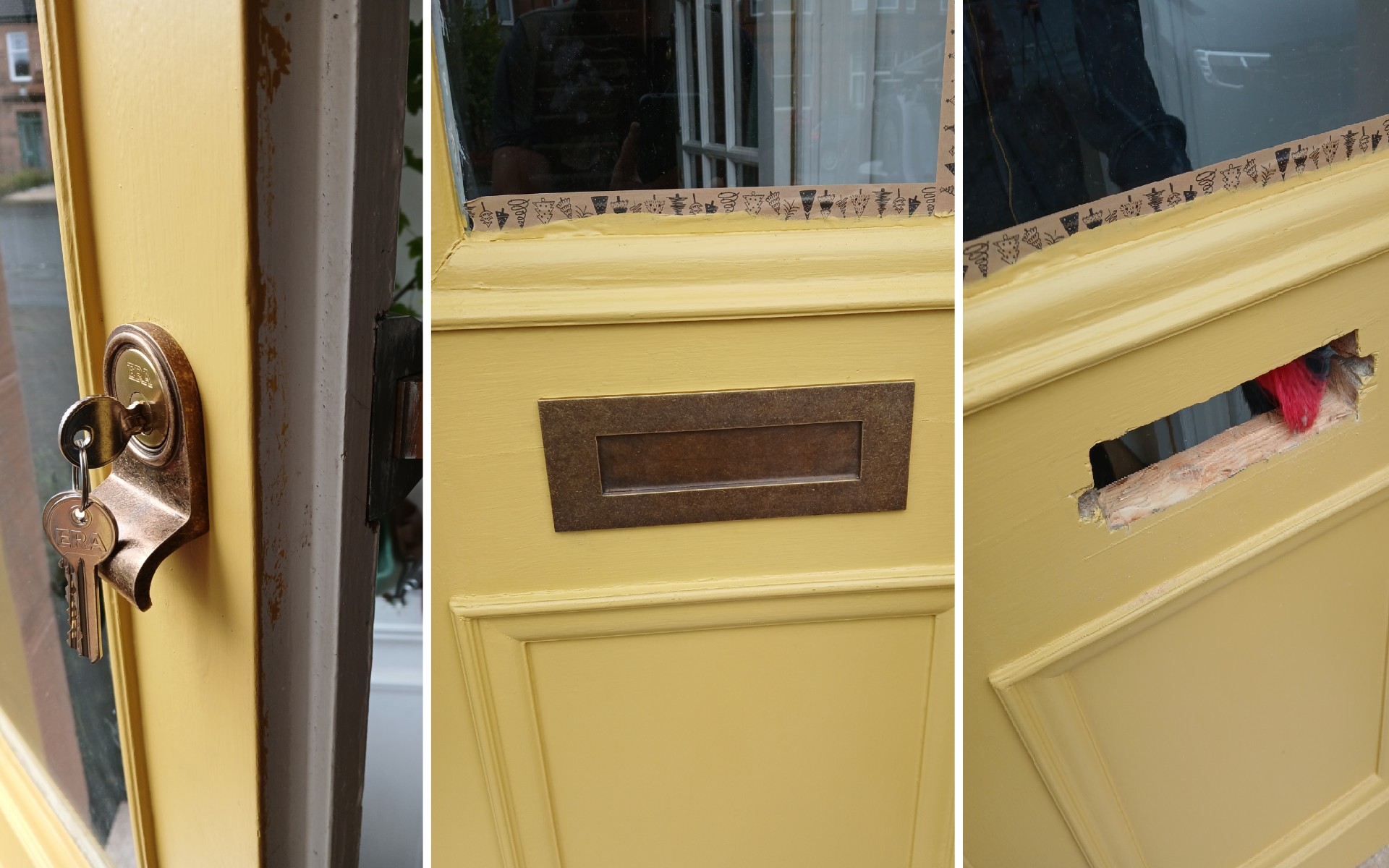
The customer had already supplied a new rim cylinder complete with an external pull ring, so I fitted this to the existing nightlatch. The lock operated perfectly, giving the customer exactly what they wanted while avoiding the unnecessary cost of a complete replacement.
If something doesn't need replacing, I won't replace it.
The Letterbox Was a Different Story
With the nightlatch completed, I moved on to fitting the new letterbox.
The first thing I noticed was that it wasn't a direct replacement.
When I offered it up to the door it was around 10mm longer than the original opening and slightly wider.
Unfortunately, that wasn't the only problem.
The original cut-out in the timber door had been made very poorly. The edges weren't straight, there was very little timber left in places and there was nowhere suitable for the fixing bolts to tighten securely.
It quickly became clear that this wasn't simply a case of removing one letterbox and fitting another.
Making Custom Spacer Plates
The fixing bolts supplied with the new letterbox had nothing solid to tighten against.
After looking at the problem, I decided the best solution was to make my own spacer plates.
Using some scrap steel I carried on the van, I measured the width required, marked everything out, drilled the fixing holes and cut the metal to size.
These custom-made spacer plates acted like long horizontal washers, spreading the load across the inside of the door and providing a solid fixing point for the bolts.
Sometimes having the right materials on the van allows you to solve problems that off-the-shelf parts simply can't.
Modifying the Fixings
The supplied fixing bolts also proved to be too long.
Using a vice, I carefully shortened each bolt by approximately 5mm, allowing the letterbox to tighten correctly without bottoming out before it clamped securely against the door.
Another Problem Appears
Once everything was assembled, I expected the job to be finished.
Instead, the external flap wouldn't open properly.
On inspection, I discovered the inner edge of the existing cut-out bowed upwards, preventing the letter plate from swinging freely.
The letterbox had to come back off.
Using a straight edge, I marked new cutting lines before carefully trimming both sides of the opening with my multi-tool to create a straight, even aperture.
After cleaning everything up, I refitted the letterbox.
One Final Adjustment
The letterbox was now operating correctly, but visually something still wasn't right.
Looking from the outside, it wasn't sitting perfectly level.
After removing it once more, I identified the cause.
One side of the timber behind the fixing bolt was preventing the letterbox from sitting square against the face of the door.
By carefully removing around 3–4mm of timber from that area, I allowed the letterbox to settle into its correct position.
Once reassembled, it finally sat perfectly horizontal.
A Job Worth Taking the Time Over
With everything completed, the new letterbox operated smoothly, the flap opened freely and the fixings were secure.
The existing Yale nightlatch continued to work perfectly with its new rim cylinder and pull ring, saving the customer the cost of buying a completely new lock.
Although what started as a simple installation turned into a series of unexpected challenges, each problem was solved without compromising the finished appearance.
These are often the jobs I enjoy the most. Every obstacle requires a bit of thought, a practical solution and a willingness to adapt rather than take shortcuts.
The customer was delighted with the finished result, and so was I.
Honest Advice and Practical Solutions
Not every job involves simply replacing old parts with new ones. Sometimes the best service you can provide is recognising when an existing lock is still perfectly usable and finding a way to make new components fit properly. A little extra time spent diagnosing problems, making custom adjustments and carrying out careful workmanship can often save customers money while achieving a much better finish than a rushed installation.
Related Articles:
What to Look for When Choosing a Locksmith?