What Is a BS8621 Lock?
A BS8621 lock is a British Standard high-security lock designed for external doors where occupants need to escape quickly without using a key.
From the outside, the lock is operated using a key.
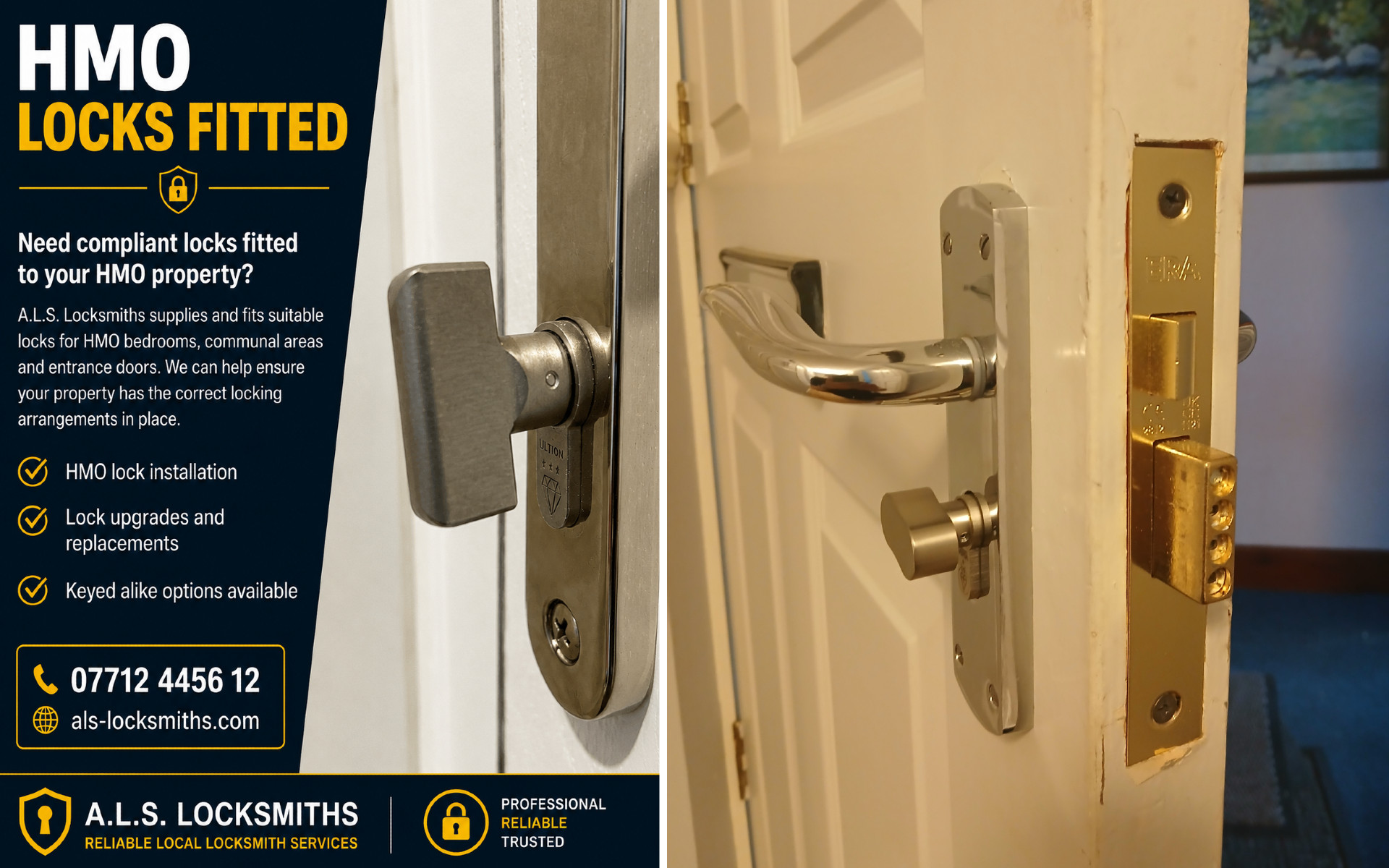
From the inside, it is opened using a thumb-turn or handle, allowing immediate exit without searching for a key. This makes it ideal for doors that form part of an escape route in the event of a fire.
How Is It Different from BS3621?
Although BS8621 and BS3621 offer a similar level of burglary resistance, they differ in how they're operated from inside.
| BS3621 | BS8621 |
|---|---|
| Key required from both sides | Key outside, thumb-turn or handle inside |
| Maximum security against someone reaching through a broken pane or letterbox | Designed to allow rapid emergency escape |
| Common on traditional timber front doors | Common where fire escape is a priority |
Both standards are independently tested for resistance to common methods of attack, including drilling, picking and forced entry. The main difference is the escape function.
Where Are BS8621 Locks Used?
BS8621 locks are commonly fitted to:
- HMO entrance doors.
- Flats and apartments.
- Apartment block entrance doors.
- Residential properties where occupants may need rapid escape.
- Timber front doors.
- Timber back doors.
- Some communal entrance doors.
They're particularly common where the front door is the principal escape route.
Can BS8621 Be Used on uPVC and Composite Doors?
Not usually.
Most uPVC and composite doors use multipoint locking mechanisms, so the equivalent arrangement is normally:
- A multipoint locking mechanism.
- A thumb-turn euro cylinder.
- A high-security anti-snap cylinder where appropriate.
This provides the same keyless escape function while retaining the advantages of a multipoint lock.
Is BS8621 Still Insurance Approved?
Yes.
BS8621 remains a current British Standard and is still recognised by insurers where a keyless escape lock is appropriate. It provides the same level of burglary resistance as BS3621, with the added benefit of allowing occupants to leave without using a key.
However, it's important to remember:
- Always check your own insurance policy.
- Some insurers specifically ask for BS3621 on timber entrance doors.
- Others accept BS8621 because it offers equivalent security while improving fire safety.
- Many insurers simply require the lock to comply with the relevant British Standard for that type of installation.
Advantages of BS8621 Locks
A BS8621 lock offers several important benefits:
- Keyless escape during an emergency.
- High level of burglary resistance.
- British Standard tested and certified.
- Suitable for many HMO and apartment applications.
- Ideal where fire safety is a priority.
- Easy day-to-day operation without searching for keys.
Are There Any Disadvantages?
The thumb-turn on the inside can introduce a small security consideration.
If your door has:
- Large glazed panels close to the lock.
- Unprotected glass.
- A letterbox positioned where someone could reach the thumb-turn.
additional protection may be needed, or another lock type may be more appropriate. This is why the entire door design should always be considered, not just the lock itself.
When Would I Recommend BS8621?
BS8621 is an excellent choice for:
- HMOs.
- Flats.
- Apartment entrance doors.
- Timber entrance doors where rapid escape is important.
- Landlords upgrading properties.
- Homeowners who don't want to keep a key in the lock at night.
Conclusion
A BS8621 lock combines high-security protection with safe emergency escape. It offers burglary resistance comparable to a BS3621 lock while allowing occupants to leave the property from the inside without using a key, making it particularly suitable for HMOs, flats and many timber entrance doors. It remains a recognised British Standard and is still accepted for many insurance and security applications, provided it is appropriate for the property and complies with the insurer's requirements. On uPVC and composite doors, the equivalent solution is typically a multipoint locking mechanism fitted with a high-security thumb-turn euro cylinder, giving the same keyless escape while maintaining the security benefits of a modern multipoint lock.