Introduction
Most homeowners use their front door every day without giving much thought to how it works. Opening the door, lifting the handle and turning the key quickly become second nature, so it's easy to forget that a modern entrance door is actually a carefully engineered system made up of dozens of individual components.
However, when something goes wrong, simple questions such as "What type of lock do you have?", "Is it a lift-to-lock mechanism?" or "What size euro cylinder is fitted?" can be surprisingly difficult to answer.
Knowing a few basic facts about your own front door can make diagnosing problems much easier. It can also help identify the correct replacement parts first time, reduce unnecessary delays and allow you to understand the advice you're given if repairs or security upgrades are recommended.
This guide explains the essential information every homeowner should know about their entrance door, from recognising the locking system and identifying common parts to measuring components accurately and describing faults clearly.
Your Front Door Is More Than Just a Lock
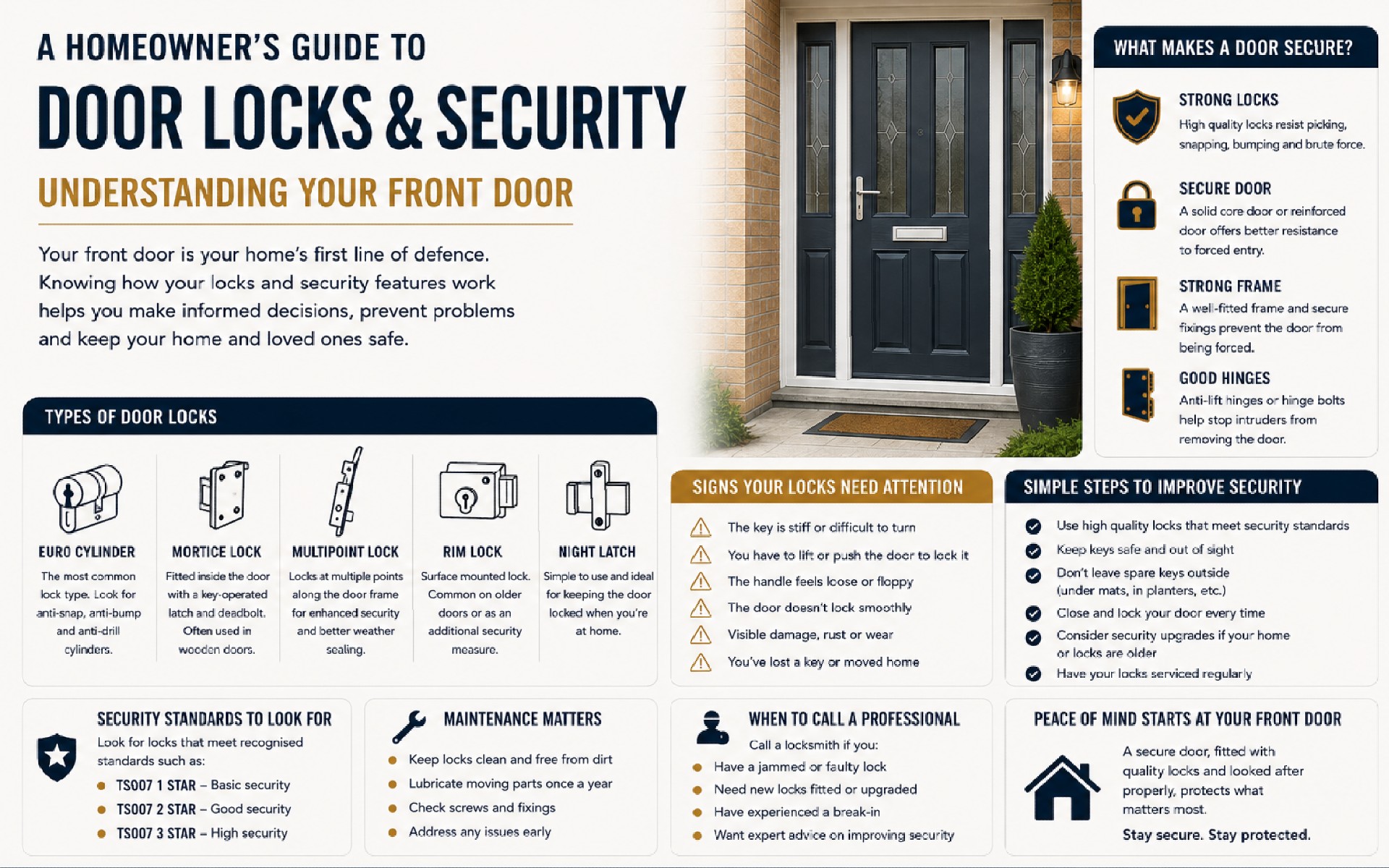
Modern entrance doors are complete security systems.
They typically consist of:
- The door slab.
- The frame.
- Hinges.
- A multipoint locking mechanism or mortice lock.
- A euro cylinder or other locking cylinder.
- Door handles.
- Keeps fitted to the frame.
- Weather seals.
- Threshold.
- Letterplate.
- Door viewer or spyhole (where fitted).
Because all of these components work together, a fault in one part may affect the performance of another.
Understanding the overall system makes it easier to identify where problems may be occurring.
Understanding Common Door Terminology
Locksmiths often use technical terms that homeowners may not hear until something goes wrong.
Learning a few common names makes describing faults much easier.
Multipoint Lock
A full-length locking mechanism fitted inside many uPVC, composite and aluminium doors.
It secures the door at several points using combinations of:
- Hooks.
- Rollers.
- Deadbolts.
- Mushroom cams.
Gearbox
The central operating unit positioned behind the handles.
It controls:
- Handle movement.
- Latch operation.
- Locking point engagement.
Many common door faults originate within the gearbox.
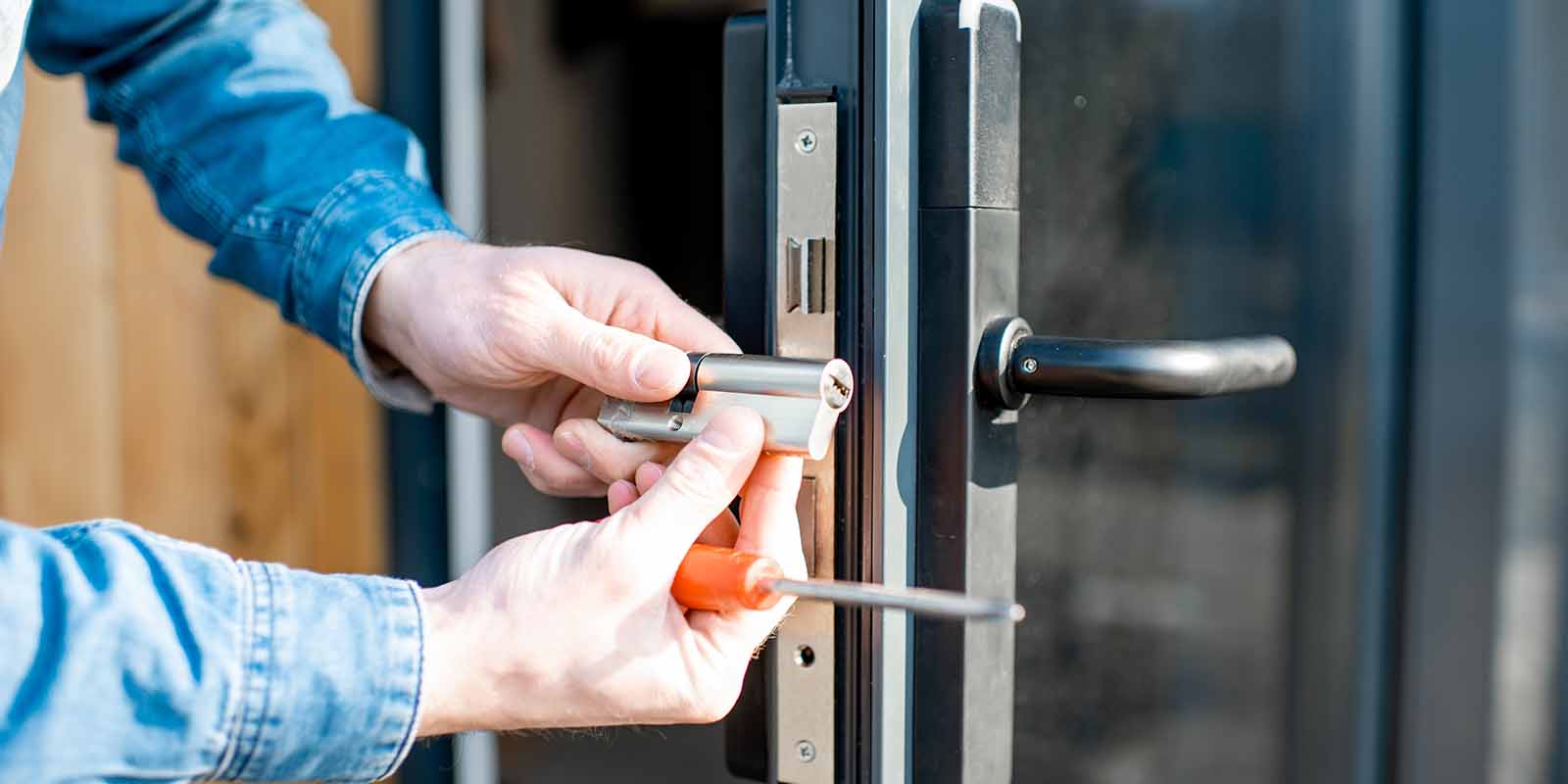
Euro Cylinder
The removable lock cylinder that accepts the key.
It is usually held in place by a single retaining screw and can often be replaced independently of the locking mechanism.
Handle Centres (PZ)
The distance between:
- The centre of the handle spindle.
- The centre of the keyhole.
Correct PZ measurement is essential when replacing door handles.
Backset
The distance from the edge of the lock faceplate to the centre of either:
- The spindle.
- The keyhole.
This measurement identifies many different locking mechanisms.
Keeps
The metal receivers fitted to the frame.
These accept the:
- Hooks.
- Rollers.
- Deadbolts.
Correct alignment between the keeps and locking points is essential for smooth operation.
How to Identify Your Locking System
Not every entrance door uses the same type of lock.
Start by opening the door and examining its edge.
Ask yourself:
- Is there a single lock or a full-length metal strip?
- Are hooks, rollers or deadbolts visible?
- Does the handle need lifting before locking?
- Does the key alone operate the mechanism?
- Is there a manufacturer's name stamped on the faceplate?
Common manufacturers include:
- Winkhaus.
- GU.
- Fullex.
- Lockmaster.
- Maco.
- Fuhr.
- Yale.
- ERA.
- KFV.
- Millenco.
While the manufacturer's name is helpful, it rarely identifies the exact mechanism on its own, as most manufacturers have produced numerous models over the years.
Lift-to-Lock or Key-Wind?
One of the first questions a locksmith may ask is how your door locks.
Most modern entrance doors fall into one of two categories.
Lift-to-Lock
The handle is lifted first.
This extends the locking points before the key locks them into position.
Key-Wind
Turning the key directly extends the locking mechanism without lifting the handle.
Knowing which system your door uses can help narrow down possible causes when faults occur.
Information That Helps a Locksmith
The more accurate the information you provide, the easier it is to diagnose problems before visiting the property.
Useful information includes:
Door Type
- uPVC.
- Composite.
- Timber.
- Aluminium.
Description of the Fault
For example:
- Handle won't lift.
- Key won't turn.
- Door won't open.
- Door won't lock when closed.
- Lock works when the door is open.
- Handle has dropped.
- Door catches on the frame.
- Key is difficult to remove.
- Door needs pushing to lock.
Being specific often allows likely causes to be identified more quickly.
When the Problem Happens
Does it occur:
- All the time?
- Only when cold?
- Only in warm weather?
- Only when the door is locked?
- Only from outside?
- Only after rain?
These details can provide valuable clues.
Photographs
Clear photographs can often identify parts before a locksmith arrives.
Useful photographs include:
- Inside handle.
- Outside handle.
- Edge of the door.
- Lock faceplate.
- Hinges.
- Euro cylinder.
- The entire door.
How to Measure a Euro Cylinder
Euro cylinders are measured from the centre retaining screw.
Measure:
- From the centre screw to the outside end.
- From the centre screw to the inside end.
Measurements are written as:
Outside / Inside
Examples include:
- 35/35.
- 40/45.
- 45/50.
Adding the two figures gives the overall cylinder length.
Always measure with the door open for the most accurate result.
Measuring Door Handles
Replacement handles require several measurements.
These include:
PZ Centres
Distance from the spindle to the keyhole.
Screw Centres
Distance between the fixing screws.
Backplate Length
Overall height of the handle backplate.
Backplate Width
Overall width of the handle plate.
Spindle Size
Most residential doors use an 8mm spindle.
Even small differences can prevent replacement handles fitting correctly.
Understanding Door Handing
Some replacement components are handed.
To identify the handing:
Stand outside the property facing the door.
If the hinges are on the:
- Left — it is generally described as a left-hand hung door.
- Right — it is generally described as a right-hand hung door.
Many modern components are reversible, but some hinges, latches and locking mechanisms must match the door's handing.
When in doubt, a photograph usually confirms the correct configuration.
Why Accurate Measurements Matter
Many replacement parts appear almost identical.
However, very small dimensional differences often prevent components fitting correctly.
Important measurements include:
- Euro cylinder length.
- PZ centres.
- Screw centres.
- Backset.
- Faceplate width.
- Faceplate length.
- Locking point positions.
- Handle backplate dimensions.
Taking accurate measurements before ordering parts reduces delays and helps ensure replacements operate correctly.
Recognising Early Warning Signs
Many door problems develop gradually rather than suddenly.
Common warning signs include:
- The handle becoming stiff.
- The key becoming difficult to turn.
- The key becoming difficult to remove.
- The door rubbing against the frame.
- The handle failing to return properly.
- The door locking more easily when open.
- Needing to lift the handle harder than before.
These symptoms often indicate that maintenance or adjustment is needed before a complete failure occurs.
Keep Basic Door Information
It can be useful to record a few details about your entrance door while everything is working normally.
Consider noting:
- Door material.
- Lock manufacturer.
- Handle manufacturer (if visible).
- Euro cylinder size.
- Handle PZ measurement.
- Approximate installation date.
- Any previous repairs or upgrades.
Having this information readily available can speed up future repairs and reduce the likelihood of ordering incorrect parts.
Understanding the Difference Between Symptoms and Causes
Many homeowners naturally assume the part showing the symptom is the part that has failed.
However, that's not always the case.
For example:
- A stiff handle may be caused by poor door alignment rather than a faulty handle.
- A difficult key may result from a worn cylinder—or from strain elsewhere in the locking mechanism.
- A door that won't lock when closed may indicate alignment issues rather than a failed lock.
Understanding this distinction helps explain why proper diagnosis is often more important than replacing the first component that appears to be faulty.
You Don't Need to Be an Expert
Homeowners don't need specialist knowledge to understand the basics of their front door.
Simply knowing:
- What type of door you have.
- Which locking system is fitted.
- Whether it is lift-to-lock or key-wind.
- The manufacturer's name (if visible).
- The euro cylinder size.
- Handle measurements.
- The symptoms when problems occur.
can make repairs faster, improve communication with a locksmith and help you make more informed decisions about maintenance and security upgrades.
Conclusion
A little knowledge about your front door can save considerable time, money and frustration when problems arise. Understanding basic terminology, recognising the type of locking system fitted, taking accurate measurements and describing faults clearly all help ensure the correct replacement parts are identified and the underlying problem is diagnosed efficiently.
Modern entrance doors are sophisticated engineered systems, and many faults have causes that aren't immediately obvious. By familiarising yourself with the basics before anything goes wrong, you'll be better prepared to understand the advice you're given, avoid unnecessary replacement of working components and make informed decisions about repairs, maintenance and future security upgrades.
Frequently Asked Questions
Do I need to know my lock manufacturer before calling a locksmith?
No, but if the manufacturer's name is visible on the faceplate it can help identify the locking mechanism more quickly.
What is a PZ measurement?
The PZ measurement is the distance between the centre of the handle spindle and the centre of the keyhole. It's one of the most important measurements when replacing door handles.
How do I know if I have a multipoint lock?
Open the door and look at its edge. If you see a full-length metal strip with several locking points such as hooks, rollers or deadbolts, it's likely to be a multipoint locking system.
Why does my lock work when the door is open but not when it's closed?
This often indicates a door alignment issue rather than a fault with the lock itself. The locking points may not be lining up correctly with the keeps in the frame.
Should I measure my door parts before ordering replacements?
Yes. Even components that look identical may differ in critical measurements such as cylinder length, PZ centres, backset or screw centres. Accurate measurements help ensure replacement parts fit and function correctly.
Related guides: