When a multipoint locking mechanism fails, many homeowners search online and discover universal repair locks. They're widely available, relatively inexpensive and often advertised as a simple solution for almost any uPVC door.
On paper they sound ideal. In reality, they're rarely as good as the original mechanism fitted by the door manufacturer.
What Is a Repair Mechanism?
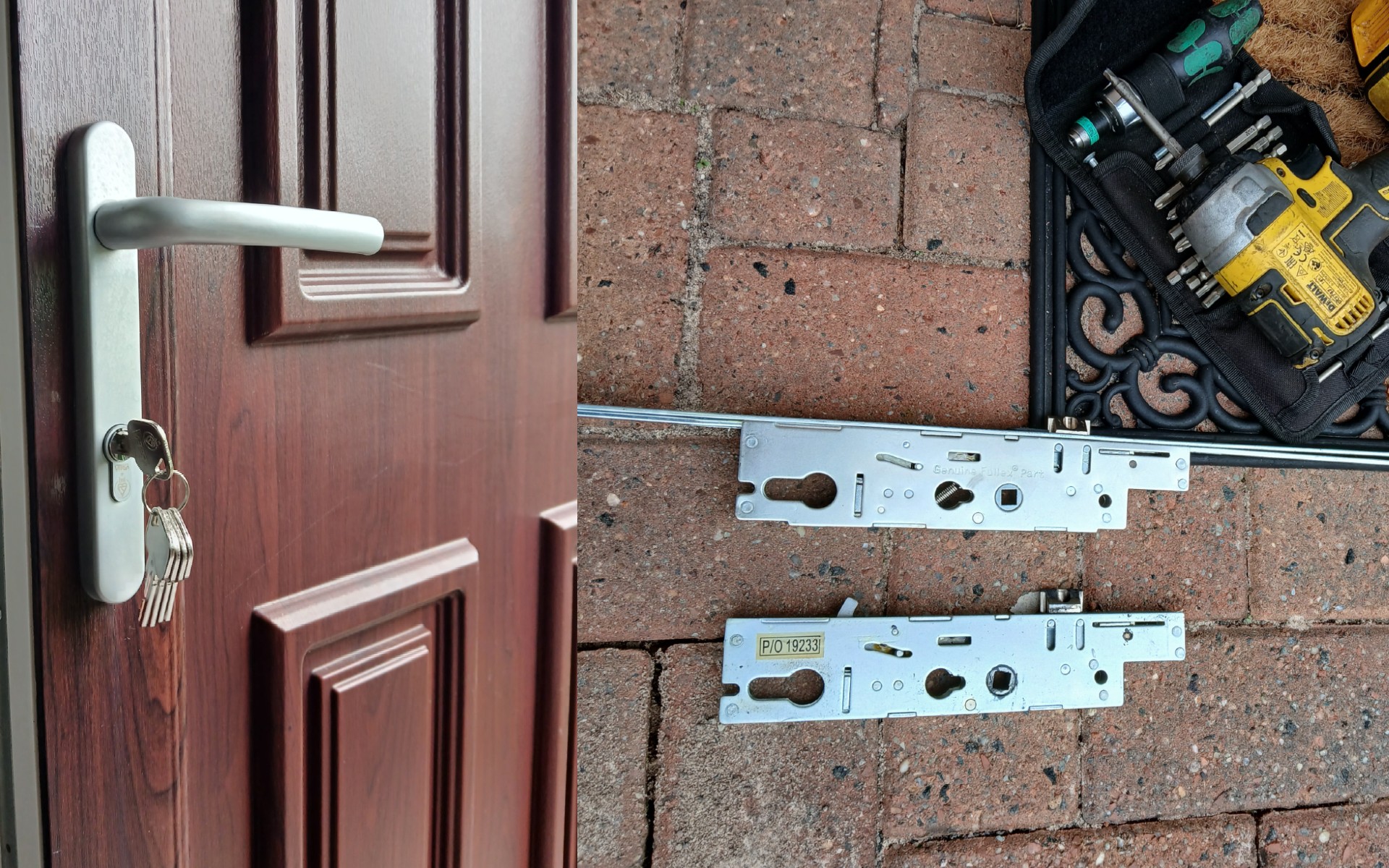
A repair mechanism is usually supplied as a kit containing an adjustable locking strip, extension pieces and a replacement gearbox.
The idea is that the installer adapts the mechanism to fit a wide range of doors and locking systems.
Although these kits can sometimes get a door working again, they are designed as a universal solution rather than an exact replacement.
The Original Mechanism Was Designed for Your Door
The mechanism fitted when the door was manufactured was designed specifically for that door.
Every component, including the:
- Hooks.
- Rollers.
- Mushroom cams.
- Deadbolts.
- Gearbox.
- Keeps.
was positioned to work together perfectly.
When the door is correctly aligned, everything engages smoothly and provides the correct weather seal and security.
A universal repair mechanism attempts to imitate this, but it rarely matches the original layout exactly.
A Compromise Rather Than a Perfect Fit
I've attended numerous jobs where a homeowner has watched an online video, ordered a repair mechanism and spent hours fitting it.
The door may lock afterwards, but it's common to find that:
- The handle feels heavier than before.
- The key becomes harder to turn.
- The locking points don't engage perfectly.
- The door doesn't seal as well.
- The mechanism feels rough compared to the original.
Although the repair kit may technically work, it's often obvious that the door isn't operating as it was designed to.
Quality Can Vary
Many repair mechanisms are produced as universal replacement products and are built to suit as many different doors as possible.
The original mechanism, by comparison, was manufactured specifically for that locking system.
That usually means:
- Better fit.
- Smoother operation.
- Correct locking point positions.
- Better long-term reliability.
Universal mechanisms inevitably involve compromises.
Repairing the Original Mechanism Is Often Better
Whenever possible, I prefer to retain the original mechanism and replace only the failed component.
This might involve:
- Replacing a faulty gearbox.
- Repairing seized locking points.
- Replacing damaged hooks or rollers.
- Servicing worn components.
Keeping the original one-piece mechanism usually results in a better repair than replacing it with an adjustable alternative. Can a Faulty Gearbox Be Repaired? explains why replacing a gearbox is often the best solution.
When the Original Mechanism Is Obsolete
Sometimes the original mechanism is no longer available.
In these situations, the preferred solution is usually to source a complete one-piece replacement mechanism that closely matches the original rather than fitting a universal repair kit.
A full replacement mechanism will generally provide a better fit, smoother operation and greater reliability.
The Hidden Cost of DIY Repairs
Many homeowners buy a repair mechanism hoping to save money.
Unfortunately, I'm often called out afterwards because:
- The door won't lock properly.
- The keeps don't line up.
- The handle is difficult to lift.
- Draughts have developed.
- The mechanism already feels stiff.
In some cases, the original mechanism has been discarded, making the repair more difficult than it needed to be.
Fix the Cause, Not Just the Failure
A failed gearbox or locking mechanism is often the result of another problem rather than simple wear.
Before replacing any parts, it's important to identify why the mechanism failed.
Common causes include:
- Dropped doors.
- Poor door alignment.
- Worn hinges.
- Seized locking points.
- Misaligned keeps.
Correcting these faults is just as important as replacing the failed component. Can a Misaligned Door Damage the Lock?, Can a Dropped Door Damage the Lock Mechanism? and uPVC Door Realignment and Lock Adjustment explain why addressing the underlying cause helps prevent the same problem from returning.
The Original Mechanism Usually Wins
If the original multipoint locking mechanism can be repaired, it is often the best option. It was designed specifically for your door, provides the correct locking point positions and usually delivers smoother, more reliable operation than a universal repair mechanism. While repair kits have their place, they are rarely a true substitute for the original engineering. You Don't Need a New Door – We Can Repair It explains why repairing the existing locking system is often the most cost-effective and reliable solution.