Introduction
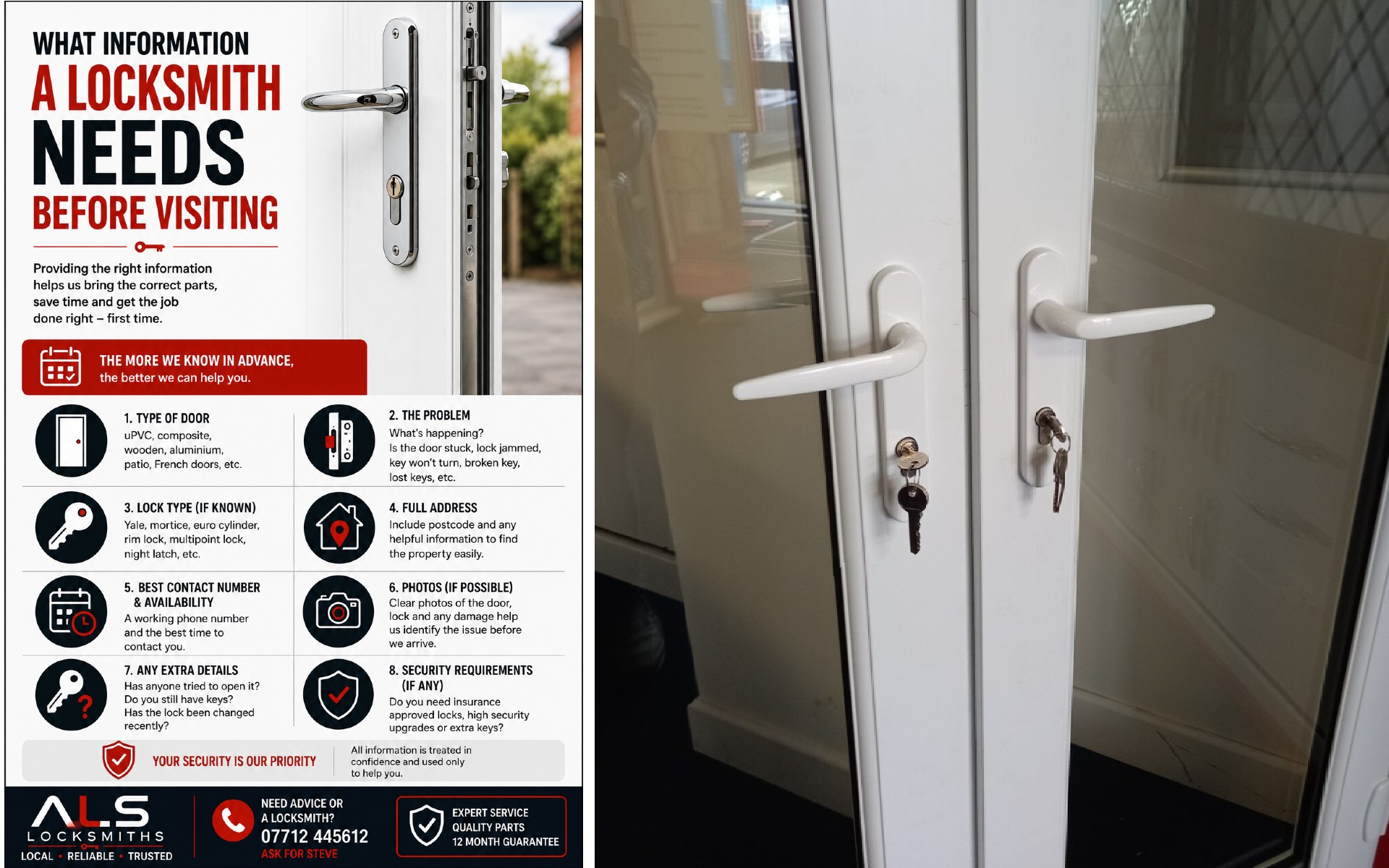
When you contact a locksmith, a few simple details can make a big difference. The more information you provide before the visit, the easier it is to identify the likely fault, prepare the correct replacement parts and, in many cases, provide an accurate fixed-price quotation before any work begins.
You don't need to know the technical name of the lock or diagnose the problem yourself. Simply explaining what's happening with the door is usually enough for an experienced locksmith to narrow down the cause.
What Type of Door Do You Have?
The first question you'll normally be asked is what type of door requires attention.
Examples include:
- uPVC door
- Composite door
- Wooden door
- French doors
- Conservatory door
- Patio door
- Garage personnel door
Different doors use different locking systems, hinges and hardware, so knowing the door type is the first step towards identifying the likely repair.
Describe the Problem
Try to explain exactly what the door is doing—or not doing.
For example:
- The key turns but the door won't open.
- The key won't turn at all.
- The handle is difficult to lift.
- The handle moves but nothing happens.
- The handle won't return properly.
- The key has snapped in the lock.
- The door won't lock.
- The door won't unlock.
- The door is jammed shut.
- The door catches the frame.
Even a simple description often provides valuable clues about whether the problem is the lock cylinder, gearbox, multipoint mechanism or door alignment.
Is the Door Open or Closed?
This is one of the most important pieces of information you can provide.
For example:
- The door is open but won't lock.
- The door is shut and won't unlock.
- The door is locked from outside.
- The door is locked from inside.
- The door is closed but not secure.
Knowing whether the door can be opened affects both the repair method and the parts that may be required.
When Did the Problem Start?
It's useful to explain whether the fault appeared suddenly or has gradually become worse.
Many locking systems give warning signs before they fail completely.
You may have noticed:
- The handle becoming stiffer.
- The key becoming harder to turn.
- The door needing to be pushed or pulled.
- Grinding or clicking noises.
- The lock occasionally sticking.
- The problem only occurring sometimes.
This information often helps determine whether the issue is caused by wear, poor alignment or a component that's reaching the end of its service life.
Has Anyone Already Tried to Fix It?
If another locksmith or tradesperson has already looked at the door, it's worth mentioning.
It's also helpful to say if:
- You've attempted a repair yourself.
- Parts have already been replaced.
- The mechanism has been dismantled.
- The door has been adjusted previously.
This gives a clearer picture of what's already been done and can avoid unnecessary work.
Photographs Can Be Extremely Helpful
Clear photographs often allow replacement parts to be identified before the visit.
Useful images include:
- The outside of the door.
- The inside of the door.
- The handles.
- The lock edge with the door open, if possible.
- Any names or markings stamped on the locking strip.
- The full length of the locking mechanism if it has already been removed.
Photographs frequently save time and increase the likelihood that the repair can be completed during the first visit.
Do You Know the Lock Manufacturer?
Don't worry if you don't.
However, if you can see a name stamped on the locking strip or handles, it's worth mentioning.
Common manufacturers include:
- Winkhaus
- GU
- Fuhr
- Lockmaster
- Fullex
- Yale
- Maco
- Mila
- KFV
- Avocet
Even if you can't identify the manufacturer, measurements and photographs are often enough to determine the correct replacement parts.
Has the Door Been Difficult to Lock?
Many complete lock failures begin with a door that's simply become harder to operate.
Tell the locksmith if you've noticed:
- A stiff handle.
- A stiff key.
- Having to lift the door.
- Having to push or pull the door.
- The door catching the frame.
- The handles feeling different from normal.
These symptoms often indicate alignment problems that may have contributed to the fault.
Is Your Home Secure?
Let the locksmith know if the problem is urgent.
For example:
- You're locked out.
- You're locked in.
- The door won't close.
- The property cannot be secured.
- The key has snapped in the lock.
- The lock has failed after an attempted burglary.
Knowing the urgency helps ensure emergency situations are prioritised appropriately.
Can a Price Be Given Before the Visit?
In many cases, yes.
If enough information is provided—particularly photographs and a clear description of the fault—it is often possible to provide a fixed-price quotation before attending.
While some faults can only be confirmed after inspecting the door, accurate information allows a locksmith to arrive better prepared, with the correct tools and the most likely replacement parts.
You Don't Need to Diagnose the Fault
Many homeowners worry about using the wrong terminology or identifying the wrong part.
That's not a problem.
An experienced locksmith doesn't expect you to know whether the issue is the gearbox, lock cylinder or multipoint mechanism. Simply describing the symptoms and answering a few straightforward questions is usually enough to build a clear picture of the likely cause.
Conclusion
Providing a little information before booking a locksmith can save time, reduce delays and often allow the correct replacement parts to be brought to the job. A clear description of the symptoms, whether the door is open or closed, and a few photographs are often all that's needed to identify the likely fault. The result is a quicker diagnosis, a smoother repair and, in many cases, an accurate fixed price before work even begins.
Related Articles: