Introduction
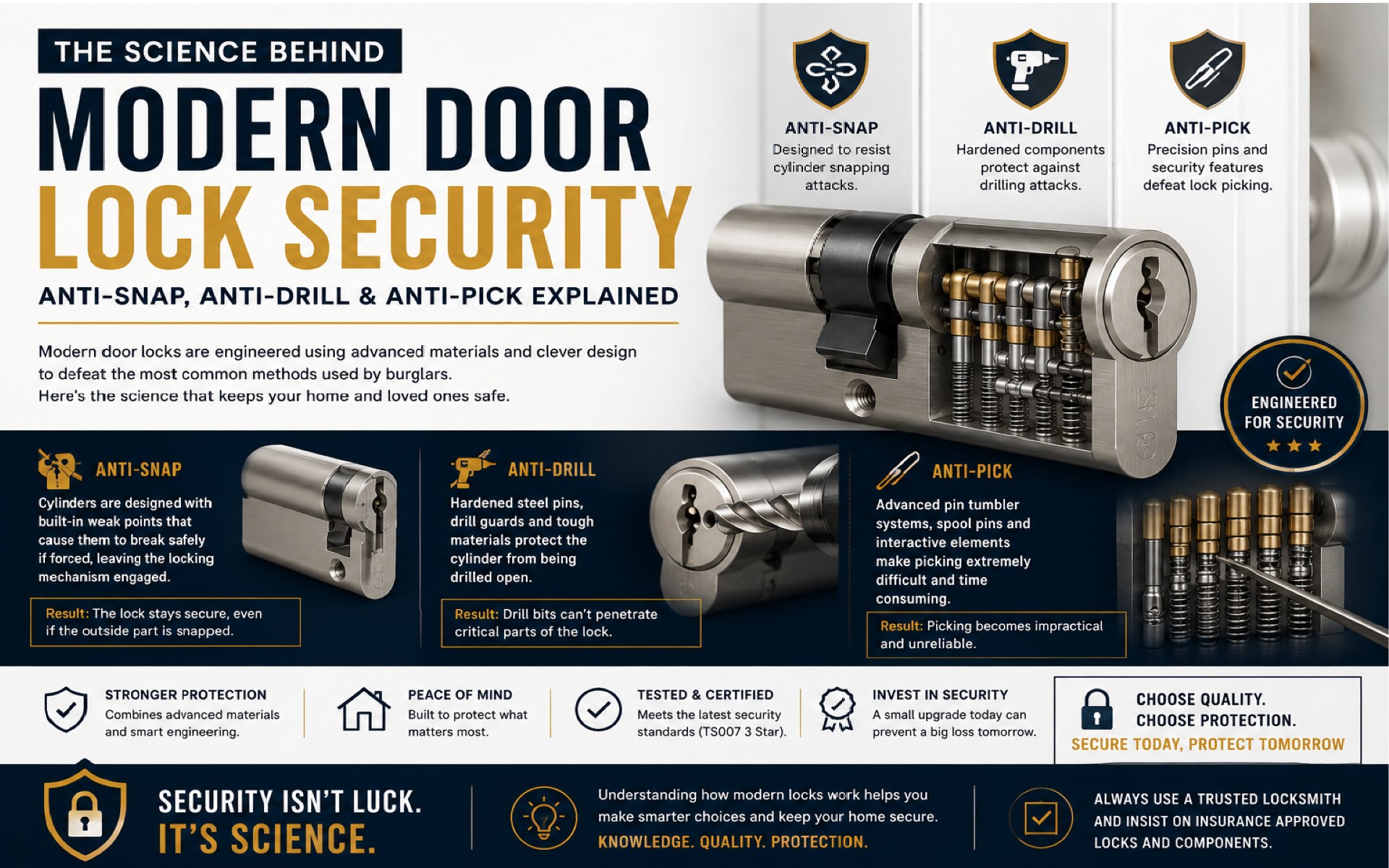
Modern door locks are far more sophisticated than many homeowners realise. While older locks could often be defeated using relatively simple methods, today's high-security cylinders are designed to resist a wide range of attacks, including lock snapping, drilling, bumping and lock picking.
Rather than relying on a single security feature, modern cylinders combine several protective technologies into one carefully engineered locking system. Hardened steel components, anti-snap sections, specialised security pins and precision manufacturing all work together to make forced entry significantly more difficult.
This guide explains the engineering behind modern high-security locks, how they resist common burglary techniques and why choosing a quality cylinder is only one part of creating a secure entrance door.
Why Modern Locks Are Different
Early euro cylinders were designed primarily to provide convenient locking rather than resist determined physical attack.
As burglary methods evolved, manufacturers responded by redesigning almost every aspect of the cylinder.
Modern security improvements include:
- Anti-snap protection.
- Anti-drill protection.
- Anti-pick technology.
- Anti-bump mechanisms.
- Reinforced steel construction.
- Precision manufacturing.
- Independent security testing.
Rather than trying to make one part incredibly strong, manufacturers use multiple protective features that work together.
This layered approach means that if one defence is challenged, others continue protecting the lock.
Understanding Lock Snapping
What Is Lock Snapping?
Lock snapping is one of the best-known methods of attacking euro profile cylinders fitted to many uPVC and composite doors.
The burglar grips the exposed section of the cylinder using locking pliers or similar tools and applies force until the cylinder breaks.
On older cylinders, breaking the cylinder could expose the internal cam, allowing the locking mechanism to be operated without the correct key.
This attack can take only a matter of seconds against an unprotected cylinder.
Why Older Cylinders Were Vulnerable
Traditional euro cylinders were never designed to resist snapping attacks.
If too much of the cylinder projected beyond the door handle, it created a convenient point where force could be applied.
Once broken, the internal mechanism could often be manipulated with relatively simple tools.
Today, excessive cylinder projection is recognised as one of the most significant weaknesses in older door security.
How Modern Anti-Snap Cylinders Work
Modern high-security cylinders are specifically engineered to prevent this type of attack.
Common anti-snap features include:
- Sacrificial break sections.
- Reinforced steel cores.
- Hardened steel bars.
- Protected cam mechanisms.
- Reinforced internal construction.
Rather than allowing the complete cylinder to fail, these components isolate the damaged section while protecting the critical locking mechanism inside the door.
The Science Behind Sacrificial Break Sections
One of the most ingenious developments is the controlled break point.
At first glance, deliberately designing part of a lock to break may seem unusual.
However, this controlled failure is intentional.
If excessive force is applied:
- The outer sacrificial section breaks away.
- The internal cam remains protected.
- The locking mechanism cannot easily be manipulated.
- The remaining cylinder continues protecting the door.
Instead of preventing the cylinder from breaking altogether, modern anti-snap cylinders prevent the burglary from succeeding after the break occurs.
How Modern Locks Resist Drilling
What Is a Drill Attack?
Another method sometimes used against older locks involves drilling directly into the cylinder.
The aim is to destroy the internal pins so the cylinder can be rotated without the original key.
Older cylinders often contained:
- Brass pins.
- Soft brass plugs.
- Relatively soft internal components.
These materials were much easier to drill through.
Hardened Steel Makes a Difference
Modern premium cylinders replace many vulnerable components with hardened steel.
These may include:
- Hardened steel inserts.
- Hardened steel pins.
- Reinforced drill shields.
- Steel protection plates.
These materials are significantly harder than standard brass.
When a drill bit contacts hardened steel:
- It struggles to bite into the surface.
- Heat builds rapidly.
- Cutting becomes extremely difficult.
- The drill bit may blunt or fail before penetrating the cylinder.
The objective isn't necessarily to make drilling impossible—it is to make it so difficult and time-consuming that the attack is abandoned.
Understanding Anti-Drill Pins
Anti-drill pins are positioned to protect the cylinder's most vulnerable internal areas.
Manufactured from hardened steel, they resist cutting far better than traditional brass pins.
During a drilling attempt:
- The hardened surface resists penetration.
- The drill bit skates across the metal.
- Progress becomes extremely slow.
- Additional heat accelerates drill-bit wear.
Several hardened pins are usually positioned throughout the cylinder to provide protection from multiple angles.
How Modern Locks Resist Lock Bumping
What Is Lock Bumping?
Lock bumping involves using a specially cut key, commonly known as a bump key.
The key is inserted into the cylinder and struck with controlled force.
The impact briefly transfers energy through the lock pins.
If all the pins align at exactly the right moment, the cylinder may rotate without the original key.
Why Older Locks Were Vulnerable
Earlier cylinders generally used relatively simple pin designs.
These allowed the transferred energy to align the pins momentarily, creating an opportunity for the cylinder to turn.
Although timing and technique were important, older locks offered relatively little resistance.
Modern Anti-Bump Technology
Today's high-security cylinders use more sophisticated internal pin arrangements.
Common security pins include:
- Mushroom pins.
- Spool pins.
- Serrated pins.
- Additional security pins.
These specially shaped components disrupt the transfer of energy needed for successful bumping.
As a result, bump keys are far less effective against quality modern cylinders.
How Modern Locks Resist Lock Picking
How Lock Picking Works
Traditional lock picking attempts to manipulate each individual pin until the cylinder reaches the correct shear line.
Once every pin is correctly positioned, the plug rotates.
Older locks with simple pin designs could often be picked relatively quickly by someone with sufficient skill.
Security Pins Create False Shear Lines
Modern cylinders introduce specially shaped pins that deliberately complicate the picking process.
Examples include:
- Mushroom pins.
- Spool pins.
- Serrated pins.
When tension is applied during picking:
- The cylinder appears to begin rotating.
- A false set is created.
- The picker is misled into believing progress has been made.
- Individual pins must then be identified and corrected before movement can continue.
These false shear lines dramatically increase both the skill and time required to pick the lock.
Why Hardened Steel Inserts Matter
One of the simplest but most effective security improvements has been replacing softer materials with hardened steel.
Manufacturers now reinforce areas such as:
- The cylinder body.
- The internal core.
- Pin chambers.
- Cam protection.
- Fixing points.
Harder materials provide greater resistance to:
- Drilling.
- Cutting.
- Snapping.
- Forced manipulation.
Combined with precision manufacturing, these reinforcements significantly improve the durability and security of modern cylinders.
Precision Engineering Is Part of Security
Modern security cylinders are manufactured to much tighter tolerances than many older locks.
This precision helps:
- Ensure smoother operation.
- Reduce internal wear.
- Improve key control.
- Make manipulation more difficult.
- Increase long-term reliability.
High manufacturing standards are just as important as the visible security features fitted to the cylinder.
Security Comes From Layers
No modern high-security lock relies on a single feature.
Instead, several technologies work together, including:
- Anti-snap protection.
- Anti-drill protection.
- Anti-pick technology.
- Anti-bump pins.
- Hardened steel inserts.
- Reinforced cam protection.
- Precision engineering.
- Independent security testing.
Each layer increases the time, effort and specialist tools required to compromise the lock.
The Lock Is Only One Part of the Security System
Even the highest-rated euro cylinder cannot compensate for problems elsewhere in the door.
Overall security also depends upon:
- High-security door handles (such as TS007 2 Star handles).
- A correctly sized and fitted euro cylinder.
- A properly aligned door.
- A smooth-operating multipoint locking mechanism.
- Secure hinges.
- Strong keeps and frame fixings.
- Good installation.
- Regular maintenance.
A door is only as secure as its weakest component.
Choosing the Right Security Upgrade
If you're upgrading your door security, it's worth considering the locking system as a whole rather than focusing on a single component.
For many homeowners, the greatest improvements come from combining:
- A high-security snap-resistant euro cylinder.
- An understanding of security standards.
- Appropriate security handles.
- A correctly adjusted multipoint locking mechanism.
- Good door alignment.
- Independently tested hardware.
This layered approach provides a much higher level of protection than replacing only one component in isolation.
Conclusion
Today's high-security locks are the result of decades of engineering, research and independent testing. Features such as sacrificial anti-snap sections, hardened steel inserts, anti-drill protection, security pins and precision manufacturing are all designed to resist the burglary techniques that proved effective against older cylinders.
While no lock can claim to be completely attack-proof, modern security cylinders provide a significant improvement in resistance to snapping, drilling, bumping and lock picking. When combined with high-security handles, a correctly functioning multipoint locking mechanism, proper door alignment and quality installation, they form part of a layered security system that makes forced entry considerably more difficult.
For homeowners looking to improve security, understanding how these technologies work makes it easier to choose the right upgrades and invest in products that provide genuine protection rather than simply relying on marketing claims.
Frequently Asked Questions
What is lock snapping?
Lock snapping is a method of attacking euro cylinders by applying force to the exposed section of the lock until it breaks. Modern anti-snap cylinders are designed to prevent the lock from being opened after this type of attack.
How do anti-drill locks work?
High-security cylinders use hardened steel pins and inserts that resist drilling. These components make it much more difficult for a drill bit to penetrate the lock and reach the internal mechanism.
Can modern locks still be picked?
No lock is completely immune to attack, but modern security cylinders use specially shaped pins and precision engineering to make lock picking significantly more difficult and time-consuming than older designs.
Are anti-bump locks worth fitting?
Yes. Modern anti-bump cylinders incorporate security pins that disrupt the transfer of energy used by bump keys, making this method of attack far less effective.
Is a high-security cylinder enough on its own?
No. A quality cylinder should be combined with appropriate security handles, a properly functioning multipoint locking mechanism, correct door alignment and good installation to achieve the highest level of security.
Related guides: