Imagine locking your front door before going to bed. You insert the key, turn it, feel resistance and hear the familiar sound of the locking mechanism moving. Everything seems normal.
But when you pull the handle, the door opens.
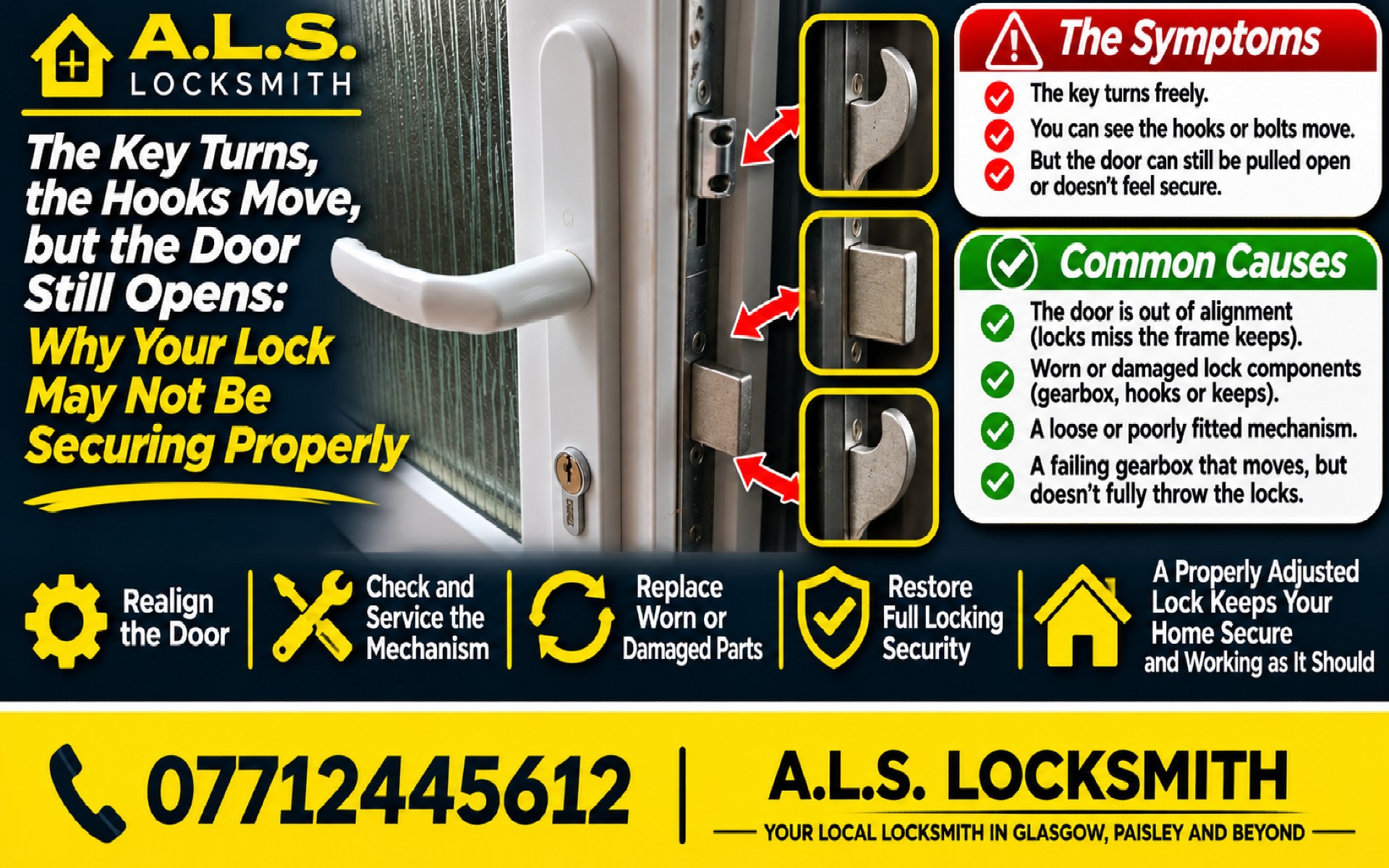
For homeowners with uPVC or composite doors, this can be a confusing and potentially serious fault. The key appears to operate the lock, and the multipoint mechanism may even move, yet the door is not securing as expected.
The problem could lie with the euro cylinder, the central gearbox, the spindle or another part of the locking mechanism.
At A.L.S Locksmiths, we believe it is important to understand why a lock can appear to work while failing to secure the door properly — and why this fault should never be ignored.
1. Why does the key turn if the door is not locked?
Many modern uPVC and composite doors use a multipoint locking mechanism. When operated correctly, the system engages several locking points along the edge of the door, such as hooks, rollers and deadbolts.
The key operates the cylinder, which interacts with the central gearbox. Depending on the design, the gearbox then controls the deadlocking function and the locking points.
If one of these components fails, the normal sequence of operation can be interrupted.
You might still feel the key turning or hear movement inside the door, but that does not necessarily mean the mechanism has reached its fully locked position.
The key may be moving a damaged component, the gearbox may be failing to complete its operation, or the locking points may not be engaging correctly with the frame.
The important distinction is between a lock that feels as though it is operating and a door that is actually secured.
2. Could it be a faulty euro cylinder cam?
One possible cause is a problem with the cylinder cam.
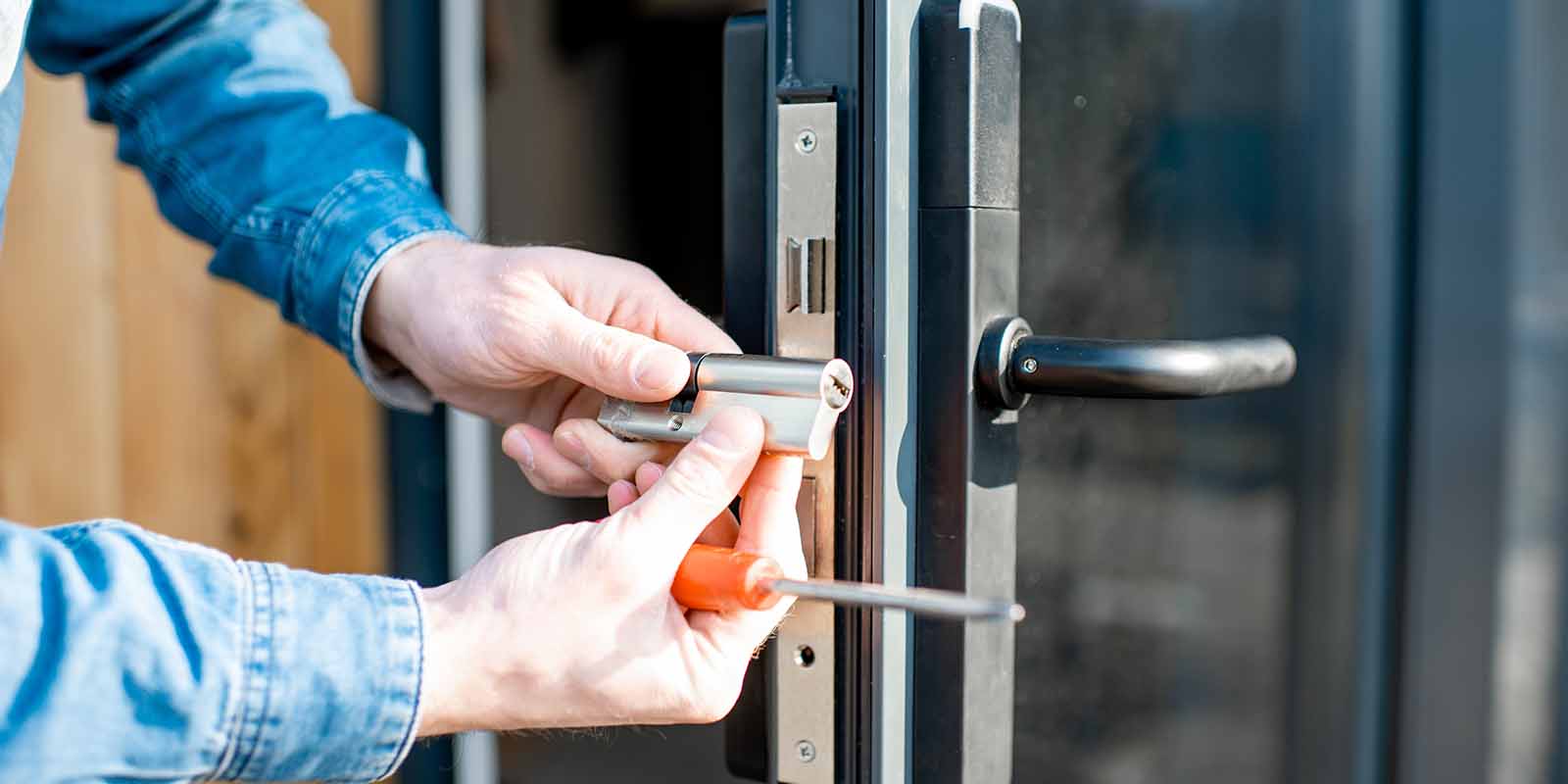
The cam is the part of a euro cylinder that transfers rotational movement from the key-operated cylinder to the locking mechanism. Its shape and position are designed to interact with the relevant parts of the gearbox.
If the cam is damaged, displaced or failing to engage correctly, the key may turn without operating the mechanism as intended.
However, a cam problem is only one possibility. A cylinder that turns without driving the lock can also indicate internal cylinder damage or a fault in the connection between the cylinder and gearbox.
The exact arrangement varies between lock designs, so the symptoms alone cannot confirm that the cam has slipped.
Replacing the cylinder may solve the problem if the fault is within that component, but it will not fix a damaged gearbox or a disconnected operating component elsewhere in the door.
3. What about a broken spindle or faulty gearbox?
Another possibility is a failure within the central gearbox or its operating connections.
The spindle is the square metal bar that connects the door handle to the mechanism. When the handle is lifted or pressed, the spindle transfers that movement to the gearbox.
If the spindle is damaged, worn or disconnected, the handle may move without correctly operating the latch or locking mechanism.
A gearbox can also develop internal faults. Worn or broken components may prevent it from completing the required locking sequence.
Depending on the design and the nature of the failure, you might notice:
-
The handle moves unusually freely.
-
The handle lifts but does not engage the locking points correctly.
-
The key turns but the deadlocking function does not operate.
-
The door appears locked but opens when the handle is used.
-
The mechanism makes an unfamiliar clicking or grinding sound.
These symptoms can overlap with other faults, including poor door alignment. A proper inspection is needed to identify the failed component.
4. Why this fault can create a false sense of security
One of the biggest concerns is that the door may appear to be locked when it is not.
Most homeowners develop a routine: close the door, lift the handle, turn the key and go about their evening.
If a mechanical fault develops gradually, the familiar movements and sounds may provide reassurance even though the locking mechanism is no longer securing the door correctly.
This is why it is important to pay attention to what the door actually does rather than relying solely on the feel of the key or handle.
If you have reason to suspect the door is not locking properly, do not assume it is secure simply because the key turns.
A faulty lock should be checked promptly, particularly if the door is an external entrance and cannot otherwise be secured.
5. Could poor door alignment be responsible?
Yes. Not every locking fault is caused by a broken cylinder or gearbox.
If a uPVC or composite door has dropped slightly, the hooks, rollers or bolts may no longer align properly with the keeps in the frame.
This can prevent the mechanism from engaging fully or cause excessive resistance when the handle is lifted.
In some cases, the handle and key may still operate, but the locking points do not engage correctly with the frame.
Forcing the handle or repeatedly turning the key will not correct the underlying problem and may cause further damage.
A locksmith can inspect the door alignment, hinges, frame keeps and mechanism to determine whether adjustment is needed or a component has failed.
6. What should you do if your door locks but still opens?
If the door opens when it should be securely locked, treat the fault seriously.
Take these steps:
-
Do not assume the door is secure. If it opens after you have locked it, the locking system may not be engaging correctly.
-
Avoid forcing the handle or key. Excessive force can worsen an existing mechanical fault.
-
Check the door carefully without dismantling it. Look for obvious misalignment or signs of damage, but do not rely on a visual check to establish that the lock is working.
-
Arrange a prompt inspection. A competent locksmith can establish whether the fault is in the cylinder, gearbox, spindle, locking points or alignment.
-
Consider immediate security. If the door cannot be secured, use another suitable entrance if available and seek urgent assistance to secure the property.
Do not leave a potentially unsecured external door overnight simply because the key appears to turn normally.
7. Does the whole door need replacing?
Usually, a fault with the locking mechanism does not automatically mean the entire door needs to be replaced.
Depending on the diagnosis, the solution may involve replacing a faulty euro cylinder, repairing the handle connection, fitting a replacement gearbox or correcting the door alignment.
The correct repair depends on which component has failed and whether suitable replacement parts are available.
At A.L.S Locksmiths, our approach is to identify the actual fault before recommending replacement work. If a suitable repair can restore the door's normal operation, replacing the whole door may be unnecessary.
8. How A.L.S Locksmiths can help
A.L.S Locksmiths provides residential lock repairs across Glasgow, Paisley and surrounding areas.
We work on uPVC and composite doors, including faulty euro cylinders, multipoint gearboxes, handles, locking points and alignment problems.
If your key turns but the door does not secure correctly, we can inspect the mechanism and explain the available repair options.
We offer fixed pricing, no call-out fees and a 12-month guarantee on parts supplied and fitted, subject to the guarantee's terms and exclusions. The agreed price includes the parts and labour for the specified repair, and we are not VAT registered.
Final thoughts
A key that turns does not automatically prove that a door is locked. A damaged cylinder, faulty gearbox, broken spindle connection or alignment problem can prevent the locking system from working as intended.
If your uPVC or composite door appears to lock but still opens, do not ignore the symptom or rely on the familiar sound of the mechanism.
Get the fault diagnosed, make sure the door can be secured and avoid assuming that a lock is working simply because the key turns.
Contact A.L.S Locksmiths for advice on faulty door locks and multipoint mechanism repairs in Glasgow, Paisley and surrounding areas.