An Urgent Security Problem
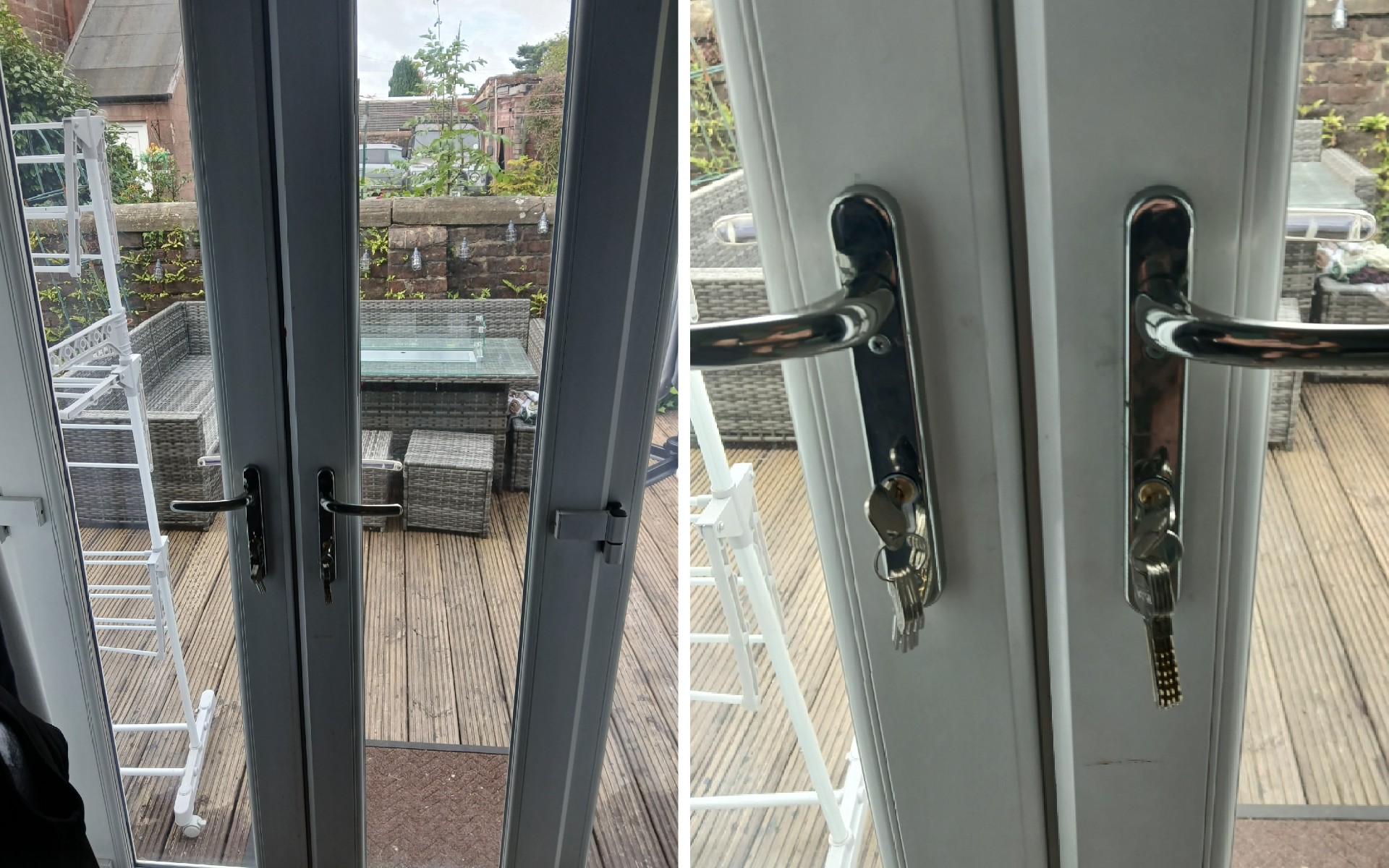
I was recently called to a customer whose French doors had become a security concern.
The doors were fitted with two euro cylinders, both operated by the same key. Unfortunately, they only had one key and it had snapped off inside one of the locks.
With both doors open and no usable key, the property couldn't be secured.
Because of the security risk, I attended first thing that morning.
Replacing the Active Door Lock
The active door was straightforward.
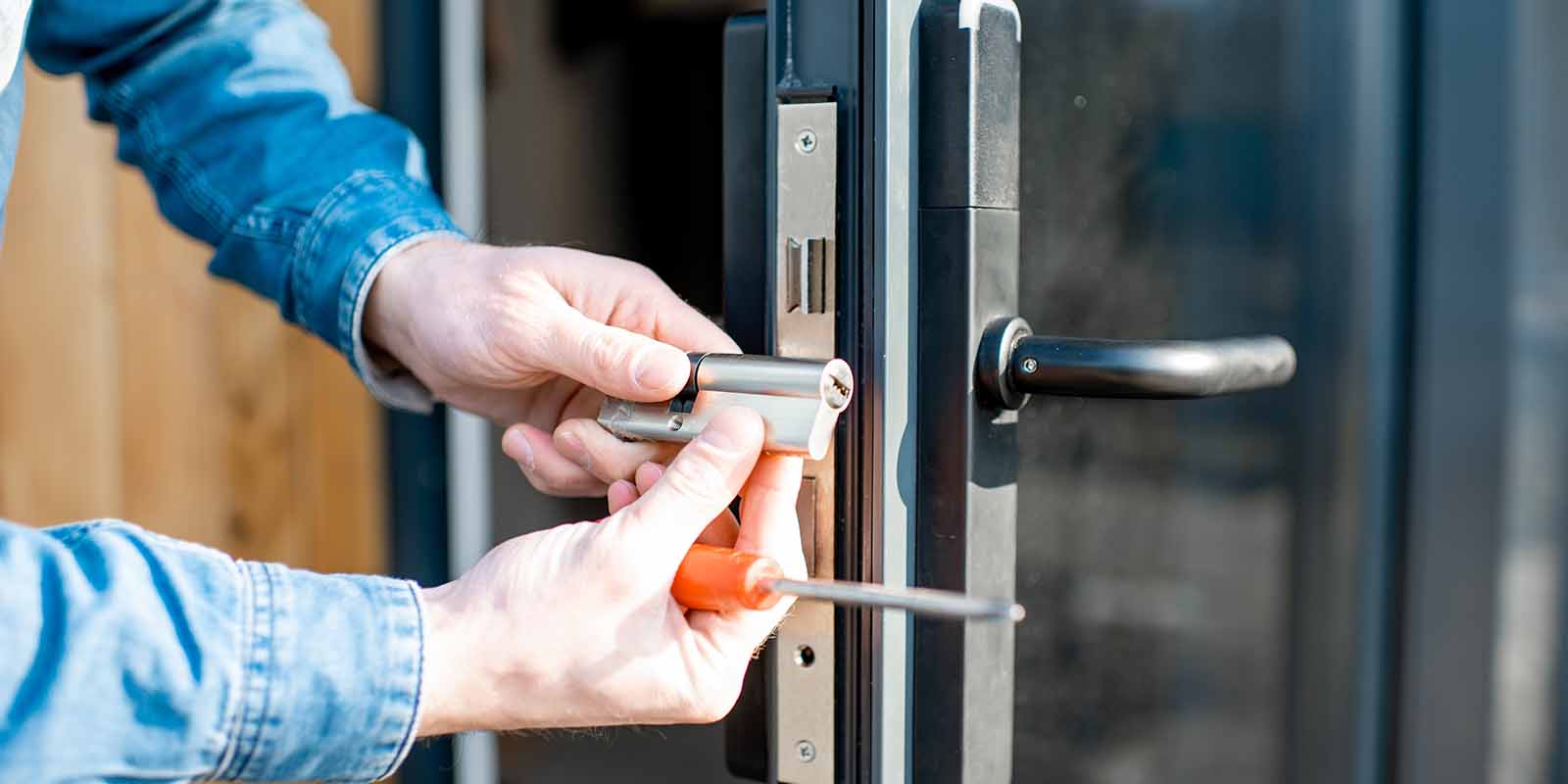
It was fitted with a standard euro cylinder which I removed and replaced with a correctly sized snap-resistant euro cylinder.
The new cylinder was fitted so that it sat correctly within the handles, allowing its security features to work as intended.
The customer was supplied with five new keys, restoring full access to the property.
The Passive Door Was More Involved
The passive door required a little more work.
Unlike the active door, the retaining screw for the cylinder isn't immediately accessible. To reach it, the centre column (also known as the astragal) attached to the passive door has to be removed.
This isn't simply a case of unscrewing a few fixings.
The centre column has to go back in exactly the correct position. Even a slight misalignment can prevent the two doors from locking together properly.
Having repaired many French doors over the years, I knew the safest method of removing it without disturbing the overall alignment.
Once removed, I replaced the existing cylinder with another correctly sized snap-resistant cylinder and supplied a further five keys.
Reassembly and Final Testing
With both cylinders replaced, I carefully reassembled the centre column and tested the doors.
As is often the case, another issue became apparent during the final checks.
Two problems remained:
- The doors were catching at the top.
- The latch wasn't engaging properly with the centre keep receiver.
Although neither problem had anything to do with the new locks, they still needed correcting if the doors were going to operate smoothly.
Adjusting the Doors
I first adjusted the hinges to remove the contact at the top of the doors.
With the alignment corrected, I then repaired and adjusted the centre keep so that the latch engaged cleanly every time the doors were closed.
After making the necessary adjustments, I tested both doors repeatedly.
The handles lifted smoothly.
The locks operated effortlessly.
Both doors aligned correctly and closed securely.
The difference in operation was immediately noticeable.
More Than Just a Lock Change
This job highlights why changing a lock isn't always just about replacing a cylinder.
While the original reason for the visit was a snapped key, the final repair involved:
- Replacing two door cylinders.
- Carefully dismantling and refitting the passive door centre column.
- Fitting two correctly sized snap-resistant cylinders.
- Supplying five new keys for each lock.
- Adjusting the hinges.
- Repairing and adjusting the centre keep.
- Testing and fine-tuning both doors.
Taking the extra time to address the alignment issues meant the customer received doors that not only had new, more secure locks but also operated far better than before.
A Happy Ending
Once everything had been completed, I asked the customer to try the doors themselves.
Both doors opened, closed and locked smoothly using the new keys.
Shortly afterwards, the customer left me a 5-star review.
That's always appreciated because it shows the customer values not just the repair itself, but the care taken to ensure every part of the job was completed properly.