Introduction
If your uPVC, composite or French door has become difficult to lock, you've probably wondered whether it needs replacing. In fact, many homeowners are told they need a completely new door as soon as a locking problem develops.
While there are situations where replacing the entire door is the right solution, they're far less common than many people realise.
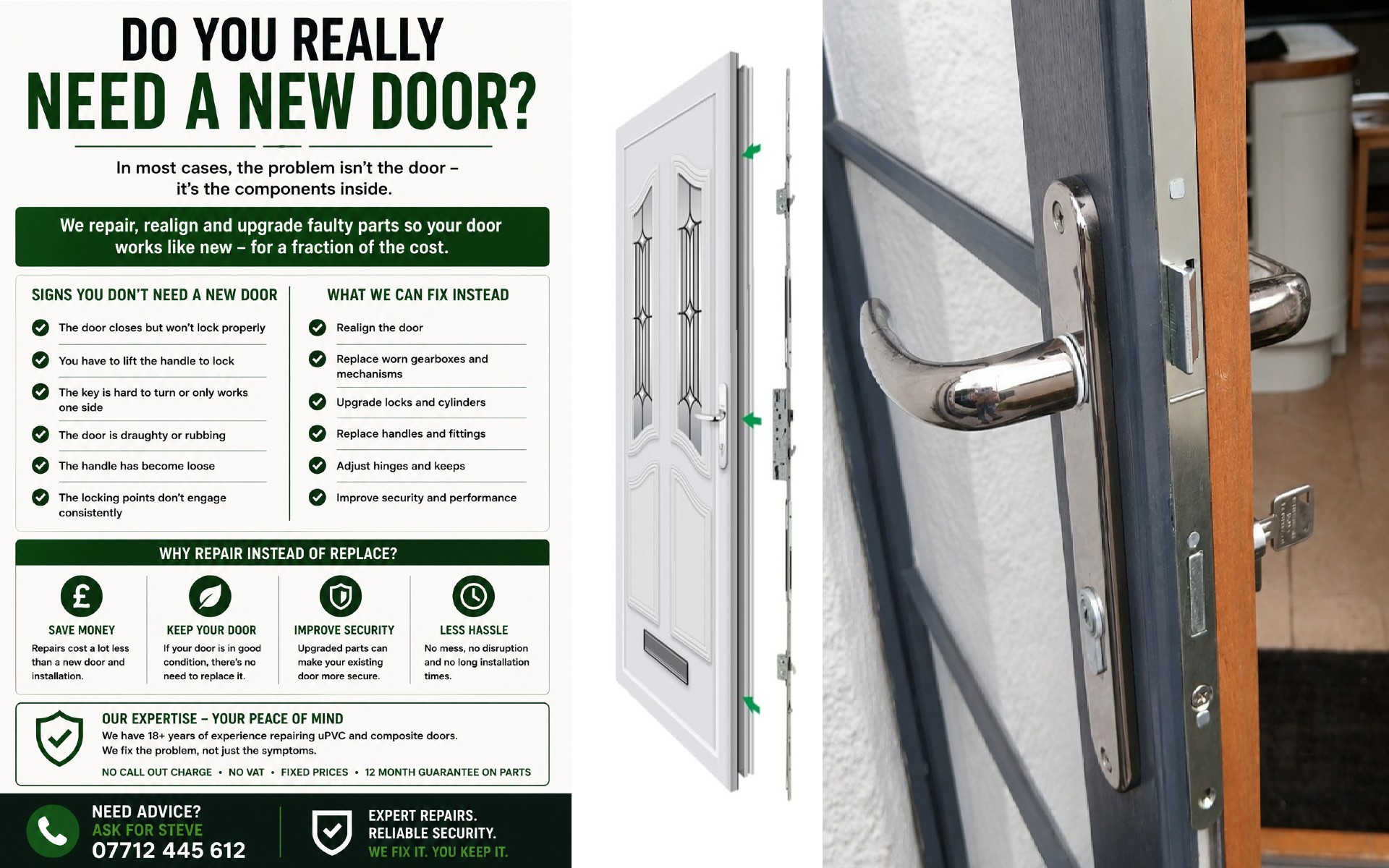
In most cases, the problem isn't the door itself—it's one or more of the mechanical components that allow it to lock and unlock. A proper diagnosis can often save you hundreds of pounds by identifying a repair instead of an unnecessary replacement.
A Door Is More Than Just a Door
Modern doors are made up of many individual components, each with a specific job.
These typically include:
- Multipoint locking mechanism.
- Centre case (gearbox).
- Euro cylinder.
- Door handles.
- Hinges.
- Keeps fitted to the frame.
- Weather seals.
Because these parts work together, a fault with one component doesn't automatically mean the entire door has reached the end of its life.
Most Lock Problems Can Be Repaired
Many of the most common door faults can be resolved by replacing only the worn component rather than replacing the whole door.
Typical repairs include:
- Gearbox replacement.
- Multipoint locking mechanism replacement.
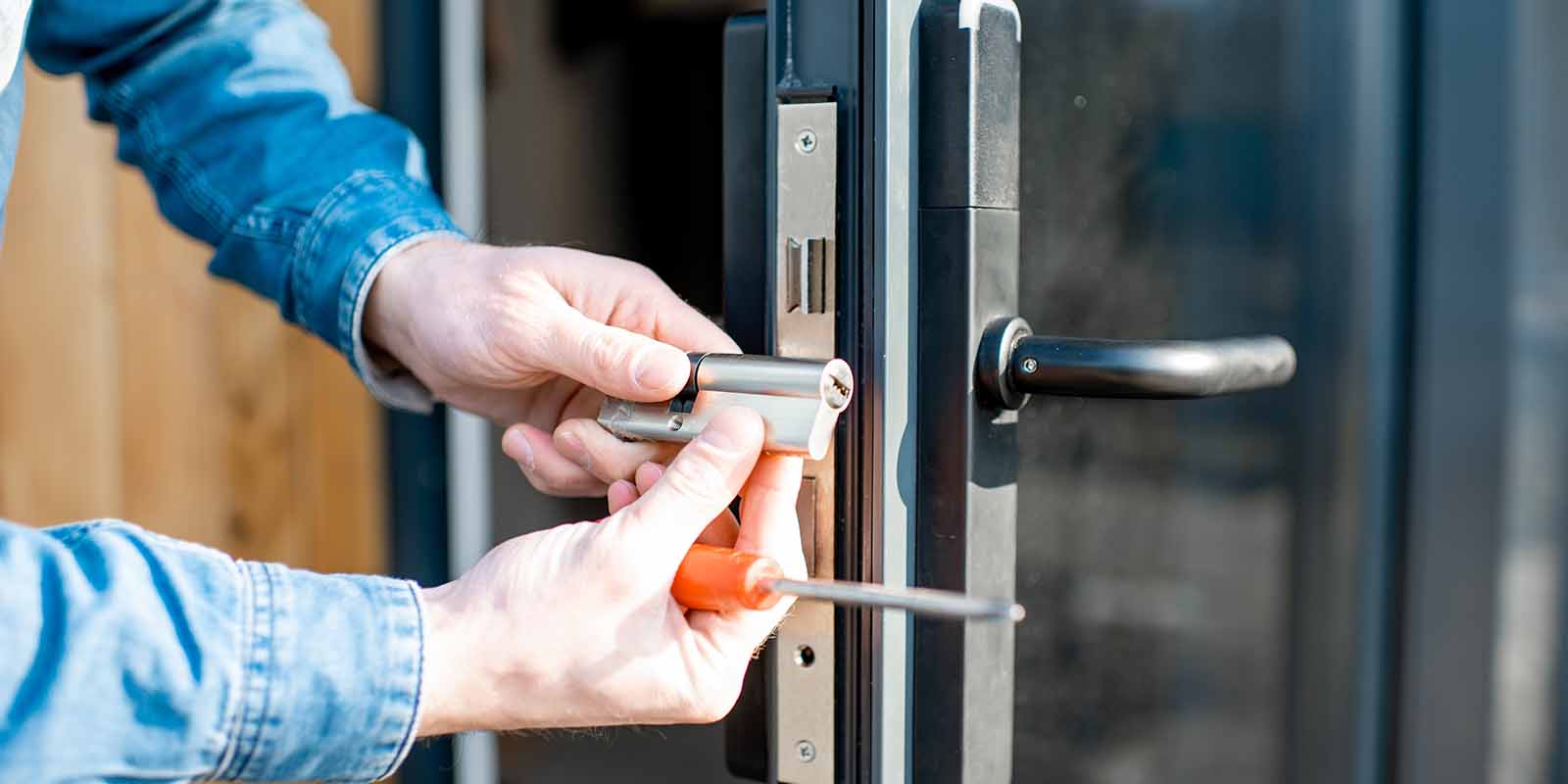
- Euro cylinder replacement.
- Door handle replacement.
- Door jammed shut opened without damaging the door and repaired.
- Door realignment.
- Hinge adjustment or replacement.
These repairs are usually completed at a fraction of the cost of installing a new door while restoring smooth and secure operation.
Poor Door Alignment Causes Many Lock Failures
One of the biggest reasons doors become difficult to lock isn't because the locking mechanism is faulty—it's because the door has gradually moved out of alignment.
As a door drops over time, the locking points no longer line up correctly with the keeps in the frame.
This can lead to:
- Stiff door handles.
- Keys becoming difficult to turn.
- Locking points rubbing against the frame.
- Excessive strain on the gearbox.
- Premature multipoint lock failure.
- Broken door handles.
Many mechanical failures are actually symptoms of poor alignment rather than the original cause of the problem.
Older Doors Can Often Be Saved
It's not uncommon to be told that an older locking mechanism is obsolete and that a replacement door is the only option.
While some original lock mechanisms are no longer manufactured, that doesn't necessarily mean the door has become obsolete too.
Depending on the make and design of the door, it may still be possible to:
- Fit a compatible replacement mechanism.
- Replace the gearbox.
- Upgrade to a modern locking system.
- Source suitable replacement parts.
Many older uPVC and composite doors continue providing years of reliable service after appropriate repairs.
A Faulty Lock Doesn't Mean a Faulty Door
A failed lock or locking mechanism is simply one component within a much larger system.
Replacing the entire door because the gearbox has failed is much like replacing an entire car because the clutch has worn out.
If the door and frame remain structurally sound, replacing the worn mechanical components is often all that's needed to restore reliable operation.
When Is a New Door Actually Necessary?
There are occasions when replacing the whole door is the most sensible option.
Examples include:
- The frame has suffered significant structural damage.
- The door has been severely damaged following an impact.
- The internal core of the door has deteriorated.
- The door has warped beyond practical adjustment.
- The overall cost of repair exceeds the value of replacing the door.
Fortunately, situations like these are relatively uncommon compared with mechanical lock failures.
Repairing Can Save You Money
Repairing an existing door often provides several advantages over replacement.
These include:
- Significantly lower costs.
- Less disruption to your home.
- No need to redecorate surrounding areas.
- Retaining a door that already matches your property.
- Extending the life of the existing door for many more years.
- Reducing unnecessary waste by repairing rather than replacing.
For many homeowners, repairing the existing door is both the most economical and the most environmentally responsible option.
Always Choose a Proper Diagnosis First
Before agreeing to replace an entire door, it's worth establishing exactly what has failed.
A professional inspection should determine whether the fault lies with:
- The euro cylinder.
- The centre case (gearbox).
- The multipoint locking mechanism.
- The door handles.
- The hinges.
- The door alignment.
- Another individual component.
Only once the cause has been identified can the most appropriate repair be recommended.
Repair the Cause, Not Just the Fault
The best repairs don't simply replace the broken component—they identify why it failed.
If a gearbox has worn out because the door has been operating under excessive strain, replacing the gearbox alone may not prevent the same problem from happening again.
Correcting issues such as poor alignment, worn hinges or misaligned locking points helps protect the replacement parts and significantly extends their lifespan.
Conclusion
A new door should almost always be considered the last option rather than the first. Most locking problems affecting uPVC, composite and French doors are caused by worn mechanical components—not by the door itself.
If the frame and door remain structurally sound, replacing a failed gearbox, multipoint locking mechanism, euro cylinder, handles or hinges, together with correctly realigning the door, will often restore smooth, secure and reliable operation for a fraction of the cost of replacement.
An accurate diagnosis ensures only the components that genuinely need attention are replaced, helping you avoid unnecessary expense while getting many more years of service from your existing door.