Which Parts of Your Home Are Burglars Most Likely to Target?
Introduction
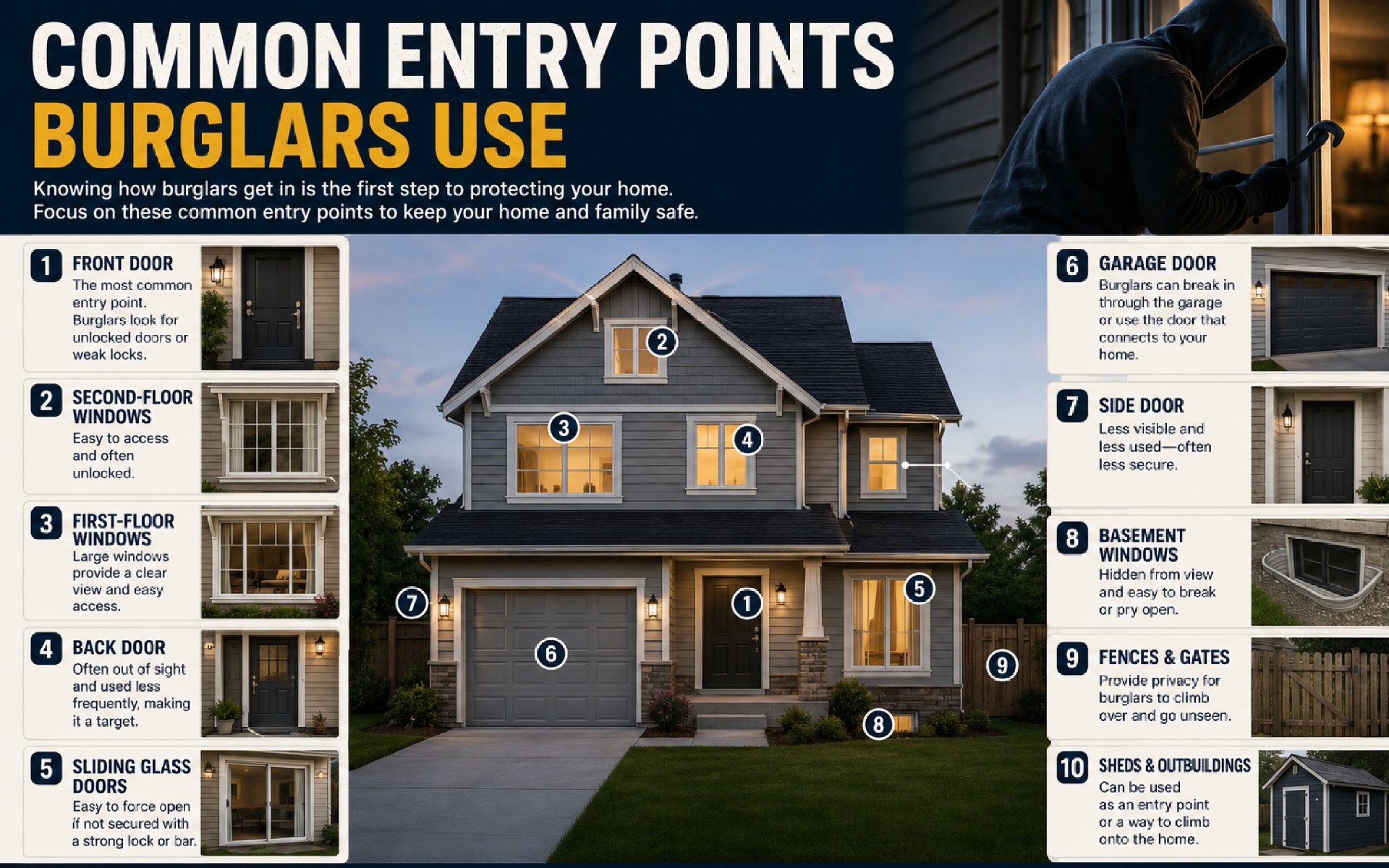
When people think about home security, they often focus on the front door. While this is an important part of protecting your home, experienced burglars rarely choose an entry point simply because it's the main entrance. Instead, they usually look for the easiest way in.
An older lock, a poorly maintained door, an unlocked window or a neglected side entrance can all provide opportunities for an opportunist burglar. By understanding which areas of your home are most commonly targeted, you can identify potential weaknesses and take simple steps to improve your property's security.
Front Doors
The front door remains one of the most common points of entry, particularly if it has older locks or obvious security weaknesses.
Common issues include:
- Standard euro cylinders without anti-snap protection.
- Incorrectly sized cylinders protruding beyond the handles.
- Loose or damaged door handles.
- Poor door alignment.
- Worn locking mechanisms.
- Doors being left unlocked.
Upgrading to a quality anti-snap cylinder, fitting TS007 security handles and ensuring the door is correctly aligned can greatly improve security.
Back Doors
Many burglars prefer the rear of a property because it is usually hidden from the road and neighbouring properties.
Common weaknesses include:
- Older lock cylinders.
- Poor external lighting.
- Worn handles.
- Doors that have dropped out of alignment.
- Faulty multi-point locking mechanisms.
Because they are less visible, back doors should always be secured to the same standard as the front door.
French Doors
French doors provide excellent access to gardens and patios, but they also contain more moving parts than a standard single door.
Potential weaknesses include:
- Worn slave door mechanisms.
- Faulty finger bolts.
- Older euro cylinders.
- Poor alignment between the doors.
- Locking points failing to engage fully.
Keeping both doors correctly aligned and ensuring every locking point operates properly is essential for maintaining security.
Patio Doors
Sliding patio doors can become vulnerable if they are poorly maintained.
Check regularly for:
- Faulty locks.
- Worn rollers.
- Damaged handles.
- Loose frames.
- Doors that no longer close properly.
Many patio doors can also benefit from additional security devices designed to prevent the door from being lifted or forced open.
Conservatory Doors
Conservatories are often overlooked when homeowners think about security.
Many are still fitted with:
- Older lock cylinders.
- Basic handles.
- Worn locking mechanisms.
- Doors that no longer align correctly.
Even if the conservatory itself isn't highly secure, the doors leading from the conservatory into the main house should always provide a high level of protection.
Side Doors and Utility Room Doors
Secondary entrances often receive far less attention than the front door.
Whether they're used daily or only occasionally, side doors should have:
- Quality locks.
- Good lighting.
- Proper alignment.
- Secure handles.
- Reliable locking mechanisms.
A burglar will happily choose a side entrance if it's easier than attacking the front door.
Timber Doors
Timber entrance doors should also be checked to ensure they are fitted with suitable locks.
Many older properties still have outdated mortice locks.
For improved security, external timber doors can often be upgraded with:
- BS3621 mortice locks, commonly recognised by insurers for external doors.
- BS8621 mortice locks, which offer similar security while allowing emergency escape using an internal thumbturn.
Choosing the correct lock helps improve both security and safety.
Ground Floor Windows
Windows remain a common point of entry, particularly where they are hidden from public view.
Look out for:
- Faulty window locks.
- Windows left on the vent position.
- Damaged handles.
- Broken catches.
- Windows that no longer close tightly.
Ground-floor windows should always be locked whenever the property is left unattended.
Garages
Garages are frequently overlooked but often contain valuable tools, bicycles and equipment.
Many are secured with older locks that have never been upgraded.
If the garage is attached to the house, it may also provide direct access into the property.
Check:
- Personnel doors.
- Garage side doors.
- Connecting internal doors.
- Window locks.
Garden Offices, Workshops and Outbuildings
Sheds and outbuildings often contain expensive equipment that can also be used to break into the main property.
Secure:
- Workshops.
- Home offices.
- Summer houses.
- Garden rooms.
- Storage sheds.
Strong locks and good lighting help reduce the risk.
Doors Left Unlocked
One of the simplest but most common security mistakes is forgetting to lock the door.
Even the highest-security lock offers no protection if it isn't being used.
Always remember to lock:
- Front doors.
- Back doors.
- Conservatory doors.
- Patio doors.
- Side entrances.
This applies even when you're at home, particularly during the evening or when working in the garden.
Don't Forget Door Maintenance
Security isn't just about fitting good locks.
Poorly maintained doors can develop problems that reduce security over time.
Watch for:
- Stiff handles.
- Keys becoming difficult to turn.
- Doors rubbing on the frame.
- Draughts.
- Loose hinges.
- Locking points failing to engage.
Addressing these issues early helps maintain both security and reliability.
Security Works Best in Layers
The most secure properties combine several layers of protection, including:
- Modern anti-snap locks.
- TS007 security handles.
- BS3621 or BS8621 locks on timber doors.
- Correct door alignment.
- CCTV or video doorbells.
- Motion-activated lighting.
- Well-maintained doors and windows.
- Secure garages and outbuildings.
A burglar will almost always look for the weakest point of entry. By ensuring every entrance to your property offers a similar level of protection, you make your home a much less attractive target.
Conclusion
Burglars rarely choose an entry point based on convenience—they choose the one that offers the least resistance. While the front door is an obvious target, back doors, French doors, conservatory doors, side entrances, garages and ground-floor windows can all become vulnerable if they're overlooked. By upgrading older locks, maintaining your doors properly, fitting the correct security hardware and ensuring every entrance is secured to the same high standard, you reduce the opportunities available to an intruder. Effective home security isn't about protecting one door—it's about protecting every possible way into your home.
Related Articles: