Can French Doors Be Repaired?
Introduction
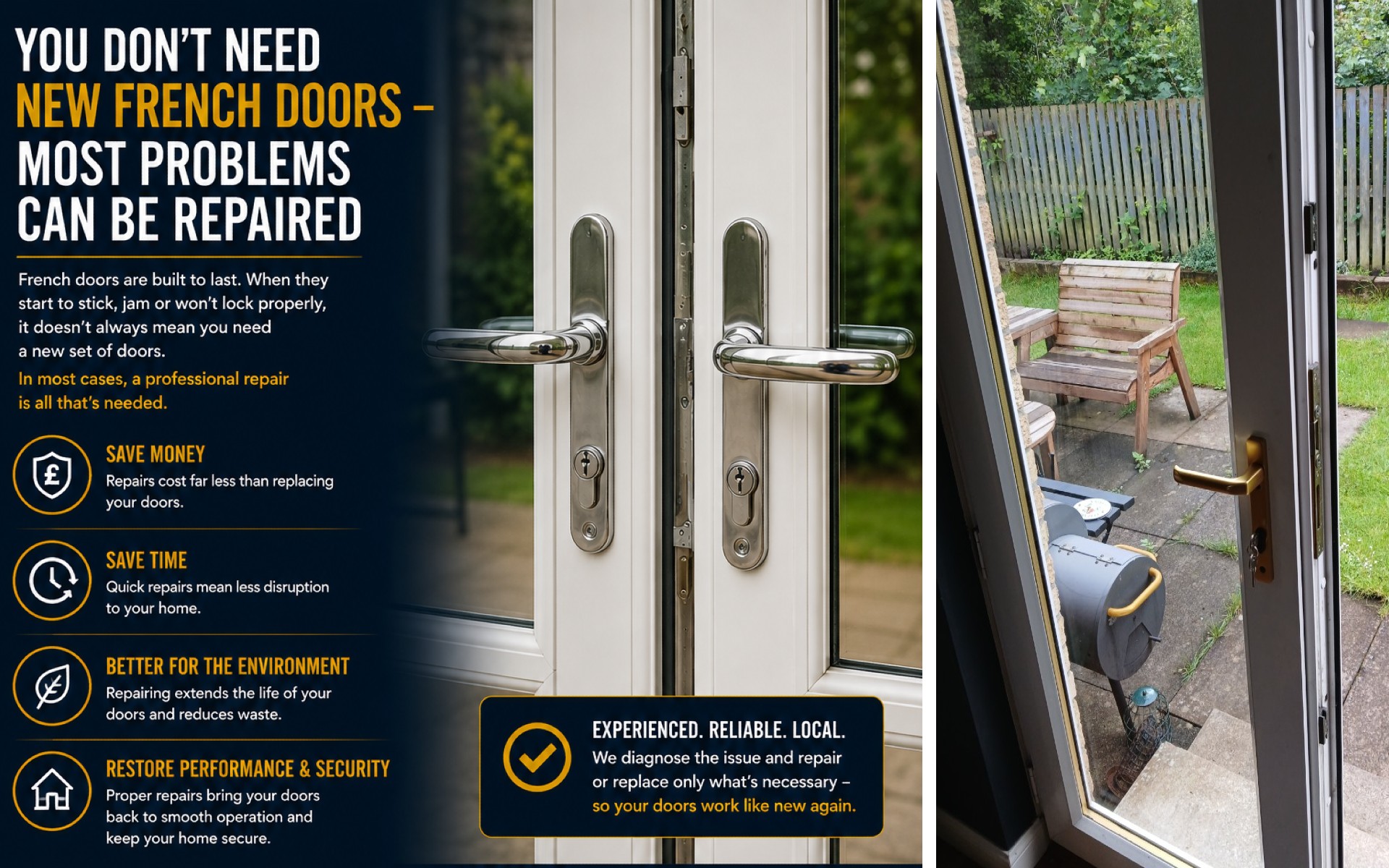
If your French doors have become difficult to lock, won't open properly or the handles no longer feel right, you may have been told that replacing the entire door is your only option.
Fortunately, that's often not the case.
Most French door problems are caused by worn components, alignment issues or faults within the locking system rather than the doors themselves. In many cases, repairs can restore smooth operation and security at a fraction of the cost of replacing the entire door set.
Failed Multipoint Locking Mechanisms
One of the most common French door faults is a failed multipoint locking mechanism.
Typical symptoms include:
- The handle won't lift properly.
- The key turns but nothing happens.
- The locking points don't engage.
- The door won't lock.
- The mechanism feels stiff or rough.
- The door becomes difficult to open.
Depending on the condition of the mechanism, it may be possible to replace the faulty gearbox or repair the locking strip without replacing the complete mechanism.
Gearbox Failure
The gearbox is the heart of the multipoint locking system.
It controls the movement of the:
- Hooks.
- Rollers.
- Deadbolts.
- Latches.
- Locking points.
As the gearbox wears, you may notice:
- The handle feels loose or floppy.
- The key turns but doesn't operate the lock.
- The handle moves without retracting the locking points.
- The door jams shut.
In many cases, replacing the gearbox restores normal operation while retaining the original locking mechanism.
Dropped or Misaligned Doors
French doors gradually move over time due to daily use, hinge wear and seasonal movement.
Common symptoms include:
- The door catching the frame.
- Difficulty lifting the handle.
- A stiff key.
- Uneven gaps.
- Having to push or pull the doors before locking.
Poor alignment places unnecessary strain on the gearbox and locking mechanism.
A professional realignment often restores smooth operation without replacing any lock components.
Problems With the Slave Door
Many homeowners assume the main opening door is at fault when the problem actually lies with the secondary (slave) door.
Common faults include:
- Stiff shoot bolts.
- Misaligned locking points.
- Worn top and bottom bolts.
- Poor alignment between both doors.
- Loose keeps.
Correcting the slave door often restores the operation of the entire French door set.
Worn or Broken Handles
Door handles experience thousands of operations throughout their lifetime.
Signs they need attention include:
- Loose handles.
- Drooping handles.
- Broken return springs.
- Cracked backplates.
- Excessive movement.
Replacing worn handles—particularly with quality sprung handles—can improve the feel of the door while reducing stress on the locking mechanism.
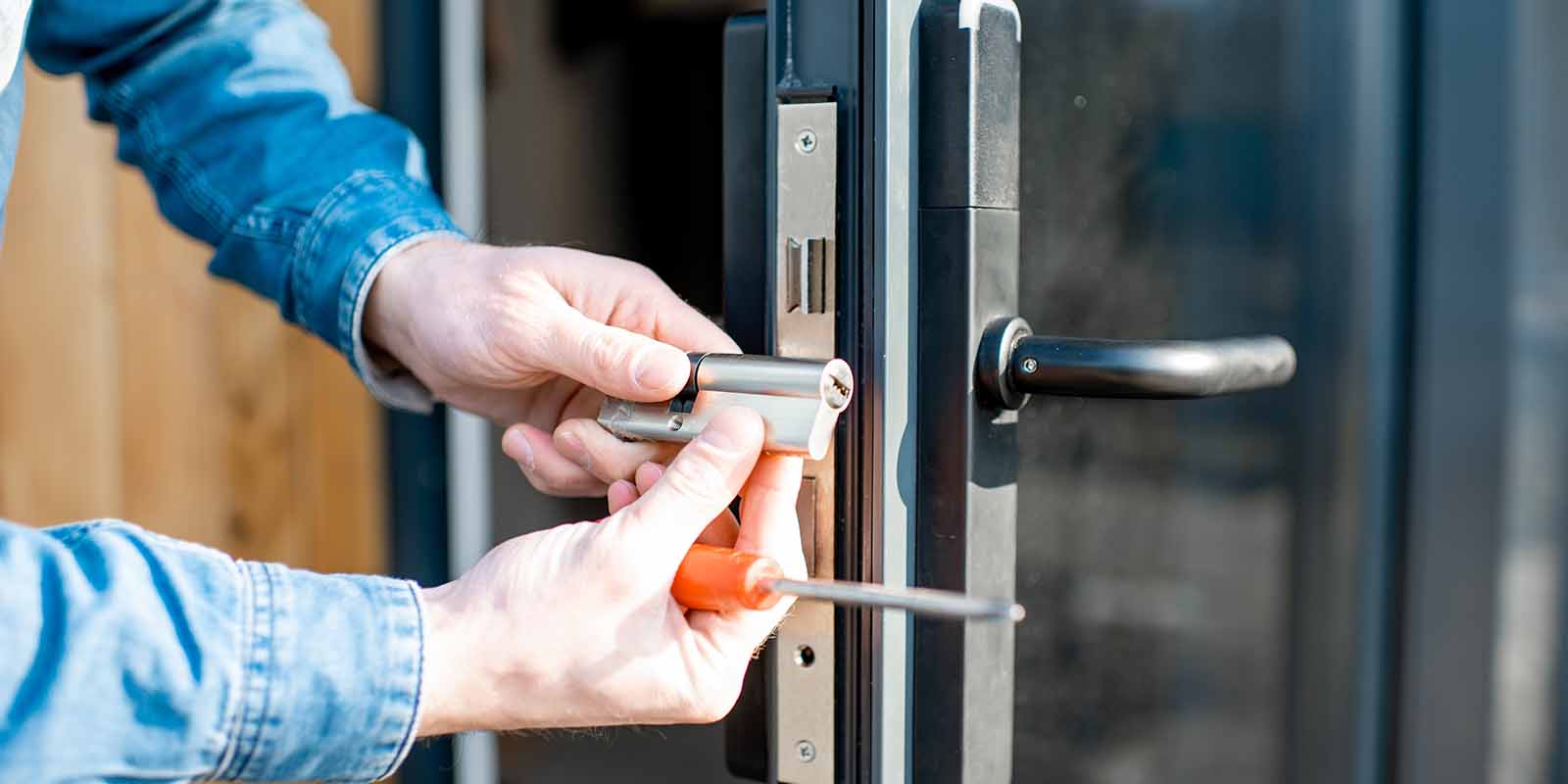
Lock Cylinder Replacement
Sometimes the lock cylinder is the only component that has failed.
Common reasons for replacement include:
- Stiff keys.
- Lost or stolen keys.
- Rough lock operation.
- Worn cylinders.
- Incorrectly sized cylinders.
- Outdated security.
Replacing the cylinder also provides an opportunity to upgrade to a correctly sized snap-resistant cylinder offering protection against:
- Lock snapping.
- Drilling.
- Picking.
- Bumping.
Older Mechanisms Can Often Be Repaired
Many French doors installed 15–25 years ago use locking mechanisms that are no longer manufactured.
That doesn't automatically mean replacement is necessary.
Depending on the design, it may be possible to:
- Replace the gearbox.
- Repair the original mechanism.
- Source old-stock components.
- Install compatible replacement parts.
- Adapt the existing mechanism.
An experienced locksmith can often repair systems that others incorrectly recommend replacing.
Correct Diagnosis Saves Money
Many homeowners are told they need new French doors without the actual fault being properly investigated.
In reality, the problem is often something much simpler, such as:
- A worn gearbox.
- A dropped door.
- A broken handle.
- A worn lock cylinder.
- Misaligned keeps.
- Stiff locking points.
Once the true cause is identified, the doors can usually be repaired and returned to smooth operation.
When Replacement Is the Better Option
Although repairs are possible in most situations, replacement may be appropriate where there is:
- Structural damage to the doors.
- A failed or distorted frame.
- Severe corrosion affecting multiple components.
- Cracked door slabs.
- Extensive impact damage.
- No genuine or suitable replacement parts available.
Fortunately, these situations are far less common than many people are led to believe.
Why Repairing Often Makes More Sense
Repairing existing French doors offers several advantages:
- Lower overall cost.
- Faster completion.
- Less disruption.
- Retains the existing doors.
- Environmentally friendly.
- Avoids unnecessary replacement.
- Restores reliable operation.
Many repairs can be completed during a single visit using replacement parts carried in stock.
Get the Doors Properly Assessed
The key to a successful repair is identifying the actual cause of the problem before replacing parts.
A proper inspection should include checking:
- Door alignment.
- Gearbox operation.
- Multipoint locking mechanism.
- Lock cylinder.
- Door handles.
- Slave door operation.
- Hinges.
- Keeps.
Correct diagnosis prevents unnecessary expense and helps ensure the repair lasts.
Conclusion
A faulty French door rarely needs replacing simply because the lock has failed. Most problems are caused by worn gearboxes, faulty lock cylinders, broken handles or doors that have moved out of alignment. These faults can usually be repaired quickly and cost-effectively, restoring smooth operation and reliable security.
Before investing in new French doors, it's worth having the existing doors professionally assessed. In many cases, a straightforward repair can add years to their service life while saving hundreds or even thousands of pounds.