Introduction
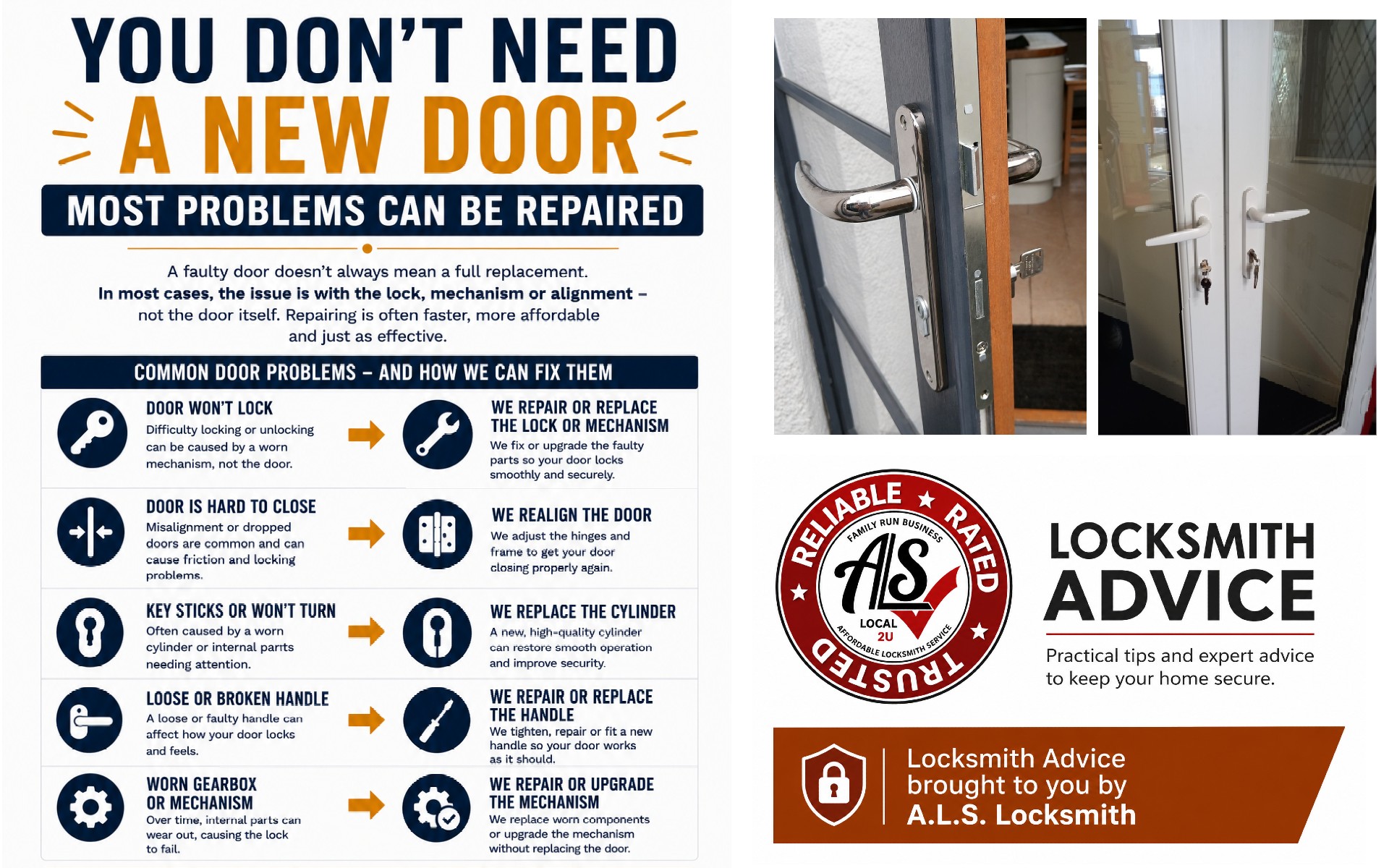
When a door becomes difficult to lock, won't open properly or develops a fault, it's easy to assume the entire door has reached the end of its life. In some cases, homeowners are even advised that replacing the whole door is the only option.
Fortunately, that's rarely true.
Most problems affecting uPVC, composite, French and conservatory doors are caused by worn components, failed locking mechanisms or poor alignment rather than the door itself. A professional repair can often restore the door to full working order for a fraction of the cost of replacement.
A Dropped Door Is Often the Real Problem
One of the most common faults is a door that has gradually dropped on its hinges.
This can result in:
- Difficulty lifting the handle.
- The door catching the frame.
- A stiff key.
- Locking points failing to engage correctly.
- Having to push or pull the door before locking it.
- Draughts around the door.
In many cases, a professional realignment is all that's required to restore smooth operation.
Failed Gearboxes Can Usually Be Replaced
The gearbox is the heart of a multipoint locking mechanism.
As it wears, you may notice:
- The handle becoming stiff.
- The key becoming difficult to turn.
- Intermittent locking problems.
- The handle moving but nothing happening.
- The door refusing to lock or unlock.
If the rest of the mechanism is still in good condition, replacing the gearbox is often the most cost-effective repair.
Sometimes the Complete Mechanism Needs Replacing
Not every fault is limited to the gearbox.
If the locking mechanism has suffered more extensive wear, replacing the entire multipoint mechanism may provide the most reliable long-term repair.
A full replacement may be required if there are:
- Broken connecting rods.
- Worn hooks or rollers.
- Seized locking points.
- Damaged faceplates.
- Extensive internal wear.
- Multiple failed components.
Even then, replacing the mechanism is still considerably cheaper than fitting a completely new door.
Lock Cylinders Are Easily Replaced
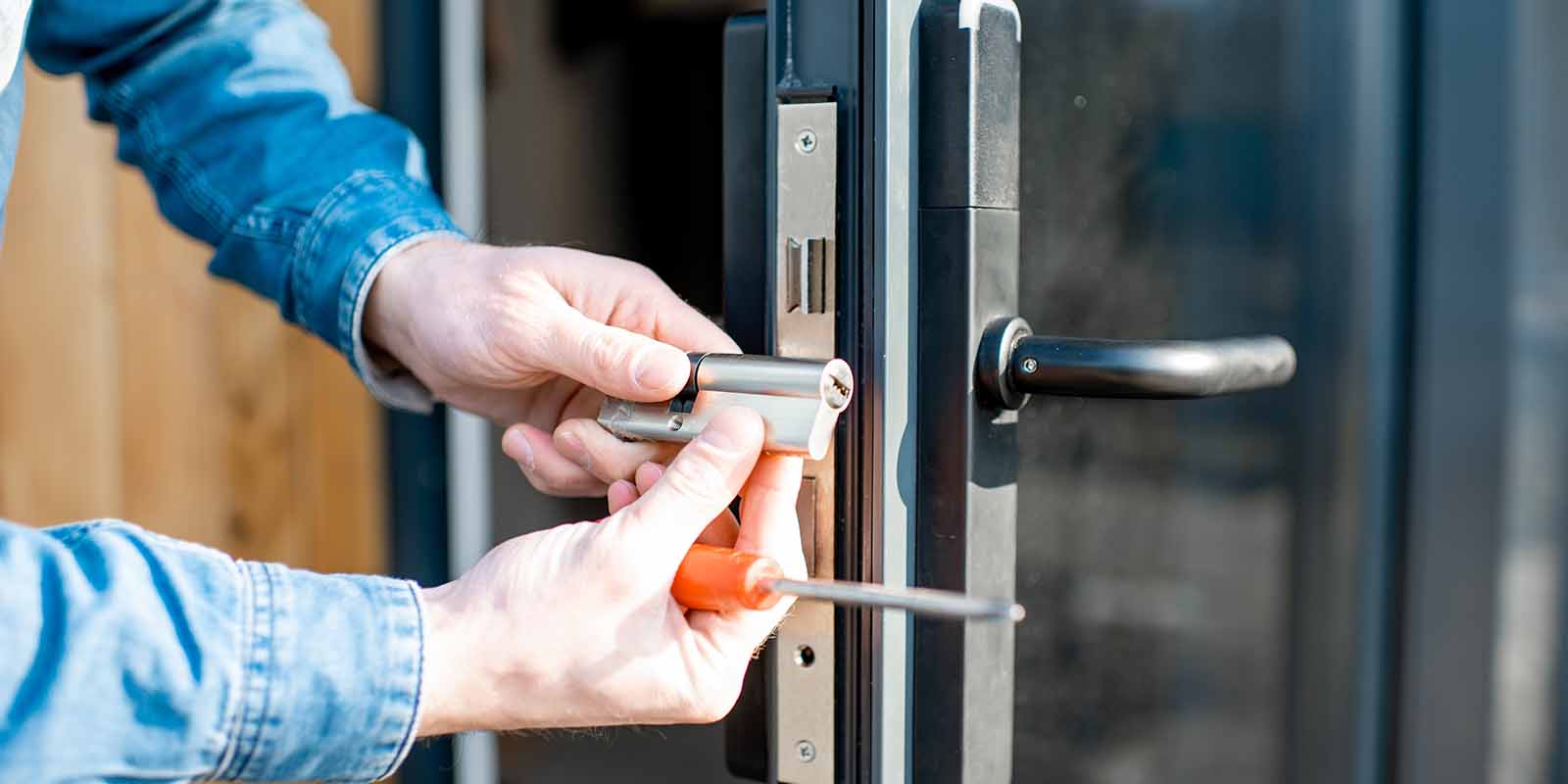
A worn or damaged euro cylinder is one of the simplest door repairs.
Symptoms include:
- A stiff key.
- Rough operation.
- Difficulty removing the key.
- Lost or stolen keys.
- An outdated cylinder with poor security.
Replacing the cylinder can:
- Restore smooth operation.
- Improve reliability.
- Upgrade security with a modern snap-resistant lock.
The remainder of the door usually requires no alteration.
Worn Handles Don't Mean a New Door
Door handles are heavily used and naturally wear over time.
Common problems include:
- Broken return springs.
- Loose fixings.
- Drooping handles.
- Cracked backplates.
- Excessive movement.
Replacing quality handles is usually a quick, affordable repair that can improve the operation of the entire locking system.
French and Conservatory Doors Are Usually Repairable
Many homeowners are told that faulty French or conservatory doors need replacing.
In reality, common faults include:
- Failed gearboxes.
- Stiff shoot bolts.
- Dropped doors.
- Worn lock cylinders.
- Poor alignment.
- Failed multipoint mechanisms.
- Broken handles.
Most of these issues can be repaired without replacing the doors themselves.
Older Doors Can Often Be Saved
Older doors sometimes contain locking mechanisms that are no longer manufactured.
Even then, replacement isn't always the only option.
Depending on the make and model, it may be possible to:
- Source replacement mechanisms.
- Fit compatible alternatives.
- Replace individual components.
- Repair the existing mechanism.
- Adapt the locking system using suitable replacement parts.
Experience with obsolete locking systems often makes the difference between a repair and an unnecessary replacement.
Correct Diagnosis Is Essential
Many different faults produce very similar symptoms.
For example, a stiff handle or difficult lock could be caused by:
- Poor door alignment.
- A worn gearbox.
- A damaged lock cylinder.
- A seized locking point.
- A failed multipoint mechanism.
- Worn handles.
Replacing the wrong component wastes both time and money.
A proper diagnosis ensures the correct repair is carried out first time.
When Does a Door Need Replacing?
Although most faults are repairable, replacement is sometimes the best option.
Examples include:
- Severe structural damage.
- Cracked composite door slabs.
- Rotten timber doors beyond repair.
- Failed or distorted frames.
- Major impact damage.
- Doors that are genuinely beyond economical repair.
Fortunately, these situations are far less common than many homeowners believe.
The Benefits of Repairing
Repairing an existing door often provides several advantages:
- Lower overall cost.
- Faster completion.
- Less disruption.
- Retains your existing door.
- Environmentally friendly.
- Avoids unnecessary replacement.
- Preserves the appearance of your property.
For many homeowners, repairing the existing door is the most practical and economical solution.
Always Fix the Cause of the Problem
Replacing a faulty component without addressing the underlying cause often leads to repeat failures.
For example:
- A dropped door should be realigned when replacing a gearbox.
- Worn handles should be replaced if they are placing strain on the mechanism.
- Incorrectly positioned keeps should be adjusted during the repair.
- Stiff locking points should be serviced before fitting new components.
A complete repair addresses both the failed part and the reason it failed.
Conclusion
Being told you need a new door doesn't always mean it's true. In the vast majority of cases, problems with uPVC, composite, French and conservatory doors are caused by worn locks, failed gearboxes, damaged handles or poor alignment rather than the door itself.
With the correct diagnosis, many doors can be restored to smooth, secure operation through targeted repairs, saving hundreds or even thousands of pounds compared to replacement. Before committing to a new door, it's always worth finding out whether your existing one can be repaired first.