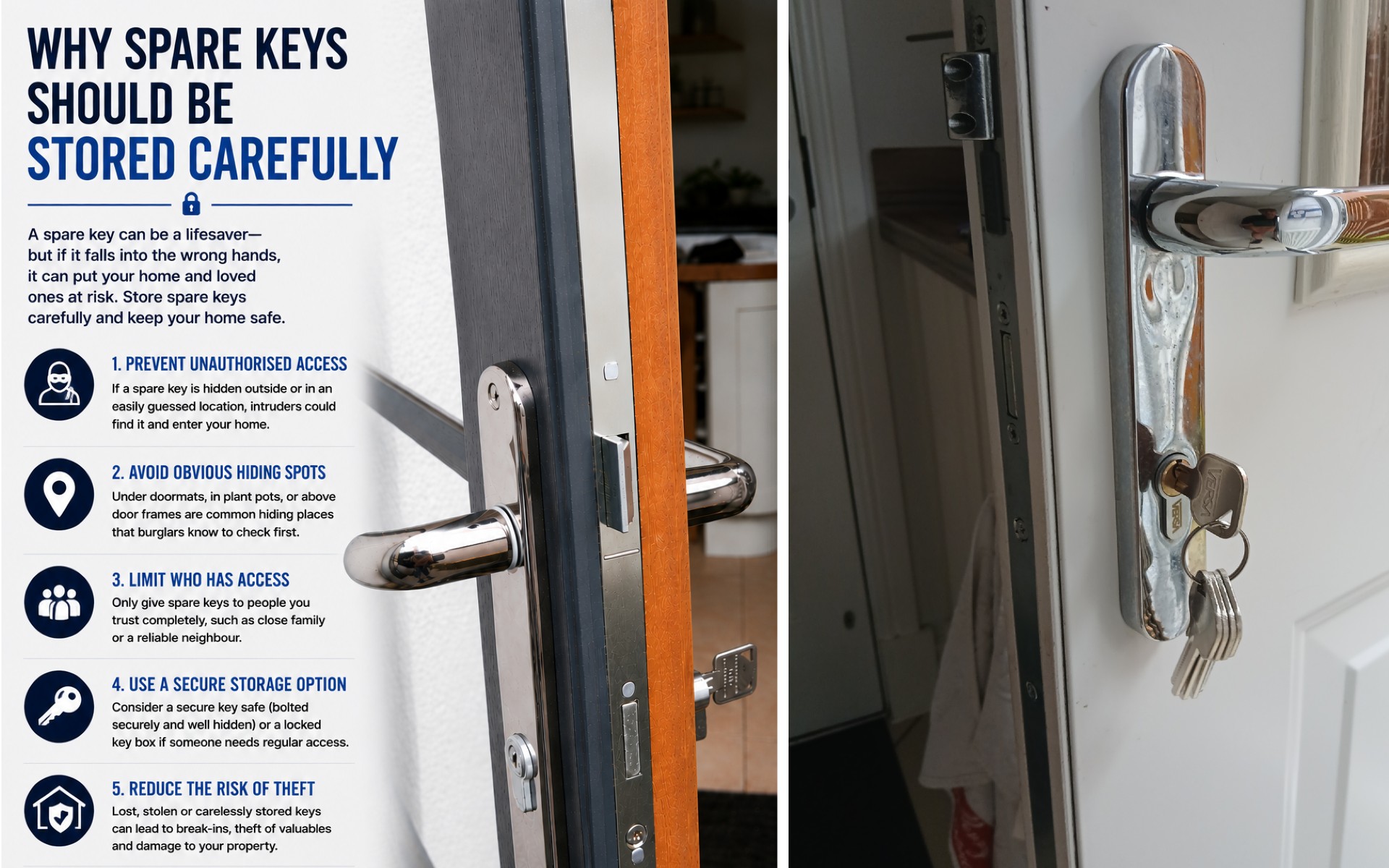
A spare key can be incredibly useful when you're locked out or need to provide access to a family member. However, where and how you store that spare key can have a significant impact on your home's security.
Many burglaries don't involve sophisticated techniques or forced entry. Sometimes, the key is simply left somewhere obvious.
The Problem With Common Hiding Places
Most burglars know exactly where homeowners tend to hide spare keys.
Common locations include:
- Under the doormat
- Under flower pots
- Inside fake rocks
- Above door frames
- In drainpipes
- Under garden ornaments
These are usually the first places an opportunist will check.
A Hidden Key Is Not Always a Secure Key
Many people believe that because a key is out of sight, it's secure.
Unfortunately, if a burglar can find the key in a matter of seconds, it effectively removes the protection offered by the lock itself.
The strongest lock in the world won't help if the key is sitting nearby.
Think About Who Can Access It
When choosing where to keep a spare key, consider:
- Visitors
- Tradespeople
- Delivery drivers
- Previous occupants
- Anyone regularly around the property
A key left in an obvious location may be discovered accidentally as well as deliberately.
Don't Leave Keys in Sheds or Garages
A common mistake is hiding a house key inside a shed or garage.
If the outbuilding can be accessed, you've effectively provided a burglar with a key to the main house.
Remember, many sheds have relatively basic security compared to your home.
Consider a Trusted Person
One of the safest options is often leaving a spare key with:
- A trusted family member
- A close friend
- A reliable neighbour
This removes the risk of the key being discovered on your property.
Key Safes Can Be a Good Option
A properly installed key safe can provide secure access when required.
They are particularly useful for:
- Elderly relatives
- Carers
- Holiday homes
- Family access
The key safe should be fitted securely and the code changed periodically if multiple people have access.
Don't Label Keys
A surprising number of people attach identifying information to their keys.
Avoid labels that include:
- Your address
- House numbers
- Street names
- Property names
If the key is lost, this information can make it much easier to identify which property it belongs to.
What If You've Lost a Spare Key?
If a spare key goes missing and you don't know where it is, consider changing the lock.
This is especially important if:
- The key can be linked to your address
- You suspect it has been stolen
- You don't know who may have found it
A lock change restores control over who can access your property.
Keep Track of How Many Keys Exist
Many homeowners lose track of spare keys over the years.
It's worth knowing:
- How many keys were supplied
- Who has copies
- When additional keys were cut
This is particularly important after moving into a new property.
Convenience Shouldn't Compromise Security
A spare key is meant to help in an emergency, not create a security weakness. By storing spare keys carefully and avoiding obvious hiding places, you can enjoy the convenience of a backup key without putting your home at unnecessary risk.