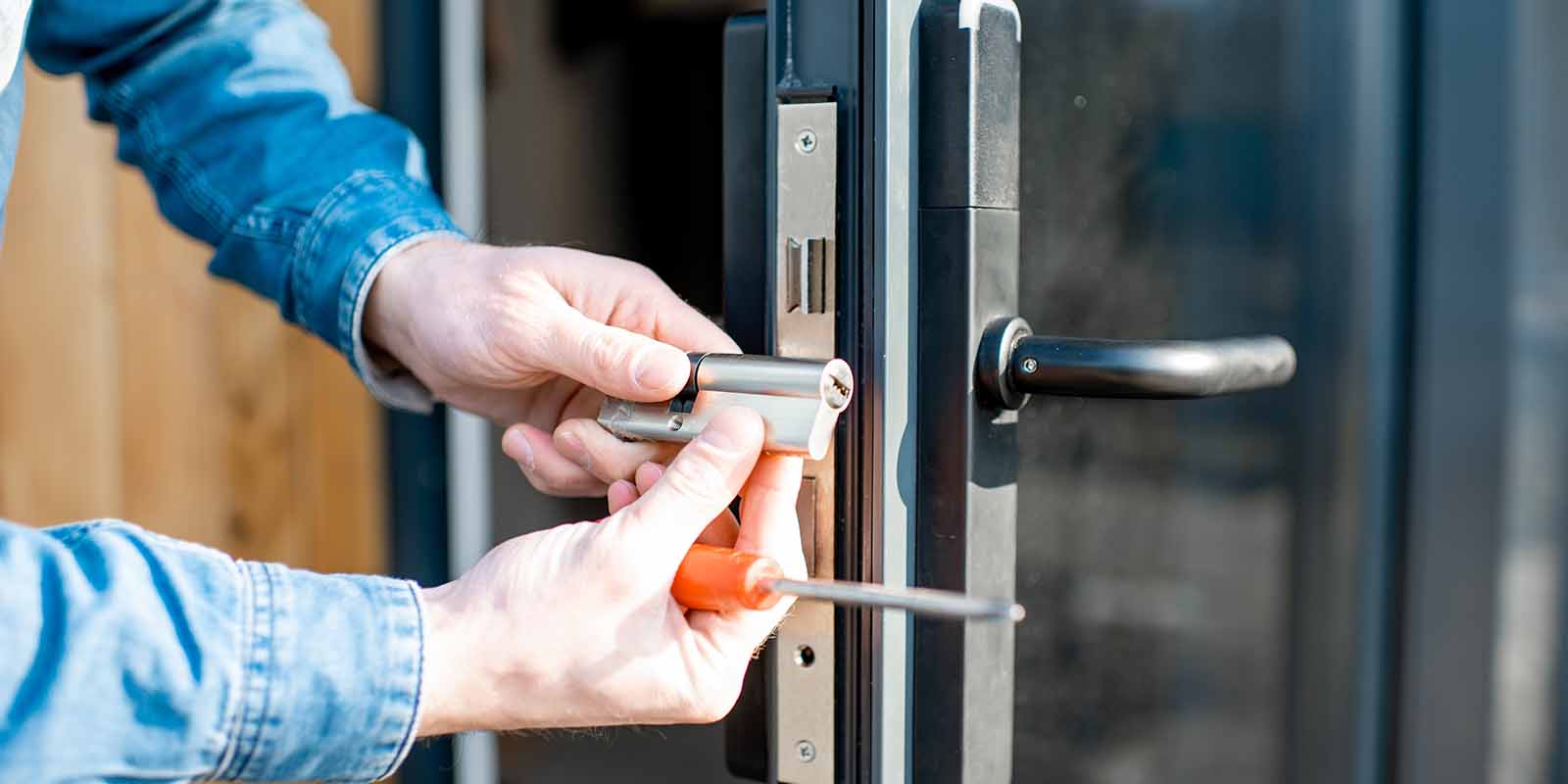
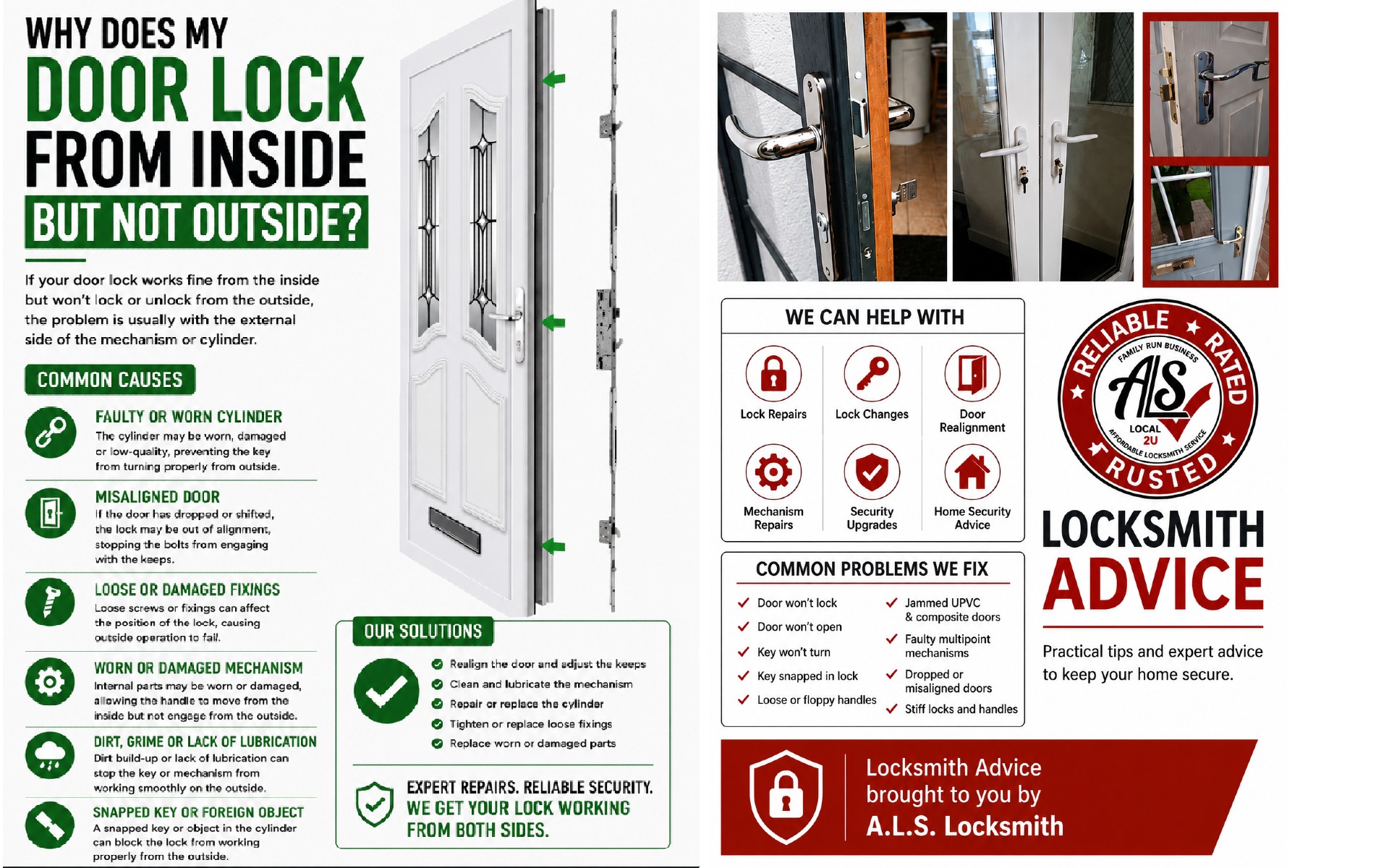
If your door locks and unlocks perfectly from the inside but refuses to work properly from the outside, the problem is usually with the locking components rather than the door itself.
This is a common fault on uPVC and composite doors, and in most cases it can be repaired without replacing the entire door.
The key is identifying which part of the locking system has failed.
A Worn or Faulty Euro Cylinder
One of the most common causes is a worn euro cylinder.
You may notice:
- The inside thumbturn works normally.
- The inside key works.
- The outside key won't turn.
- The outside key feels stiff or rough.
Over time, the pins inside the cylinder can wear or become damaged, preventing the key from operating correctly from one side.
Replacing the cylinder is often all that's required.
The Cylinder Has Failed Internally
Double-sided euro cylinders contain separate pin chambers for each side.
Sometimes one side wears more quickly than the other.
This can result in:
- Normal operation from inside.
- Poor or no operation from outside.
- The key entering normally but refusing to turn.
This type of internal failure usually requires a replacement cylinder.
The Wrong Key
Before assuming there's a fault, make sure you're using the correct key.
Keys that are:
- Worn
- Bent
- Damaged
- Poor-quality copies
may work from one side but struggle from the other.
Trying the original manufacturer's key can sometimes solve the problem.
The Door Is Under Pressure
If the door has dropped slightly, pressure on the locking mechanism may make it harder to unlock from outside.
You might find:
- The inside handle releases the pressure.
- The outside key becomes difficult to turn.
- Pulling or pushing the door slightly changes how the lock operates.
This usually indicates poor door alignment rather than a faulty cylinder.
The Gearbox May Be Beginning to Fail
If the cylinder is working correctly, the problem may lie inside the gearbox.
Common symptoms include:
- The key turns only part of the way.
- The handle feels stiff.
- The lock works intermittently.
- The outside operation is unreliable.
A worn gearbox may initially affect one side before failing completely.
Check the Door Handles
Loose or damaged handles can also prevent the outside mechanism from operating correctly.
Signs include:
- Excessive movement in the handle.
- The handle not returning properly.
- The spindle slipping.
- Loose fixing screws.
Sometimes replacing the handle restores normal operation.
Don't Force the Key
If the key won't turn from outside, avoid using excessive force.
Doing so can:
- Snap the key.
- Damage the cylinder.
- Break the gearbox.
- Turn a simple repair into an emergency call-out.
If the lock suddenly becomes difficult to operate, it's best to have it checked before it fails completely.
Correct Diagnosis Prevents Unnecessary Repairs
Several different faults can produce the same symptoms.
The problem could be:
- A worn euro cylinder.
- A failing gearbox.
- Poor door alignment.
- Loose handles.
- A combination of more than one issue.
Replacing parts without identifying the real cause often leads to unnecessary expense.
Most Problems Can Be Repaired
If your door locks from inside but not outside, it doesn't usually mean you need a new door. In many cases, replacing a worn euro cylinder, repairing the gearbox, adjusting the door alignment or fitting new handles will restore normal operation. A professional inspection ensures the correct component is repaired or replaced, helping you avoid repeat failures and keeping your existing door working smoothly.