Introduction
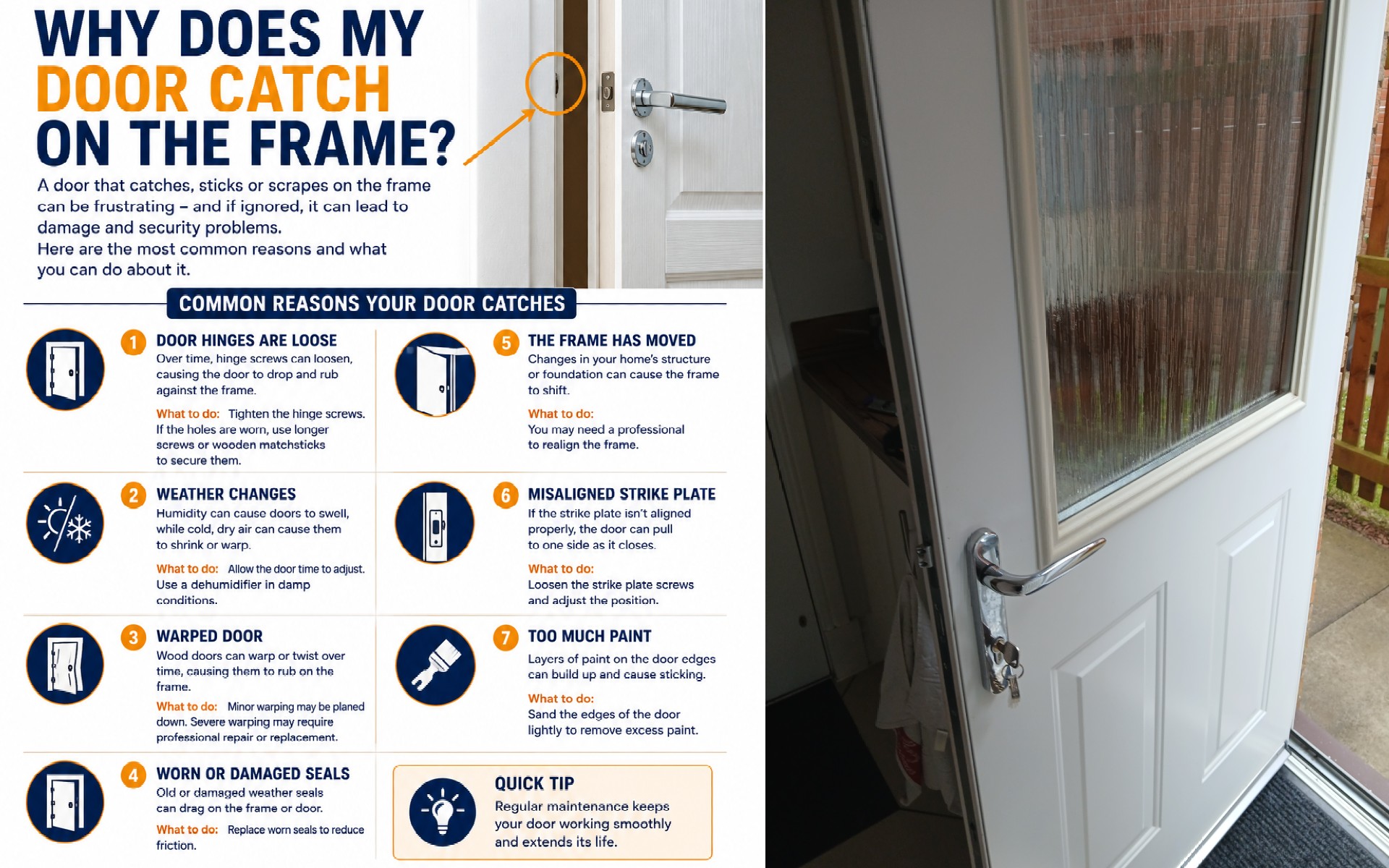
If your uPVC, composite or French door is catching on the frame, it's usually a sign that something has moved out of alignment. While it may seem like a minor inconvenience, a door that rubs or catches should never be ignored. Every time the door is forced closed or locked, additional strain is placed on the hinges, handles, lock cylinder, gearbox and multipoint locking mechanism.
Fortunately, most doors that catch on the frame can be repaired without replacing the door itself. Identifying the underlying cause early can often prevent a simple adjustment becoming an expensive lock or mechanism repair.
The Door Has Dropped
The most common reason a door catches on the frame is that it has dropped slightly on its hinges.
Over time, the weight of the door, everyday use and normal wear can cause it to move a few millimetres out of position. That's often enough for the edge of the door to start rubbing against the frame.
Common signs include:
- Scrape marks on the frame.
- Difficulty closing the door.
- The handle becoming harder to lift.
- The key becoming stiff to turn.
- The door rubbing at the top or bottom.
A professional realignment will usually restore the correct door position.
Worn or Loose Hinges
Hinges support the entire weight of the door and naturally wear over time.
As hinges become worn or their fixings loosen, the door can begin to sag, causing it to catch the frame or place additional strain on the locking mechanism.
Depending on their condition, the hinges may simply require adjustment or, if excessively worn, replacement.
Seasonal Expansion and Contraction
Temperature changes affect both doors and frames.
During periods of:
- Hot weather.
- Cold weather.
- High humidity.
Materials naturally expand and contract. This slight movement can alter the door's position enough for it to begin rubbing on the frame.
Although seasonal movement is normal, excessive movement should still be investigated.
Incorrect Previous Adjustments
I've attended many properties where homeowners have tried adjusting the hinges after watching online tutorials.
Unfortunately, adjusting one hinge without understanding how the others interact can pull the door out of square.
The result is often:
- Increased rubbing.
- Poor sealing.
- Difficult locking.
- Additional strain on the gearbox.
- Premature lock failure.
A door may appear straight while still being badly aligned.
The Locking Points Are Catching the Keeps
Sometimes the door itself isn't rubbing the frame at all.
Instead, the:
- Hooks.
- Rollers.
- Mushrooms.
- Deadbolts.
are striking the keeps when the handle is lifted.
This often feels very similar to a dropped door and commonly causes:
- Stiff handles.
- Difficult locking.
- Keys becoming harder to turn.
- Excessive gearbox wear.
Correct adjustment of the keeps often restores smooth operation.
Building Movement
Properties naturally settle over time.
Even slight structural movement can affect:
- Door frames.
- Hinge positions.
- Lock alignment.
- Closing tolerances.
Older homes are particularly susceptible to these gradual changes, although they can affect newer properties as well.
Warped or Distorted Doors
Although less common with composite doors, prolonged exposure to heat, sunlight or age can occasionally cause movement within the door itself.
Similarly, older timber doors may:
- Warp.
- Twist.
- Swell.
- Shrink.
These changes can affect how the door fits within the frame and may require adjustment or repair.
Why You Shouldn't Ignore It
A door that catches on the frame is placing unnecessary strain on every part of the locking system.
This includes:
- The euro cylinder.
- The gearbox.
- The multipoint locking mechanism.
- The handles.
- The hinges.
- The locking points.
Many failed gearboxes and worn locking mechanisms begin with a door that simply needed adjusting.
Common Warning Signs
Your door may require attention if you notice:
- The door rubbing on the frame.
- Difficulty lifting the handle.
- Keys becoming stiff.
- The need to push or pull the door to lock it.
- Uneven gaps around the frame.
- Draughts.
- Scraping noises when opening or closing.
- Loose or dropping handles.
These symptoms rarely improve on their own.
Most Doors Can Be Realigned
The good news is that most doors catching on the frame can be repaired without replacing the door.
Professional realignment can often:
- Eliminate rubbing.
- Restore smooth locking.
- Improve the weather seal.
- Remove draughts.
- Reduce strain on the locking mechanism.
- Extend the lifespan of the gearbox and lock.
- Improve home security.
Correct alignment allows every locking point to engage naturally without unnecessary force.
Preventing Future Problems
Regular maintenance helps keep your door operating smoothly.
Good practice includes:
- Checking hinges for movement.
- Tightening loose fixings.
- Lubricating locking points.
- Keeping the door correctly aligned.
- Replacing worn handles.
- Investigating stiff locks early.
- Avoiding forcing the handle or key.
Small adjustments made early are usually far less expensive than repairing a failed locking mechanism.
Conclusion
A door that catches on the frame is usually telling you that something has moved out of alignment. Whether the cause is worn hinges, seasonal movement, misaligned keeps, building settlement or previous incorrect adjustments, continuing to force the door will only increase wear on the lock, gearbox and multipoint mechanism. In most cases, a professional realignment is all that's needed to restore smooth operation, improve security and prevent more costly repairs in the future. Addressing the problem early can add years to the life of your door and its locking system while saving the expense of avoidable component failures.