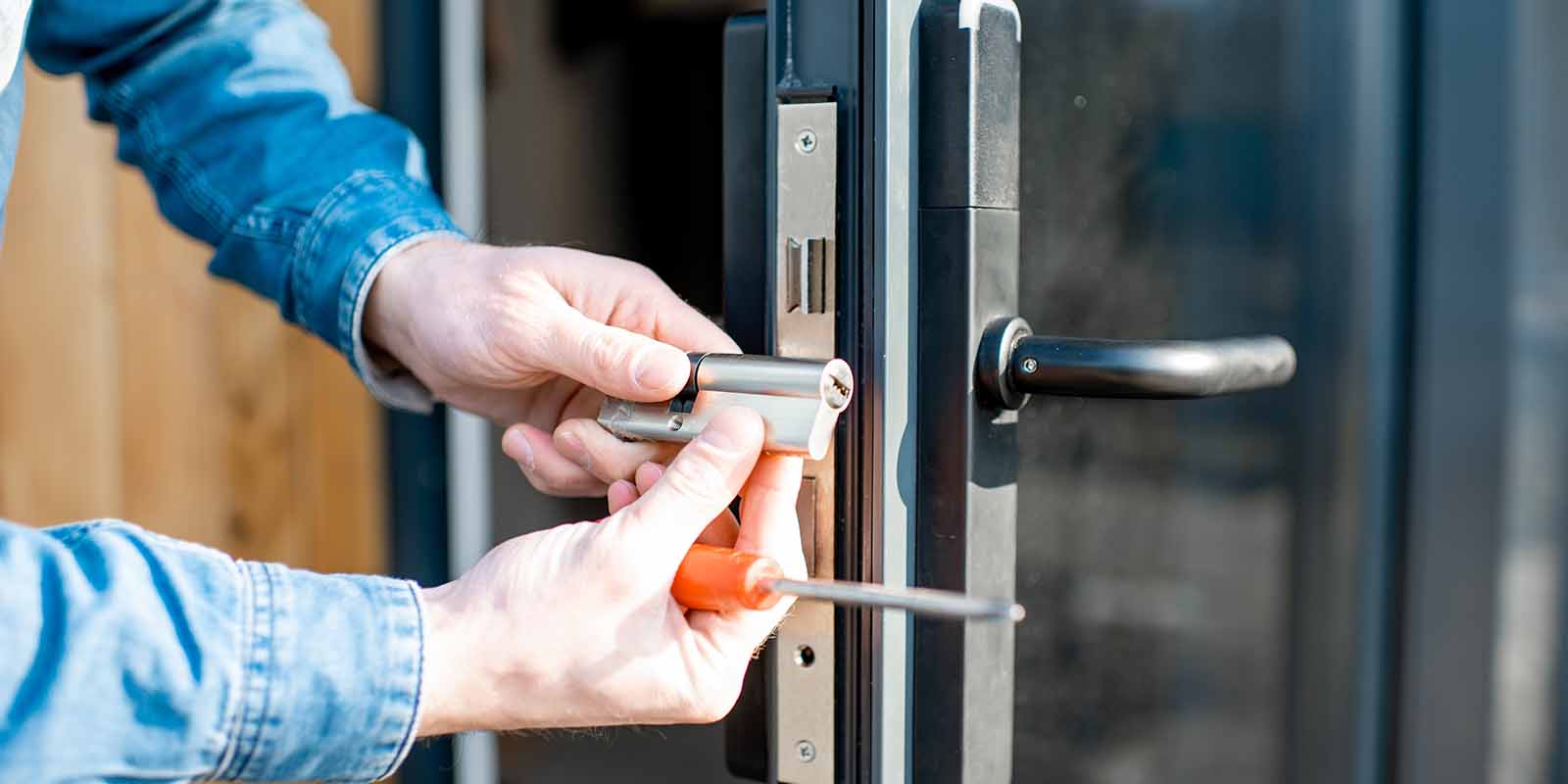
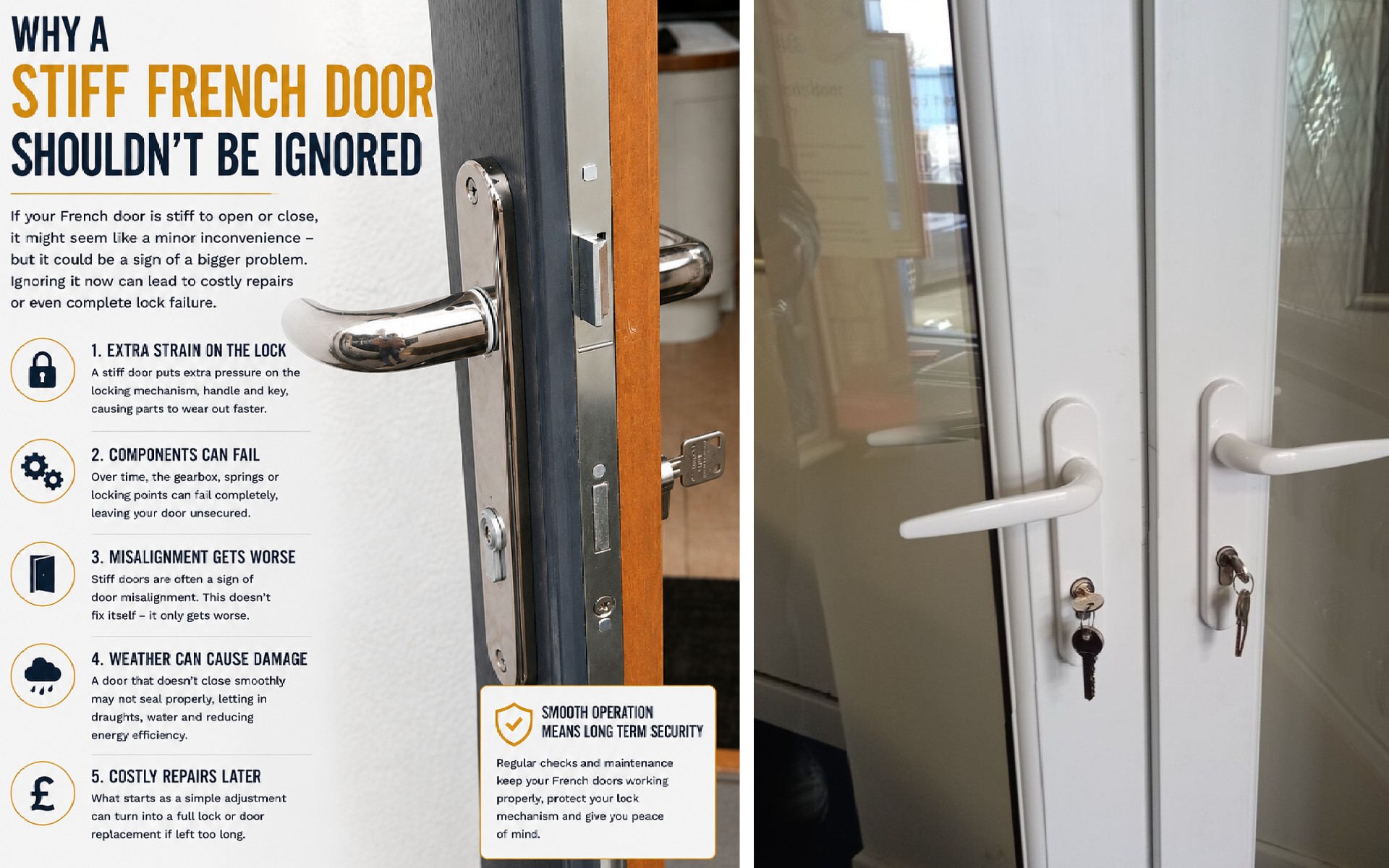
A French door should open, close, and lock smoothly with very little effort. If you've noticed the handle becoming harder to lift, the key becoming stiff, or the doors needing a push or pull to lock properly, don't ignore it.
These are often the first signs that something is wrong, and dealing with the problem early can prevent a complete lock failure.
A Stiff Door Is Usually a Warning Sign
French doors rarely become stiff without a reason.
Common causes include:
- A dropped door
- Poor alignment
- A worn gearbox
- A failing lock cylinder
- Stiff locking points
- Worn handles
Identifying the cause early is usually much cheaper than waiting for the lock to fail completely.
Door Alignment Problems
Over time, French doors can move slightly due to:
- Daily use
- Hinge wear
- Seasonal expansion and contraction
- Natural movement of the property
Even a small amount of movement can stop the locking points lining up correctly with the frame, making the handle harder to lift.
The Gearbox May Be Wearing Out
The gearbox is the heart of the multipoint locking system.
As it begins to wear, you may notice:
- Increased resistance when lifting the handle
- The key becoming harder to turn
- Locking points not engaging smoothly
- Intermittent locking problems
If left unchecked, the gearbox may eventually fail, leaving the door locked shut or unable to lock securely.
The Lock Cylinder Could Be Worn
If the handle operates normally but the key feels stiff, the lock cylinder may be reaching the end of its life.
Common signs include:
- The key sticking
- Rough operation
- Difficulty removing the key
- The key needing to be jiggled before it turns
Replacing the cylinder before it fails can help prevent a snapped key or lockout.
Don't Force the Handle
One of the biggest mistakes homeowners make is applying more force when the door becomes difficult to lock.
This can damage:
- The gearbox
- The lock cylinder
- The handles
- The locking points
A minor adjustment can quickly turn into a much more expensive repair.
Check the Slave Door
If your French doors have a secondary (slave) door, problems there can affect the entire door set.
Look for:
- Stiff shoot bolts
- Difficulty opening the second door
- Poor alignment
- Locking points that don't engage fully
Sometimes the main door isn't the problem at all.
Most Problems Start Small
Many emergency call-outs begin with symptoms that were present for weeks or even months, such as:
- A stiff handle
- A heavy lock
- A door catching the frame
- Grinding noises
- Difficulty locking
These warning signs shouldn't be ignored.
Most French Door Faults Can Be Repaired
A stiff French door doesn't usually mean you need new doors.
Common repairs include:
- Door realignment
- Gearbox replacement
- Lock cylinder replacement
- Handle replacement
- Multipoint lock repairs
- Slave door adjustments
In most cases, the existing doors can be restored to smooth, reliable operation.
Don't Wait Until You're Locked In or Out
A French door that has become stiff is telling you something isn't right. Dealing with the problem while the door is still working normally is almost always easier, less disruptive, and more cost-effective than waiting until the lock fails completely.