Introduction
A quality mortice lock can provide decades of reliable service, but like any mechanical device, it won't last forever. Over time, the internal levers, springs and moving parts wear through everyday use, reducing both reliability and security.
Sometimes a mortice lock needs replacing because it has failed. In other cases, replacing it before it fails can prevent a lockout, improve security, and help meet modern insurance requirements.
Knowing the warning signs can help you decide when it's time for a replacement.
The Key Is Becoming Difficult to Turn
One of the first signs that a mortice lock is wearing out is a key that no longer turns smoothly.
You may notice:
- The key sticking.
- Increased resistance.
- The need to wiggle the key.
- The lock feeling rough or gritty.
- The key becoming difficult to remove.
While these symptoms can sometimes be caused by door movement or a poorly aligned keep, they can also indicate wear inside the lock itself.
The Lock Is Several Decades Old
Many timber doors are still fitted with mortice locks that have been operating for 20, 30 or even 40 years.
Although these locks may still function, years of daily use can result in:
- Worn levers.
- Weak springs.
- Excessive internal wear.
- Reduced reliability.
- Lower security than modern locks.
Replacing an ageing lock before it fails can provide greater peace of mind and reduce the risk of unexpected problems.
You've Lost the Keys
If your keys have been lost or stolen, replacing the lock is usually the safest option.
You have no way of knowing:
- Who may find the keys.
- Whether copies already exist.
- Whether the keys can be linked to your property.
A replacement lock immediately restores control over who has access to your home.
You've Moved Into a New Home
Moving house is one of the best times to replace your locks.
Previous owners may have provided keys to:
- Family members.
- Neighbours.
- Friends.
- Cleaners.
- Builders and tradespeople.
- Former tenants.
Even if every key is handed over, there's no way of knowing how many copies have been made over the years.
The Lock No Longer Meets Modern Security Standards
Many older timber doors are still fitted with standard mortice locks that pre-date current British Standards.
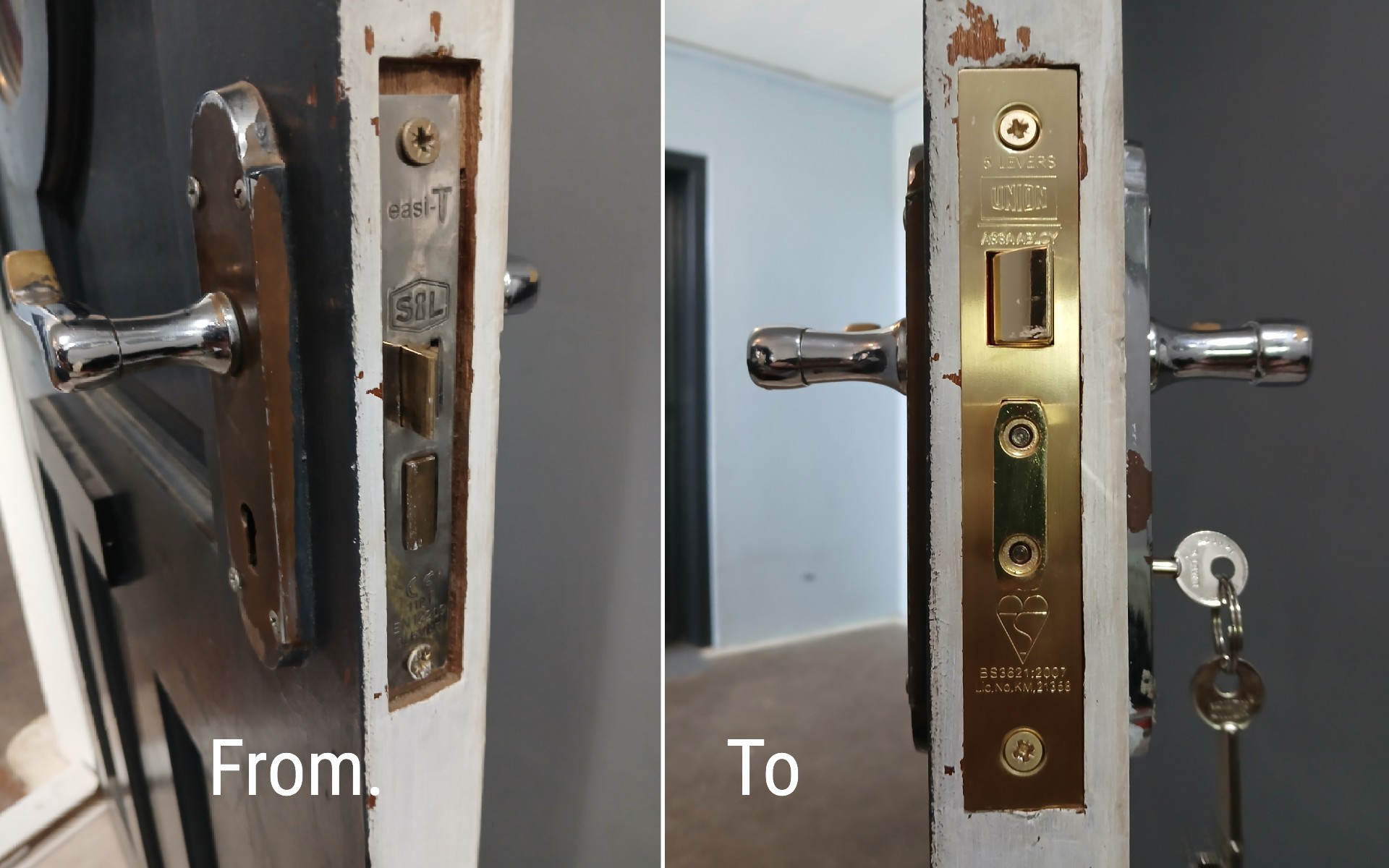
If your door has an older 3 lever or non-British Standard lock, upgrading to a BS3621 mortice lock can offer several advantages, including:
- Improved resistance to forced entry.
- Hardened anti-drill protection.
- Stronger deadbolt construction.
- Increased durability.
- Compliance with many home insurance requirements.
For entrance doors, a BS3621 lock is often a worthwhile security upgrade.
Consider BS8621 for Escape Doors
If the door is the final exit from your home, you may also wish to consider a BS8621 mortice lock.
Unlike a BS3621 lock, which requires a key to unlock from both sides, a BS8621 lock uses a thumbturn on the inside and a key on the outside.
This allows occupants to leave quickly in an emergency without searching for a key while still maintaining high levels of security from outside.
BS8621 locks are commonly recommended where:
- The door is the main escape route.
- Occupants may need to exit quickly during a fire.
- Keys are not always left in the lock.
- Additional convenience is preferred.
The most suitable option depends on both your security requirements and how the property is used.
The Lock Has Been Forced or Damaged
A mortice lock that has been subjected to an attempted break-in should usually be replaced.
Examples include:
- Drill damage.
- Levering.
- Broken keys inside the lock.
- Impact damage.
- Excessive wear following forced entry.
Even if the lock still appears to work, hidden internal damage can affect its reliability.
The Latch or Deadbolt Isn't Working Properly
Internal wear eventually affects how the lock operates.
Common symptoms include:
- The latch sticking.
- The deadbolt failing to extend fully.
- The key turning but not operating the bolt correctly.
- The bolt retracting inconsistently.
- Rough or noisy operation.
These are often signs that the lock is approaching the end of its service life.
The Door or Keep Has Become Misaligned
Sometimes the problem isn't the lock itself.
If you need to:
- Lift the door.
- Push the door.
- Pull the door.
before the lock will operate properly, the door or keep may have moved out of alignment.
Constant strain placed on the lock eventually accelerates wear and can lead to premature failure.
Correcting the alignment should always be considered alongside replacing the lock.
You Want Better Security
A mortice lock doesn't have to fail before it's replaced.
Many homeowners choose to upgrade simply because they want improved protection.
Modern British Standard mortice locks often include:
- Hardened anti-drill plates.
- Reinforced lock cases.
- Stronger deadbolts.
- Improved resistance to picking.
- Enhanced durability.
- British Standard certification.
Upgrading an older lock is often one of the simplest ways to improve the security of a timber door.
Repair or Replace?
Some mortice lock problems can be resolved by adjusting the keep, realigning the door or replacing worn hardware.
However, replacement is usually the better option when the lock is:
- Worn through age.
- Difficult to operate.
- Damaged.
- Outdated.
- No longer meeting current security standards.
- Showing multiple signs of internal wear.
Replacing the lock before it fails completely is often more convenient and far less stressful than dealing with an emergency lockout.
Conclusion
A mortice lock will often provide many years of reliable service, but it shouldn't be expected to last forever. Stiff operation, worn components, lost keys, visible damage or outdated security are all good reasons to consider a replacement. Whether upgrading to a BS3621 lock for improved security and insurance compliance or choosing a BS8621 thumbturn lock for easier emergency escape, fitting the right lock at the right time helps keep your property secure while avoiding unexpected failures and unnecessary inconvenience.