Introduction
Few household problems are more frustrating than a front door that refuses to open. Whether you're trying to get into your home after work or you're unable to leave the house, it's a situation that usually happens without warning.
The first and most important piece of advice is simple—don't force the key, handle or door. Applying excessive force often turns a straightforward repair into a much more expensive one.
The good news is that most front door faults can be repaired without replacing the entire door.
First, Identify the Symptoms
Different faults produce different symptoms, so take a moment to identify exactly what's happening.
Ask yourself:
- Does the key turn?
- Does the handle lift?
- Is the handle floppy?
- Does the key only work from one side?
- Has the key snapped?
- Does the door appear unlocked but still won't open?
- Is the door catching on the frame?
These clues often help identify the underlying problem.
The Key Won't Turn
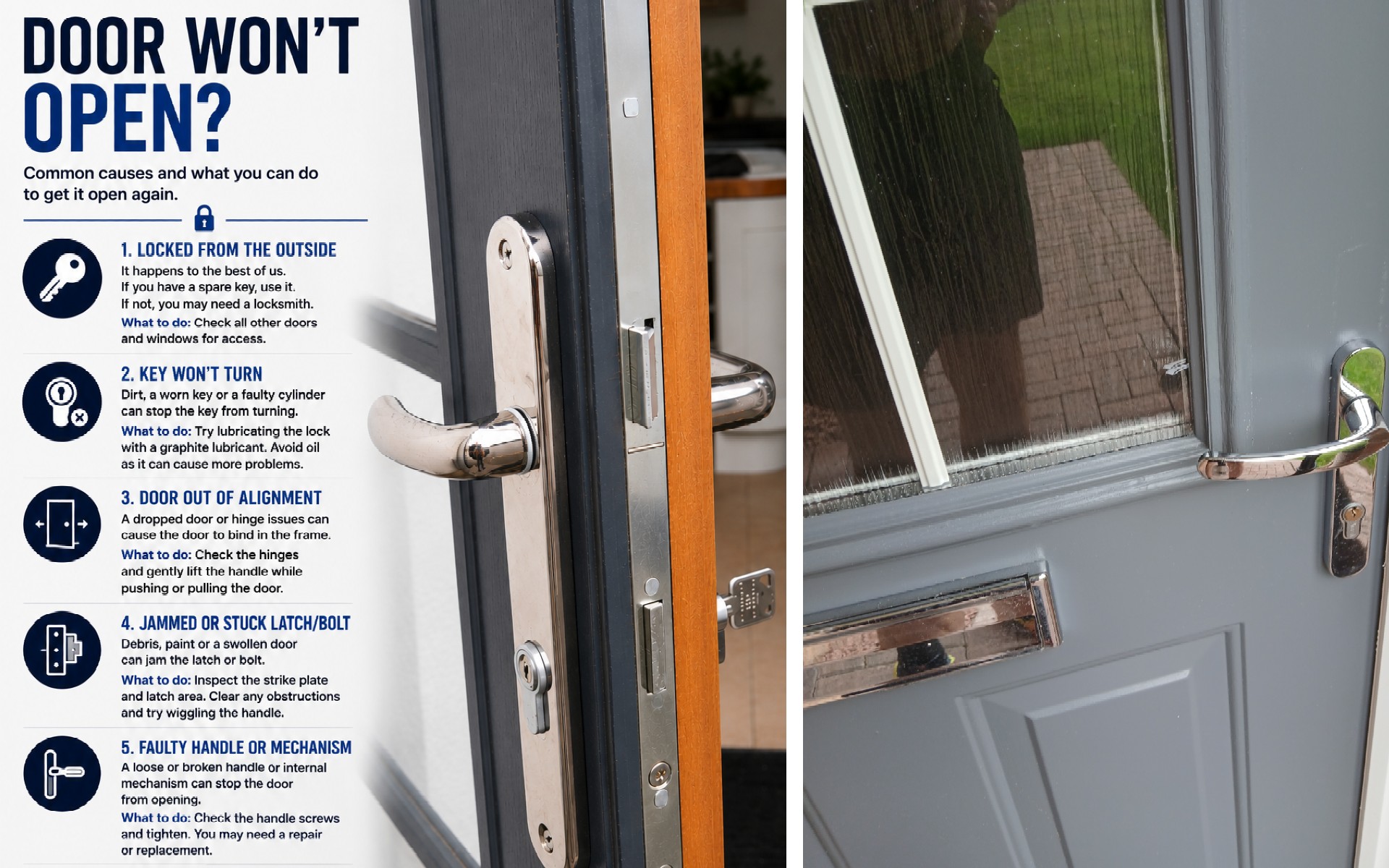
If the key won't turn at all, possible causes include:
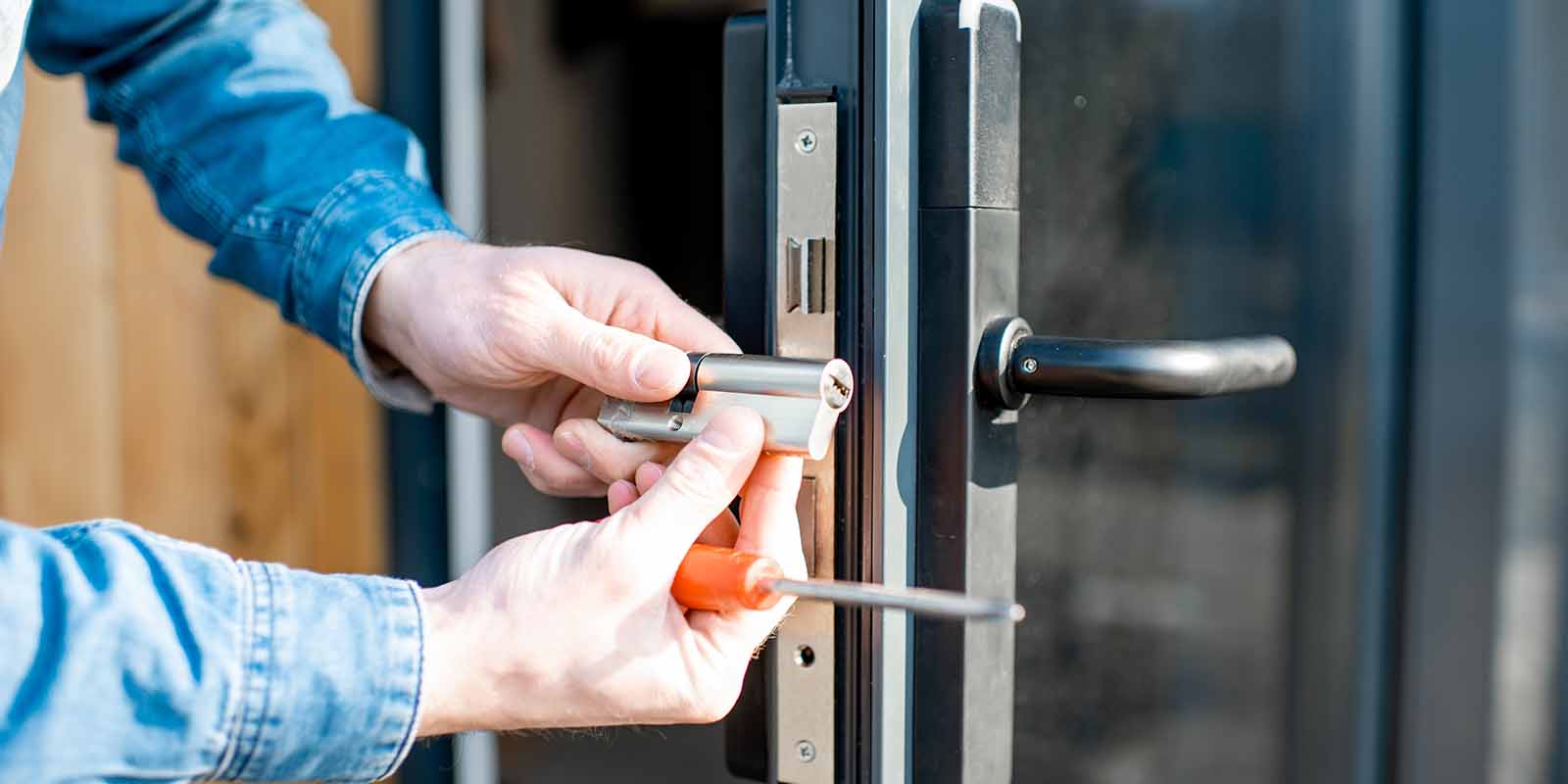
- A worn or failed euro cylinder.
- A dropped or misaligned door.
- A seized multipoint mechanism.
- Dirt or debris inside the cylinder.
- A broken piece of key inside the lock.
If the door has dropped slightly, try gently pushing or pulling the door while turning the key.
If the key still won't move, stop. Forcing it can easily result in a snapped key or damaged cylinder.
The Handle Moves But Nothing Happens
One of the most common faults on uPVC and composite doors is a failed gearbox.
The gearbox is the central operating component of the multipoint locking mechanism and controls:
- Hooks.
- Rollers.
- Mushroom cams.
- Deadbolts.
- The latch.
Typical symptoms include:
- The handle lifts freely.
- Nothing happens inside the mechanism.
- The locking points don't move.
- The door remains locked.
In many cases, replacing the gearbox restores full operation without replacing the complete mechanism.
The Door Appears Unlocked But Won't Open
Sometimes the lock appears to have opened, but the door still refuses to move.
Possible causes include:
- A hook that hasn't fully retracted.
- A seized roller.
- A jammed latch.
- Internal mechanism failure.
- Broken locking components.
Only one locking point needs to remain engaged for the entire door to stay shut.
The Key Has Snapped
A snapped key is usually a symptom rather than the cause of the problem.
Common reasons include:
- A stiff lock.
- A dropped door.
- A worn cylinder.
- A poorly cut key.
- Excessive force being used.
If part of the key is still visible, avoid pushing it further into the lock.
Specialist extraction tools can often remove the broken piece without damaging the cylinder.
Check Whether the Door Has Dropped
Door alignment is one of the biggest causes of front door problems.
Look for:
- Scrape marks on the frame.
- Uneven gaps around the door.
- Difficulty lifting the handle.
- The need to push or pull the door to lock it.
- Draughts around the door.
A dropped door places constant strain on the lock, gearbox and multipoint mechanism until something eventually fails.
The Lock Works With the Door Open
If the lock operates perfectly while the door is open but becomes stiff once it's closed, the problem is unlikely to be the cylinder itself.
This usually points towards:
- Poor door alignment.
- Misaligned keeps.
- Worn hinges.
- Locking points binding against the frame.
Correctly realigning the door often restores smooth operation.
Why You Should Never Force the Door
Many expensive repairs begin with someone trying to force the lock.
Excessive force can cause:
- Broken handles.
- Snapped keys.
- Failed gearboxes.
- Damaged lock cylinders.
- Bent locking points.
- Additional damage to the multipoint mechanism.
A repair that may have involved a simple adjustment can quickly become far more complicated.
Common Causes of a Front Door That Won't Open
Some of the most common faults include:
- Failed gearboxes.
- Worn euro cylinders.
- Broken handles.
- Misaligned doors.
- Seized locking points.
- Broken springs.
- Failed multipoint locking mechanisms.
- Snapped keys.
- Incorrect previous repairs.
Fortunately, most of these problems can be repaired without replacing the entire door.
Can the Door Usually Be Repaired?
In most cases, yes.
Depending on the fault, repairs may involve:
- Replacing the gearbox.
- Fitting a new lock cylinder.
- Extracting a broken key.
- Replacing broken handles.
- Repairing or replacing the multipoint mechanism.
- Realigning the door.
- Adjusting the keeps.
- Replacing worn hinges.
The aim should always be to repair the existing door wherever practical rather than recommending unnecessary replacement.
Preventing Future Lockouts
Most front doors give warning signs before they fail completely.
Look out for:
- Stiff keys.
- Handles becoming harder to lift.
- The door catching the frame.
- Keys sticking.
- Loose handles.
- Having to push or pull the door when locking.
- Locking points becoming difficult to operate.
Having these issues corrected early often prevents emergency call-outs and much larger repair bills.
Conclusion
A front door that won't open doesn't automatically mean you need a new door. Whether the problem is a failed gearbox, worn lock cylinder, dropped door, snapped key or seized locking mechanism, the majority of faults can be repaired quickly and cost-effectively. The most important thing is to avoid forcing the lock or handle, as this often causes additional damage. A correct diagnosis and repair will usually restore your door to smooth, reliable operation without the expense of a replacement.