Introduction
When people think about home security, the first thing that usually comes to mind is the lock. While choosing a high-quality lock is certainly important, it is only one part of what makes an entrance door secure.
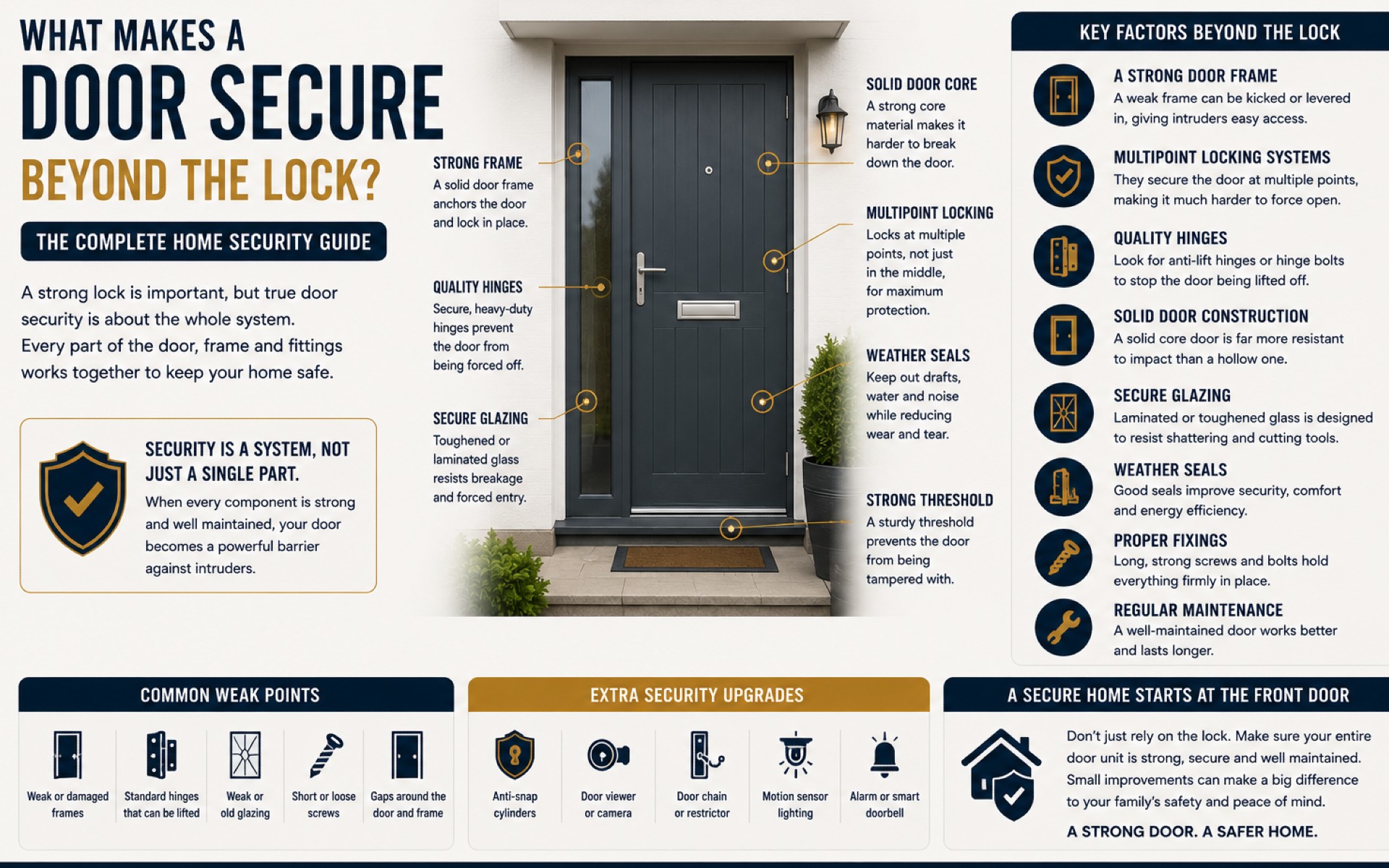
A modern front door is an engineered security system made up of many individual components working together. The door leaf, frame, hinges, locking mechanism, gearbox, handles, euro cylinder, keeps, fixings and even the surrounding wall all contribute to how well the door performs. If one component is weak, damaged or poorly installed, it can affect the effectiveness of every other part.
Modern door security is therefore about far more than simply fitting the most expensive lock available. It involves understanding how the complete door system functions, recognising the importance of regular maintenance and ensuring that every component continues to work as intended.
This guide explains the principles behind real door security, how modern entrance doors resist common methods of attack and why a well-maintained door often provides better protection than one fitted with expensive hardware that has been neglected.
A Secure Door Is a Complete System
No single component secures your home on its own.
Instead, modern entrance doors rely on several engineered parts working together, including:
- The door slab.
- The frame.
- The hinges.
- The multipoint locking mechanism or mortice lock.
- The gearbox.
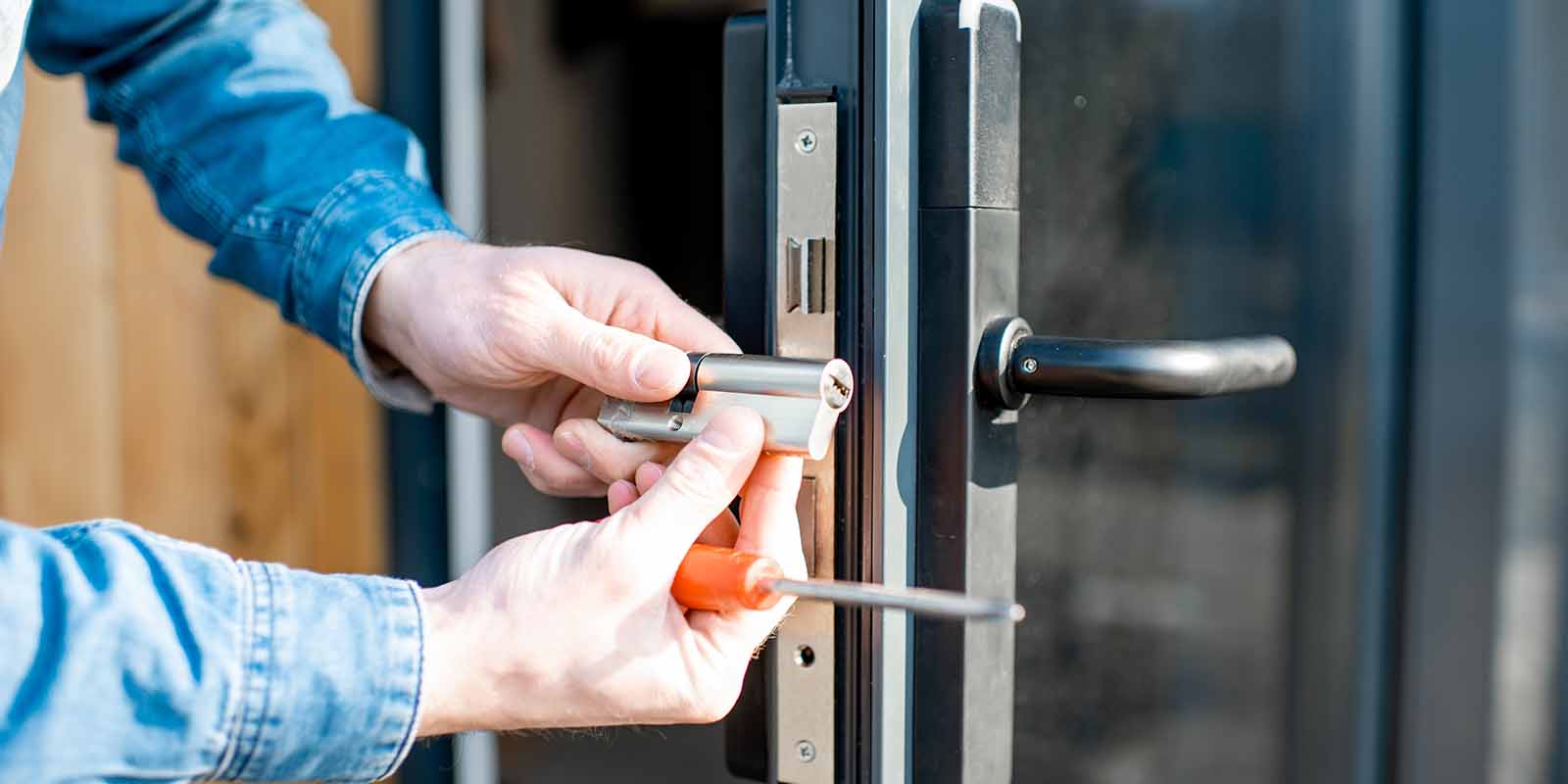
- The euro cylinder.
- The door handles.
- The keeps.
- The fixing screws.
- The surrounding masonry.
Every component has a specific role.
If one part becomes damaged, worn or poorly adjusted, it can place additional stress on the others and reduce the overall performance of the door.
Real security comes from the strength of the complete system rather than any individual product.
Understanding Common Methods of Forced Entry
Popular films often portray burglars picking locks with specialist tools.
In reality, many attempted burglaries involve attacking the door itself rather than trying to manipulate the lock internally.
Common methods include:
- Applying pressure to the edge of the door.
- Attempting to lever the door away from the frame.
- Attacking a protruding lock cylinder.
- Exploiting damaged handles or loose hardware.
- Taking advantage of poor door alignment.
- Targeting weak frames or fixings.
Modern entrance doors are designed to resist these attacks by distributing loads across several locking points and reinforcing areas most likely to experience force.
Why Multipoint Locks Improve Security
Unlike traditional single-point locks, multipoint locking systems secure the door at several locations along its height.
Depending on the mechanism, these locking points may include:
- Hooks.
- Rollers.
- Deadbolts.
- Mushroom cams.
When engaged, the locking points help:
- Distribute force more evenly.
- Reduce movement of the door.
- Improve weather sealing.
- Increase resistance to levering.
- Support the entire frame.
The locking mechanism therefore becomes part of the structural performance of the door rather than simply holding it closed.
Why Every Component Matters
Each part of an entrance door has its own purpose.
For example:
Multipoint Lock
Secures the door to the frame.
Gearbox
Coordinates the movement of the locking system.
Euro Cylinder
Provides key-operated security.
Handles
Transfer force to the gearbox.
Hinges
Support the weight of the door while maintaining alignment.
Keeps
Receive the locking points within the frame.
Frame
Supports the complete assembly and transfers loads into the building.
If one component deteriorates, additional strain is often transferred elsewhere.
For example:
- A dropped door may overload the gearbox.
- Loose hinges may prevent locking points engaging fully.
- Poor alignment can make even a high-security cylinder difficult to operate.
- Worn handles may affect the smooth operation of the locking mechanism.
Hidden Security Features Many Homeowners Never See
Some of the most important security features are concealed inside the door and frame.
Depending on the manufacturer, these may include:
- Steel reinforcement.
- Reinforced lock areas.
- Anti-lift blocks.
- Adjustable keeps.
- Anti-snap cylinders.
- Security escutcheons.
- Fully sprung handles.
- Mushroom locking cams.
- Reinforced hinge fixings.
- Security hinge bolts.
Although hidden from view, these features work together to improve the strength and durability of the complete door system.
How Opportunist Burglars May Assess a Door
An opportunist burglar may first look for obvious weaknesses before attempting entry.
Without causing damage, they might observe whether:
- The handle feels loose.
- The door moves excessively when locked.
- The lock cylinder projects beyond the handle.
- The letterplate could provide access to keys.
- Windows appear unsecured.
- The door looks poorly maintained.
- Hinges or handles appear loose.
- Gaps are visible around the frame.
Maintaining the door properly helps remove many of these obvious vulnerabilities before they become more serious.
Security Often Depends on Basic Things
Many residential burglaries involve exploiting simple weaknesses rather than overcoming sophisticated security systems.
Examples include:
- Doors left unlocked.
- Windows left open.
- Keys left within easy reach.
- Damaged locking mechanisms.
- Doors failing to latch correctly.
- Existing maintenance issues.
This illustrates why regular maintenance and consistent locking habits remain an important part of home security.
Why Door Alignment Is So Important
Door alignment affects both security and reliability.
When a door becomes misaligned:
- Hooks may not engage correctly.
- Rollers may bind.
- The gearbox experiences greater loads.
- Handles become harder to operate.
- Keys may become stiff.
- Components wear more quickly.
Many homeowners assume the lock has failed when the underlying problem is actually poor alignment.
Correct adjustment helps every part of the locking system perform as intended.
The Importance of Strong Door Hinges
A secure lock cannot compensate for inadequate hinges.
Modern entrance door hinges are designed to:
- Support heavy door weights.
- Maintain alignment.
- Resist wear.
- Prevent excessive movement.
- Secure the hinge side of the door.
Many outward-opening doors also incorporate:
- Security studs.
- Hinge bolts.
- Anti-lift features.
These prevent the door being removed even if hinge pins are attacked.
Regular inspection and adjustment help ensure hinges continue supporting the locking system correctly.
Why External Doors Need Different Locks
Internal and external doors perform very different roles.
Internal doors mainly provide:
- Privacy.
- Noise reduction.
- Separation between rooms.
External entrance doors must also withstand:
- Forced entry.
- Weather exposure.
- Temperature changes.
- Moisture.
- Daily security risks.
They therefore require more substantial hardware, including:
- Multipoint locking mechanisms.
- High-security euro cylinders.
- Reinforced handles.
- Security keeps.
- Heavy-duty hinges.
Good Installation Is Part of Security
Even the highest-quality hardware cannot perform properly if it has been installed incorrectly.
Correct installation includes:
- A square frame.
- Secure fixings.
- Properly adjusted hinges.
- Correct lock alignment.
- Suitable reinforcement.
- Accurate cylinder positioning.
A well-installed door allows every component to operate with minimal strain, improving both security and longevity.
Maintenance Is a Security Feature
Many people think of maintenance purely in terms of preventing breakdowns.
In reality, maintenance also helps preserve security.
Regular checks should include:
- Handle operation.
- Lock engagement.
- Door alignment.
- Hinge adjustment.
- Fixing screws.
- Cylinder condition.
- Weather seals.
- Letterplate security.
Identifying small issues early often prevents larger failures later.
Older Doors Can Still Be Highly Secure
The age of a door alone does not determine its security.
Many older timber doors remain extremely secure because they combine:
- Solid construction.
- Quality mortice locks.
- Reinforced frames.
- Strong hinges.
- Regular maintenance.
Likewise, a relatively new entrance door fitted with poor-quality components or suffering from alignment issues may provide less effective protection than an older, well-maintained installation.
Security depends far more on condition, installation and maintenance than on age alone.
Layered Security Provides Better Protection
The strongest home security rarely relies on one product.
Instead, several layers work together, including:
- A robust entrance door.
- A secure frame.
- Quality hinges.
- Correct alignment.
- A reliable locking mechanism.
- A high-security cylinder.
- Reinforced handles.
- Good installation.
- Routine maintenance.
- Appropriate external lighting.
- Sensible key management.
Each layer strengthens the next, making the property more resistant to opportunist attacks while helping the door operate reliably every day.
Security Upgrades Should Address Weaknesses
When improving door security, it is usually more effective to identify and address the weakest part of the system than simply replacing one component.
Depending on the condition of the door, improvements might include:
- Replacing a worn euro cylinder with a TS007 high-security model.
- Upgrading older door handles.
- Correcting door alignment.
- Tightening or replacing worn hinges.
- Renewing damaged keeps.
- Replacing worn weather seals.
- Repairing loose frames or fixings.
Treating the door as a complete system often provides greater benefits than focusing solely on the lock.
Conclusion
A secure entrance door is much more than a strong lock. It is a carefully engineered system in which the door, frame, hinges, locking mechanism, cylinder, handles and fixings all work together to resist everyday wear and provide effective protection against forced entry. The strength of the complete assembly is determined not only by the quality of its individual components but also by correct installation, accurate alignment and regular maintenance.
Understanding door security standards and how these elements interact allows homeowners to make better-informed decisions when maintaining, repairing or upgrading their doors. Whether your property has a traditional timber entrance door or a modern uPVC, composite or aluminium system, maintaining every part of the door—not just the lock—provides the best foundation for long-term security, reliability and peace of mind.
Frequently Asked Questions
Is the lock the most important part of a secure door?
A quality lock is essential, but it performs best when combined with a strong frame, correctly adjusted hinges, secure handles, proper alignment and good installation. The entire door system contributes to security.
Why do multipoint locks improve security?
Multipoint locking systems secure the door at several locations rather than a single point, helping distribute force more evenly and increasing resistance to levering and forced entry.
Can poor door alignment affect security?
Yes. Misalignment can prevent locking points from engaging correctly, place additional strain on the gearbox and make the lock more difficult to operate, potentially reducing both reliability and security.
Are older timber doors still secure?
Many older timber doors remain highly secure when fitted with quality locks, strong hinges and reinforced frames, provided they are well maintained and in good condition.
What is layered security?
Layered security means combining several complementary measures—such as a well-constructed door, quality locking hardware, good installation, routine maintenance and sensible security habits—to provide stronger overall protection than relying on a single product.