Introduction
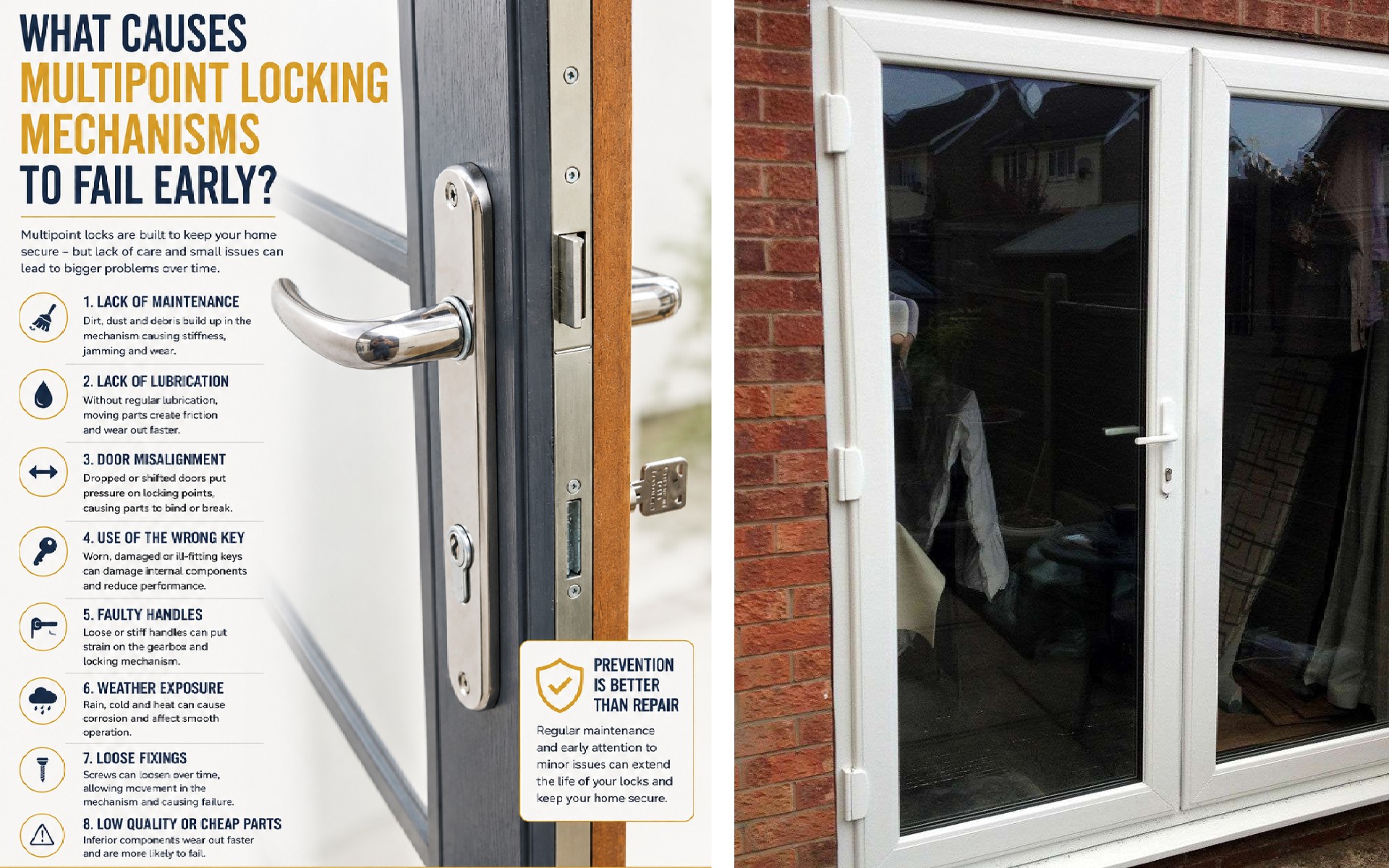
A quality multipoint locking mechanism fitted to a uPVC, composite or French door should provide many years of reliable service. In fact, many mechanisms continue working for 15–20 years or longer.
However, some fail much sooner than expected.
In most cases, premature failure isn't caused by a manufacturing defect. Instead, it's the result of everyday wear, poor door alignment, excessive strain or minor problems that have been ignored until they become major faults.
Knowing what shortens the life of a multipoint lock can help you avoid expensive repairs and keep your door operating smoothly.
Poor Door Alignment
The single biggest cause of premature multipoint lock failure is poor door alignment.
As doors gradually move over time, the locking points stop lining up correctly with the keeps fitted to the frame.
This means the mechanism has to work much harder every time you lock or unlock the door.
Common faults and warning signs include:
- Difficulty lifting the handle.
- The key becoming stiff.
- Having to push or pull the door.
- The door catching the frame.
- Scrape marks on the frame.
Correcting alignment early removes unnecessary strain and can dramatically extend the life of the locking mechanism.
Forcing a Stiff Handle
If the handle becomes difficult to lift, many homeowners simply use more force.
Unfortunately, every time excessive pressure is applied, additional strain is transferred into:
- The gearbox.
- Internal springs.
- Linkages.
- Locking points.
- The handle spindle.
What could have been resolved with a simple adjustment may eventually result in complete gearbox failure.
Ignoring Early Warning Signs
Multipoint locks almost always provide warning signs before they fail completely.
Look out for:
- A stiff key.
- Difficulty locking the door.
- The handle feeling heavier than normal.
- Hooks or rollers not retracting fully.
- Clicking or grinding noises.
- Intermittent locking problems.
These symptoms rarely improve on their own and usually become progressively worse.
Lack of Maintenance
Although multipoint locking systems require very little maintenance, occasional attention helps keep them working efficiently.
Moving components such as:
- Hooks.
- Rollers.
- Deadbolts.
- Latches.
benefit from occasional lubrication to reduce friction and minimise wear.
Keeping these components clean also prevents dirt and debris from increasing resistance within the mechanism.
Worn or Unsprung Door Handles
Door handles play a greater role than many homeowners realise.
If the return springs inside the handles weaken or fail, the gearbox has to work harder every time the handle is operated.
Common symptoms include:
- Drooping handles.
- Loose handles.
- Slow handle return.
- Broken springs.
- Excessive movement.
Replacing worn handles—particularly with quality sprung handles—helps reduce unnecessary strain on the locking mechanism.
Poorly Cut or Worn Keys
A worn or poorly cut key can make a perfectly good lock feel stiff.
This often encourages homeowners to force the key or handle, placing additional stress throughout the locking system.
To reduce unnecessary wear:
- Use the original key when having duplicates cut.
- Replace keys that are bent or badly worn.
- Avoid repeatedly copying already worn keys.
Seasonal Expansion and Contraction
Warm weather causes uPVC and composite doors to expand slightly, while colder temperatures cause them to contract.
If the door is already marginally out of alignment, seasonal movement can make the problem much worse.
You may notice:
- Increased resistance.
- Difficulty locking.
- The handle becoming harder to lift.
- The key feeling stiffer.
The weather usually highlights an existing alignment problem rather than creating a new fault.
Worn Components Left Too Long
Older locking mechanisms naturally wear over time.
Replacing individual worn components before they fail completely can often prevent damage spreading through the rest of the mechanism.
Components that commonly wear include:
- Gearboxes.
- Springs.
- Followers.
- Rollers.
- Hooks.
- Linkages.
Early intervention is usually much cheaper than waiting until the mechanism jams completely.
Low-Quality Replacement Parts
Not all replacement parts offer the same level of quality.
Cheap or poorly manufactured components may:
- Wear more quickly.
- Feel rough in operation.
- Reduce reliability.
- Shorten the life of the mechanism.
Where possible, genuine or high-quality compatible parts designed specifically for the locking system should be used.
Incorrect Repairs
Some mechanisms fail shortly after being repaired because the underlying problem was never addressed.
Examples include:
- Replacing the gearbox without correcting a dropped door.
- Fitting incorrect replacement parts.
- Installing universal repair mechanisms where the original mechanism could have been repaired.
- Adjusting hinges incorrectly.
A successful repair involves correcting both the failed component and the cause of the failure.
Everyday Wear
Even with good maintenance, every multipoint lock experiences thousands of operating cycles during its lifetime.
Factors that naturally contribute to wear include:
- Frequent use.
- Heavy doors.
- Environmental conditions.
- General ageing of internal components.
Regular inspections help identify wear before it develops into a complete lock failure.
How to Extend the Life of Your Multipoint Lock
You can significantly increase the lifespan of your locking mechanism by:
- Keeping the door correctly aligned.
- Never forcing a stiff handle or key.
- Investigating locking problems early.
- Lubricating locking points occasionally.
- Replacing worn handles when necessary.
- Using correctly cut keys.
- Repairing worn components before they fail completely.
These simple measures can add years to the life of your lock and reduce the risk of unexpected lockouts.
Conclusion
Most multipoint locking mechanisms don't fail prematurely because they're poorly made. They fail because they're forced to work under unnecessary strain caused by dropped doors, misalignment, worn handles or ignored warning signs.
By dealing with small problems early, maintaining the locking system and ensuring the door is properly adjusted, you can significantly extend the life of the mechanism, reduce repair costs and avoid the inconvenience of an unexpected lock failure.