Introduction
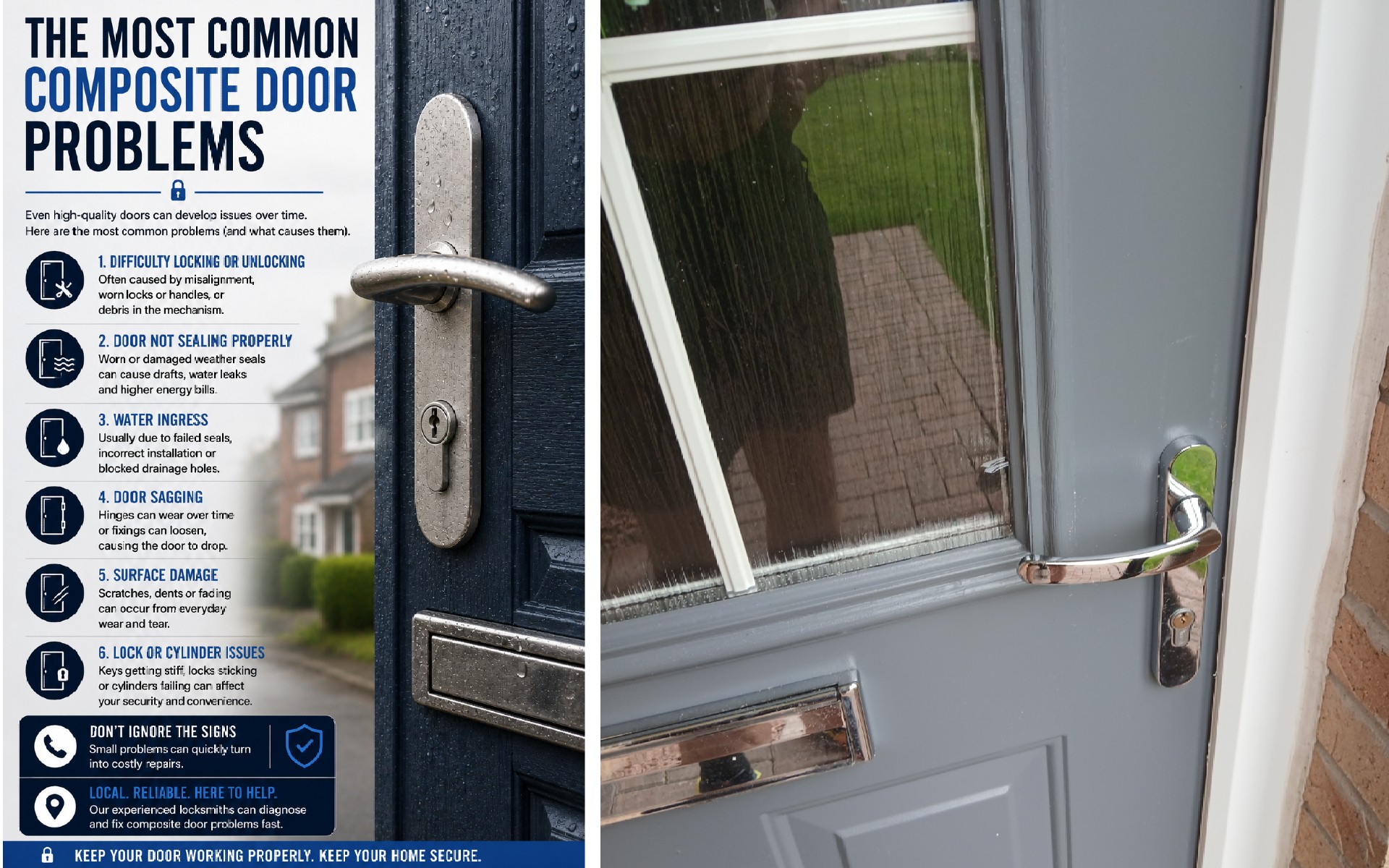
Composite doors are one of the most secure and durable types of entrance door available. Their solid construction, excellent insulation, and resistance to the elements make them a popular choice for homes across Scotland.
However, while the door itself is built to last, the components fitted to it—such as locks, gearboxes, hinges, handles and multipoint mechanisms—can wear over time.
The good news is that most composite door problems can be repaired without replacing the entire door, often saving homeowners hundreds or even thousands of pounds.
The Door Has Dropped
One of the most common problems is a composite door that has dropped slightly out of alignment.
Because composite doors are heavier than many standard uPVC doors, the hinges can gradually settle through years of regular use.
Common signs include:
- The door catching the frame.
- Difficulty closing the door.
- The handle becoming difficult to lift.
- A stiff key.
- Uneven gaps around the door.
- Draughts around the frame.
A dropped door places constant strain on the locking mechanism and should be adjusted before further damage occurs.
Failed Gearboxes
The gearbox is the central operating component of the multipoint locking mechanism.
Every time you lift the handle or turn the key, the gearbox controls the movement of the hooks, rollers, mushrooms and deadbolts.
When it begins to fail, you may notice:
- The handle lifts but nothing happens.
- The key turns but the lock doesn't operate.
- The handle feels loose or floppy.
- The door becomes difficult to lock.
- The mechanism jams intermittently.
In many cases, replacing the gearbox restores the locking system without replacing the complete mechanism.
Faulty Multipoint Locking Mechanisms
While the gearbox is the component most likely to fail, the complete multipoint locking strip can also wear after many years of use.
Common symptoms include:
- Hooks failing to retract.
- Rollers sticking.
- Deadbolts not engaging fully.
- The mechanism jamming.
- Difficulty opening or locking the door.
Many mechanisms can be repaired or replaced without fitting a new door.
Worn or Incorrect Lock Cylinders
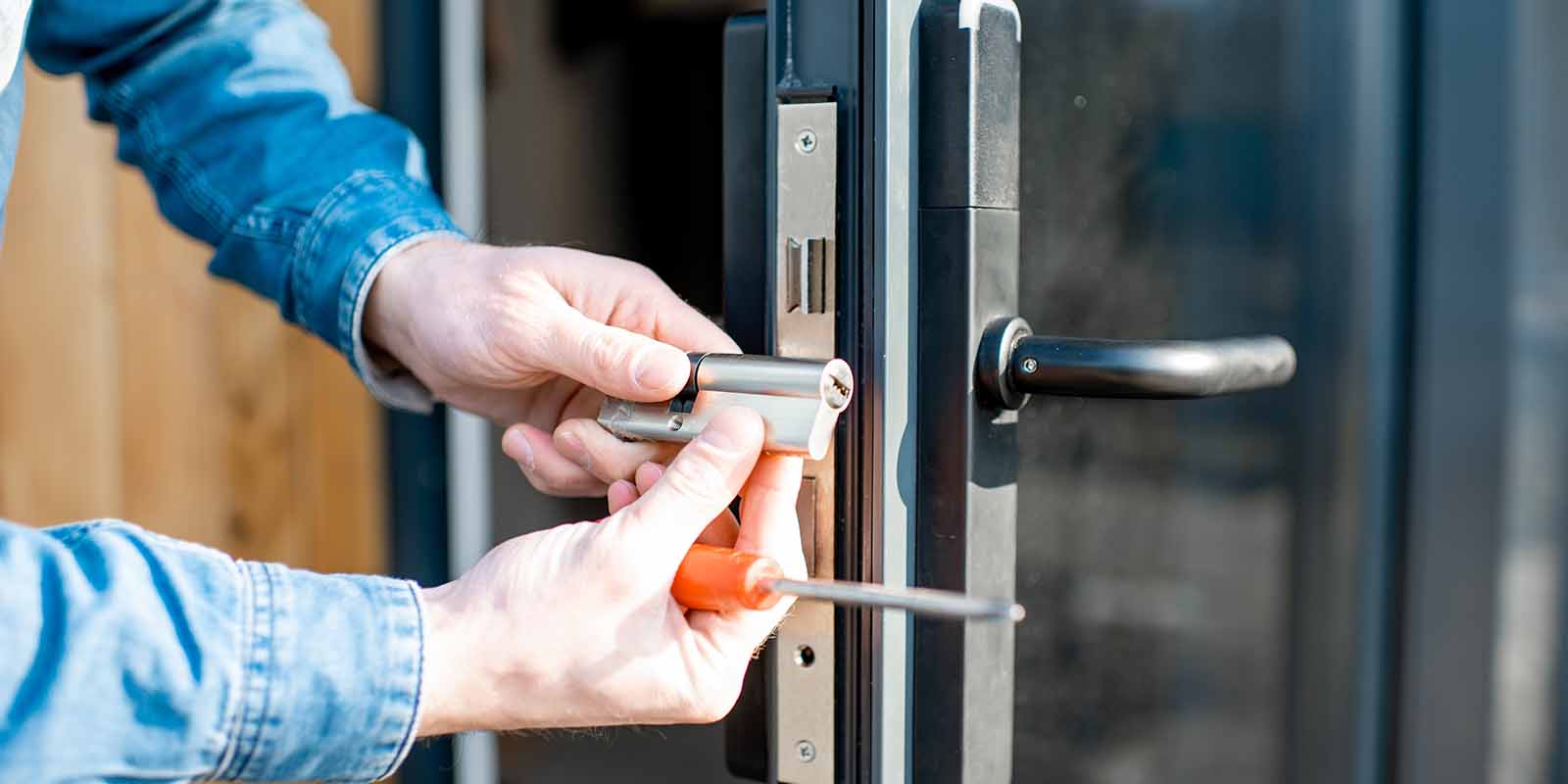
The euro cylinder is another common source of problems.
Over time, cylinders can become worn, damaged or simply outdated.
Typical issues include:
- Stiff operation.
- Keys sticking.
- Lost or stolen keys.
- The cylinder protruding beyond the handle.
- Older cylinders without anti-snap protection.
Replacing the cylinder with a correctly sized TS007 high-security anti-snap lock improves both security and reliability.
Loose or Broken Door Handles
Composite door handles receive thousands of operations throughout their lifetime.
Eventually they can develop faults such as:
- Loose backplates.
- Broken return springs.
- Handles failing to return to their resting position.
- Worn fixing points.
- Excessive movement during operation.
Replacing worn handles with quality sprung handles often improves the feel of the entire locking system while reducing strain on the gearbox.
Seized Locking Points
Composite doors secure using several locking points positioned along the edge of the door.
These may include:
- Hooks.
- Rollers.
- Mushroom cams.
- Deadbolts.
Over time these components can become:
- Dirty.
- Corroded.
- Dry.
- Stiff.
- Seized.
As resistance increases, extra pressure is transferred into the gearbox, eventually causing premature failure.
Draughts Around the Door
A composite door should seal tightly against the frame.
If cold air is entering around the door, possible causes include:
- Poor alignment.
- Worn weather seals.
- Incorrectly adjusted keeps.
- Hinges requiring adjustment.
- The locking mechanism not pulling the door tightly against the frame.
Correct adjustment often restores both the seal and the smooth operation of the door.
Stiff Locks
A key should turn smoothly with very little effort.
If your lock becomes stiff, possible causes include:
- A worn cylinder.
- Door alignment problems.
- A failing gearbox.
- Poorly cut keys.
- Seized locking points.
Never force a stiff lock. Doing so can lead to a snapped key, damaged cylinder or complete gearbox failure.
Broken or Worn Hinges
Composite doors are considerably heavier than many standard uPVC doors.
Over time, hinges can wear, resulting in:
- The door dropping.
- Poor alignment.
- Difficulty closing.
- Increased strain on the locking system.
- Draughts around the frame.
Replacing worn hinges and correctly realigning the door can often restore smooth operation.
Failed Letterboxes
Letterboxes are continually exposed to rain, frost and sunlight.
Eventually they can become:
- Loose.
- Faded.
- Broken.
- Corroded.
- Difficult to open or close.
Replacing a worn letterbox is a relatively inexpensive repair that improves both appearance and functionality.
Security Upgrades
Not every repair is carried out because something has failed.
Many homeowners choose to improve security by upgrading older hardware, including:
- Snap-resistant euro cylinders.
- TS007 2 Star security handles.
- Correctly sized lock cylinders.
- Keyed alike locking systems.
- BS8621 thumbturn cylinders for doors where emergency escape without a key is required.
- BS3621 mortice locks on timber entrance doors where insurance-approved locking is required.
Upgrading these components can significantly improve security without replacing the door itself.
Why Composite Doors Develop Problems
Most composite door faults are caused by one or more of the following:
- Years of daily use.
- Natural hinge wear.
- Poor door alignment.
- Lack of maintenance.
- Seasonal expansion and contraction.
- Worn moving parts.
- Previous incorrect repairs.
Identifying and correcting the underlying cause helps prevent the same problem returning.
Repair Before You Replace
Many homeowners are told they need a new composite door when the actual problem is a failed component.
In reality, repairs often involve replacing only:
- The gearbox.
- The lock cylinder.
- Door handles.
- Hinges.
- Letterboxes.
- The multipoint locking mechanism.
These repairs usually cost a fraction of replacing the entire door while restoring full security and smooth operation.
Conclusion
Composite doors are designed to provide decades of reliable service, and most faults occur in the hardware rather than the door itself. Whether the problem is a dropped door, failed gearbox, stiff lock, worn handles or a faulty multipoint mechanism, the majority of issues can be repaired quickly and cost-effectively. A proper diagnosis, quality replacement parts and correct realignment will often restore your composite door to full working order without the expense of a replacement door.