Introduction
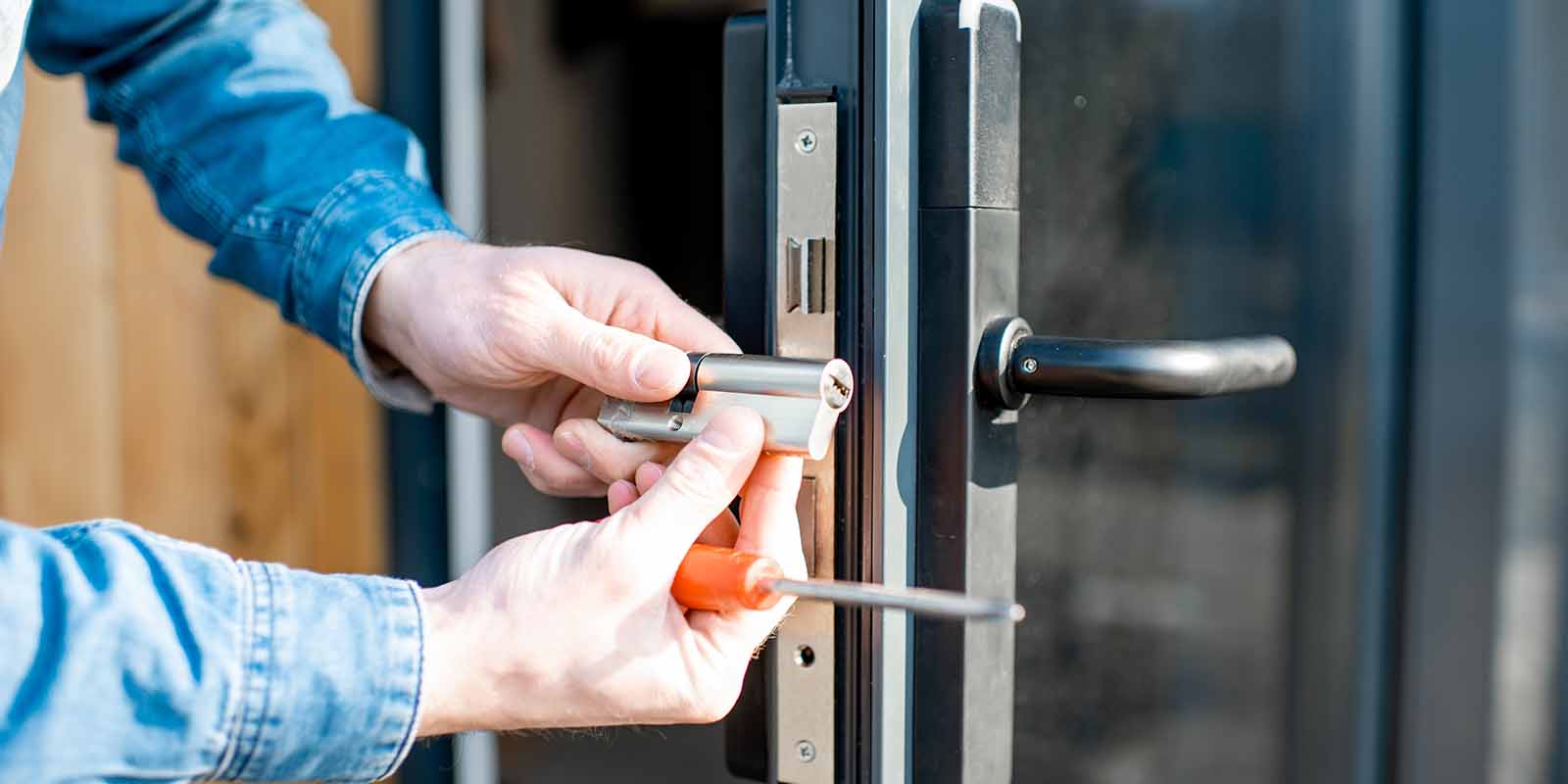
Euro cylinders are the most common type of lock fitted to modern uPVC, composite, aluminium and many timber doors. Although they all look similar, they are manufactured in dozens of different sizes to suit different door thicknesses, handle designs and locking systems.
Choosing the wrong size can affect both security and operation. A cylinder that protrudes too far beyond the handle may become vulnerable to attack, while one that's too short may not engage correctly or operate smoothly.
Modern Euro cylinders are also available in different security levels, including anti-snap, anti-drill and TS007-rated models, making it important to choose the correct type as well as the correct size.
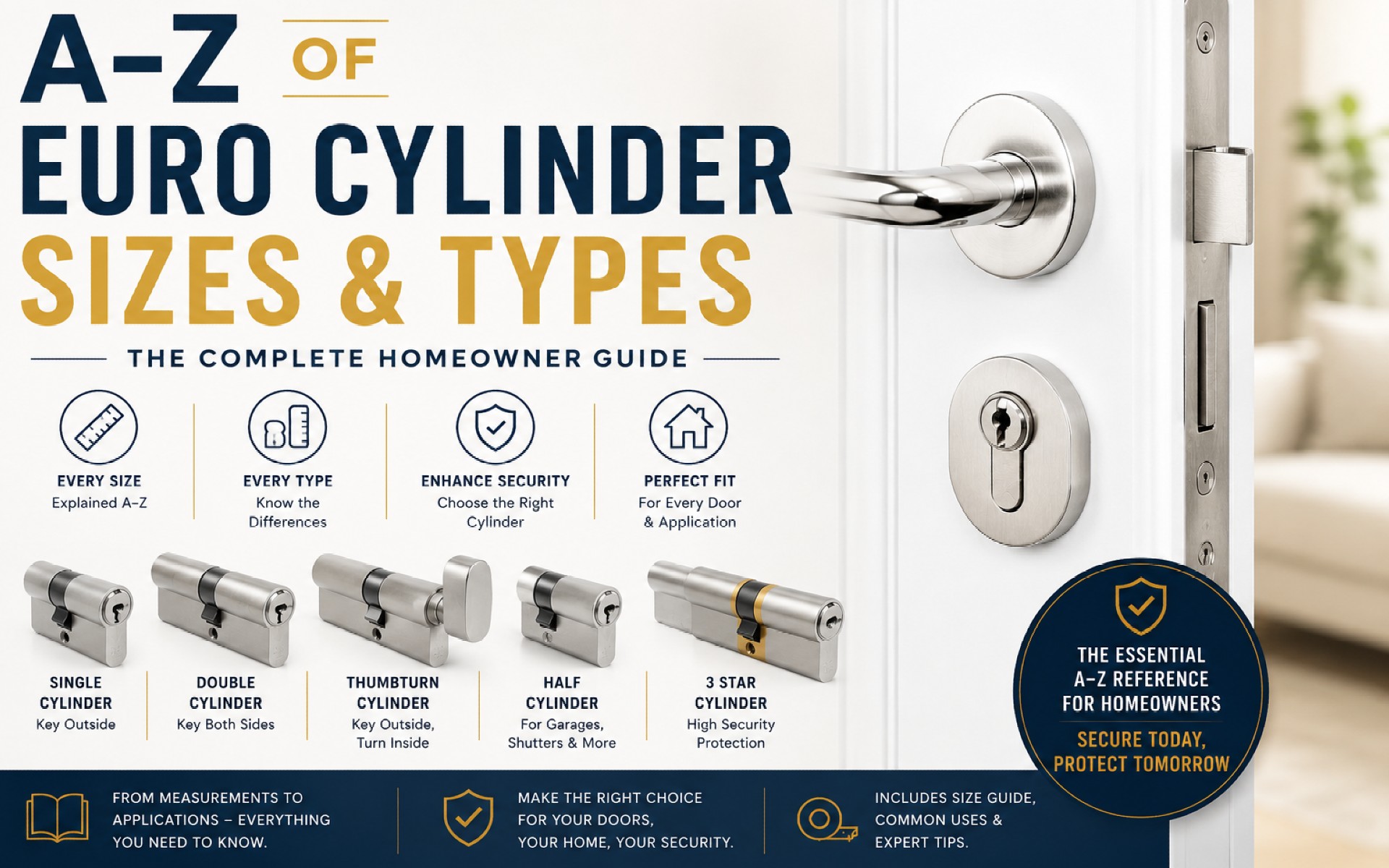
This A–Z guide explains the different types of Euro cylinders, how they are measured, the most common sizes used throughout the UK and the terminology you'll encounter when replacing or upgrading a cylinder.
Common Euro Cylinder Features
Looking for a particular type of cylinder? These are some of the terms homeowners most commonly encounter.
- Anti-Drill Cylinders
- Anti-Pick Cylinders
- Anti-Snap Cylinders
- Double Euro Cylinders
- Emergency Function Cylinders
- Half Euro Cylinders
- Keyed Alike Cylinders
- Master Key Systems
- Symmetrical Cylinders
- Thumbturn Cylinders
- TS007 Security Ratings
- Unequal Cylinders
A
Anti-Drill Cylinder
What it is
A cylinder incorporating hardened steel inserts designed to resist drilling attacks.
Why it matters
Helps protect the internal locking mechanism against destructive entry methods.
Complete Guide
➡ Complete Guide to Euro Cylinder Door Locks
Related Articles
- Anti-Drill Locks Explained
- Home Door Security
Anti-Pick Cylinder
What it is
A cylinder designed to resist manipulation using lock picks.
Why it matters
Provides increased resistance against covert methods of entry.
Anti-Snap Cylinder
What it is
A high-security Euro cylinder engineered to resist lock-snapping attacks.
Why it matters
One of the most effective security upgrades for older uPVC and composite doors.
Related Articles
- Do Anti-Snap Locks Really Work?
- Lock Snapping Explained
- TS007 Security Ratings
C
Cylinder Sizes
Euro cylinders are measured from the centre fixing screw.
Measurements are written as:
Outside / Inside
Example:
35/35 = 70mm Overall
The first measurement refers to the outside of the door, while the second refers to the inside. Measuring from the centre fixing screw ensures the replacement cylinder matches both the thickness of the door and the fitted door furniture.
Complete Guide
➡ Complete Guide to Euro Cylinder Door Locks
Related Articles
- Measuring a Euro Cylinder
- Choosing the Correct Cylinder Size
Common Euro Cylinder Sizes
30/10 (40mm)
Common Applications
- Garage doors
- Meter cupboards
- Utility cupboards
30/30 (60mm)
Common Applications
- Slim aluminium doors
- Older uPVC doors
- Internal security doors
One of the smallest double Euro cylinders.
35/30 (65mm)
Common Applications
- Older composite doors
- Slim timber doors
- Apartment entrance doors
35/35 (70mm)
Common Applications
- Standard uPVC doors
- Composite doors
- French doors
Probably the most common residential size.
40/30 (70mm)
Common Applications
Doors with thicker external furniture than internal furniture.
40/35 (75mm)
Common Applications
Modern composite entrance doors.
45/35 (80mm)
Common Applications
Composite doors fitted with security handles.
40/40 (80mm)
Common Applications
Equal-thickness aluminium and composite doors.
45/40 (85mm)
Common Applications
High-security composite and timber entrance doors.
45/45 (90mm)
Common Applications
Thick composite entrance doors.
50/40 (90mm)
Common Applications
Doors fitted with thicker external furniture.
50/45 (95mm)
Common Applications
Modern composite entrance doors.
50/50 (100mm)
Common Applications
Thick timber entrance doors and commercial doors.
55/45 (100mm)
Commercial and high-security residential applications.
55/50 (105mm)
Thick timber and aluminium entrance doors.
60/50 (110mm)
Commercial entrance doors.
60/55 (115mm)
High-security timber entrance doors.
60/60 (120mm)
Extra-thick timber entrance doors.
65/55 (120mm)
Commercial buildings.
65/60 (125mm)
Commercial aluminium entrance doors.
65/65 (130mm)
Heavy-duty entrance doors.
70/60 (130mm)
Commercial security doors.
70/70 (140mm)
Very thick timber entrance doors and specialist commercial applications.
One of the largest standard double Euro cylinders commonly available.
H
Half Euro Cylinder
What it is
A cylinder accepting a key from one side only.
Common Applications
- Garage doors
- Roller shutters
- Meter cupboards
- Switch cabinets
K
Keyed Alike Cylinders
What they are
Multiple cylinders operated by a single key.
Why they matter
Allows one key to operate:
- Front door
- Back door
- Garage
- Side gate
Key & Turn Cylinder
Another name for a thumbturn cylinder.
M
Master Key Cylinders
What they are
Each cylinder has its own individual key while a master key operates every lock.
Common Applications
- Apartment buildings
- Schools
- Offices
- Commercial premises
S
Symmetrical Cylinder
What it is
A Euro cylinder with equal measurements on both sides of the centre fixing screw.
Examples
- 30/30
- 35/35
- 40/40
- 45/45
- 50/50
Why it matters
Symmetrical cylinders are commonly fitted where the internal and external door furniture are the same thickness.
T
Thumbturn Cylinder
What it is
Key operated externally with a thumbturn internally.
Why it matters
Provides quick locking and unlocking from inside without using a key.
TS007 1-Star Cylinder
Designed to work alongside TS007 2-Star security handles to achieve a 3-Star security rating.
TS007 3-Star Cylinder
Provides enhanced protection against lock snapping without requiring a separate security handle.
U
Unequal Cylinder
What it is
A Euro cylinder with different measurements on each side of the centre fixing screw.
Examples
- 35/45
- 40/50
- 45/35
- 50/40
Why it matters
Unequal cylinders are extremely common on modern composite and uPVC doors where the external security handles are thicker than the internal furniture.
35/45
45/35
Designed to suit doors with unequal furniture thickness.
Common Security Features
Modern high-security Euro cylinders may include:
- Anti-Snap Protection
- Anti-Drill Inserts
- Anti-Pick Pins
- Anti-Bump Protection
- Sacrificial Break Sections
- Hardened Steel Bars
- Emergency Function
- Restricted Key Systems
- TS007 Certification
Not every cylinder includes every feature. Premium cylinders combine several technologies to provide greater resistance against common methods of attack.
Choosing the Correct Size
A correctly fitted Euro cylinder should project no more than 2–3mm beyond the security handles. Excessive projection may increase the risk of lock-snapping attacks, while a cylinder that is too short may not operate the locking mechanism correctly.
When replacing a Euro cylinder, it should:
- Sit almost flush with the handles.
- Operate smoothly.
- Match the door thickness.
- Be compatible with any security handles fitted.
A correctly sized cylinder improves both security and reliability.
Bigger Isn't Always Better
A longer cylinder is not necessarily more secure. The correct cylinder is one that fits your door precisely, with little or no projection beyond the handle.
For maximum protection, consider a TS007 3-Star cylinder or combine a TS007 1-Star cylinder with TS007 2-Star security handles to provide excellent resistance against common methods of attack.
Related Complete Guides
Related Complete Guides
If you'd like to learn more about Euro cylinders, locks and home security, these guides provide additional information on selecting, maintaining and upgrading modern door locking systems.
Complete Guide to Euro Cylinder Door Locks
Learn how Euro cylinders are measured, the different security ratings available and how to choose the correct replacement.
Complete Guide to Home Door Security
Discover how cylinders, handles, multipoint locks and door alignment all contribute to protecting your home.
Complete Guide to Door Locks
Understand the different types of locks used on modern homes, how they operate and the most common faults.
Complete Guide to uPVC & Composite Door Handles
Find out how security handles protect Euro cylinders and why choosing compatible hardware is important.
Complete Guide to Multipoint Locking Systems
Learn how multipoint locks work and why the Euro cylinder is only one part of the complete locking system.
Conclusion
Although Euro cylinders may appear simple, they are available in a wide range of sizes, security ratings and operating styles. Selecting the correct cylinder involves far more than matching the overall length. Accurate measurements, appropriate security features and compatibility with the door and its hardware are all essential for reliable operation.
Understanding the terminology used throughout the industry helps homeowners choose suitable replacements, improve home security and avoid common fitting mistakes. Whether replacing a worn cylinder or upgrading to a high-security anti-snap model, selecting the correct Euro cylinder and ensuring it is properly fitted will help keep your door secure, reliable and operating smoothly for many years.