Introduction
Most homeowners assume that a stiff handle, a difficult key or a lock that's becoming harder to operate means the locking mechanism is wearing out. While mechanical wear can certainly cause these symptoms, the underlying problem is often much simpler—a door that's no longer correctly aligned.
Door alignment is one of the most overlooked aspects of door maintenance, yet it has a direct impact on the performance, security and lifespan of your entire locking system. Even the highest-quality multipoint locking mechanism will struggle if the door isn't sitting correctly within its frame.
Understanding how alignment affects your door can help you spot problems early, avoid unnecessary repairs and significantly extend the life of your locking system.
What Is Door Alignment?
Door alignment refers to how accurately the door sits within its frame when closed.
A properly aligned door should have:
- Even gaps around all four sides.
- A latch that enters the keep smoothly.
- Hooks, rollers and deadbolts that engage without resistance.
- A handle that lifts easily.
- A key that turns smoothly.
- A door that closes without rubbing or catching.
When everything is correctly aligned, the multipoint locking mechanism operates with very little effort because none of its components are working against unnecessary resistance.
Why Doors Move Over Time
No external door remains perfectly aligned forever.
Over months and years, doors naturally move due to:
- Everyday use.
- The weight of the door.
- Wear within the hinges.
- Seasonal expansion and contraction.
- Small amounts of building movement.
- General ageing of the door and frame.
These changes often happen so gradually that homeowners don't notice them until the door becomes increasingly difficult to lock.
Even a movement of just a few millimetres can place significant additional strain on the locking mechanism.
How Poor Alignment Affects the Lock
A multipoint locking mechanism is designed to operate freely.
When the door drops or shifts, the locking points no longer line up correctly with the keeps in the frame.
Instead of moving smoothly, the mechanism has to force its way into position.
This can cause:
- Hooks to miss or scrape against the keeps.
- Rollers to rub against the frame.
- Deadbolts to meet resistance before fully engaging.
- The gearbox to work much harder.
- Door handles to come under excessive strain.
The locking mechanism may appear to be faulty when, in reality, it's simply working against a misaligned door.
The Early Warning Signs
Alignment problems rarely appear overnight.
Most develop gradually, with symptoms becoming worse over time.
Common warning signs include:
- The handle becoming progressively stiffer.
- The key becoming harder to turn.
- Needing to push, pull or lift the door while locking it.
- The door rubbing against the frame.
- Uneven gaps around the door.
- The handle failing to spring back.
- Scraping or catching noises.
- The lock operating more easily with the door open than when it's closed.
These are all indications that the door should be inspected before more serious damage occurs.
Why Gearboxes Often Fail
The gearbox, housed within the centre case, is the engine of the multipoint locking mechanism.
Every time you operate the handle or turn the key, the gearbox transfers movement to every locking point.
If the door has been working against resistance for months or years, the gearbox experiences far greater loads than it was designed to handle.
Eventually this can lead to:
- Internal gear wear.
- Broken springs.
- Damaged cams.
- The handle moving but nothing happening.
- Locking points failing to engage.
- The key turning without unlocking the door.
- Complete gearbox failure.
Many failed gearboxes are the result of prolonged alignment problems rather than poor-quality components.
Why Door Handles Break
Door handles are designed to operate a correctly aligned locking mechanism—not to force a door into position.
If excessive effort is required every time you lift the handle, the internal components gradually weaken.
This often results in:
- Broken handles.
- Loose handles.
- Handles that fail to return to their resting position.
- Broken spindles.
- Cracked backplates.
- Premature handle wear.
Replacing the handle alone rarely solves the problem if the door remains out of alignment.
A Stiff Key Doesn't Always Mean a Faulty Cylinder
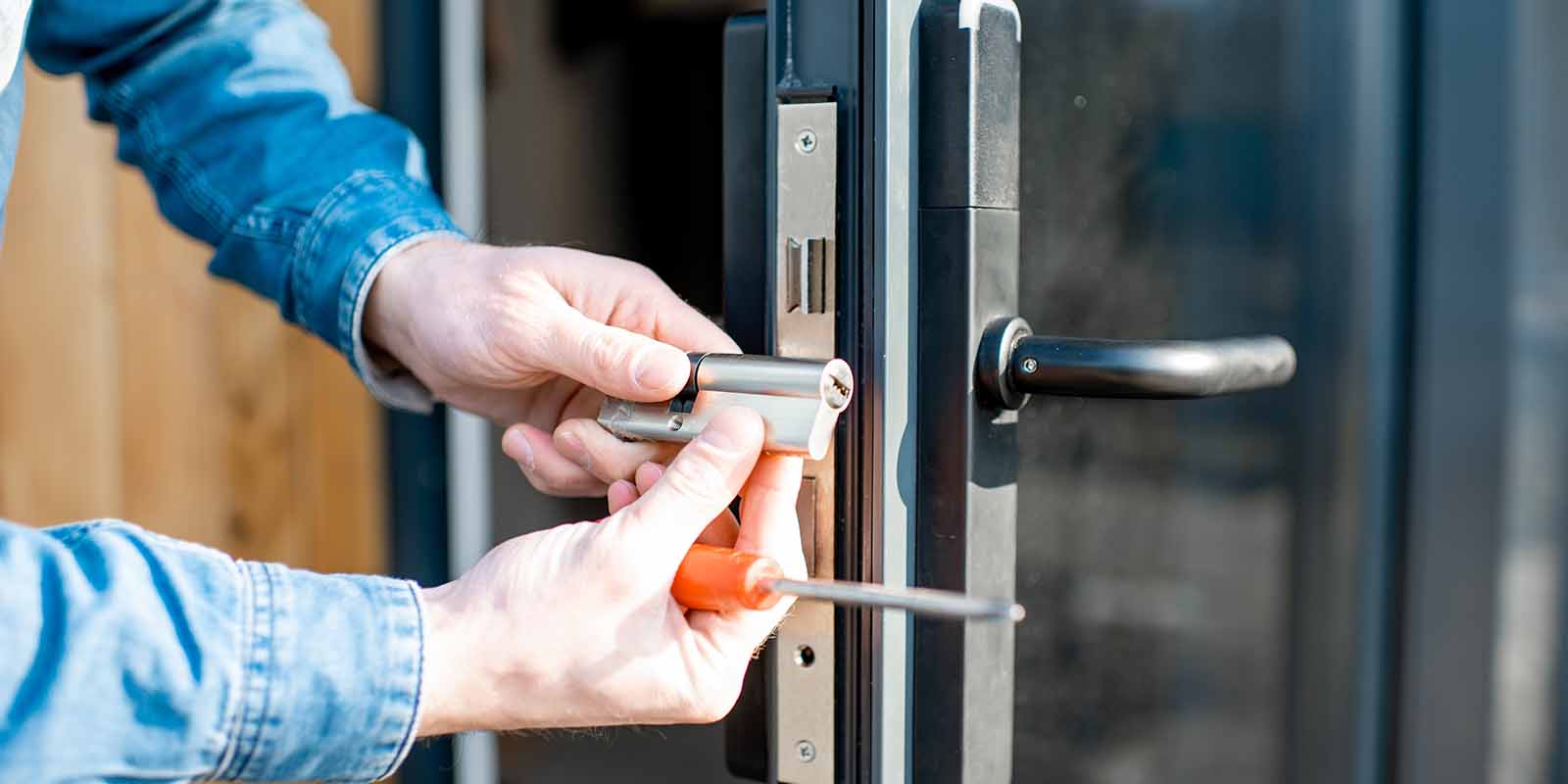
Many homeowners assume that a difficult key means the euro cylinder has worn out.
However, pressure from a dropped or misaligned door can make a perfectly good cylinder feel faulty.
A simple test is to operate the lock with the door open.
If the key turns smoothly when the door is open but becomes stiff when it's closed, the cylinder is often working normally and the real problem lies with the door alignment.
Replacing the cylinder without correcting the alignment is unlikely to resolve the issue.
Why Realignment Should Be Part of Every Repair
Replacing worn components without correcting the cause of their failure often results in the same problem returning.
Whether replacing:
- A gearbox.
- A multipoint locking mechanism.
- Door handles.
- A euro cylinder.
the alignment of the door should always be checked.
A professional repair should include:
- Checking the door height.
- Inspecting the hinges.
- Adjusting side-to-side alignment.
- Setting the correct compression against the seals.
- Ensuring the locking points engage freely.
- Confirming smooth handle operation.
- Confirming the key turns without resistance.
Correct alignment allows every component to work as it was designed.
The Benefits of Correct Door Alignment
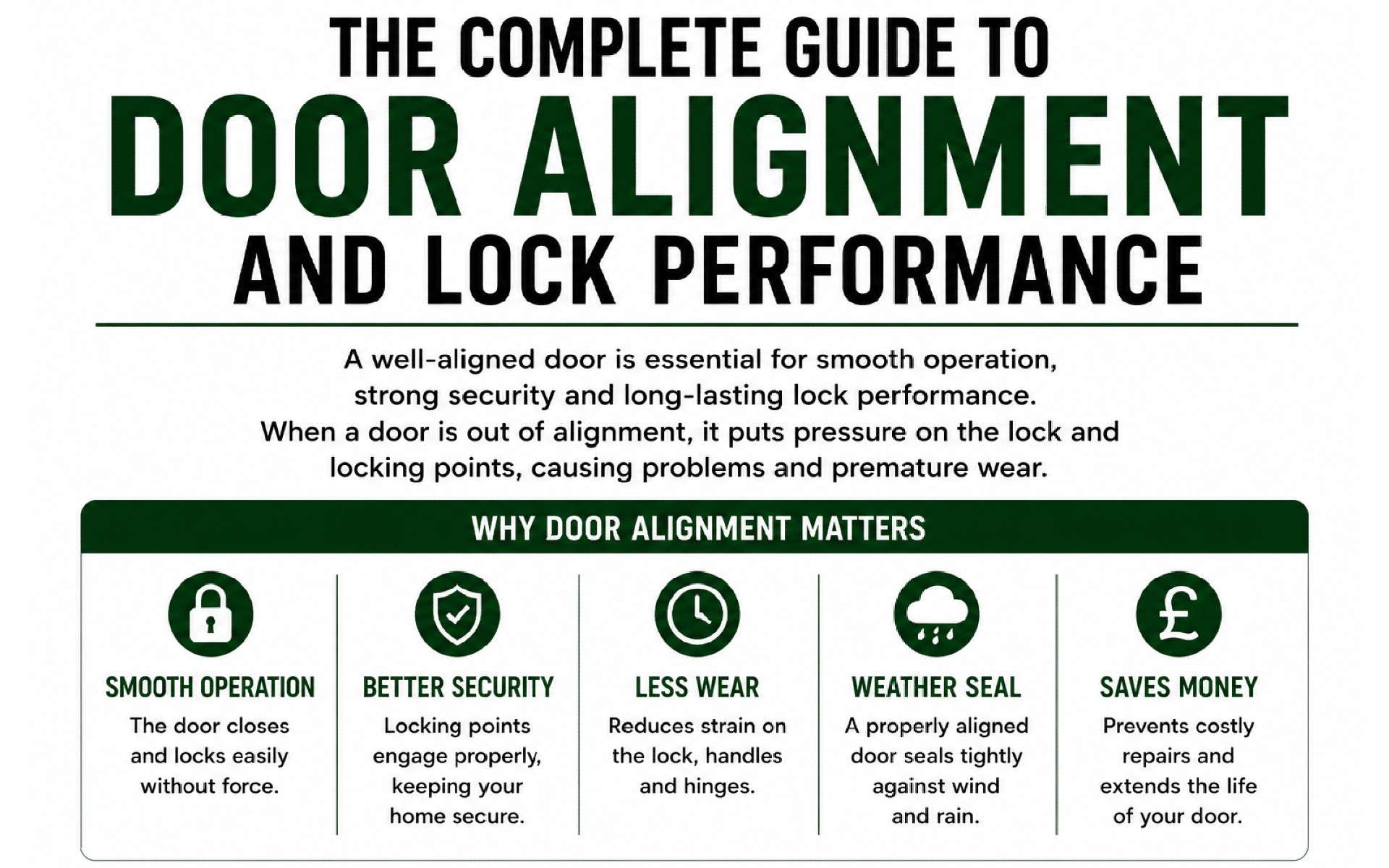
Keeping your door correctly aligned offers benefits far beyond making it easier to lock.
It can:
- Extend the lifespan of the gearbox.
- Reduce wear on the multipoint locking mechanism.
- Prevent broken door handles.
- Make the key easier to turn.
- Improve home security.
- Reduce draughts.
- Improve weather sealing.
- Prevent premature lock failures.
- Reduce long-term repair costs.
A small adjustment today can often prevent major repairs in the future.
When Should You Have Your Door Checked?
It's worth arranging an inspection if you notice:
- The handle becoming stiff.
- The key requiring more effort to turn.
- The door rubbing against the frame.
- Locking points failing to engage smoothly.
- The lock operating better with the door open.
- The need to slam, lift or pull the door shut.
- New noises during locking or unlocking.
Addressing these symptoms early is usually far less expensive than waiting for a complete lock failure.
Small Problems Become Bigger Ones
One of the biggest mistakes homeowners make is simply applying more force when the door becomes difficult to lock.
Unfortunately, forcing the handle or key doesn't solve the problem—it simply transfers more strain to the gearbox, handles, locking points and cylinder.
Many emergency lock failures begin with months of ignored stiffness that could have been resolved with a relatively simple adjustment.
Recognising the warning signs early helps prevent avoidable breakdowns and extends the life of the entire locking system.
Conclusion
Your door lock can only perform as well as the door it's fitted to. Even the highest-quality gearbox, euro cylinder and multipoint locking mechanism will wear prematurely if they're forced to operate against a misaligned door.
Keeping your door correctly aligned is one of the simplest and most effective ways to protect your locking system, improve security and avoid unnecessary repairs. In many cases, correcting the alignment not only restores smooth operation but also prevents costly failures before they occur.
Rather than assuming every stiff handle or difficult key means a worn-out lock, it's worth considering whether the door itself simply needs adjusting. A proper diagnosis that includes checking the door alignment can often save both money and unnecessary replacement of perfectly serviceable components.
Frequently Asked Questions
Can a dropped door damage a lock?
Yes. A dropped door places constant strain on the gearbox, locking points, door handles and other moving components, often leading to premature wear and failure.
Why does my lock work when the door is open?
This is one of the clearest signs of poor alignment. When the door is open, the locking points move freely. Once the door is closed, they begin meeting resistance from the keeps in the frame.
Does every stiff handle mean I need a new lock?
No. A stiff handle is frequently caused by poor door alignment rather than a faulty lock or gearbox. Identifying the cause before replacing parts is always the best approach.
Can door alignment improve security?
Yes. A correctly aligned door allows every locking point to engage fully with the frame, helping the multipoint locking system provide the level of security it was designed to deliver.
How often should door alignment be checked?
There's no fixed maintenance schedule, but it's sensible to have the alignment checked whenever you notice a change in how the door closes, locks or unlocks. Early adjustments are usually simple and can prevent much larger repairs later.