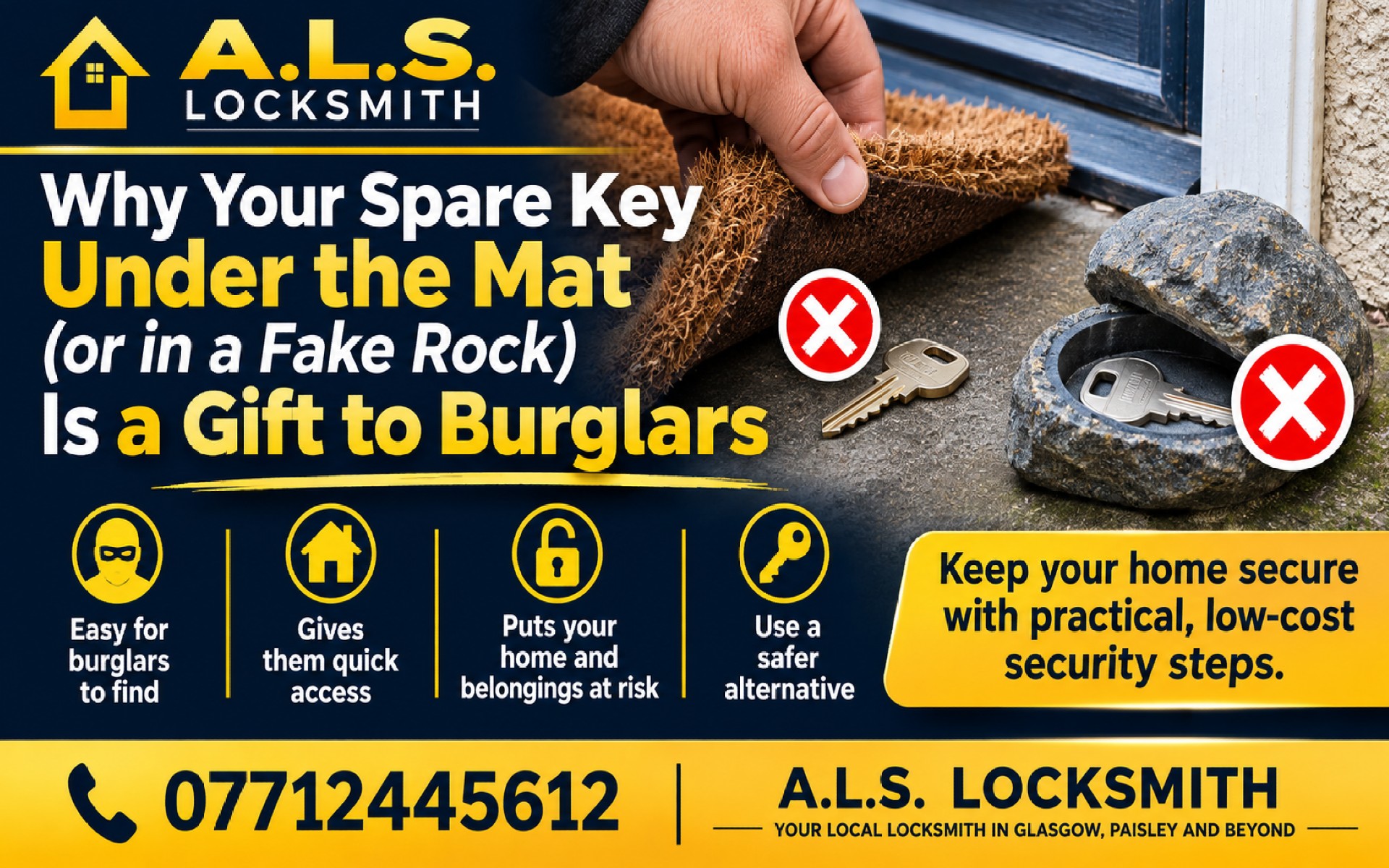
It seems like a sensible idea. You leave a spare key under the doormat, inside a plant pot or hidden in one of those fake rocks beside the front door. That way, if you lose your keys or a family member gets locked out, there is always a way to get back inside.
The problem? These hiding places are among the first places someone may check when looking for a spare key.
At A.L.S. Locksmiths, we help homeowners throughout Glasgow, Paisley, Dumbarton, Alexandria, Balloch and surrounding areas keep their properties secure. Here is why leaving a key outside can put your home at risk and what you can do instead.
1. Burglars Know the Usual Hiding Places
A spare key hidden beneath a doormat might feel concealed, but it offers very little protection. The same applies to keys hidden under flowerpots, inside outdoor ornaments, behind drainpipes or inside fake rocks.
These hiding places are convenient because they are easy for you to remember. Unfortunately, that also makes them predictable.
Even if you believe your key is well hidden, anyone who discovers it could potentially enter your home without forcing a door or breaking a window.
2. A Fake Rock Isn't a Security Solution
Fake rocks and decorative key holders are designed to blend into their surroundings, but they do not provide meaningful security if they can be easily found and opened.
If you use one near your front or back door, you are effectively leaving a potential way into your home outside the property.
The risk is not limited to burglars. Visitors, contractors or other people who notice the hiding place may discover that a key is available.
The safest option is not to rely on a hidden outdoor key as your main backup plan.
3. What If Someone Finds Your Spare Key?
If someone finds a key that opens your door, they may be able to enter without causing obvious damage. This can make an incident harder to identify immediately.
If you suspect someone has discovered or taken your spare key, consider changing the affected lock, particularly if the key can be linked to your address.
If you have recently moved into a property, changing the locks is also worth considering because you cannot always know how many copies of the original keys exist or who still has access.
A professional locksmith can advise whether a cylinder replacement is sufficient or whether another part of the locking system needs attention.
4. Better Ways to Keep a Spare Key
You do not need to leave yourself without a backup plan. There are safer alternatives.
Leave a key with someone you trust. A reliable family member, friend or neighbour who lives nearby can keep a spare for emergencies.
Use a properly installed, secure key safe. Choose a robust model with a suitable combination mechanism, fit it according to the manufacturer's instructions and position it discreetly. Avoid obvious locations immediately beside the front door.
Keep a spare key somewhere secure indoors. If practical, keep a spare in a consistent location inside your home so you can find it when needed.
Review who has access to your keys. If a key is lost, stolen or not returned, consider whether the lock needs changing.
The aim is to have a backup plan without leaving an easy route into your property.
5. Check Your Door Locks Too
Avoiding hidden spare keys is only one part of home security. Your external doors should also have suitable, correctly fitted locks.
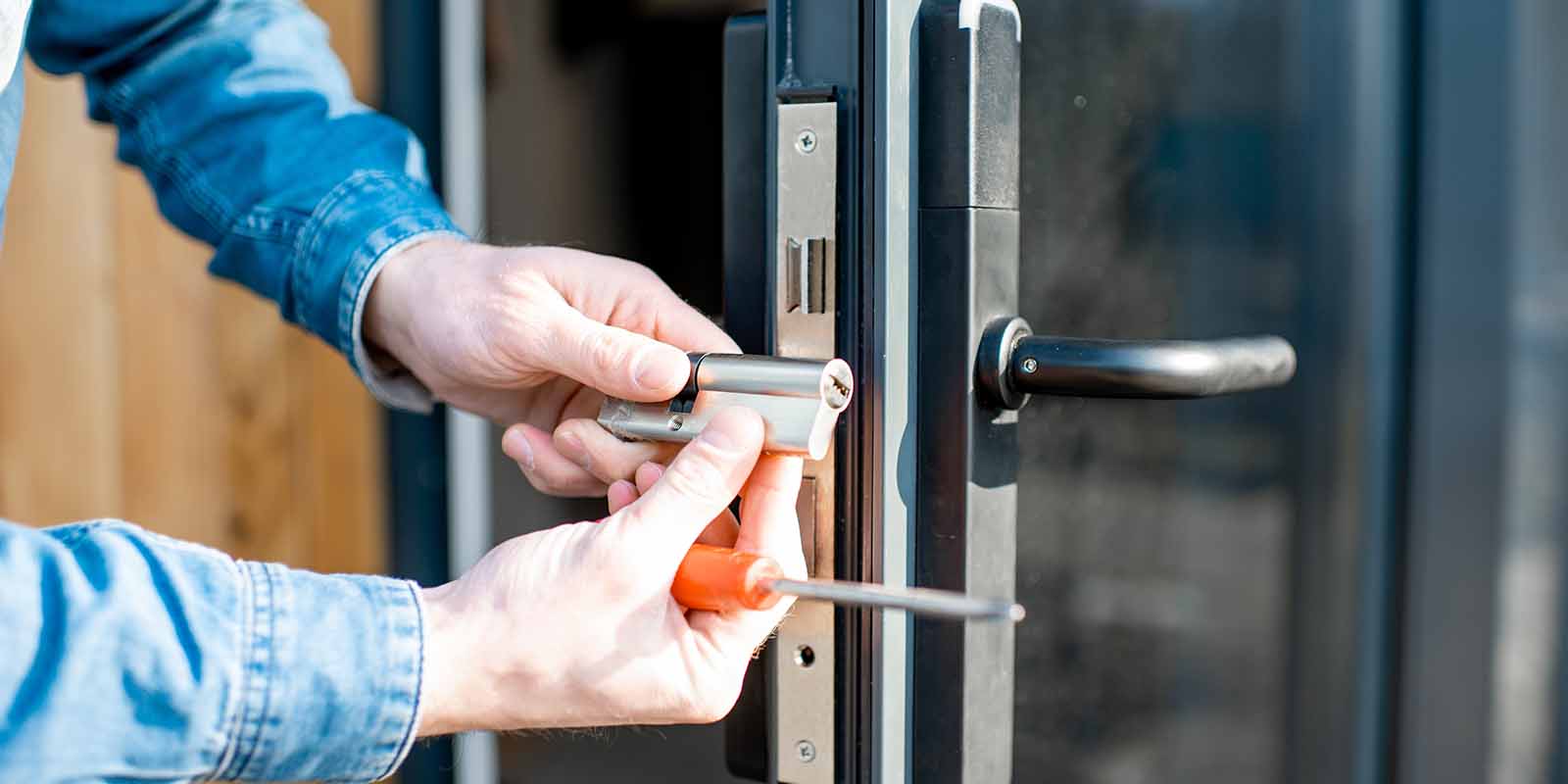
Many UPVC and composite doors use multipoint locking systems operated by a euro cylinder. If the cylinder is outdated or vulnerable to common attack methods, consider upgrading to an appropriate security-rated model.
For example, a TS007 3-star cylinder is one recognised option. A suitable TS007 1-star cylinder combined with a 2-star security handle can provide an alternative compliant arrangement.
Correct sizing and fitting matter. A cylinder that protrudes excessively beyond its handle may be more exposed to attack.
If your door is stiff, difficult to lock or requires excessive force on the handle, the problem may be a misaligned door or a failing gearbox rather than the cylinder itself.
6. What If You've Already Left a Key Outside?
If you have a spare key hidden outside, remove it and take it indoors or give it to someone you trust.
If you believe someone may already have found or taken the key, assess the circumstances. If the key could be connected to your property, changing the affected lock is a sensible precaution.
You may not need to replace the entire locking mechanism. On many doors, changing the euro cylinder is sufficient, provided the rest of the lock is working correctly.
If you are unsure, a locksmith can assess your existing lock and explain the options.
Home Security Advice from A.L.S. Locksmiths
Leaving a spare key under a mat might save you a phone call when you get locked out, but it can also create an unnecessary security risk.
A better approach is to keep spare keys under controlled access, check your door locks regularly and deal with missing keys before they become a problem.
At A.L.S. Locksmiths, we provide professional lock changes, anti-snap cylinder upgrades, UPVC door repairs, composite door lock repairs and multipoint mechanism replacements throughout Glasgow, Paisley, Dumbarton, Alexandria, Balloch and surrounding areas.
We operate on a fixed-price basis, with no call-out fees. We provide a clear quotation before the agreed work proceeds.
Need to change your locks or improve your door security?
Contact A.L.S. Locksmiths on 07712 445612 for practical advice and professional locksmith services.
Your spare key should be a backup for you, not an opportunity for someone else.