Introduction
Your front and back doors are among the hardest-working parts of your home. They're opened and locked thousands of times over the years, yet they're often forgotten until something goes wrong.
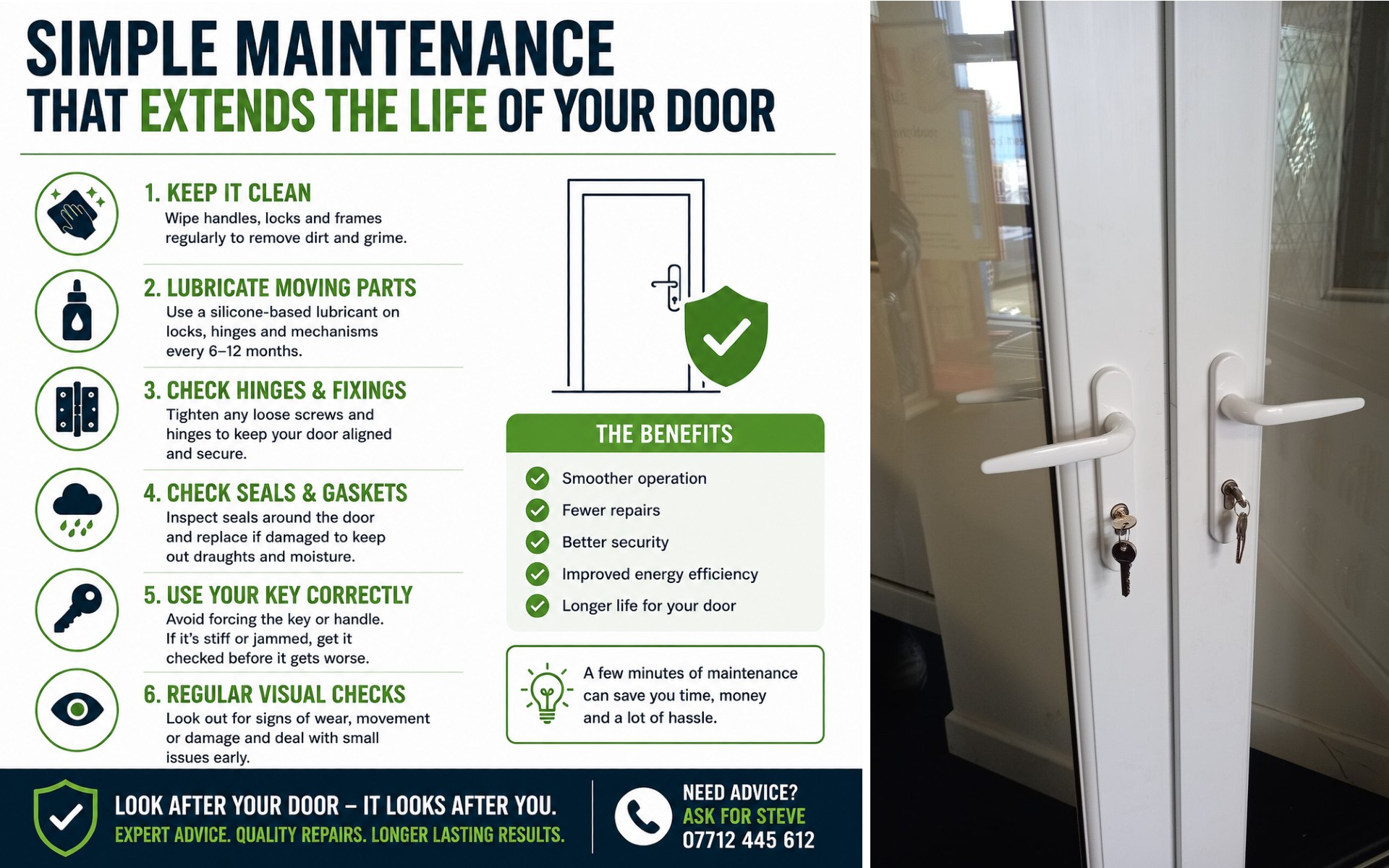
Fortunately, most locking problems don't happen without warning. A little routine maintenance and a few simple checks can help prevent premature wear, reduce the risk of a lockout, and extend the life of your door and its locking mechanism.
Whether you have a uPVC, composite, French or conservatory door, spending just a few minutes on maintenance a couple of times a year can save you the inconvenience and cost of unexpected repairs.
Keep the Locking Points Clean
The hooks, rollers, deadbolts and latch are constantly exposed to dust, dirt and moisture. As debris builds up, these moving parts can become stiff, increasing friction throughout the locking mechanism.
Open the door occasionally and wipe clean:
- Hooks
- Rollers
- Deadbolts
- Centre latch
- Faceplate of the locking mechanism
Keeping these components clean helps them move freely and reduces unnecessary wear.
Lubricate the Moving Parts
Multipoint locking mechanisms contain several moving components that benefit from occasional lubrication.
Apply a suitable lubricant to the moving locking points, including:
- Hooks
- Rollers
- Deadbolts
- Latch
Only a light application is needed. Excess lubricant attracts dirt and can create more problems than it solves.
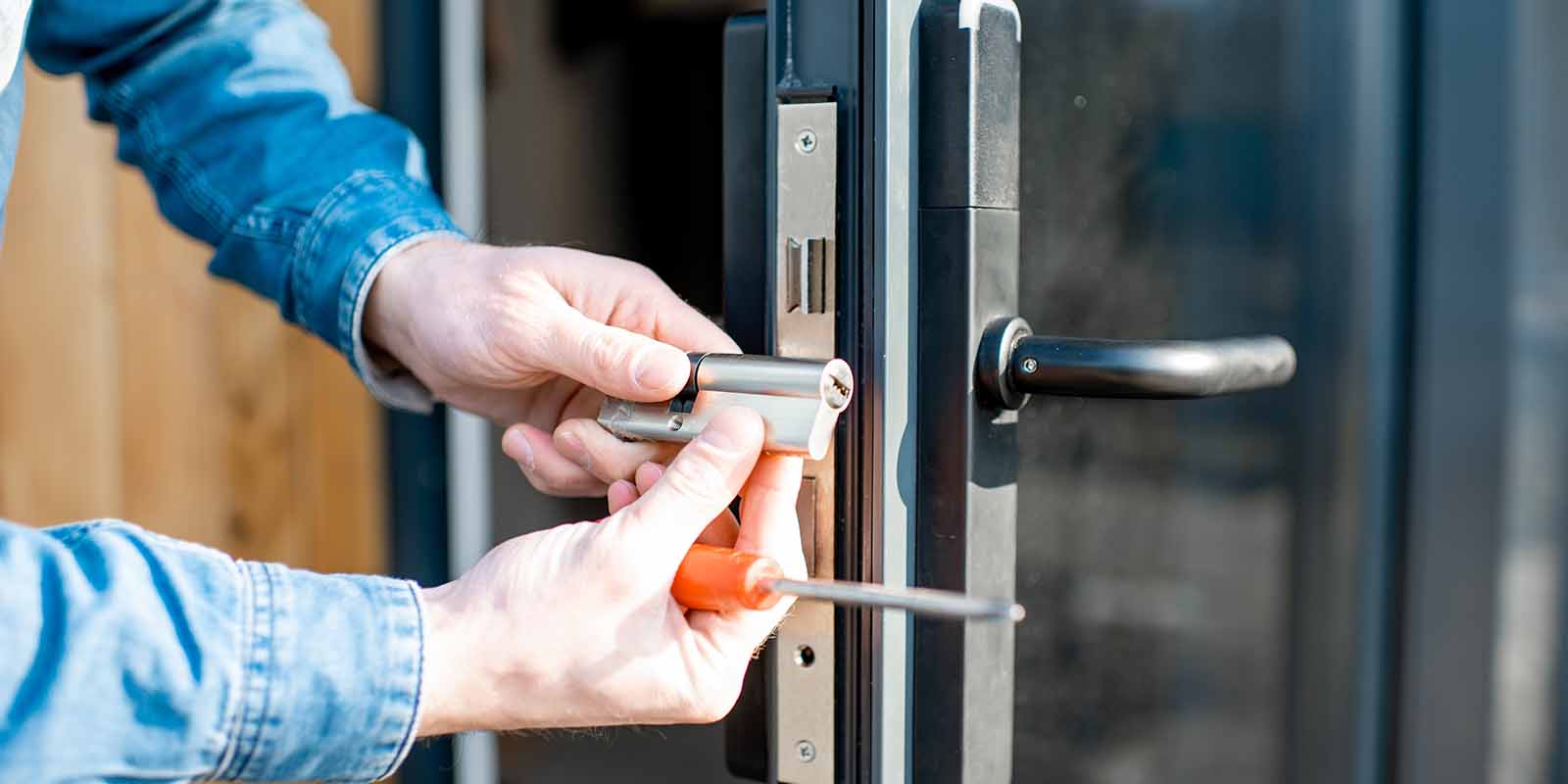
For the euro cylinder, always use a lubricant designed specifically for lock cylinders. General-purpose oils or sprays can leave sticky residues that affect the internal pins.
Check That the Door Closes Smoothly
Your door should open, close and lock with very little effort.
If you notice yourself having to:
- Push the door closed
- Pull the door towards you
- Lift the handle harder than usual
- Slam the door to make it latch
it's worth investigating before the problem becomes worse.
These are often early signs that the door has moved out of alignment.
Look at the Gaps Around the Door
Stand back and inspect the gaps between the door and frame.
They should appear even all the way around.
Uneven gaps, rubbing on the frame or scrape marks near the locking keeps can indicate that the door has dropped slightly.
Even a few millimetres of movement can place significant strain on the gearbox and multipoint locking mechanism.
Check the Door Handles
Handles receive constant use and naturally wear over time.
Make sure:
- Both handles feel secure.
- The backplates don't move.
- The fixing screws remain tight.
- The handle springs back properly after use.
A handle that feels loose, droops or doesn't return fully shouldn't be ignored, as it may be a sign of either worn handles or a locking mechanism beginning to fail.
Pay Attention to the Key
The key is often the first indicator that something isn't quite right.
If it starts to:
- Feel rough when turning
- Stick in the cylinder
- Become difficult to remove
- Require extra force
don't assume the cylinder has failed.
A stiff key is often caused by pressure from a dropped door or a locking mechanism working under strain.
Never Force a Stiff Door
One of the quickest ways to turn a minor repair into an expensive one is by forcing the handle or key.
Applying excessive force can damage:
- The gearbox
- Internal linkages
- Lock cylinder
- Door handles
- Multipoint locking mechanism
If the door suddenly becomes difficult to operate, stop using force and investigate the cause instead.
Check the Hinges
The hinges carry the full weight of the door every day.
Look for:
- Loose fixing screws
- Signs of movement
- Doors rubbing on the frame
- Uneven closing
A dropped door is one of the most common causes of premature gearbox and locking mechanism failure.
Correcting the alignment early can add years to the life of the locking system.
Don't Forget Less Frequently Used Doors
French doors, patio doors, conservatory doors and side entrances are often left untouched for long periods.
When these doors aren't used regularly, small problems can go unnoticed until the lock eventually seizes or fails.
Every so often, check that each external door:
- Opens smoothly.
- Closes correctly.
- Locks without resistance.
- Unlocks easily.
- Shows no signs of stiffness.
Operating them occasionally also helps keep the moving parts free.
Deal With Small Problems Early
Most major lock failures begin as minor faults.
Early warning signs include:
- A slightly stiff handle.
- A key that's becoming harder to turn.
- Grinding or clicking noises.
- A handle that doesn't spring back.
- The door catching the frame.
- Having to push or pull the door to lock it.
Addressing these issues promptly often prevents damage to the gearbox or multipoint locking mechanism and helps avoid an emergency lockout.
A Professional Service Can Extend the Life of Your Door
If your door is several years old or has started showing signs of stiffness, a professional inspection can often identify problems before components fail.
Checking the alignment, adjusting the hinges where necessary and replacing worn parts early is usually far less expensive than dealing with a complete mechanism failure.
Conclusion
A well-maintained door should operate smoothly with very little effort. By keeping the locking points clean, lubricating the moving parts, checking the alignment, tightening loose handles and paying attention to early warning signs, you can significantly reduce wear on the locking system and help prevent unexpected failures.
Most doors don't suddenly stop working—they gradually become harder to operate over time. Regular maintenance, combined with prompt attention to small faults, can add years to the life of your door and help you avoid costly repairs. When problems do develop, repairing worn components and correcting the underlying cause is usually far more economical than replacing the entire door.