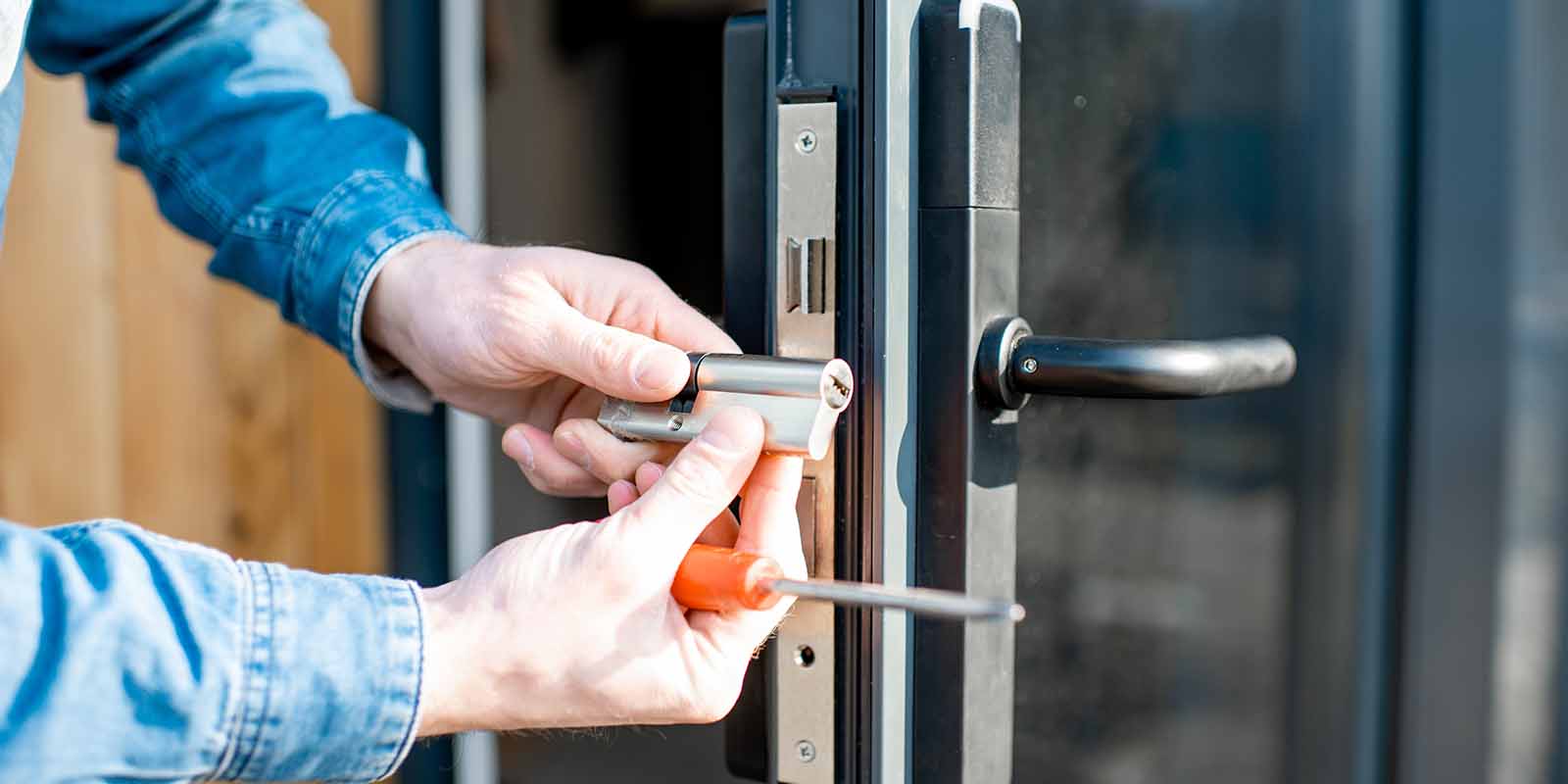
Replacing a door handle or fitting an additional security device such as a sash jammer might seem like a straightforward DIY job. A quick trip to the hardware shop, a few screws and a screwdriver — what could possibly go wrong?
Quite a lot, as it happens.
At A.L.S. Locksmiths, we regularly come across problems caused by seemingly minor mistakes when homeowners modify their uPVC doors. However, there are two different issues worth understanding.
When fitting external security devices, screws that are too long can interfere directly with the internal locking mechanism. When replacing door handles, the problem can be quite different. In some cases, screws that are too short can cause excessive pressure on the gearbox because of the way the handle compresses against the door.
Understanding the difference is important.
1. Fitting Sash Jammers: When Screws Are Too Long
A uPVC door contains a multipoint locking system running through the door profile. Depending on the design, this may operate hooks, rollers, bolts and other locking points.
When you lift the handle, the gearbox operates the connecting locking strip, moving these components into position.
There is limited space inside the door, and this is where fitting additional security devices can cause problems.
When installing a sash jammer or another external security device, using screws that are too long can allow the fixings to protrude into the internal chambers of the door.
If a screw reaches the moving locking strip or another component, it can physically obstruct its movement.
The symptoms can include:
-
A handle that suddenly becomes difficult to lift.
-
A key that will not turn properly.
-
Locking hooks or rollers that refuse to move.
-
A multipoint mechanism that becomes completely jammed.
The problem may appear immediately after the security device has been installed.
This is why the position of the fixing and the length of the screw are important. A screw that is suitable for one door construction may be completely unsuitable for another.
2. Replacing Door Handles: When Screws Are Too Short
This is a different problem and one that is often misunderstood.
When replacing uPVC door handles, the length of the fixing screws is not always the issue people expect.
Some replacement handles, particularly plastic or certain nickel-finished handle designs, can create problems when tightened against a door that does not have adequate internal metal reinforcement.
Here's why.
When the handle screws are tightened, they pull the two handle plates together against the door. If the door has a solid internal metal frame providing sufficient support, the pressure is generally transferred through that reinforcement.
However, not all uPVC doors have the same internal construction.
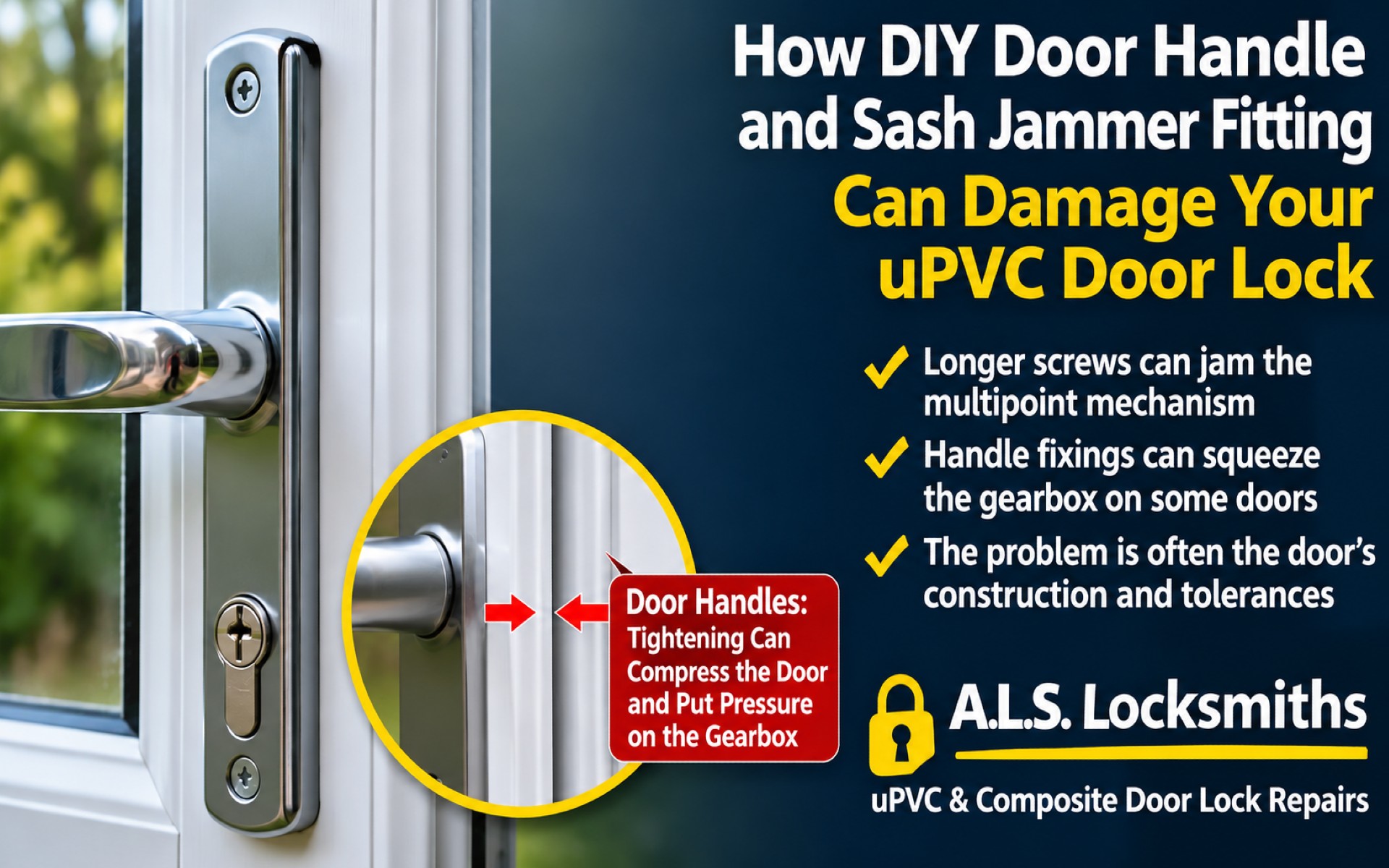
On doors without adequate metal reinforcement behind the handle fixing area, tightening the screws can compress the plastic door profile.
This compression can transfer pressure onto the gearbox positioned between the handles.
The gearbox can effectively become squeezed from both sides, creating additional friction and resistance within the mechanism.
The result is a locking system that may have been working perfectly before the handle replacement but becomes stiff or difficult to operate once the new handle has been fitted.
3. How Does This Affect the Handle and Key?
One of the clearest indications of this problem is resistance when operating the handle and turning the key.
You may notice:
-
The handle feels unusually stiff when lifted.
-
The key becomes difficult to turn after the handle has been tightened.
-
The mechanism operates more freely when the handle fixings are loosened slightly.
-
The door worked correctly before the replacement handle was installed.
That last point is particularly important.
If loosening the handle screws allows the mechanism to operate more freely, it can indicate that pressure from the handle installation is being transferred onto the gearbox.
This is not necessarily evidence of a faulty gearbox. The gearbox may simply be experiencing excessive external pressure.
4. Why There Is No Universal Screw Length or Handle Solution
It is tempting to assume that using the correct screw length will solve every handle-fitting problem.
Unfortunately, it isn't that simple.
The construction and tolerances of uPVC doors vary considerably between manufacturers and models. Some have substantial metal reinforcement around the handle fixing area, while others rely more heavily on the plastic door profile.
Replacement handles also vary in their construction, thickness and fixing arrangements.
The important factor is how the handle, door profile and gearbox interact when everything is tightened together.
A handle needs to be secure against the door, but it must not create excessive compression or transfer unwanted pressure onto the gearbox.
This is where experience matters. A locksmith familiar with different door constructions understands that sometimes the installation needs to be fine-tuned to achieve the correct balance.
The objective is straightforward:
-
The handles must be securely fitted.
-
The gearbox must operate without external pressure.
-
The handle must lift freely.
-
The key must turn smoothly.
Simply tightening the screws as much as possible is not necessarily the correct approach.
5. Why Forcing a Stiff Handle Can Cause Further Damage
If a handle becomes stiff following replacement, repeatedly forcing it can put unnecessary strain on the gearbox and other locking components.
A gearbox is designed to operate within certain tolerances. Introducing additional pressure through incorrect handle installation can interfere with its normal operation.
If the problem is left unresolved, continued use could contribute to premature wear or further mechanical damage.
If you notice resistance immediately after fitting a new handle, investigate the installation rather than assuming the gearbox has failed.
Similarly, if the mechanism becomes stiff after fitting a sash jammer or another external security device, check whether the fixings are interfering with the locking strip.
6. Can These Problems Be Repaired Without Replacing the Door?
In most cases, yes.
The important thing is identifying which of the two problems has occurred.
Where an external fixing is obstructing the multipoint mechanism, the obstruction needs to be addressed and any resulting damage assessed.
Where a replacement handle is compressing the door profile and placing pressure on the gearbox, the handle installation needs to be corrected so that the handles are secure without restricting the mechanism.
A gearbox should not automatically be condemned simply because the handle and key have become difficult to operate.
At A.L.S. Locksmiths, we regularly diagnose and repair uPVC and composite door locking problems, including handle-related faults, gearbox failures and multipoint mechanism issues.
Our approach is to identify the actual cause before recommending replacement parts.
Need Help With a Stiff or Jammed uPVC Door?
A simple handle replacement or additional security upgrade should never leave you with a door that struggles to lock or unlock.
If your door has become stiff following DIY work, avoid forcing the handle or key. The problem may be caused by the installation rather than a failed locking mechanism.
A.L.S. Locksmiths provides uPVC and composite door lock repairs across Glasgow, Paisley and surrounding areas.
The lesson is simple: fitting a uPVC door handle is not just about getting the screws tight. The handle must be secure, the door must not be compressed excessively, and the gearbox must be free to operate within its designed tolerances.
My recommendation: Keep this as two separate technical explanations within one article. It is a stronger article because it demonstrates practical locksmith knowledge rather than repeating generic DIY warnings. The handle-compression issue is particularly valuable because it is something homeowners and inexperienced installers may mistake for gearbox failure.